
Flame Mahogany Buffet Server
A flame mahogany buffet server brings deep wood figures and practical dining room storage into the home.
Flame Mahogany Buffet Server
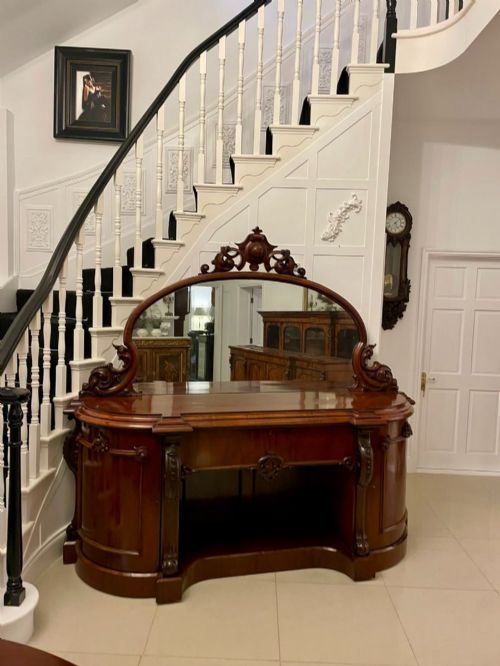
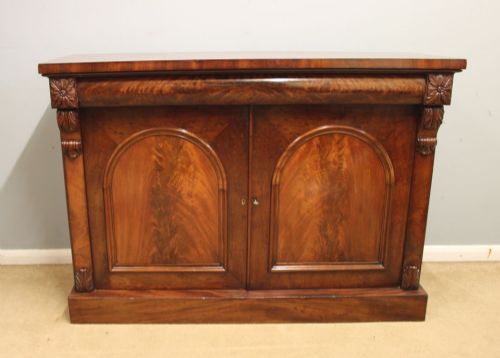
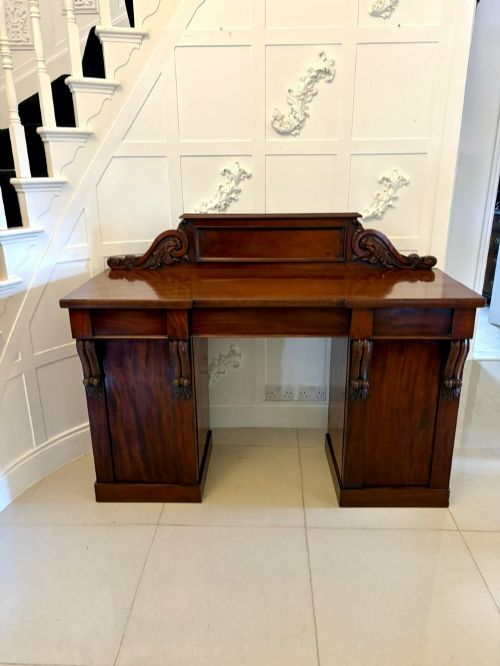
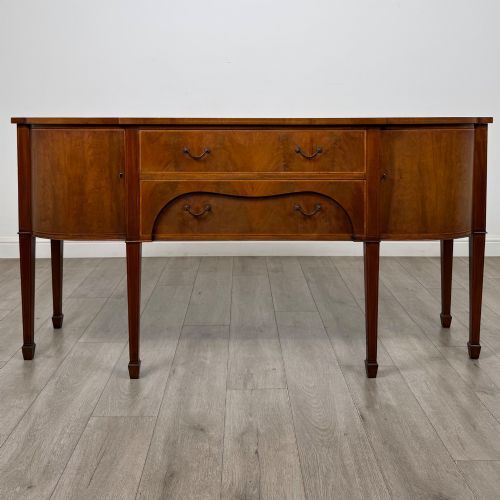
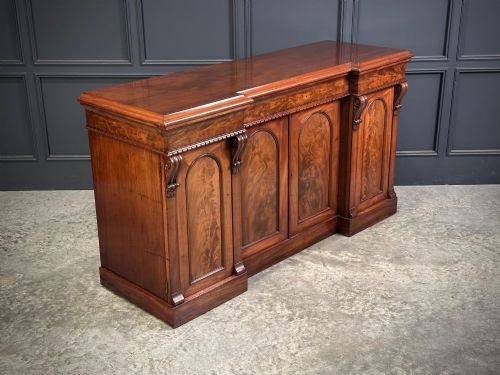
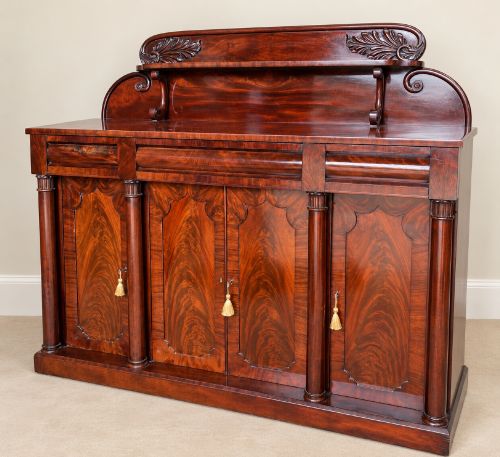
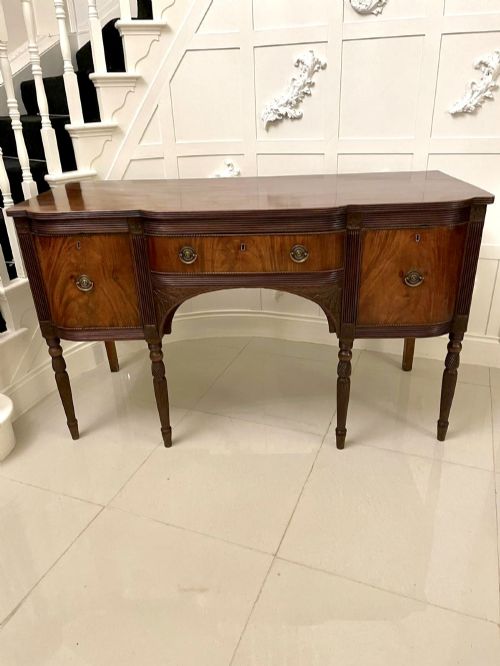
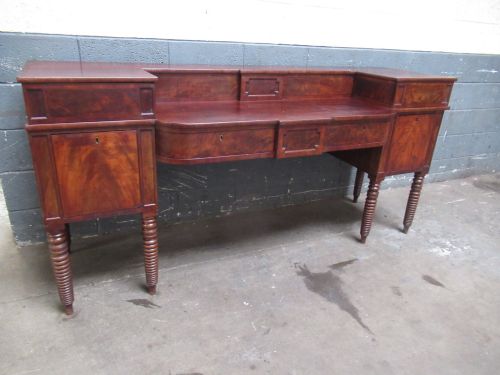
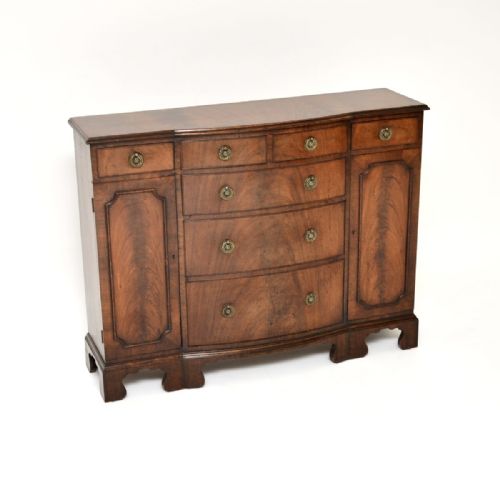
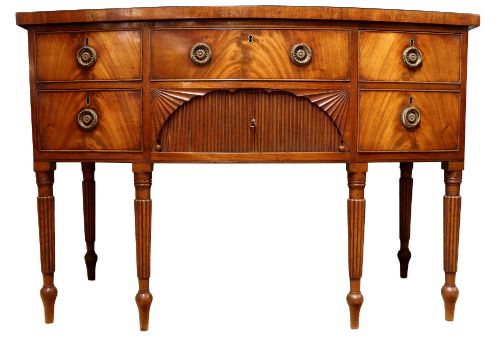
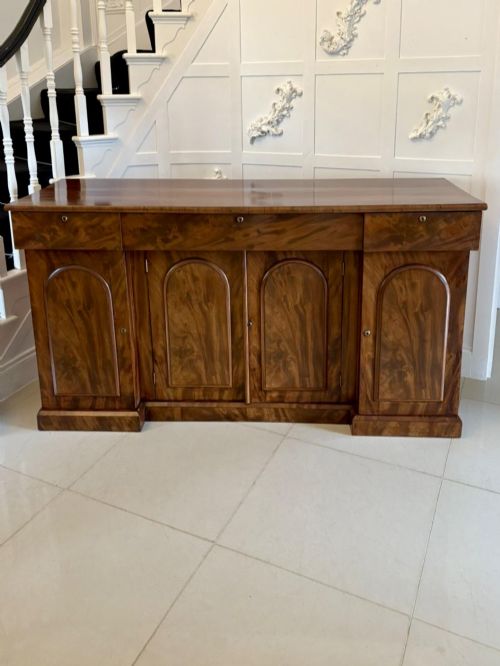
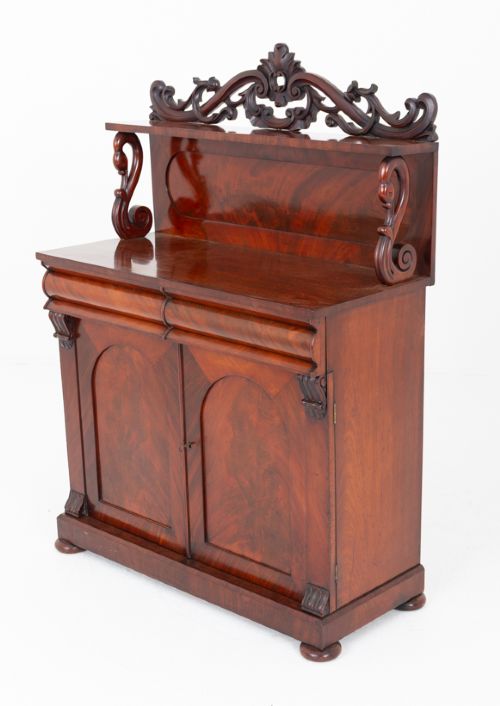
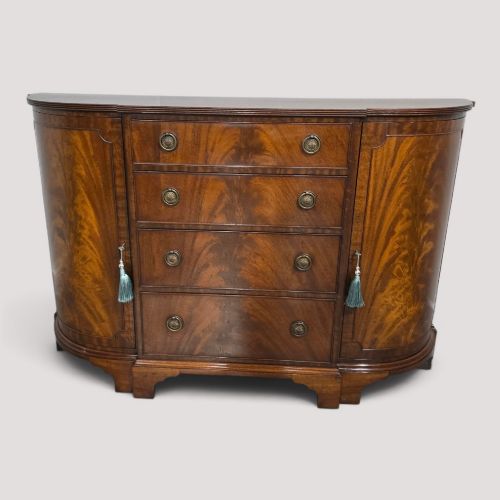
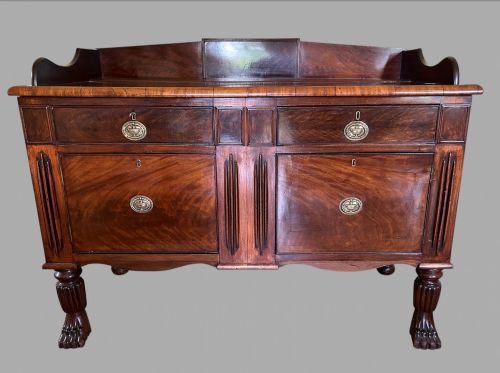
A flame mahogany buffet server is a substantial piece of dining room furniture designed for serving food and storing tableware. When searching this phrase, buyers encounter various forms including sideboards, side cabinets, chiffoniers, and console tables. These pieces span multiple eras, with strong representation from the Georgian, Regency, and Victorian periods.
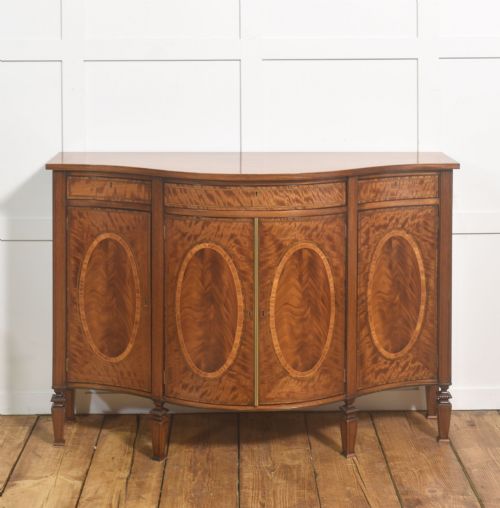
The pieces often feature curved bow fronts, breakfront silhouettes, or pedestal designs. Materials range from solid mahogany to flame mahogany veneer, frequently accented with satinwood or boxwood inlay and brass details. Pieces appear from the 18th, 19th, and early 20th centuries, including Edwardian and Sheraton Revival interpretations.
How they were made
Cabinet makers utilised dense tropical timber, selecting highly figured cuts for decorative surfaces. Flame mahogany veneer was carefully sliced and applied over secondary woods to create dramatic, flickering grain patterns across drawer fronts and doors. Inlayers added contrasting stringing and borders using pale timbers such as satinwood and boxwood.
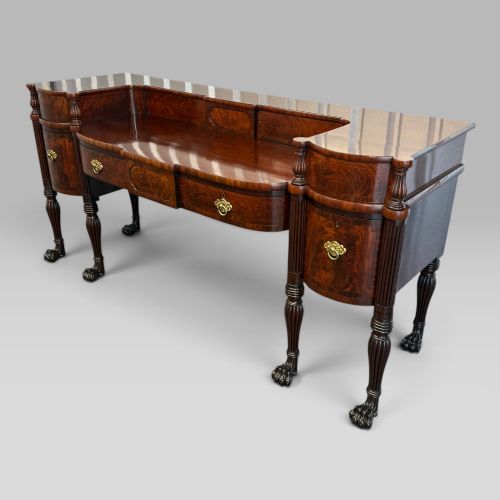
Structural elements relied on solid mahogany framing, while hardware typically included cast brass handles and occasionally lion paw feet. Glass panels appeared in select cabinet doors, and marble tops featured on specific server tables. Joinery techniques such as dovetailed drawers ensured durability alongside decorative appeal.
Object forms span sideboards, chiffoniers, breakfronts, and console tables with brass hardware and boxwood inlay.
What varies in quality
The visual impact of a flame mahogany buffet server depends on the symmetry and intensity of the veneer figuring. Superior examples display book-matched flame patterns that flow evenly across multiple doors or drawers. Subtler differences lie in the precision of the contrasting inlay work and the weight of the brass hardware.
Construction standards distinguish utilitarian pieces from high-status commissions. Finer servers incorporate secondary woods of higher grade, heavier timber scantlings in the carcase, and hand-carved details such as lion paw feet or applied moulding. The alignment of drawers and doors reflects the original skill of the workshop.
The Flame Mahogany Buffet Server Glossary
- Flame mahogany veneer
- A thin slice of mahogany timber cut from the point where branches join the trunk, producing a rippling, flame-like pattern. Furniture makers prized this figure for principal display surfaces.
- Bow front
- A convex, outwardly curved front elevation popular on dining furniture from the Georgian and Regency periods. This shape softens the profile of large storage cabinets.
- Breakfront
- A cabinet design where the central section projects forward from the flanking outer wings. This architectural arrangement creates depth and shadow on large sideboards.
- Chiffonier
- A low storage cabinet featuring shelves or enclosed cupboards, developed during the 19th century. These pieces often served similar dining functions to traditional sideboards.
- Inlay
- A decorative technique where contrasting woods like satinwood or boxwood are inserted into recesses in the primary timber. This creates geometric borders and fine lines.
Flame Mahogany Buffet Server: Frequently Asked Questions
What is a flame mahogany buffet server used for?
These items provide surface space for serving food and storing dining accessories during meals.
Cupboards and drawers hold cutlery, linen, and glassware while the top surface functions as a sideboard.
Which periods do these pieces come from?
Surviving examples originate primarily from the Georgian, Regency, and Victorian eras.
Later Edwardian and revival interpretations also appear in the selection.
How do I care for flame mahogany veneer?
Keep wooden furniture away from direct sunlight and sudden temperature changes to protect the finish.
Dust regularly with a dry cloth and apply occasional mild wax polish.
What is the difference between a sideboard and a buffet?
The terms are often used interchangeably to describe dining room storage and serving furniture.
Buffet servers generally emphasise surface serving space while sideboards offer larger internal capacity.