




Fitted Walnut Clothes Press
A fitted walnut clothes press brings serious presence to a bedroom, offering deep storage within rich timber.
Fitted Walnut Clothes Press
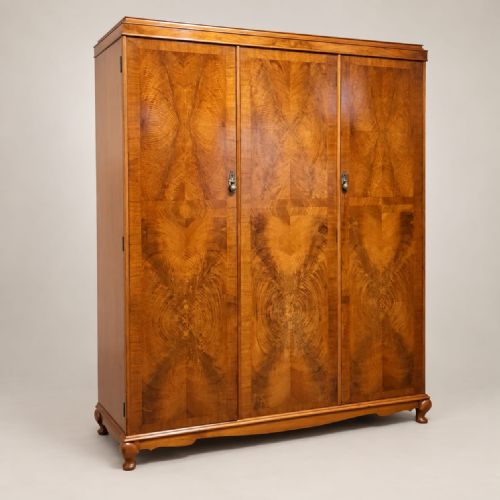
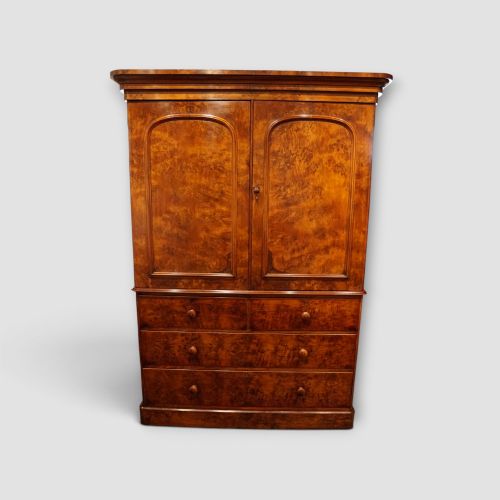
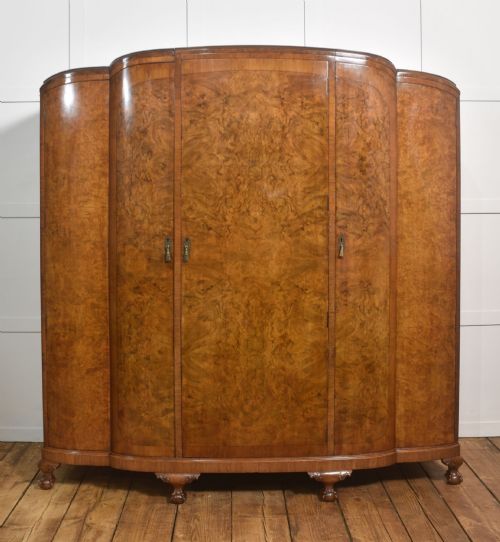
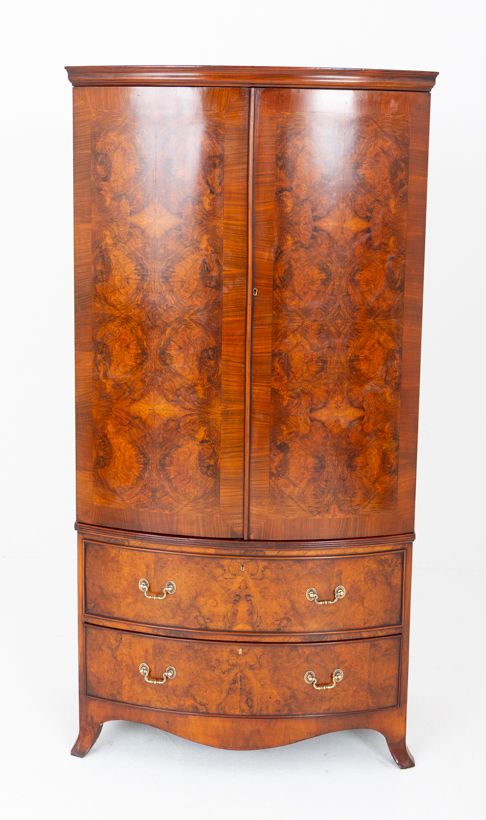
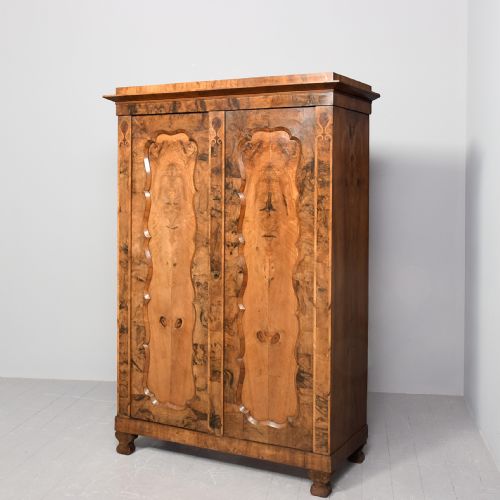
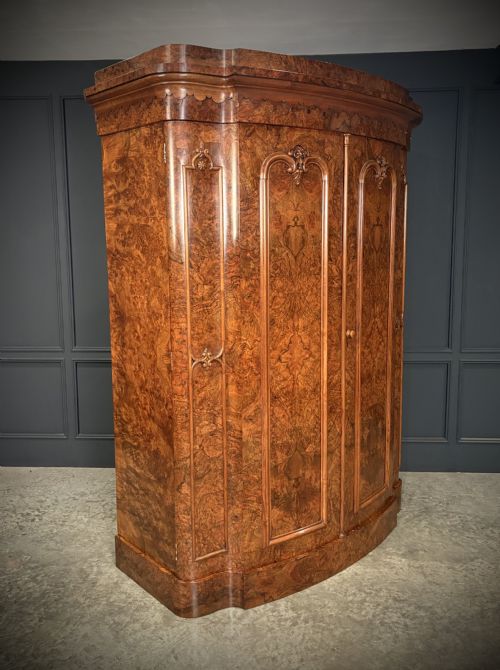
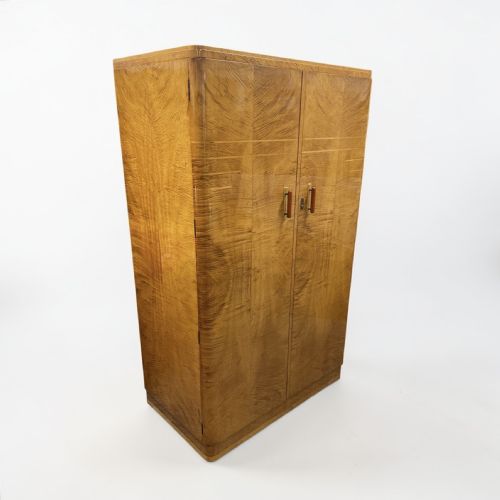
A fitted walnut clothes press spans several distinct periods, appearing as nineteenth-century compactums alongside twentieth-century Art Deco wardrobes. Buyers encounter varied forms here, from bow-fronted triple wardrobes to North European armoires.
The materials balance solid walnut with burr walnut veneer, complemented by brass fittings and glass elements. Pieces range from Victorian linen presses with internal drawers to streamlined Art Deco compactums.
Construction and timber choice
Cabinetmakers utilised figured walnut and burr walnut veneer over solid carcases to achieve striking grain patterns across large surfaces. Brass hardware secures the doors and internal drawers, while secondary timbers such as oak provide internal structure.
Surface finishing relied on traditional polishing techniques that highlighted the natural variations in the walnut timber. Construction methods evolved from nineteenth-century Victorian joinery to twentieth-century Art Deco manufacturing.
One listed wardrobe even comes accompanied by its matching dressing table, ensuring your socks and hairbrush coordinate historically.
Distinguishing quality in walnut furniture
Quality rests on the selection and matching of the burr walnut veneer across the doors and drawer fronts. Superior examples display continuous grain patterns that demonstrate careful timber preparation.
Internal configuration and drawer construction further separate standard pieces from finer ones. Solid oak linings and well-fitted internal trays indicate careful assembly and robust historical manufacture.
The Fitted Walnut Clothes Press Glossary
- Burr walnut
- A specialised timber veneer taken from the growth excrescence of a walnut tree. It yields highly figured, swirling patterns prized in cabinetmaking.
- Compactum
- A fitted wardrobe that incorporates multiple internal sections, including hanging space, shelving and sliding drawers. It maximises storage within a single footprint.
- Armoire
- A large standing cupboard used for storing clothing. Continental examples often feature deep proportions and distinctive paneling.
- Bow-fronted
- A convex curved furniture front that projects outward. This shape softens the profile of large wardrobes.
Fitted Walnut Clothes Press: Frequently Asked Questions
How do I date a walnut clothes press?
Dating relies on stylistic markers such as Victorian mouldings, Regency revival curves, or Art Deco geometric lines. Construction details inside the drawers also help confirm the period of manufacture.
Examining the handles, hinges and backing boards provides further evidence of when the piece was constructed.
What is the difference between a press and a wardrobe?
A clothes press traditionally incorporates sliding trays or drawers enclosed by doors, often situated above deeper base drawers. Wardrobes focus primarily on vertical hanging space for garments.
Many pieces listed as fitted walnut clothes presses combine both elements into a compactum format.
How should I care for walnut veneer?
Walnut benefits from stable room temperatures and protection from direct sunlight, which can fade the timber over time. Regular dusting with a dry cloth maintains the polished surface.
Occasional application of appropriate wax polish preserves the moisture and lustre of the veneer without building up heavy residue.
Are these pieces easy to dismantle for moving?
Many larger wardrobes and compactums were constructed to dismantle into modular sections for transport. Victorian and twentieth-century examples frequently feature modular cornices, sides and bases.
Checking the construction method helps determine whether professional installation is advisable during relocation.