






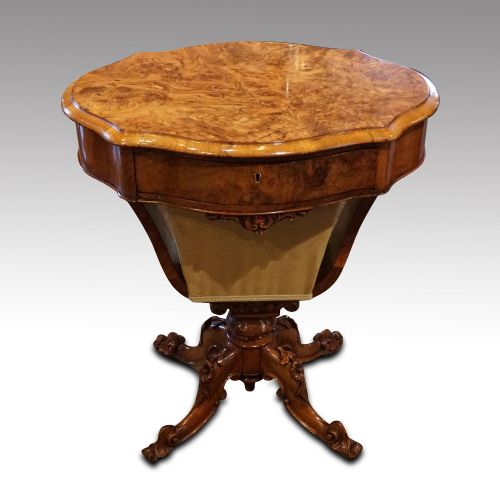


Fitted Sewing Table
When you handle a fitted sewing table, you are looking at a masterclass in domestic utility and fine cabinet-making designed for needlework and small crafts.

Fitted Sewing Table
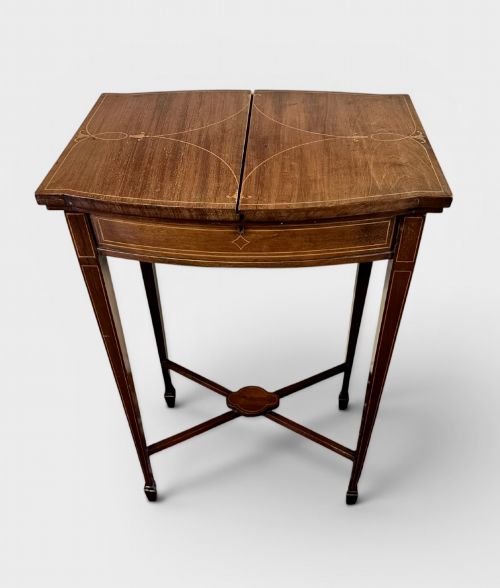
A fitted sewing table combines a stable surface for occasional use with internal compartments designed to hold threads, needles and unfinished pieces of work. These items appear across several distinct eras, spanning from the Georgian period through to the Edwardian age, taking the form of work tables, side tables and occasionally portable boxes.
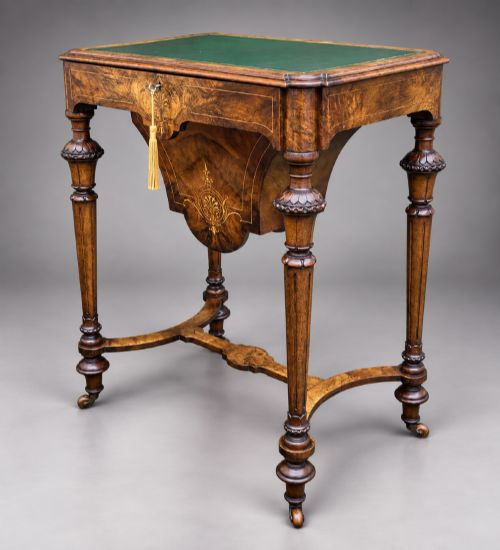
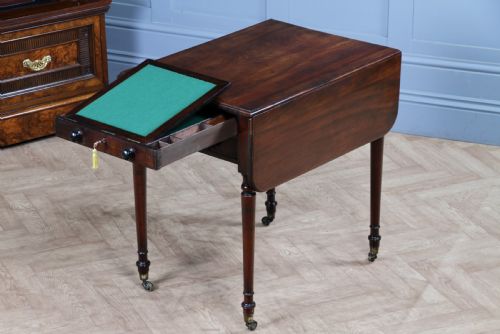
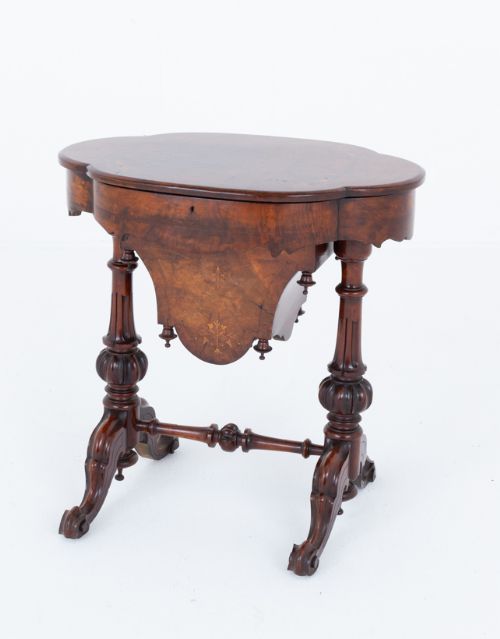
Victorian examples in burr walnut dominate the selection, often featuring elaborate marquetry, boxwood inlay and carved or turned supports. Earlier Georgian and Regency iterations lean towards mahogany, sometimes incorporating drop-leaf Pembroke designs or specialised writing drawers.
Alongside standard domestic formats, you encounter more distant origins including Chinese Export and Anglo-Indian variants. These pieces demonstrate how global trade and regional craftsmanship adapted the utilitarian sewing table to foreign timber and decorative vocabularies.
How they were made
Cabinet-makers relied primarily on mahogany and burr walnut as the principal timbers, utilising the distinct grain patterns of the latter for decorative veneering. Boxwood inlay and brass hardware frequently accent the exterior surfaces, while fabric lines the interior compartments and storage bags.
Construction techniques balanced structural rigidity with interior complexity, incorporating specialised drawers with fitted layouts, lift-up lids and cradle bases. Drop-leaf mechanisms on Pembroke tables allowed the top surface to expand when needed for sewing or writing tasks.
Fitted Sewing Table Retail Price Guide 2026
Typical asking prices for fitted sewing table among the pieces listed under this phrase on Sellingantiques today, from the lower quarter to the upper quarter. They describe what is for sale here now, not the wider market.
Materials span from standard mahogany and walnut to specialised boxwood inlay and papier-maché.
What varies in quality
Surface ornamentation reveals the ambition of the maker, moving from plain mahogany panels to intricate burr walnut marquetry and delicate boxwood stringing. The integration of structural supports, such as carved pedestals and tripod bases, further separates utilitarian pieces from high-status decorative examples.
The Fitted Sewing Table Glossary
- Burr walnut
- A figured timber derived from the excrescences of walnut trees, prized for its swirling grain patterns used in high-end Victorian veneering. It provides a highly decorative surface for table lids and cabinet fronts.
- Pembroke table
- A small occasional table featuring hinged flaps on either side that can be raised or lowered. These tables often incorporate a single drawer and slender legs.
- Marquetry
- The art of applying pieces of veneer to a structure to form decorative patterns and pictures. Makers utilised contrasting woods like boxwood to create geometric or floral motifs.
- Secretaire
- A desk or table containing a drawer that pulls out to reveal a writing surface and small compartments. In sewing tables, this combines needlework storage with correspondence facilities.
- Cradle base
- A supportive framework, often rocking or curved, that holds the main body of the work table above the floor. It offers stability while accommodating the swinging bag beneath.
Fitted Sewing Table: Frequently Asked Questions
What is a fitted sewing table?
A fitted sewing table is a specialised piece of antique furniture designed to hold needlework accessories, threads and small personal items within dedicated internal compartments. They typically feature a hinged top, a drawer with specialised dividers and sometimes an attached fabric bag.
These tables gained immense popularity during the Georgian and Victorian eras when hand sewing was a daily occupation for ladies of the household. They served a dual purpose as both a functional workbench and a decorative occasional table for the parlor.
How do I date a sewing table?
Dating a sewing table relies heavily on identifying the primary timber, the style of the supports and the decorative techniques used on the exterior. Georgian pieces frequently utilise mahogany with understated lines, while Victorian examples often showcase figured burr walnut and elaborate marquetry.
Hardware, such as brass pulls and escutcheons, alongside the construction of the internal drawers, provides further clues to the period of manufacture. Earlier 18th-century pieces tend to have simpler, robust forms compared to the ornate tripod and cradle bases of the mid-to-late 19th century.
Were these tables only used for sewing?
While primarily built for needlework, many fitted sewing tables included multi-purpose compartments that accommodated writing materials, jewellery or small personal documents. Some variants incorporated specialised writing drawers with fold-down surfaces.
Their compact size and movable nature meant they easily doubled as lamp tables or occasional side tables in sitting rooms. The addition of a fitted interior made them versatile receptacles for any small, valuable pastime items.
What are Chinese Export sewing tables?
Chinese Export sewing tables were manufactured in China during the 19th century specifically for the Western market. They typically utilised exotic local timbers and featured distinctive carved decoration or lacquered finishes.
These pieces combined traditional European furniture forms with Asian craftsmanship, often including intricately carved ivory fittings within the interior compartments. They represent a fascinating cross-cultural exchange in domestic furnishings.