
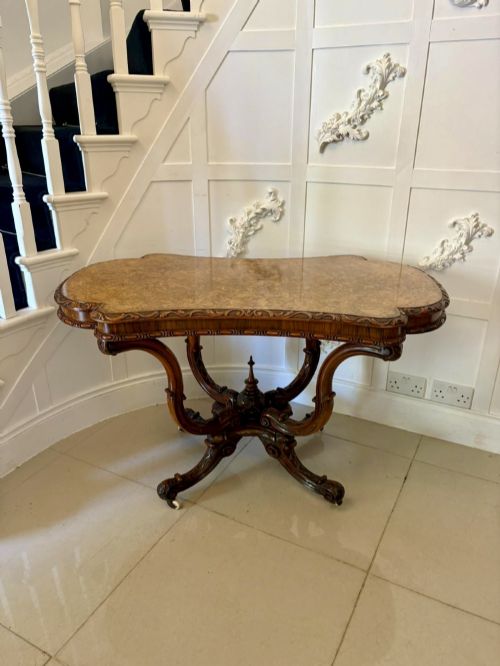
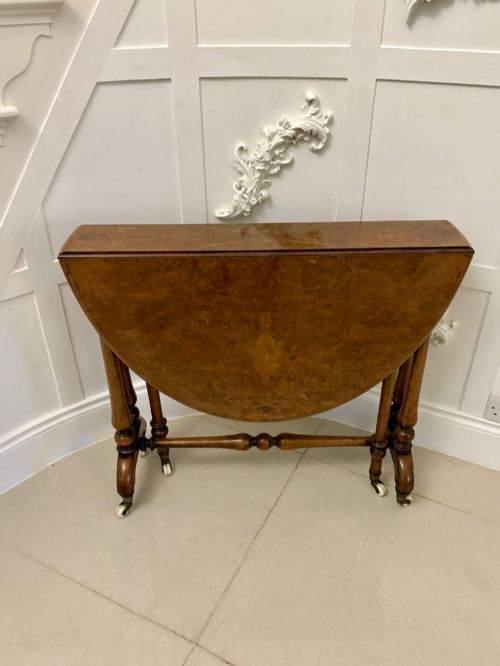
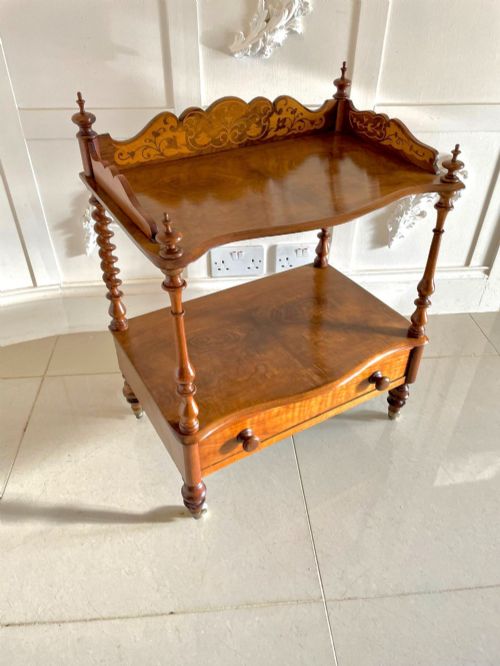

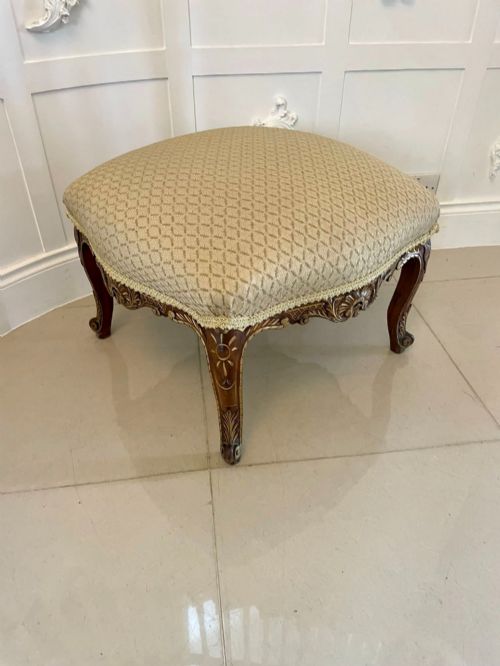
Victorian Walnut Accent Table
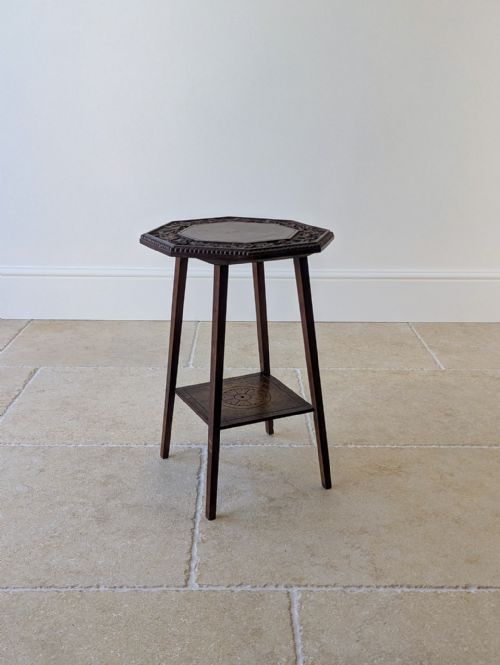
These victorian walnut accent table pieces bring rich timber figure and compact nineteenth-century utility to sitting rooms.

Victorian Walnut Accent Table
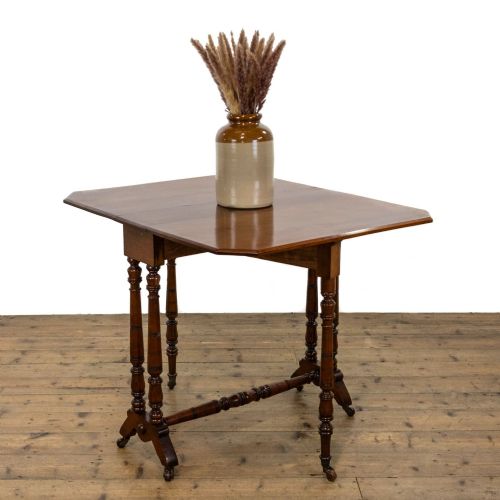
A victorian walnut accent table serves as a movable surface for lamps, books, or tea, appearing across nineteenth-century domestic spaces in varied forms. Buyers meet these mostly as occasional, lamp, or Sutherland tables shaped around central pedestals or slender legs.
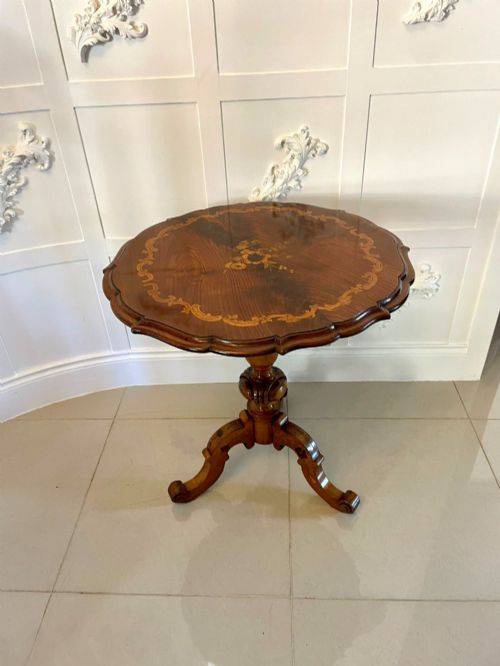
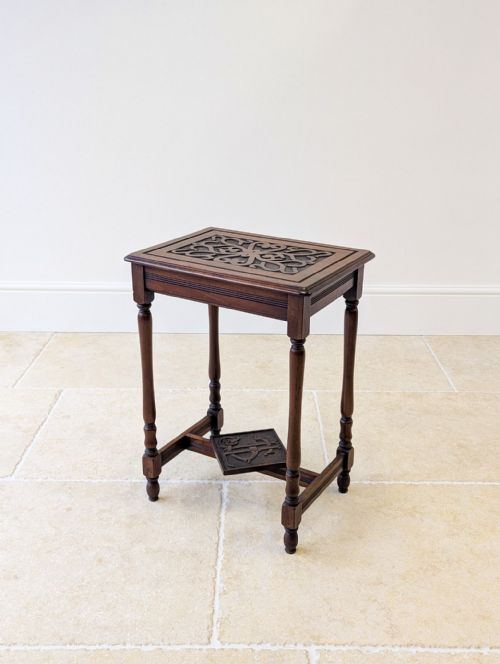
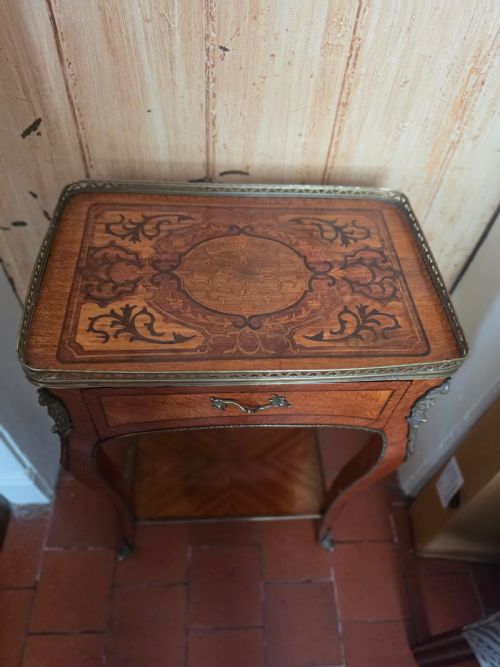
The selection spans the Victorian era into the Edwardian period, incorporating specific revivals like Louis XV style, Aesthetic movement, and Arts & Crafts designs. Forms include oval tops, trefoil shapes, and drop-leaf folding tables built for practical nineteenth-century living.
Materials and construction
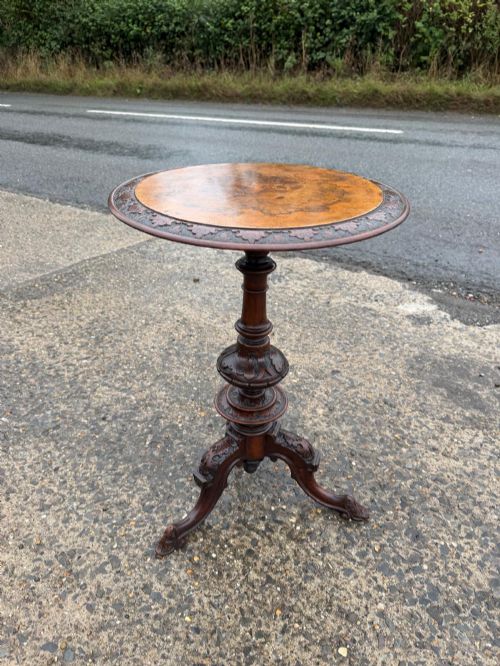
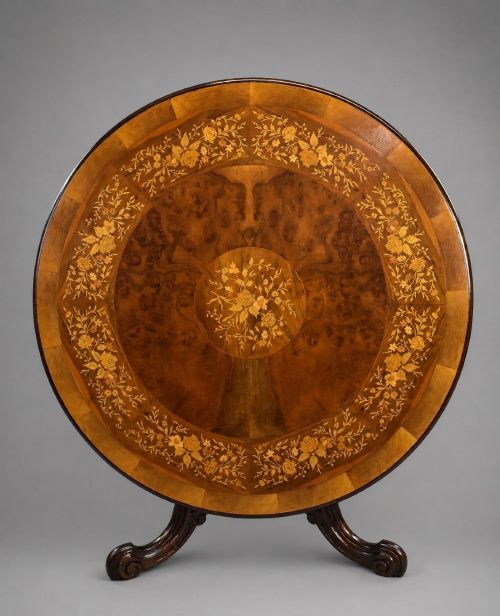
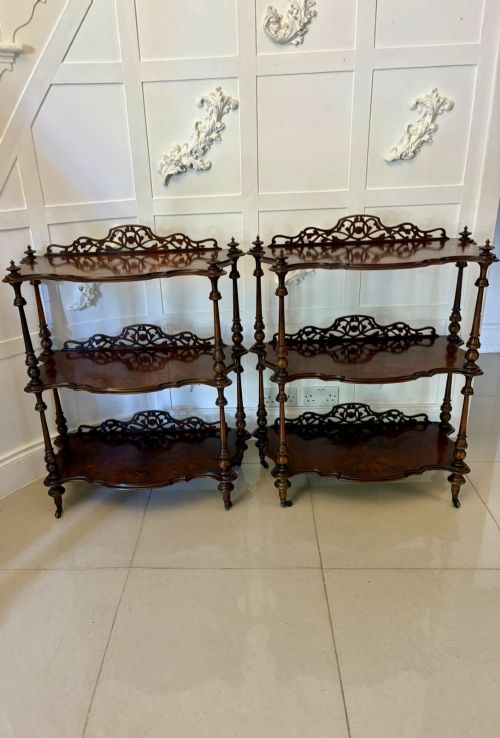
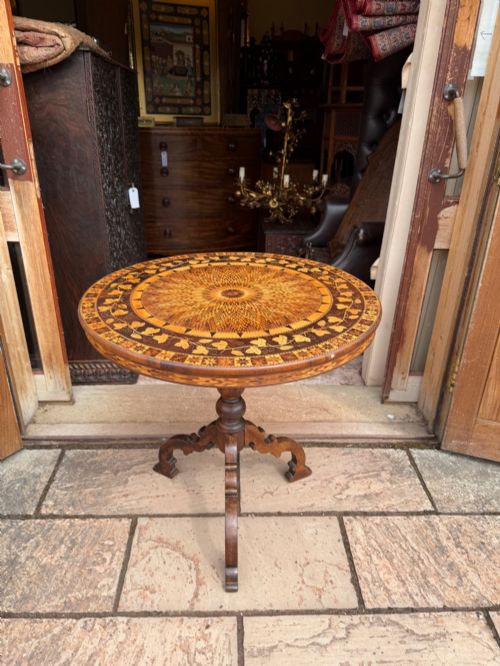
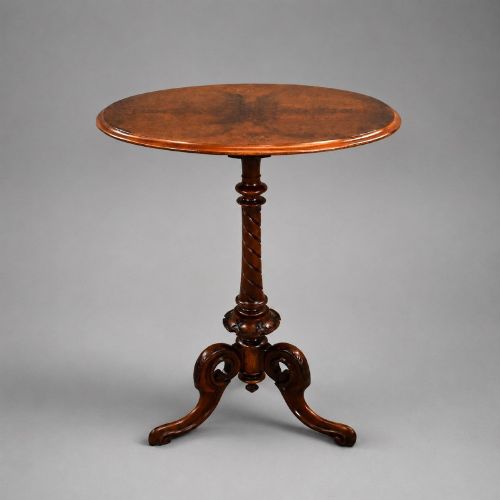
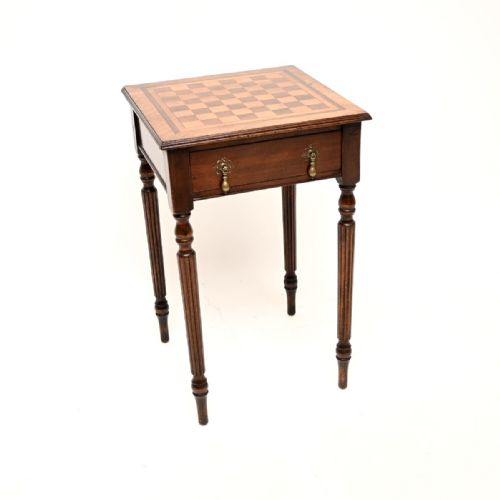
Cabinetmakers utilised solid walnut and figured burr walnut veneers, laid over secondary timbers to showcase rich grain patterns across table tops. Marquetry inlay, boxwood detailing, and brass fittings complete the decorative surface vocabulary.
Frames rely on turned barley twist stems, tripod supports, and cabriole legs, while hinged surfaces utilise folding wooden brackets on drop-leaf Sutherland models.
Table forms include occasional, lamp, centre, Sutherland, and gaming tables supported by pedestals, tripod bases, and bobbin legs.
Quality differences
Excellence lies in the choice of burr walnut veneer, where intricate natural figuring and balanced book-matching across the top dictate visual depth. Lesser examples display plain grain or uninspired timber selection.
Hand-cut marquetry and precise boxwood inlay separate finer workshop pieces from standard commercial production. Structural rigidity in pedestals and joints maintains stability over decades of daily use.
William Birch·Liberty of London
The Victorian Walnut Accent Table Glossary
- Burr walnut
- A timber harvested from walnut tree growths, producing highly figured, swirling grain patterns prized for table tops.
- Sutherland table
- A narrow drop-leaf table with hinged flaps that fold down almost vertically, designed to save floor space.
- Marquetry
- Decorative veneer work arranged in pictorial or geometric patterns using various coloured woods.
- Barley twist
- A turned wooden column carved in a spiral shape, common on nineteenth-century pedestals and legs.
- Trefoil
- A three-lobed shape resembling a clover leaf, often seen in the outline of occasional table tops.
Victorian Walnut Accent Table: Frequently Asked Questions
What is a Sutherland table?
A Sutherland table is a narrow drop-leaf design with folding flaps that drop down almost vertically. It was built for nineteenth-century rooms where space required flexible furniture.
When folded down, the table takes up minimal floor area and easily rests against a wall or beside a chair.
Where should I place an accent table?
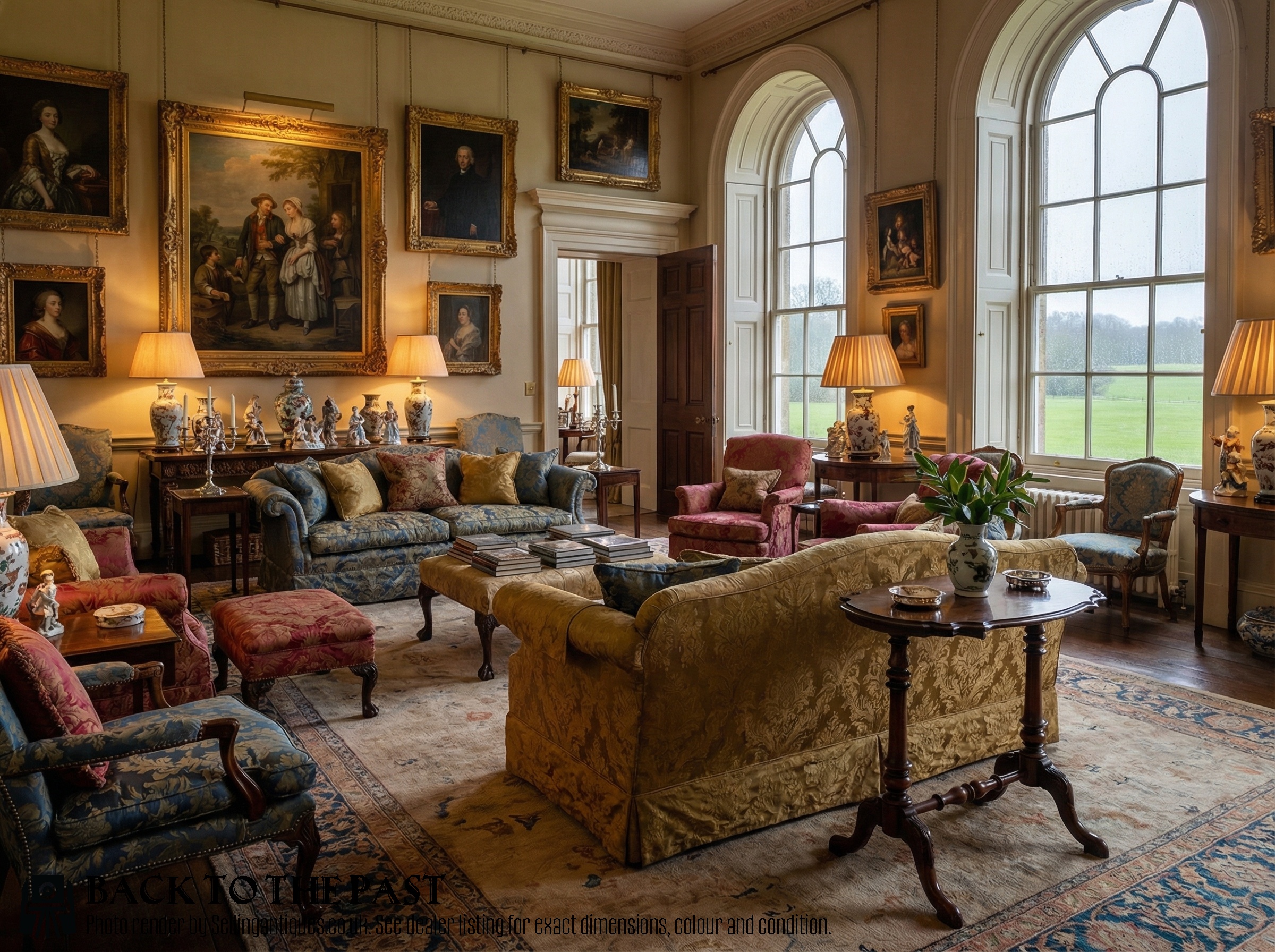
These tables suit sitting rooms as lamp tables, beside armchairs for holding books, or in hallways as decorative surfaces. Their compact nineteenth-century proportions allow them to fit into small spaces.
Avoid placing them in direct sunlight or near heat sources to protect the vintage walnut timber and polish.
How do I date a Victorian walnut table?
Dating relies on stylistic clues, construction methods, and timber choices recorded across the nineteenth century. Mid-century pieces often feature heavy burr walnut and elaborate carving, while later examples show Aesthetic or Arts & Crafts influences.
Turned leg styles, such as barley twists or slender cabriole supports, also point to specific decades within the Victorian and Edwardian periods.