





Victorian Carved Workbox
These victorian carved workbox examples are timber containers and tables built for needlework, offering fitted interiors that collectors prize for everyday storage.

Victorian Carved Workbox
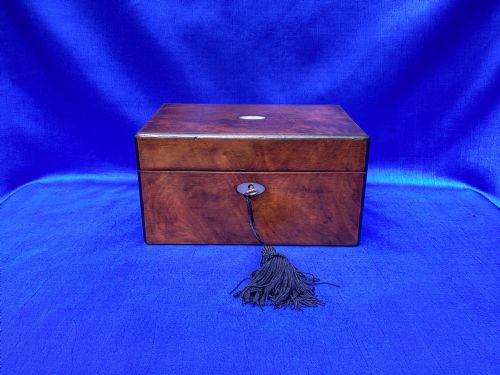
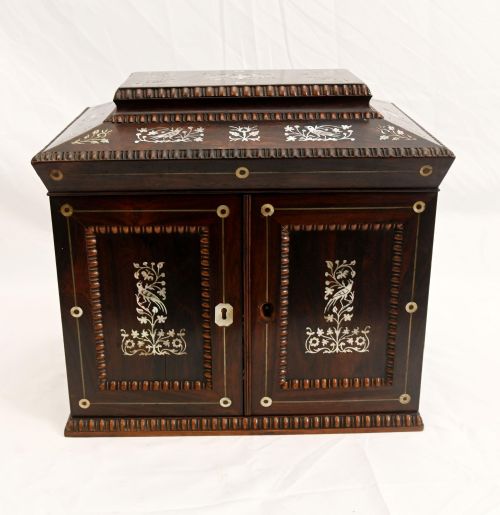
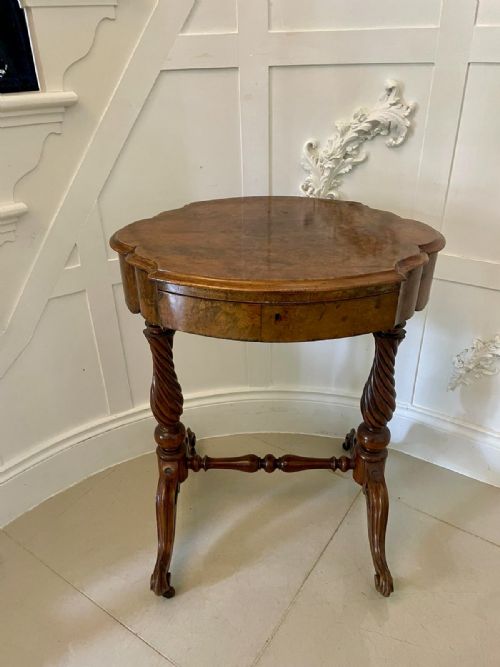
A victorian carved workbox encompasses portable desktop boxes and freestanding sewing tables designed during the nineteenth century. The selection ranges from compact rosewood and mahogany tabletop boxes to elaborate walnut trumpet tables equipped with internal compartments.
Most items on this page date from the Victorian era alongside occasional Edwardian and mid-nineteenth-century pieces. Buyers encounter forms including side tables, jewellery chests, and games tables alongside traditional sewing boxes.
Origins span English workshops to Anglo-Indian and nineteenth-century French productions, bringing diverse timbers and decorative schemes together. Tabletop versions sit on surfaces while freestanding trumpet models stand on tripod or pillar bases.
Materials and construction methods
Cabinet makers utilised dense hardwoods such as walnut, burr walnut, rosewood, mahogany, and coromandel for the primary structures. These rich timbers often featured figured grain patterns and decorative inlay work.
Surface ornamentation incorporated mother-of-pearl, bone, brass fittings, and intricate quill work or horn details on specialised imported pieces. Interiors typically lined themselves with fitted fabric compartments to hold sewing implements.
Trumpet tables cleverly hide your loose buttons inside an expanding octagonal skirt that refuses to sing.
Distinctions in construction and detail
Superior examples display crisp carving, tight timber joints, and carefully matched burr walnut veneers across the primary surfaces. Lesser pieces rely on simpler construction and plainer timber selections without decorative inlay.
The complexity of the interior arrangement and the intact survival of original fabric linings and compartmental trays elevate individual pieces. Finer workboxes incorporate specialised materials like mother-of-pearl or delicate bone and horn marquetry.
The Victorian Carved Workbox Glossary
- Trumpet table
- A freestanding sewing table featuring an octagonal or flared body resembling a musical instrument, supported by a pillar and tripod base.
- Burr walnut
- A prized timber harvested from walnut tree growths, displaying swirling, highly decorative grain patterns used for veneer work.
- Sarcophagus shaped
- A box profile featuring a steep sloped lid and stepped base reminiscent of an ancient stone coffin.
Victorian Carved Workbox: Frequently Asked Questions
What is a workbox used for?
These boxes served as portable or freestanding stations for storing sewing threads, needles, and small crafting tools.
Victorian ladies kept them in sitting rooms to organise ongoing needlework projects neatly out of sight.
How do I identify a trumpet table?
Trumpet tables feature a distinctive octagonal body that flares outward toward the top, resembling the bell of a musical instrument.
They usually stand on a central turned pillar supported by three carved feet.
Are these boxes made from solid wood?
Most pieces utilise pine or secondary timbers as a carcase, covered with decorative hardwood veneers like walnut or mahogany.
Finer sections and mouldings are frequently fashioned from solid hardwoods.
Where were Anglo-Indian workboxes made?
Anglo-Indian boxes were manufactured in workshops across the Indian subcontinent during the nineteenth century for export to Britain.
They often feature distinctive materials such as coromandel, sandalwood, and intricate horn or ivory ornamentation.