





Fitted Mahogany Drawers Desk
A fitted mahogany drawers desk brings together practical storage and a writing surface, offering period craftsmanship built for daily correspondence.
Fitted Mahogany Drawers Desk
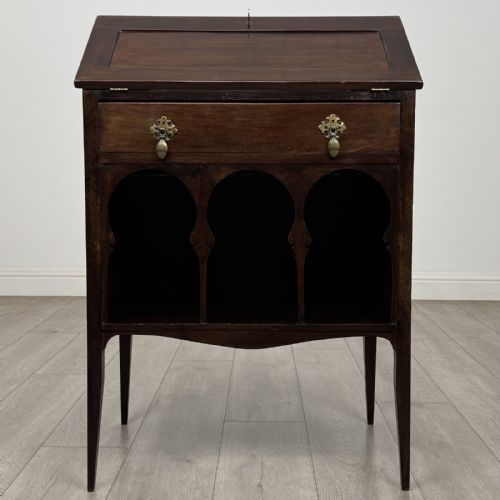
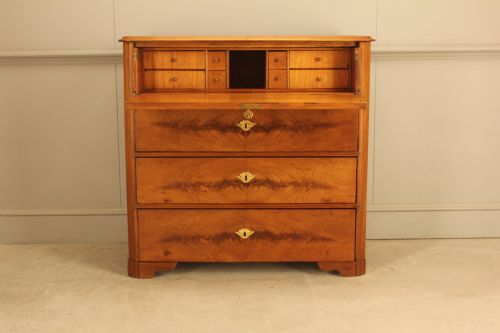
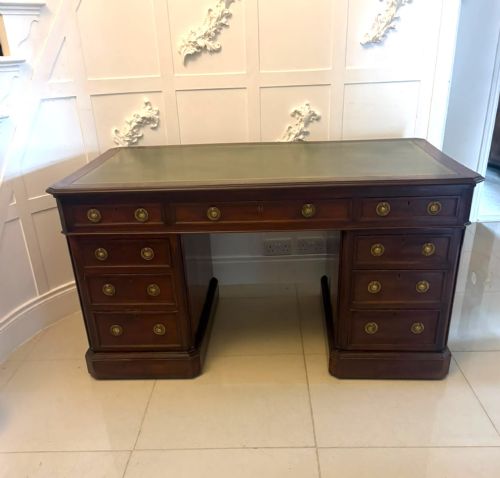
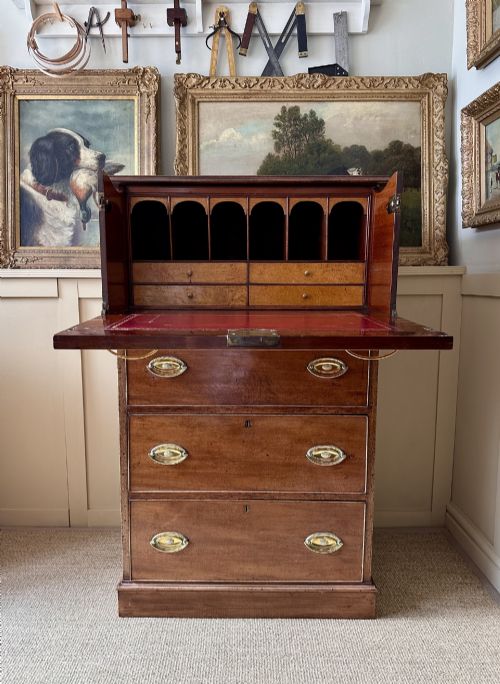
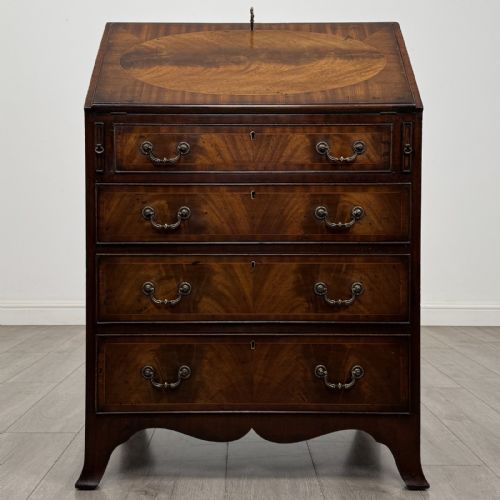
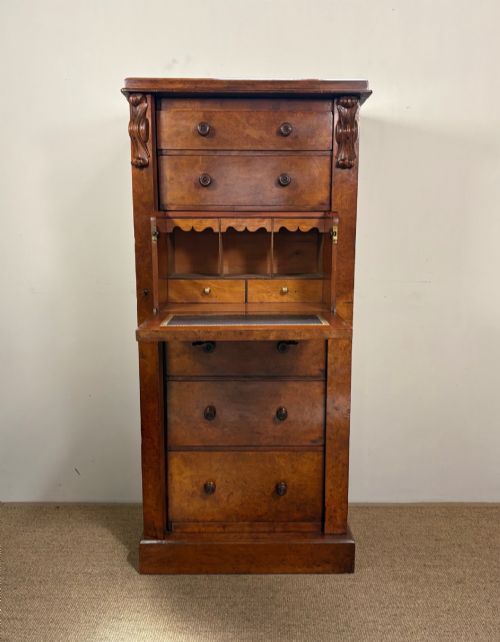
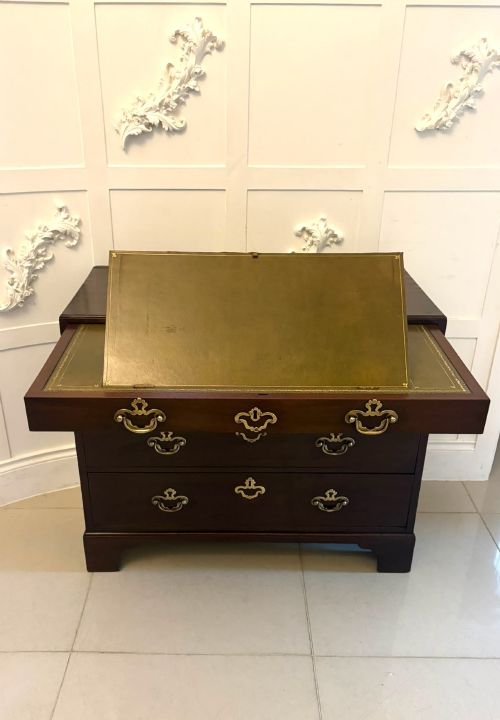
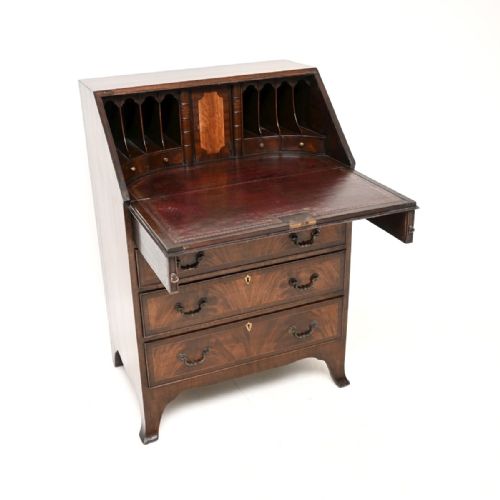
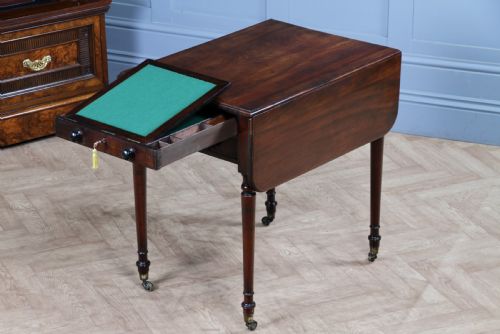
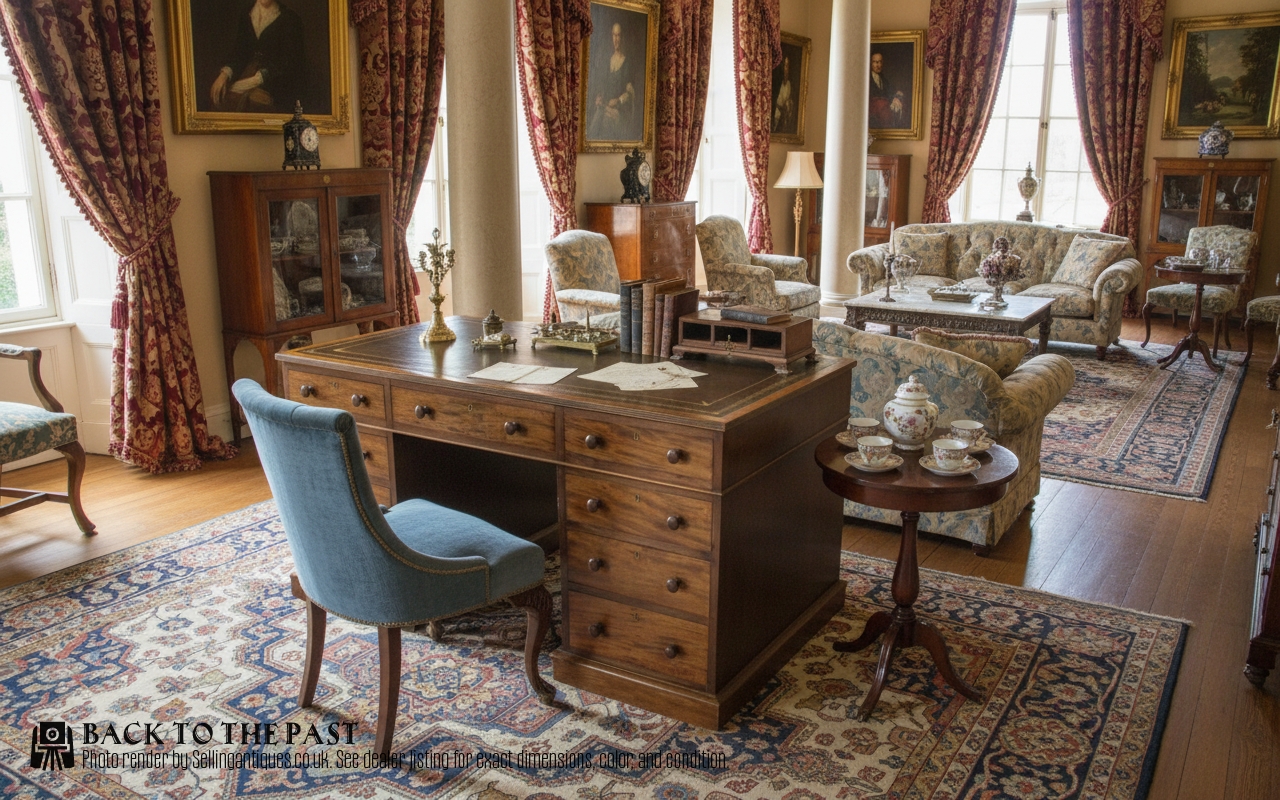
A fitted mahogany drawers desk spans centuries of woodworking, appearing as Georgian chests with drop fronts, Regency secretaire cabinets, and Victorian pedestal tables. When searching for a fitted mahogany drawers desk, buyers encounter forms that merge standard storage drawers with cleverly concealed writing compartments.
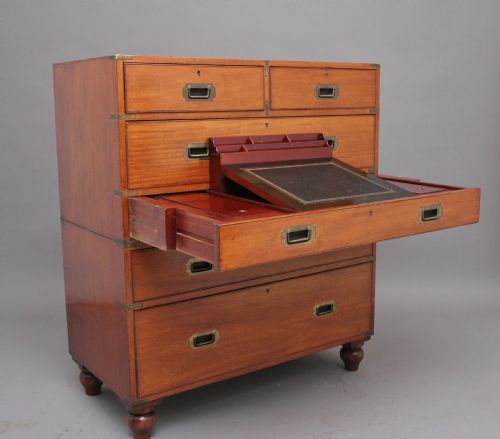
The pieces originating from the eighteenth and nineteenth centuries dominate the selection, crossing stylistic eras from George II through to Edwardian designs. These pieces range from tallboys and military campaign chests to compact side tables equipped with internal writing slides.
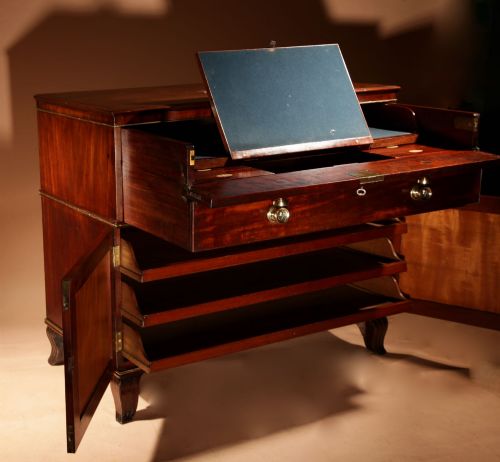
Bureau bookcases and secretaire chests represent the most prevalent iterations of this form. Each variant conceals small pigeonholes and fitted stationery drawers behind a fall-front panel or upper drawer fascia.
Materials and Construction
Cabinet makers relied primarily on solid mahogany and flame mahogany veneers, often supplemented by secondary woods such as oak for drawer linings. This dense tropical timber provided the structural stability required for intricate interior fittings and deep drawer carcasses.
Brass hardware, including flush campaign handles, key escutcheons, and quadrant hinges, reinforced corners and added functional detail. Writing surfaces frequently incorporated contrasting insets of leather or baize to provide a smooth plane for ink and quill work.
Joinery techniques involved meticulous dovetailing on drawer construction and frame assembly, ensuring internal fitted compartments remained rigid over centuries of use.
Fitted Mahogany Drawers Desk Retail Price Guide 2026
Typical asking prices for fitted mahogany drawers desk among the pieces listed under this phrase on Sellingantiques today, from the lower quarter to the upper quarter. They describe what is for sale here now, not the wider market.
Secret compartments hidden behind dummy book spines kept private correspondence safe from wandering eyes.
Assessing Quality
Quality rests in the precision of the internal mechanism and the harmony of the timber figure. Finer examples display symmetrical flame mahogany grain across the primary facade and tight, hand-cut dovetails within the hidden stationery drawers.
The integrity of the conversion from standard chest to secretaire, or the originality of the interior layout, dictates the standing of a piece within its period. Superior workshops employed thoughtful secondary timbers and robust brass fittings that operated smoothly without binding.
Gillows of Lancaster·William Trotter
The Fitted Mahogany Drawers Desk Glossary
- Secretaire
- A desk or chest of drawers featuring a pull-out or drop-front drawer that conceals a fitted writing interior.
- Dovetail
- A joint formed by interlocking wedge-shaped fingers, commonly used in drawer construction for superior tensile strength.
- Pedestal Desk
- A freestanding writing table supported by two columns of drawers beneath the desktop.
- Flame Mahogany
- Timber cut from the fork of the mahogany tree, displaying a distinctive flamed or fire-like grain pattern.
- Tallboy
- A tall chest of drawers made in two sections, stacking one case on top of another.
Fitted Mahogany Drawers Desk: Frequently Asked Questions
What is a fitted mahogany drawers desk?
A fitted mahogany drawers desk is a piece of antique case furniture designed specifically for writing and correspondence. It typically conceals small drawers and pigeonholes behind a fall front or upper drawer.
These pieces emerged strongly during the Georgian and Regency periods to meet the rising demand for personal organisation and letter writing. The exterior maintains the appearance of a standard chest or table while the interior provides specialised storage.
How do I identify a George III desk?
George III desks are identified by their classic proportions, use of solid mahogany or flame veneers, and refined brass hardware. The interior fittings often feature miniature arched pigeonholes and small central cupboards.
Construction details such as hand-cut oak drawer linings and straightforward bracket or ogee feet help confirm this eighteenth-century attribution.
Where were these desks used?
These desks served primarily in private libraries, drawing rooms, and estate offices where gentlemen and ladies managed correspondence. Military campaign versions also travelled with officers on colonial service.
The clever integration of storage allowed them to function as both everyday chests of drawers and dedicated writing stations in domestic spaces.
How do I care for mahogany?
Mahogany furniture requires stable indoor humidity away from direct sunlight and heat sources to prevent wood splitting or veneer lifting. Regular dusting with a dry, soft cloth preserves the natural sheen of the timber.
Leather and baize writing surfaces benefit from minimal moisture and occasional specialised wax treatment to maintain their suppleness without staining the surrounding wood.