



Fitted Interior Roll Desk
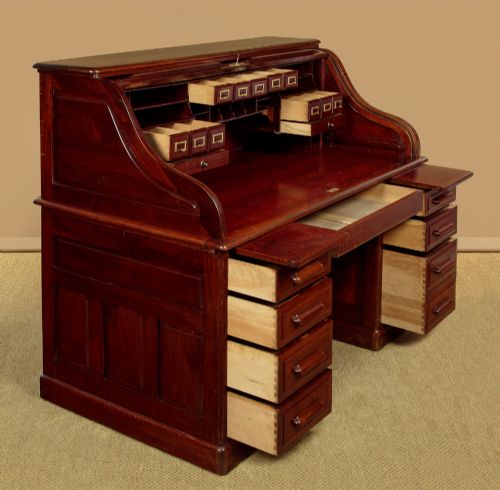
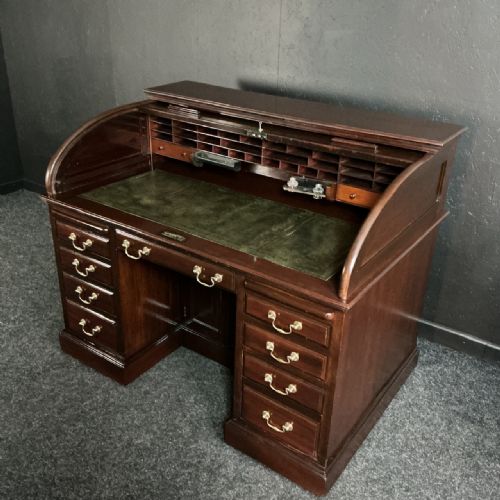
A fitted interior roll desk gives you a private workspace with neat pigeonholes and concealed drawers behind a curved tambour shutter.
Fitted Interior Roll Desk
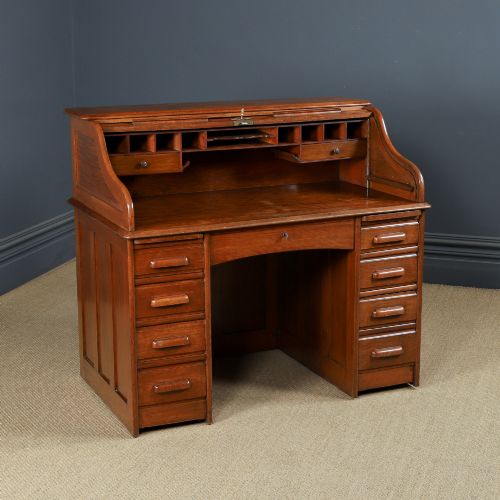
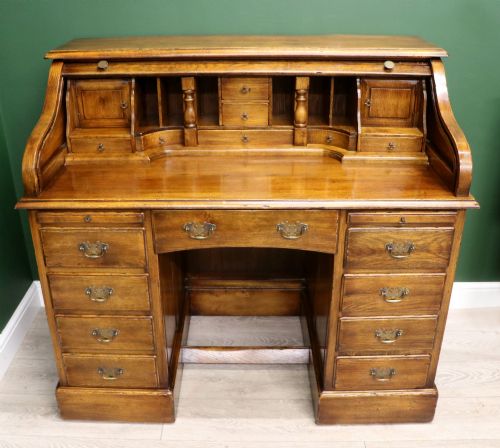
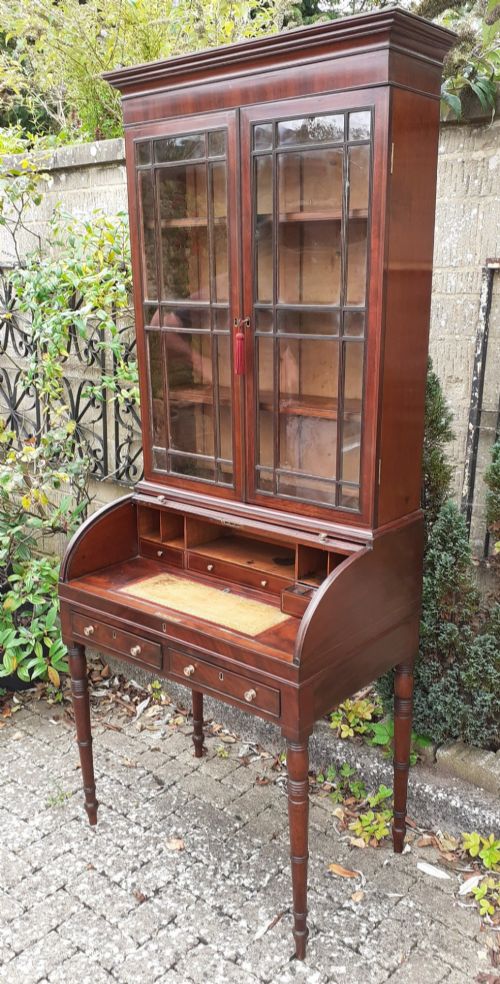
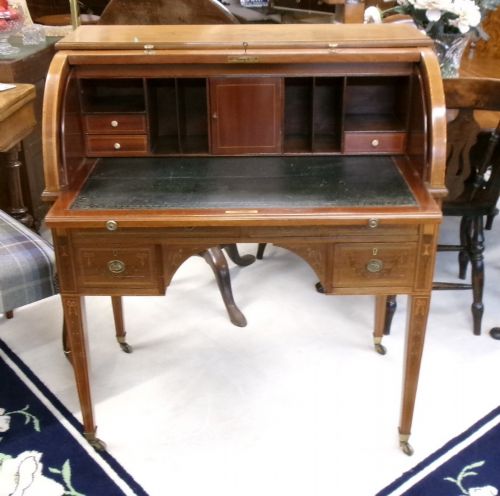
A fitted interior roll desk provides a practical writing station where a slatted wooden curtain pulls down to secure your papers and stationery out of sight. You will most frequently encounter sturdy oak and mahogany examples originating from the Edwardian and Victorian eras.
The form combines the enclosed security of a traditional bureau with the expansive writing surface of a pedestal desk. Many feature substantial multi-drawer arrangements alongside the internal compartments to handle everyday office storage needs.
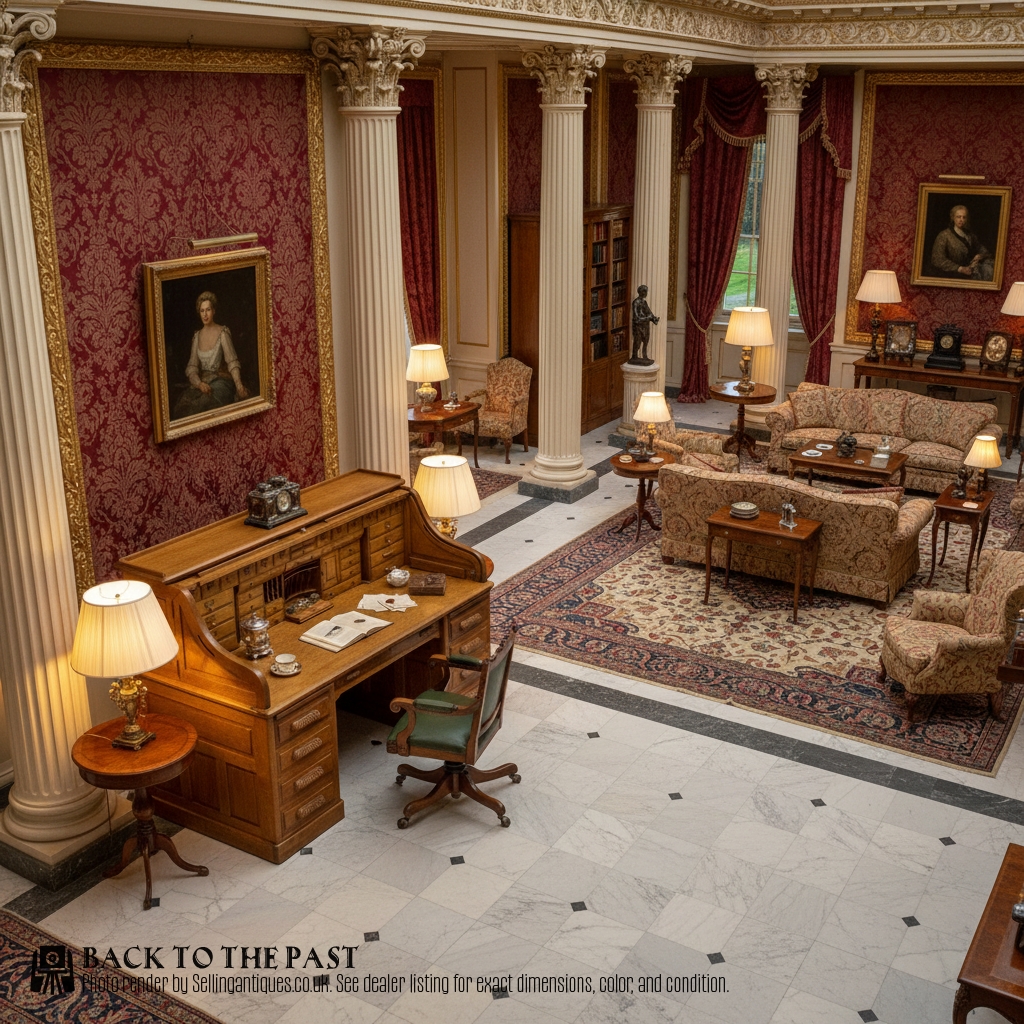
Makers adapted these desks for both grand studies and domestic home offices, resulting in variations ranging from compact single-pedestal formats to massive four-foot-wide executive pieces. The defining characteristic remains the slatted cylinder or roll top that operates on tracks to conceal the fitted stationery compartments.
Materials and construction
Cabinet makers relied primarily on solid and veneered timbers such as oak, walnut, and mahogany to build the robust carcases of these desks. Selected pieces incorporate finer decorative elements like satinwood inlay to accent the writing surfaces and drawer fronts.
The signature tambour shutter is constructed from narrow vertical strips of wood glued to a flexible canvas or leather backing, allowing the curtain to curve smoothly around tracks. Brass handles, escutcheons, and hinges provide durable operational hardware across the drawers and cupboard doors.
Interior sections utilise precise joinery to create miniature drawers, pigeonholes, and document slots that require careful hand-fitting. Leather inserts frequently top the pull-out or fixed writing beds to provide a smooth, durable surface for daily correspondence.
Listings feature woods spanning oak, mahogany, walnut, and satinwood alongside brass hardware and leather writing inserts.
Assessing quality and craftsmanship
The complexity and finish of the internal fitted compartments separate standard utility models from finer workshop productions. Better pieces showcase superior dovetail joinery on the drawer construction and heavier, more substantial brass hardware.
The overall structural integrity of the pedestal framing and the quality of the secondary timbers used in hidden areas indicate the standard of original manufacture. Desks bearing recognised maker stamps or retailing marks often reflect a higher tier of period craftsmanship.
Tudor & Burrey Shrewsbury·Boston Chair Company·Maples of London and Paris
The Fitted Interior Roll Desk Glossary
- Tambour
- A flexible shutter made of narrow wooden slats glued to fabric backing. It slides along curved grooves to conceal the desk interior.
- Cylinder top
- A solid or veneered curved wooden lid that rotates on a pivot rather than flexing on tracks like a tambour shutter.
- Pedestal desk
- A heavy freestanding writing table supported by two vertical banks of drawers rather than simple legs.
- Pigeonhole
- A small, open compartment built into the upper interior of a desk for sorting letters and documents.
- Escutcheon
- A protective metal plate surrounding a keyhole, frequently cast in brass on quality period furniture.
Fitted Interior Roll Desk: Frequently Asked Questions
How do I maintain the roll top mechanism?
Keep the wooden tracks clean and free from dust by occasionally wiping them with a dry cloth. Avoid using heavy household oils or silicone sprays that can attract grit and damage the canvas backing of the tambour.
Ensure the room maintains stable humidity levels to prevent the wooden slats from swelling and sticking in their runners. Gentle operation will keep the flexible curtain sliding smoothly along the curved grooves for decades.
Are these desks suitable for daily laptop use?
Many period desks provide ample surface area and depth to accommodate modern computing equipment comfortably. You should measure the width of your specific keyboard and screen against the available writing bed before purchasing.
Consider the clearance height beneath the interior pigeonholes to ensure your screen fits when the desk is open. The enclosed compartments also provide convenient hidden storage for charging cables and accessories.
How can I date an Edwardian oak desk?
Edwardian pieces typically date from the early twentieth century and often display simpler, cleaner lines than heavily carved Victorian furniture. Oak was the predominant timber for commercial office models produced during this period.
Look for construction clues such as machine-cut dovetails, brass locks stamped with period registry marks, and original retailer labels. These details help narrow down the manufacturing decade within the broader Edwardian era.