


Fitted Interior Cabinet
A fitted interior cabinet organises documents, instruments or glassware behind panelled doors using clever compartments and hidden drawers.
Fitted Interior Cabinet
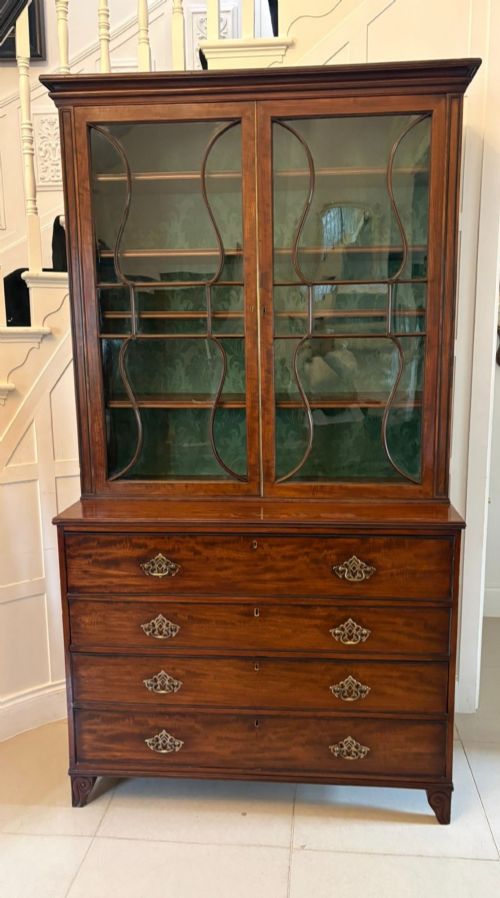
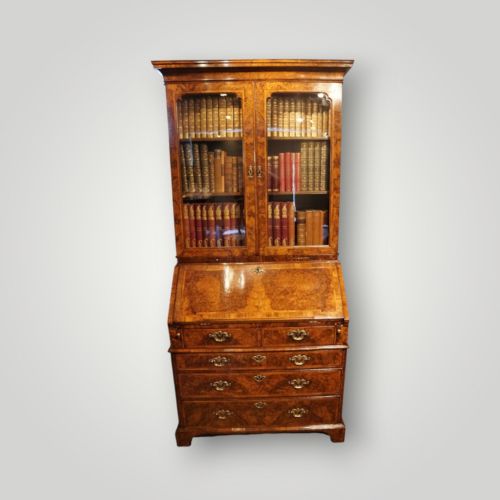
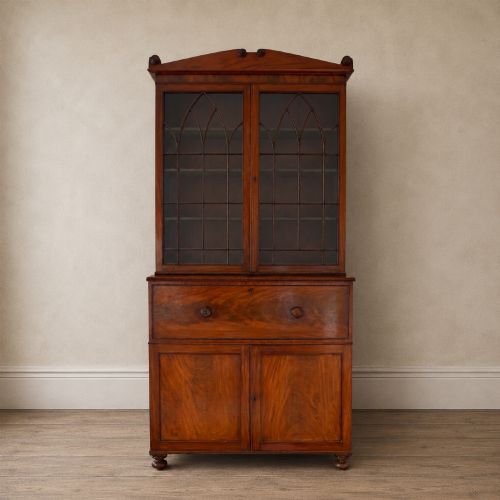
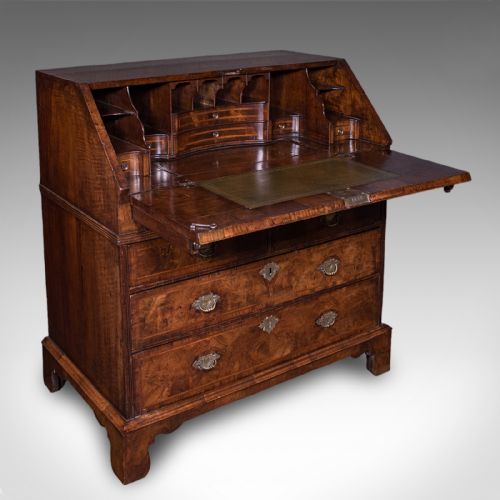
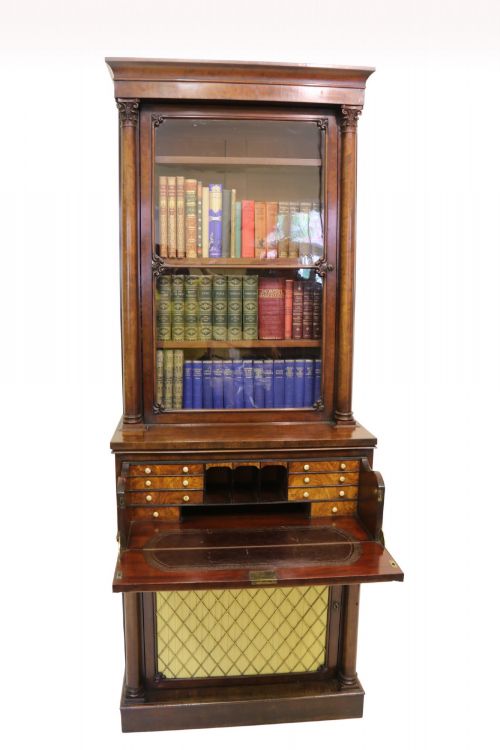
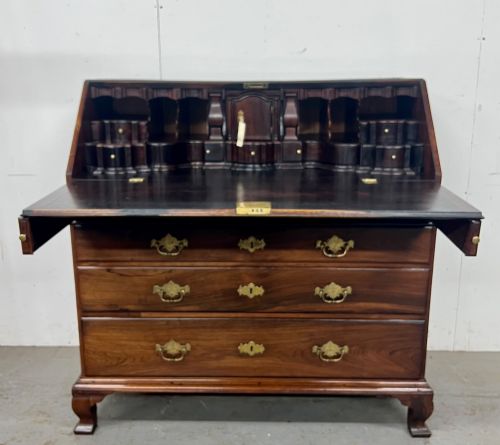
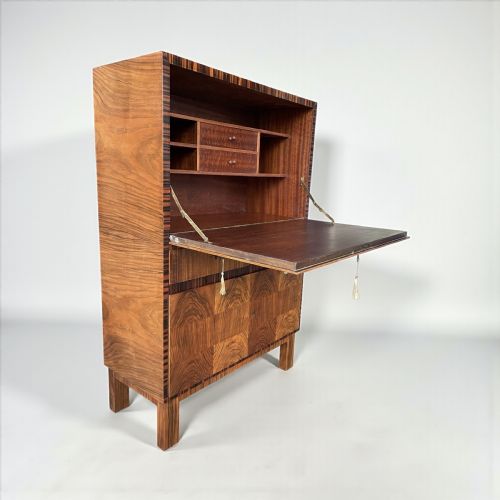
A fitted interior cabinet brings together workspace and storage, appearing most frequently as bureau bookcases, secretaires, writing cabinets and cocktail cabinets across this selection.
Makers constructed these pieces during the Georgian, Regency, Victorian and Edwardian eras, alongside walnut examples referencing Queen Anne and George I designs.
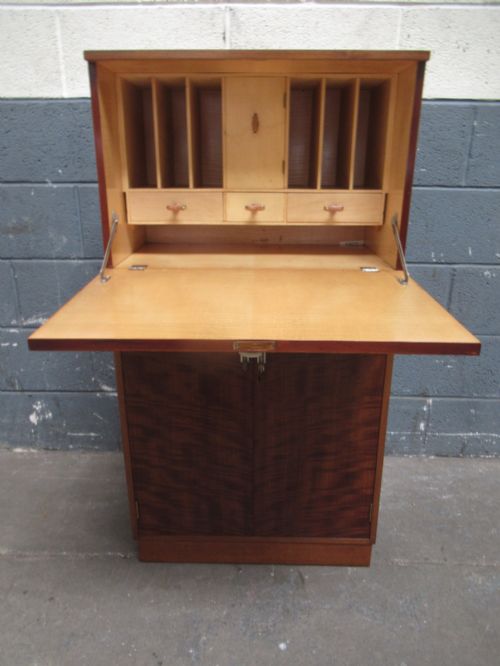
Twentieth-century pieces introduce Art Deco cocktail cabinets with fitted mirrored interiors alongside oak and satinwood writing desks.
Materials and construction
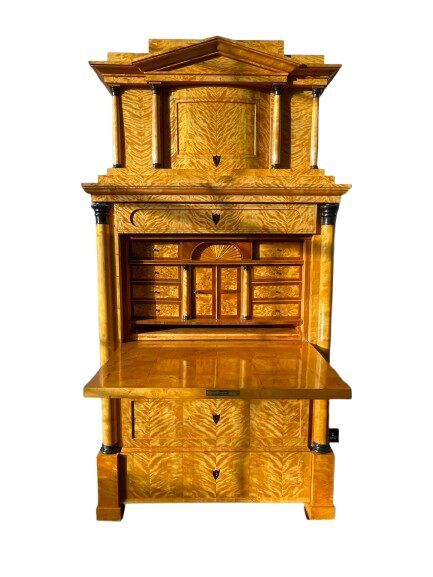
Cabinet makers utilised dense hardwoods including mahogany, walnut, oak and rosewood, frequently applying burr veneers and figured grains to exterior surfaces.
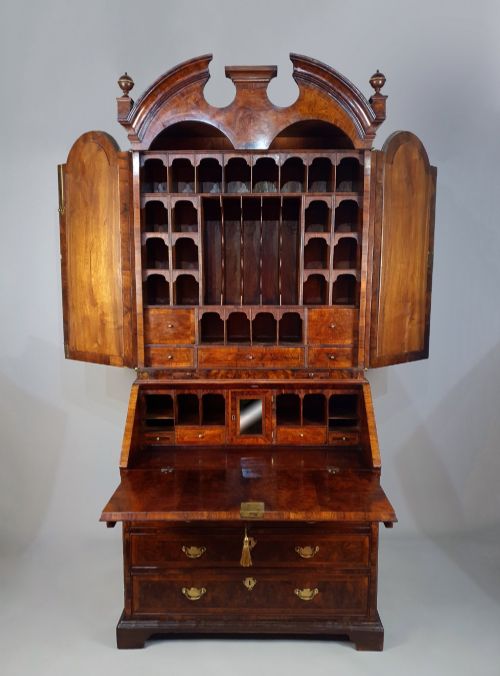
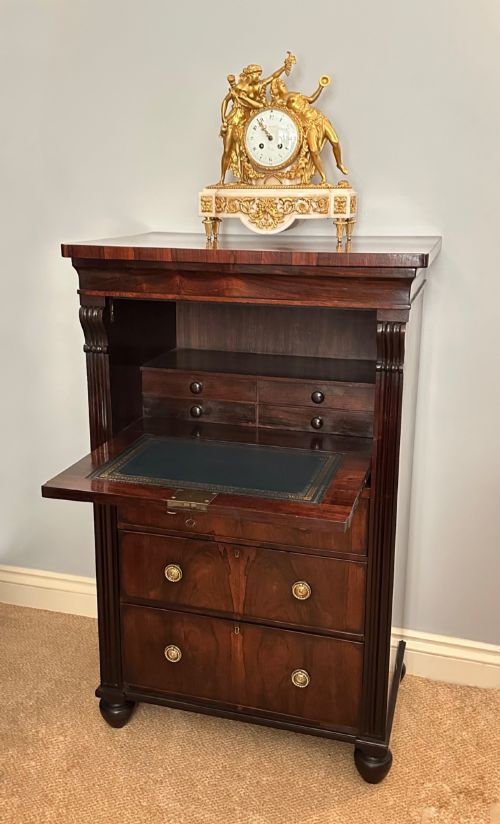
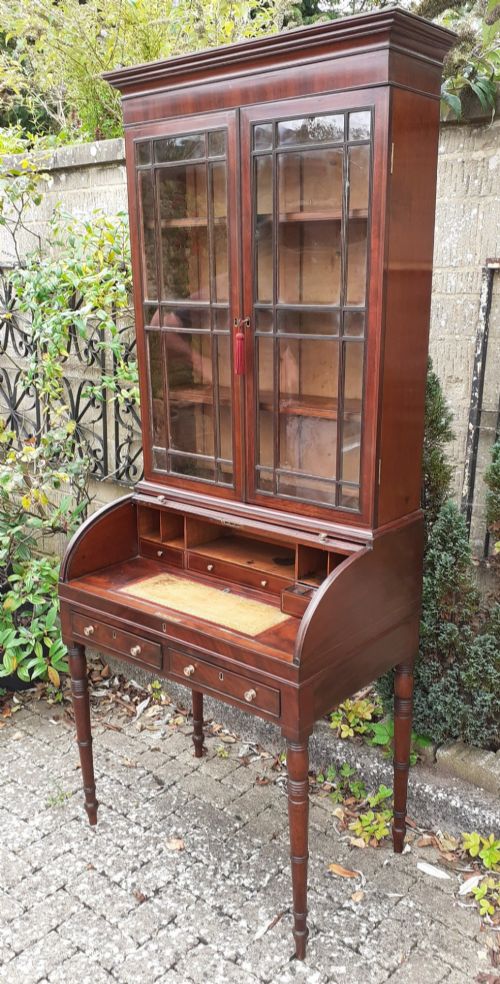
Brass hardware, glass door panels and leather writing surfaces appear alongside specialised internal joinery such as secret drawers, pigeonholes and sliding trays.
Several cabinets conceal hidden compartments and secret drawers designed to outwit curious guests and protect private letters.
Judging execution
The refinement of internal pigeonholes, secret compartments and miniature drawer dovetails separates standard cabinet work from exceptional workshop production.
Timber selection governs overall visual impact, distinguishing matched figured veneers and solid hardwoods from plain secondary woods.
Tudor and Burrey·Gillows of Lancaster·Harry and Lou Epstein
The Fitted Interior Cabinet Glossary
- Secretaire
- A desk or cabinet featuring a drop-front writing flap that conceals an arrangement of small drawers and pigeonholes. This form allows a writing surface to fold away neatly when not in use.
- Wellington chest
- A tall, slender chest of drawers secured by a hinged locking side bar that fastens with a key. These cabinets typically house numerous shallow internal drawers.
- Fall-front
- A hinged writing surface or door that drops down into a horizontal position for use. It rests flat against support arms or chains when lowered.
- Cylinder cabinet
- A piece featuring a quarter-circle rotating roll-top cylinder that conceals a pull-out writing slide and internal compartments. This mechanism protects the desk surface while maintaining a clean profile.
Fitted Interior Cabinet: Frequently Asked Questions
What is a fitted interior cabinet?
A fitted interior cabinet is a storage piece containing specialised internal compartments, small drawers, pigeonholes or racks designed to organise specific items such as letters, books, tools or glassware.
These pieces range from tall bureau bookcases and secretaire desks to low cocktail cabinets and tool chests.
How were these cabinets used historically?
Owners utilised these pieces primarily for writing correspondence, managing household accounts, storing valuable documents or serving drinks.
Internal compartments kept inkwells, paper and personal seals neatly arranged behind locked exterior doors.
How do I identify the period of a cabinet?
Period identification relies on observing timber choices, construction techniques, hardware styles and overall architectural proportions.
Early eighteenth-century pieces often feature burr walnut and simple candle slides, whereas Regency and Victorian examples lean towards figured mahogany and rosewood.
How should I care for a vintage cabinet?
Proper maintenance involves keeping wooden surfaces away from direct sunlight and maintaining stable room humidity to prevent veneer cracking.
Periodic application of appropriate wax polish helps preserve the finish of the hardwood timber.