





Fitted Compactum Wardrobe
A fitted compactum wardrobe organises hanging space, drawers and shelving into one substantial piece of bedroom furniture.
Fitted Compactum Wardrobe
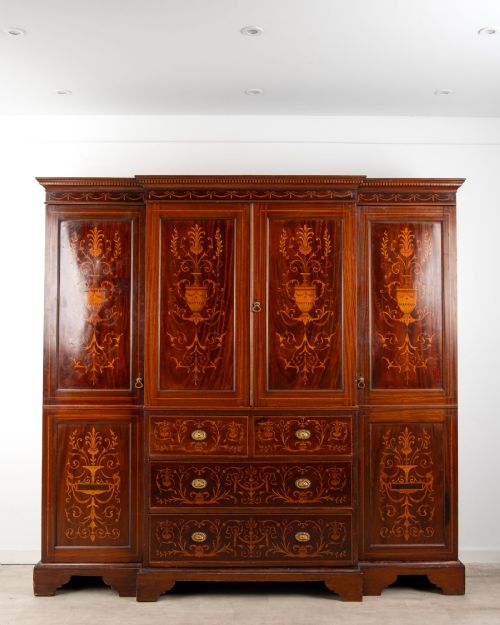
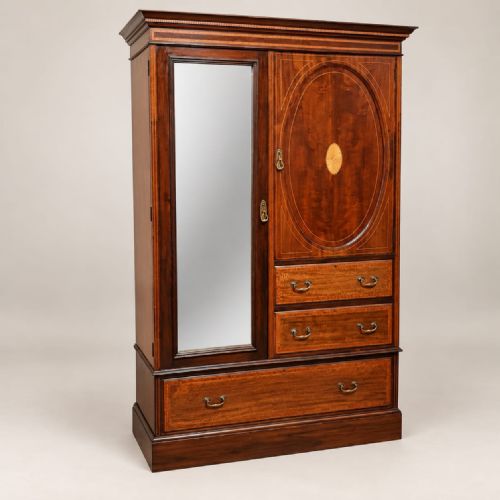
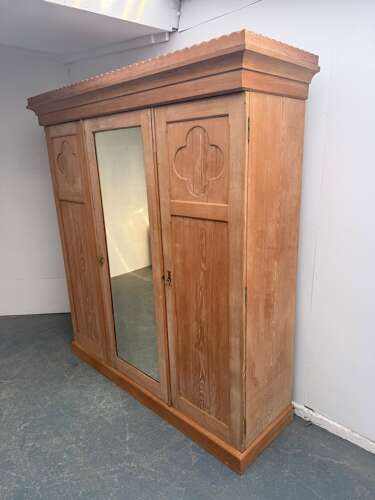
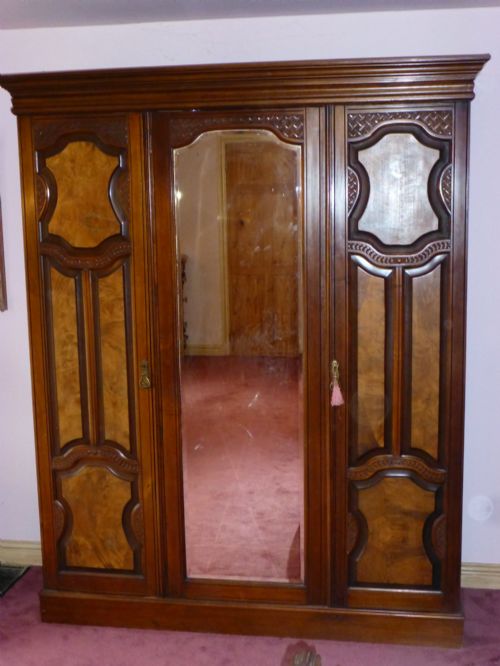
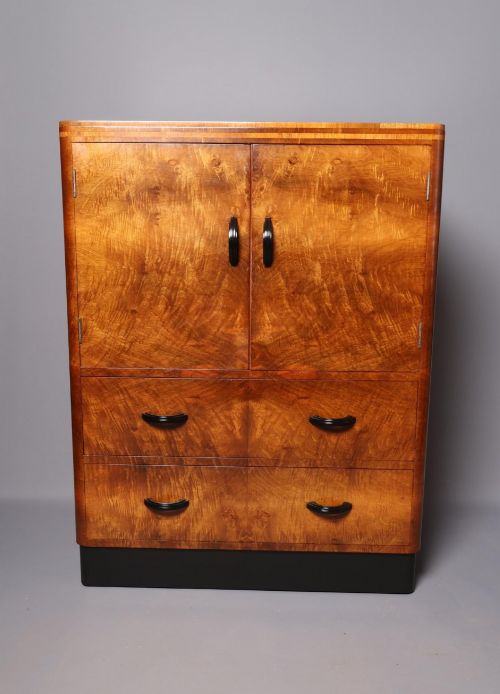
A fitted compactum wardrobe combines the functions of a wardrobe, a tallboy and a chest of drawers into a single piece of bedroom furniture. When searching this phrase, buyers encounter large storage items originating from periods including the Georgian era, the Victorian era, the Edwardian period and the 1930s.
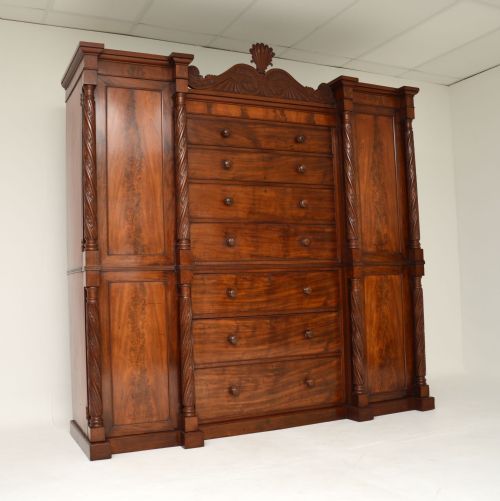
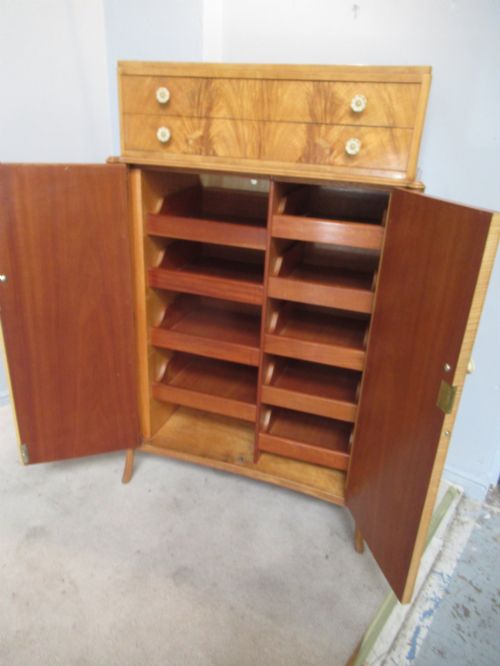
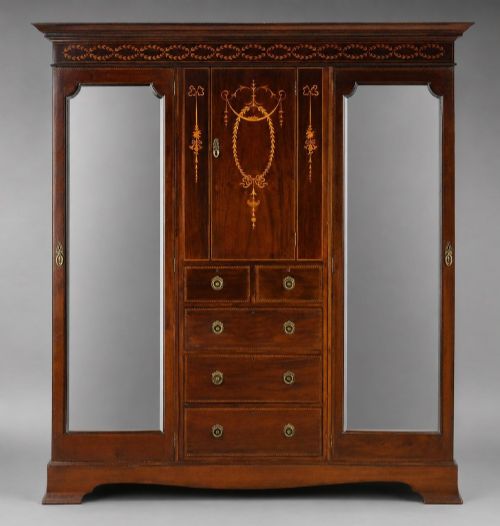
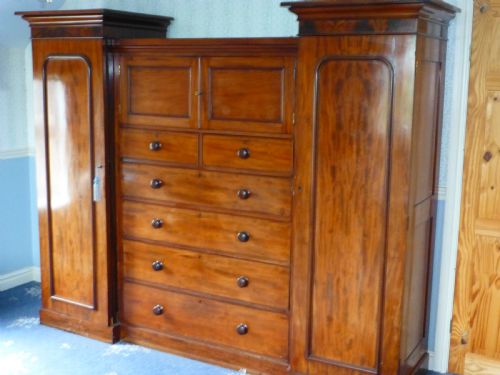
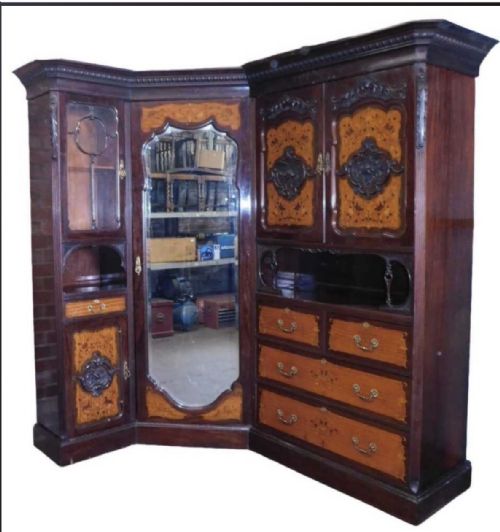
Many examples span multiple sections, such as triple or four-door breakfront formats, incorporating hanging compartments flanked by linen presses or gentleman's chest configurations. These storage pieces appear in timbers like mahogany, walnut, oak and ash, often featuring internal sliding trays and fitted drawers.
How they were made
Cabinetmakers constructed these large storage items using solid hardwoods and decorative veneers over secondary carcases, employing flame mahogany, burr walnut, satinwood and birds-eye maple. Panels were set into frames to accommodate seasonal wood movement, while internal sliding trays and drawer boxes utilised traditional dovetail joints.
What varies in quality
The distinction between tiers of production rests on timber selection and internal cabinetry. Pieces utilising highly figured flame mahogany veneer, burr walnut or select satinwood reflect more ambitious workshops than standard plain pine or utilitarian oak iterations.
Construction complexity also separates standard builds from superior examples, such as breakfront facades, intricate marquetry inlay, and fully fitted internal compartments with original sliding linen trays and secure locking mechanisms.
Holland and Sons·Gillows·Maple and Co·Edwards and Roberts
The Fitted Compactum Wardrobe Glossary
- Compactum
- A multi-functional wardrobe combining hanging space, drawers and shelving within one piece of furniture. This configuration offers extensive storage compared to standard single-hanging wardrobes.
- Breakfront
- A piece of furniture where the central section projects forward from the flanking wings. This architectural arrangement creates depth and visual weight.
- Gentleman's chest
- A storage piece featuring a chest of drawers beneath upper cupboard doors or a linen press. It traditionally served to store folded shirts and accessories.
- Marquetry
- Decorative veneer work arranged in pictorial or geometric patterns using various woods. Craftsmen cut contrasting veneers to fit precisely within a prepared ground.
- Linen press
- An upper cupboard fitted with internal sliding shelves or trays designed for storing folded textiles. These sections sit atop a base section containing drawers.
Fitted Compactum Wardrobe: Frequently Asked Questions
What is a fitted compactum wardrobe?
A fitted compactum wardrobe is a large multi-purpose storage unit that integrates hanging space, linen trays and drawers into a single architectural piece. These pieces were designed to accommodate a complete gentleman's or lady's wardrobe within one footprint.
They often feature central mirrored doors flanked by hanging compartments or enclosed drawer stacks. The internal layout distinguishes them from standard wardrobes by offering dedicated spaces for folded garments alongside hanging apparel.
How do I identify the period?
Periods are identified through a combination of timber choice, decorative motifs and overall structural form. Georgian and William IV examples favor heavy solid mahogany and classical proportions, while Victorian pieces often showcase figured flame mahogany and elaborate breakfront cornices.
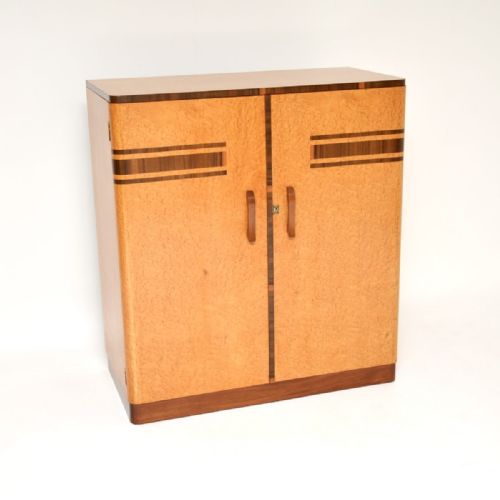
Edwardian items frequently display satinwood inlay and lighter mahogany or walnut frames, whereas 1930s Art Deco pieces utilise birds-eye maple and streamlined geometric surfaces. Hardware styles and construction methods inside the drawers also provide clear dating clues.
Will a compactum dismantle for transport?
Most large compactum wardrobes are constructed to dismantle into manageable sections for transport and installation. They typically separate into a cornice top, a heavy plinth base, and individual hanging or drawer carcasses.
Because these pieces were built for substantial Victorian and Edwardian bedrooms, dismantling is usually necessary to move them between rooms. Securing the loose internal trays and removing the doors beforehand ensures safe transit.
How should I care for the timber?
Timber surfaces require stable environmental conditions away from direct heat sources and strong sunlight to prevent veneer cracking. Regular dusting with a soft cloth maintains the finish without chemical buildup.
Applying traditional beeswax occasionally nourishes polished hardwood surfaces like mahogany and walnut. Avoid excessive moisture and keep internal linen trays clean to preserve the original interior linings.