
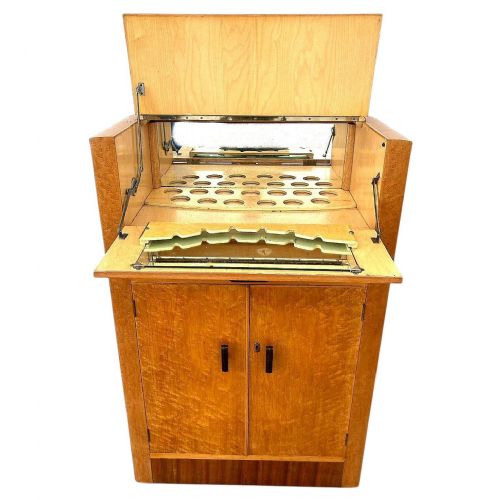
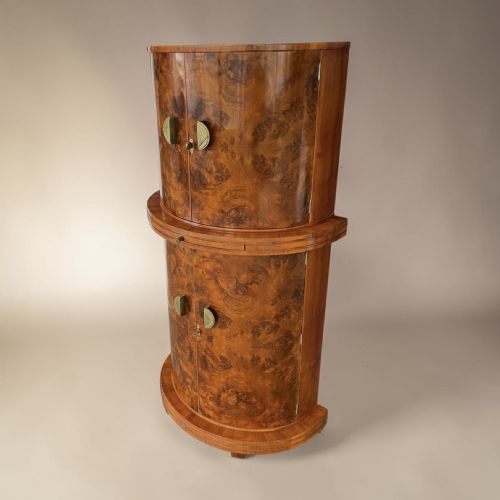


Fitted Cocktail Cabinet
A fitted cocktail cabinet is a designated entertaining station, combining internal storage with mirrored surfaces for serving drinks.
Fitted Cocktail Cabinet
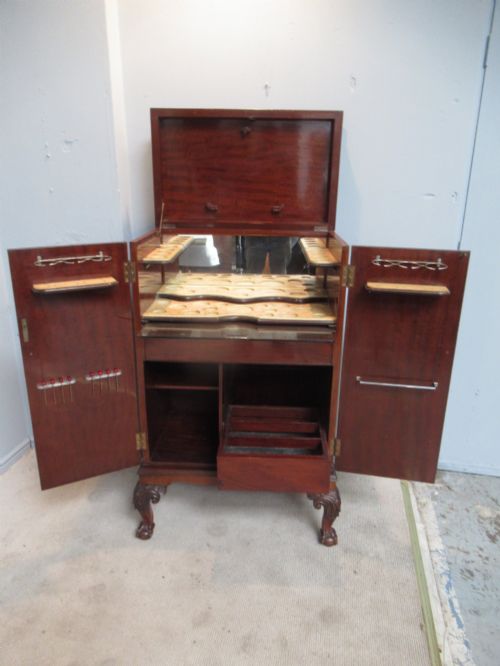
A fitted cocktail cabinet serves as a dedicated piece for entertaining, designed to hold bottles, glassware, and mixing equipment within a secure enclosure. The selections here span the Edwardian period, 1900, 1910, 1920, and 1930, capturing both early transitional forms and later modernist interpretations.
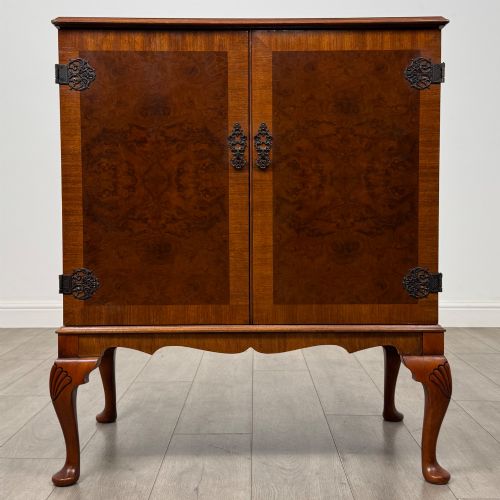
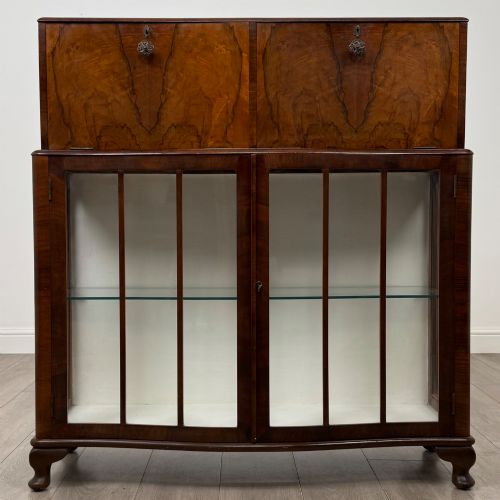
The version most frequently encountered is the Art Deco walnut or burr walnut model from 1930, often built with symmetrical grain patterns and specialised internal fittings. Alongside these, earlier revival styles appear, including Chippendale Revival and Queen Anne Revival pieces in mahogany and oak.
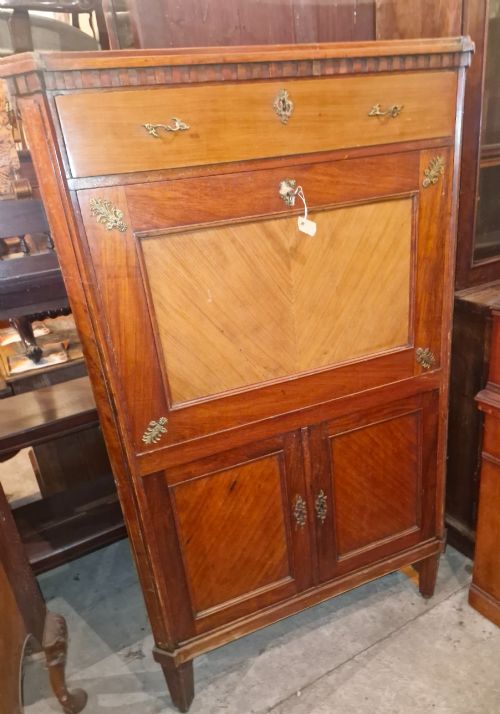
Object variations include standard drinks cabinets, corner cabinets, drinks trolleys, and metamorphic bureau forms. These items reflect changing domestic social habits across the early twentieth century, moving from formal enclosed storage toward specialised display.
Materials and construction
Makers utilised a foundation of solid woods such as oak and mahogany, applying decorative veneers like burr walnut, figured walnut, and bird's-eye maple to the exterior surfaces. These veneers were selected for their rich grain patterns, which defined the visual character of the finished piece.
Interiors frequently incorporated mirror glass panels, glass shelves, and brass or chrome hardware to reflect light and hold glassware securely. Joinery methods combined traditional cabinet-making frames with specialised fitted hardware designed to accommodate bottles and serving accessories.
Fitted Cocktail Cabinet Retail Price Guide 2026
Typical asking prices for fitted cocktail cabinet among the pieces listed under this phrase on Sellingantiques today, from the lower quarter to the upper quarter. They describe what is for sale here now, not the wider market.
Assessing quality
The distinction between tiers rests upon the choice of veneer and the complexity of the interior architecture. Pieces utilising heavily figured burr walnut or bird's-eye maple represent a higher standard than simpler oak or plain walnut examples.
Internal execution separates standard production from workshop attribution. Superior items integrate fitted mirrored backs, specialised pull-out slides, and designated lighting elements that work cohesively within the cabinet shell.
Harry and Lou Epstein·Waring and Gillow
The Fitted Cocktail Cabinet Glossary
- Burr walnut
- A highly decorative wood veneer taken from the wart-like growths on walnut trees. It creates complex, swirling grain patterns across the front of the cabinet.
- Secretaire
- A cabinet or desk incorporating a pull-out writing flap that conceals small drawers and compartments. In these pieces, it combines writing utility with drinks storage.
- Metamorphic
- A descriptive term for furniture that transforms from one form into another, such as a bureau converting into a drinks station. This mechanism involves concealed hinges and folding panels.
- Chippendale Revival
- A late nineteenth or early twentieth century style replicating the eighteenth-century designs of Thomas Chippendale. It typically employs mahogany with carved decorative details.
- Bird's-eye maple
- A figured timber showing small, circular eye patterns caused by local depressions in the growth rings. It provides a pale, contrasting surface on modernist designs.
Fitted Cocktail Cabinet: Frequently Asked Questions
What is a fitted cocktail cabinet?
A fitted cocktail cabinet is an enclosed furniture piece designed specifically for the storage and preparation of alcoholic drinks. It typically includes internal shelves, racks for bottles, and mirrored surfaces for serving.
These pieces emerged strongly during the early twentieth century as home entertaining became a central part of social life. The interior layout distinguishes them from standard cupboards by providing dedicated spaces for glassware and accessories.
How do I date a cocktail cabinet?
Dating relies on stylistic markers, materials, and construction techniques visible in the cabinet. Pieces from the 1930s often display Art Deco geometry, streamlined veneers like burr walnut, and chrome hardware.
Earlier examples from the Edwardian period or 1910 tend to utilise revival styles such as Chippendale or Queen Anne, employing mahogany or oak with more traditional carving. Examining the interior fittings and secondary woods helps confirm the period of production.
Where were these cabinets placed in the home?
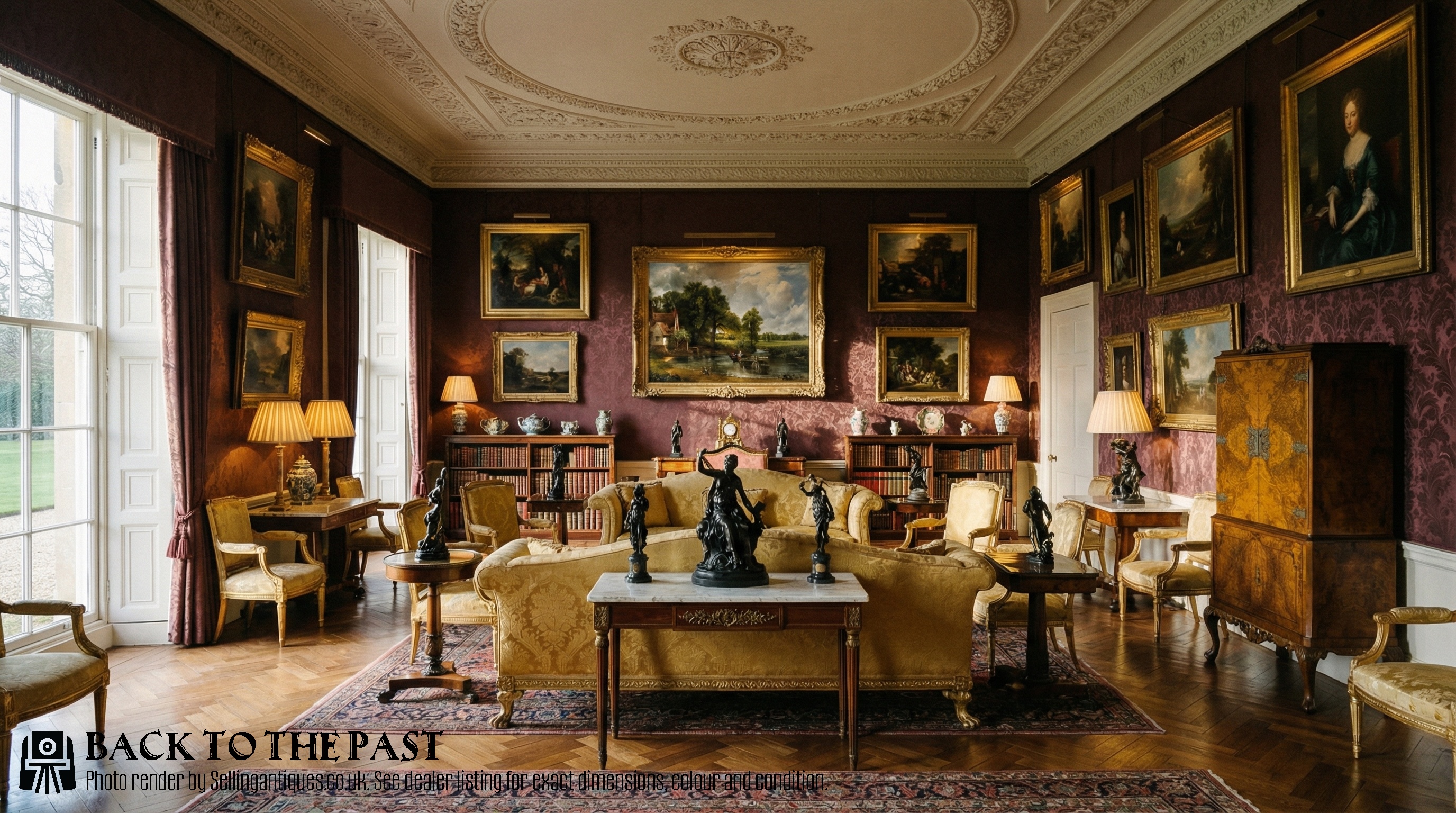
These cabinets were primarily situated in reception rooms, drawing rooms, or dedicated dining spaces where guests were entertained. Corner variants were specifically designed to fit into architectural angles to save floor space while maintaining storage capacity.
Because they served as both functional bars and decorative furniture, they occupied prominent positions in the room. Some variations, such as drinks trolleys, were mobile and moved between rooms as needed.
What is the difference between a drinks cabinet and a cocktail cabinet?
While the terms are often used interchangeably, a cocktail cabinet specifically implies internal fittings designed for mixing drinks, such as pull-out serving slides, juicers, and glass racks. A general drinks cabinet may simply provide general shelving for bottle storage.
Art Deco examples frequently emphasise the cocktail terminology alongside mirrored compartments tailored for glassware display. The presence of specialised internal mechanics usually defines the distinction.