
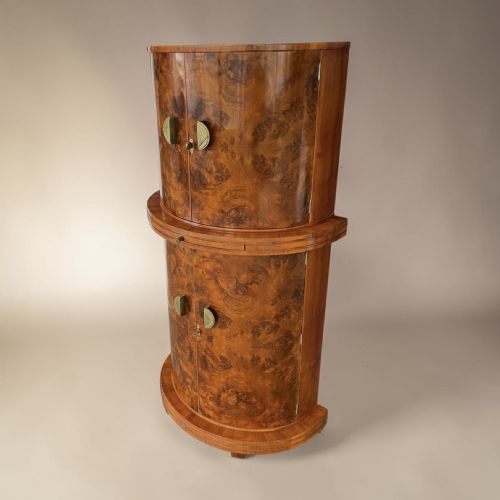


Fitted Bar Cabinet
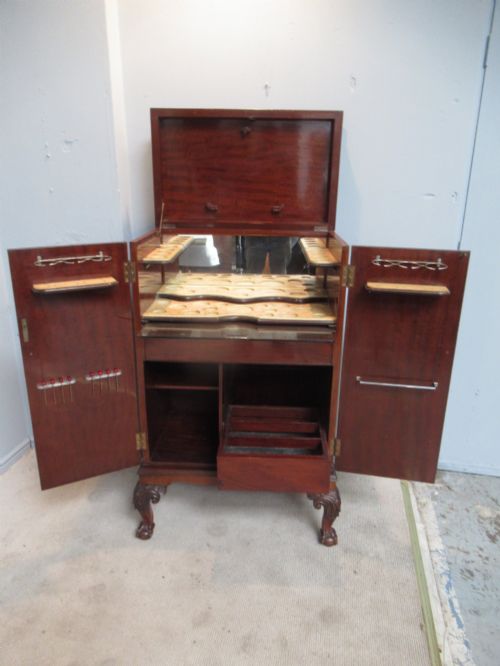
These fitted bar cabinet pieces are sophisticated entertaining furniture designed to house glassware and bottles.
Fitted Bar Cabinet
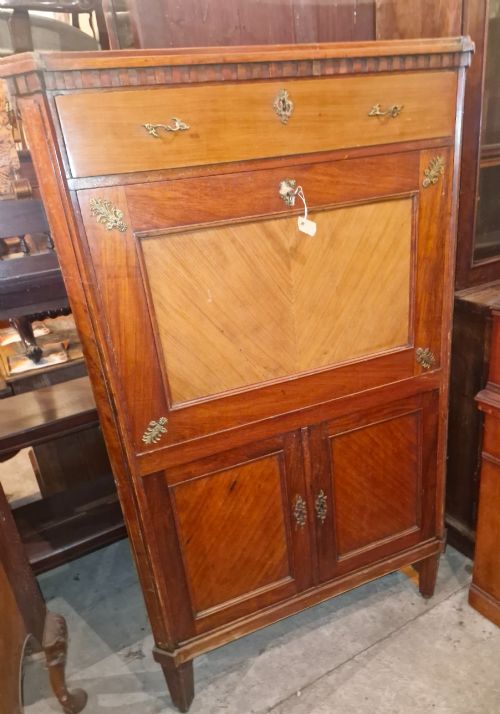
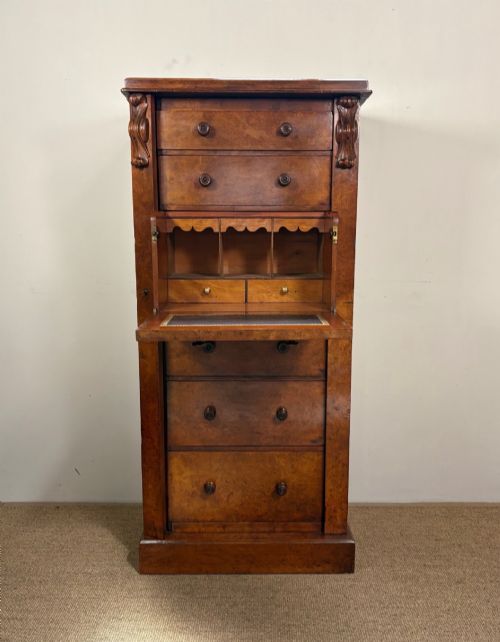
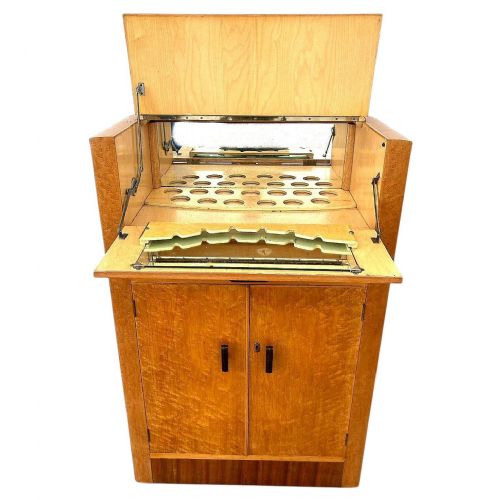
A fitted bar cabinet serves as a dedicated station for hosting and dispensing drinks, appearing across various historical eras. You will encounter pieces taking the form of cocktail cabinets, drinks trolleys, cellarettes, wine coolers, and secretaire chests. The selection spans distinct styles such as Art Deco, Victorian, Chippendale Revival, French Empire, Regency, and Queen Anne Revival.
The majority of pieces date from the early twentieth century, particularly the 1920s and 1930s, alongside nineteenth-century examples originating from the 1850s, 1860s, 1880s, and 1900s. Forms range from freestanding walnut cupboards to metamorphic bureau designs in oak and fitted corner cabinets.
What separates differing tiers of quality
Quality variation rests in the choice of timber figurations, such as highly figured burr walnut or bird's-eye maple veneers versus plainer grain timbers. The sophistication of the internal fitting and the integration of specialised compartments also distinguish finer examples.
The execution of period revival details or geometric Art Deco lines marks the level of craftsmanship involved. Superior pieces demonstrate precise joinery and refined hardware selection in brass and chrome.
Some Victorian pieces cleverly disguised their drinking stores inside traditional bureau-form secretaire chests.
Harry and Lou Epstein·Waring and Gillow
The Fitted Bar Cabinet Glossary
- Burr walnut
- A prized timber harvested from walnut tree growths, displaying complex, swirling grain patterns. It is frequently utilised for decorative veneer on high-status cabinet doors and panels.
- Cellarette
- A freestanding box or cabinet designed to hold wine bottles and spirits securely. Nineteenth-century examples often sit on stands or include fitted interior dividers.
- Secretaire
- A piece of furniture featuring a pull-down writing flap that conceals small drawers and pigeonholes. In drinks furniture, this mechanism often conceals a fitted cocktail preparation surface.
- Drinks trolley
- A mobile serving cart fitted with wheels or castors for transporting glassware and bottles. These pieces commonly incorporate glass shelves and metal framing.
- Art Deco
- A design movement prominent in the 1920s and 1930s characterised by streamlined geometric forms and modern materials. Cabinets from this period frequently showcase symmetrical wood veneers and polished chrome.
Fitted Bar Cabinet: Frequently Asked Questions
What periods do fitted bar cabinets come from?
The pieces originate from the nineteenth and early twentieth centuries, with a strong representation from the 1920s and 1930s.
Earlier examples from the 1850s to 1900s typically take forms like cellarettes and secretaire chests, while the later twentieth-century pieces lean towards dedicated Art Deco cocktail cabinets.
What materials were used to build them?
Construction incorporates a range of fine hardwoods including walnut, burr walnut, mahogany, oak, maple, bird's-eye maple, and rosewood.
Internal and external detailing frequently includes brass hardware, chrome fittings, and mirrored glass panels.
How do cocktail cabinets differ from cellarettes?
Cocktail cabinets are upright pieces designed with internal shelving and preparation surfaces for mixing drinks, often associated with Art Deco design.
Cellarettes function primarily as storage vessels for holding wine and spirit bottles, frequently dating from the nineteenth century.
Can I find mobile drinks furniture?
Yes, the selection includes drinks trolleys designed for moving glassware and bottles across rooms.
These mobile pieces often pair wood construction with glass shelving and metal frames.