

Fireside Log Bin
A fireside log bin brings hearthside practicality together with metalwork and timber crafted for domestic warmth.
Fireside Log Bin
A fireside log bin serves as a practical hearthside container designed to hold fuel such as logs, kindling, or coal near the fireplace. When searching this phrase, a buyer encounters domestic receptacles spanning the Victorian, Edwardian, and Georgian periods, alongside later twentieth-century examples.
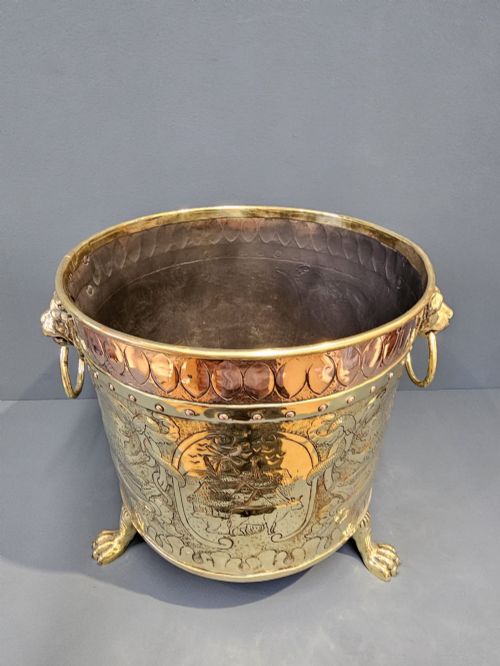
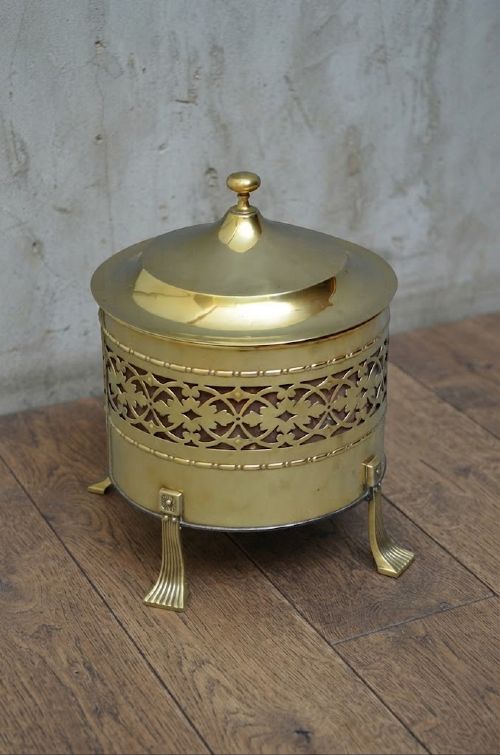
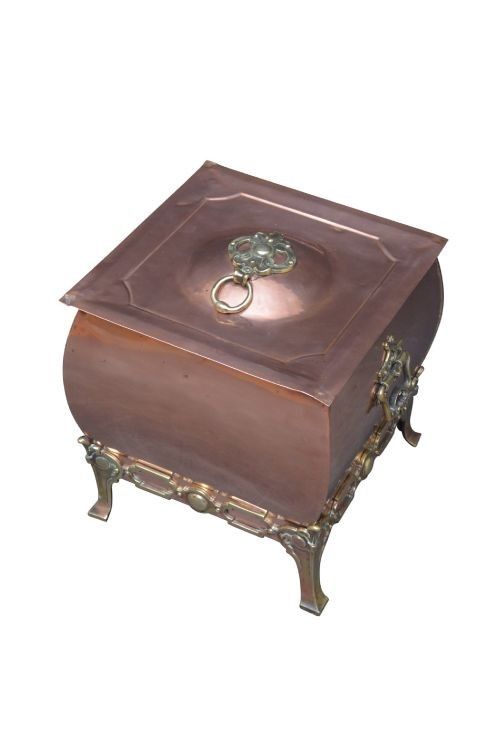
The most common versions met on this page are metal buckets and lidded wooden boxes produced in copper, brass, oak, and walnut. Many examples date from the nineteenth century, reflecting the heavy reliance on solid fuel heating during that era.
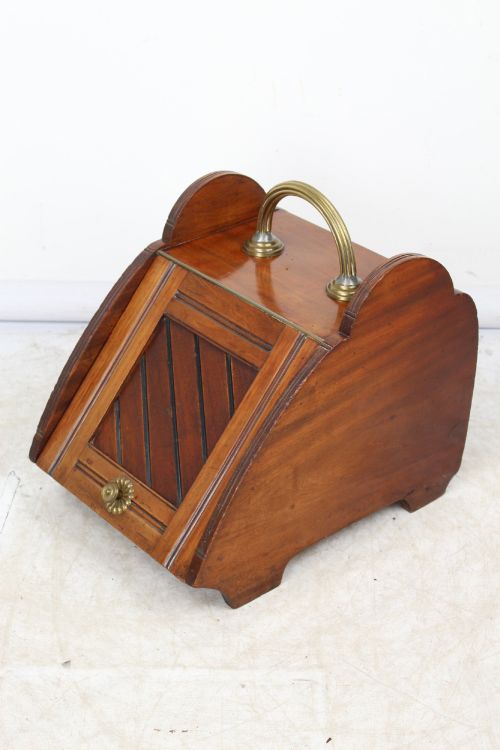
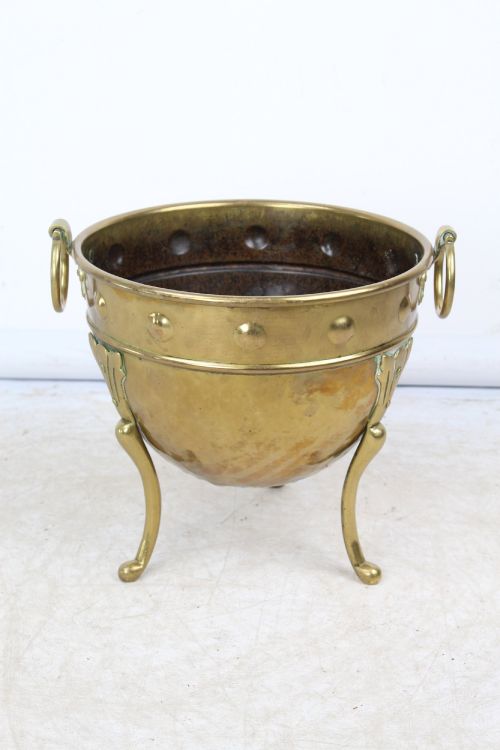
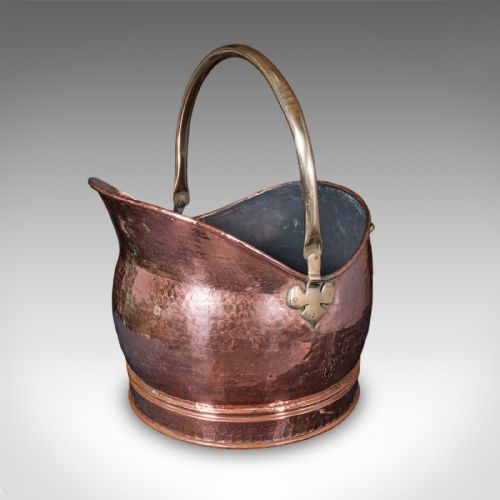
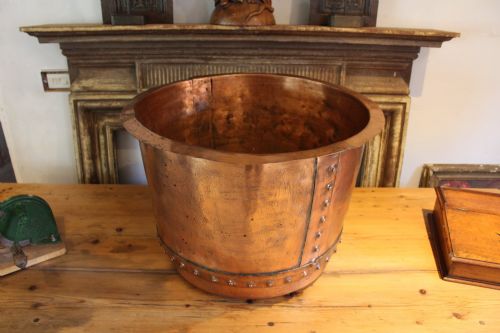
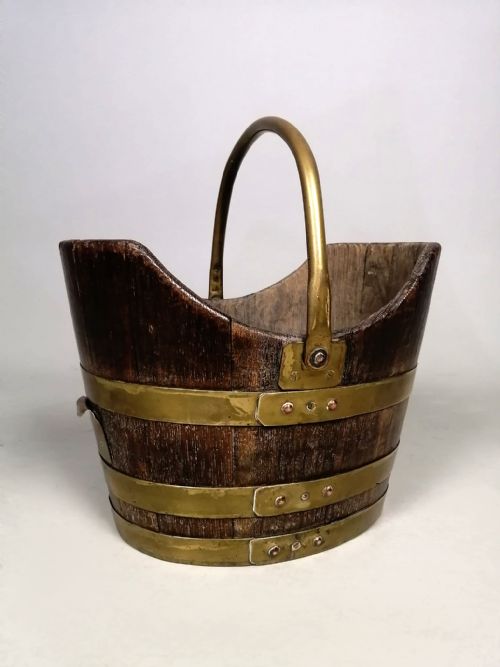
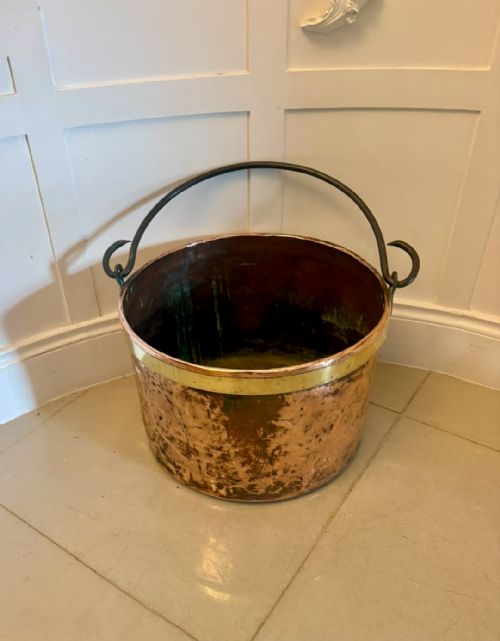
Makers and craftsmen shaped these storage pieces into cylindrical buckets, rectangular boxes, and hinged purdoniums designed to sit neatly beside the hearth. Alongside purely functional coal scuttles, the selection includes decorative brass-banded vessels and hand-beaten copper cauldrons.
How they were made
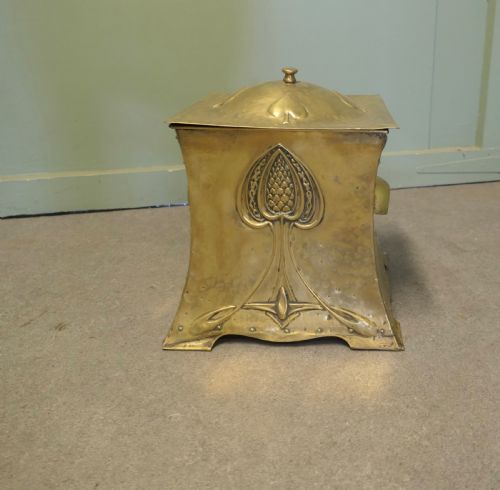
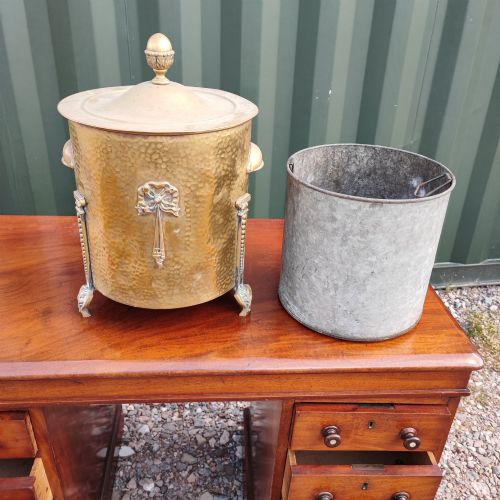
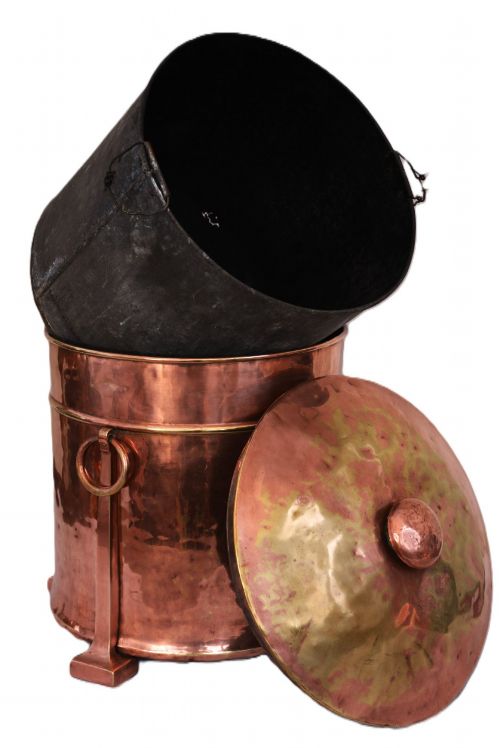
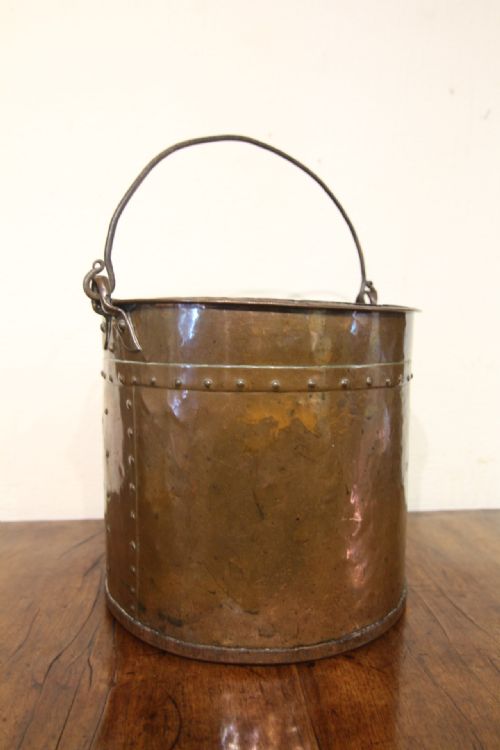
Metal log bins rely on heavy gauge copper and brass sheets shaped into cylinders or helmet forms, often joined by visible riveted seams and paired with sturdy wrought iron handles. Many feature hand-beaten textures, embossed ornamentation, or applied brass bands secured around the body.
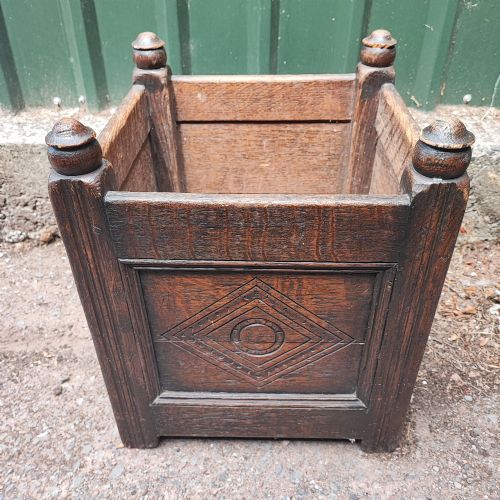
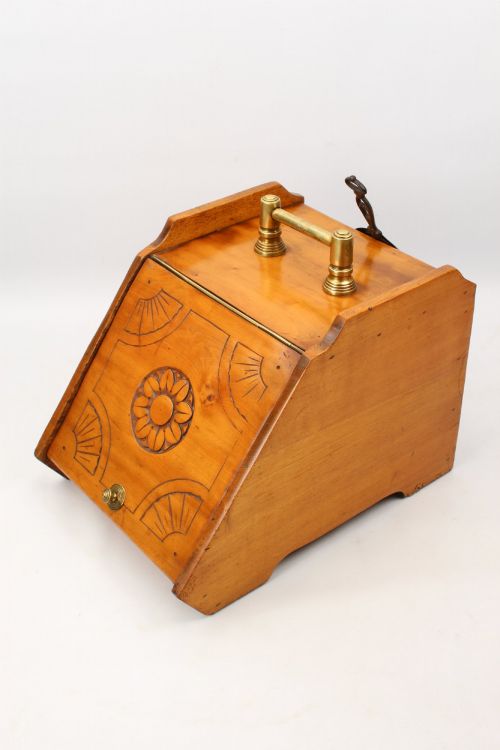
Wooden storage boxes and purdoniums utilise solid oak, walnut, mahogany, and pine, frequently enhanced with carved panels, brass mountings, or fretwork designs. Makers incorporated metal liners inside wooden frames to contain debris and protect the timber from damp fuel.
Listings show heavy representation of Victorian copper and brass coal buckets alongside Edwardian oak purdoniums.
What varies in quality
The caliber of a fireside log bin depends significantly upon the thickness of the metal and the structural integrity of the timber frame. Heavy gauge copper or solid hardwood withstands decades of heavy fuel storage without buckling or splitting at the joints.
Artisanal detail separates ordinary containers from superior examples, visible in crisp hand-beaten decoration, tight dovetail or riveted construction, and the presence of original wrought iron swing handles and fitted interior liners.
Henry Loveridge·Petrus Ramus
The Fireside Log Bin Glossary
- Purdonium
- A specialised coal box or cabinet featuring a sloping front and a hinged compartment designed to store fuel and a shovel out of sight. These storage cabinets often include internal metal liners.
- Coal Scuttle
- A bucket or helmet-shaped vessel utilised for carrying coal to the grate, typically fitted with a swinging top handle and a smaller fixed base grip for tipping. Many double as general log holders.
- Arts and Crafts
- A design movement emphasising handcraftsmanship, visible texture, and natural materials over mass production. Pieces from this style often display hammered copper surfaces and stylized plant motifs.
- Planter
- A secondary function often ascribed to metal log buckets when repurposed for horticulture. These watertight vessels accommodate large indoor house plants and ferns.
Fireside Log Bin: Frequently Asked Questions
What is a purdonium?
A purdonium is a dedicated enclosed coal box featuring a sloping front door and an internal metal liner to hold fuel cleanly beside the hearth. Victorian households utilised these cabinets to keep dust contained while maintaining a tidy appearance in the main living space.
Most examples include a matching shovel stored within a side compartment or inside the back. Walnut and oak versions frequently display decorative brass handles and mouldings matching other fireside accessories.
How do I clean a copper log bin?
Cleaning depends on whether the surface retains its original aged patina or polished finish. Gentle washing with warm soapy water removes soot and hearth dust without stripping historical character from the metal.
Avoid harsh abrasive scouring pads that leave permanent scratches on hand-beaten copper surfaces. Lighter maintenance involves simply wiping down the exterior with a soft dry cloth.
Were these bins only used for coal?
While originally built to hold coal, coke, or anthracite for Victorian and Edwardian grates, modern owners frequently utilise them for storing logs and kindling wood. Their sturdy construction handles rough timber just as effectively as loose fuel.
Many metal examples also function successfully as large indoor planters for substantial ferns and trees. The waterproof nature of copper and brass buckets makes them ideal for holding potted foliage.
How do I date an antique log bin?
Dating relies on observing construction methods, material choices, and stylistic markers such as Arts and Crafts hand-beaten motifs or Georgian brass banding. Nineteenth-century pieces typically feature heavy hand-riveted copper joints and solid oak frames.
Later Edwardian and Art Deco iterations introduce different handle designs, lighter gauge metals, and alternative framing. Examining any stamps or maker marks on the base often provides a precise point of origin.