
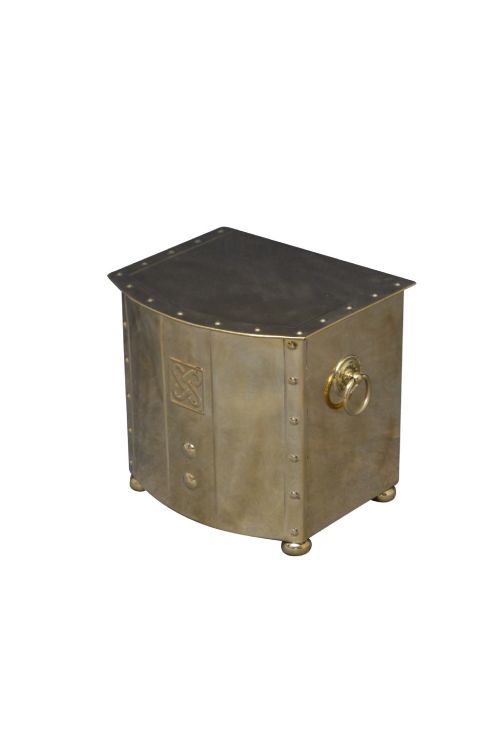


Vintage Coal Store
A vintage coal store keeps your hearth tidy, bringing character and practical fuel storage to the fireplace.
Vintage Coal Store
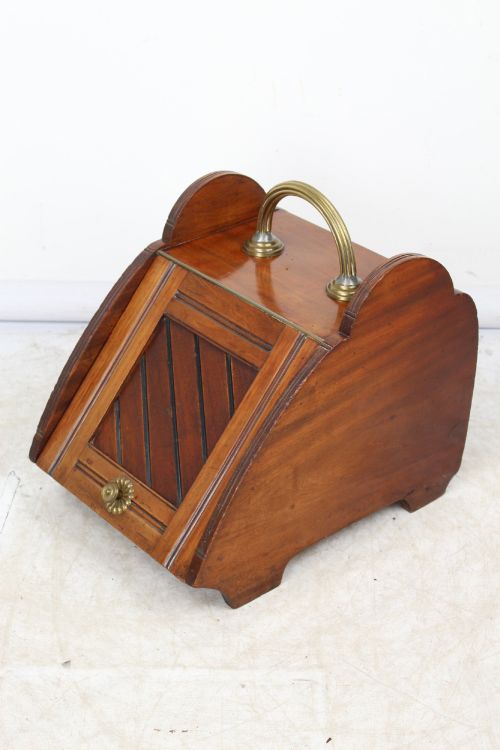
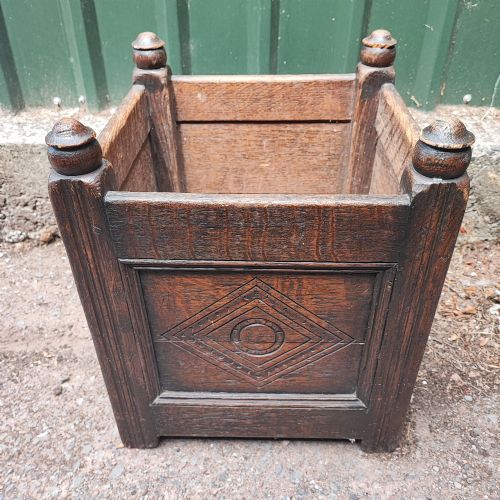
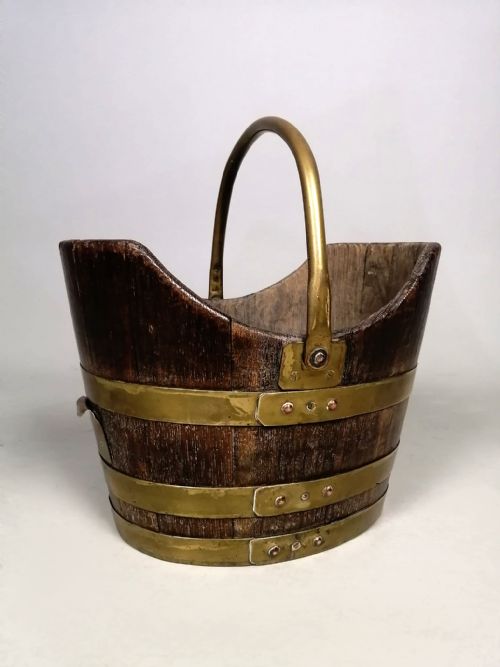
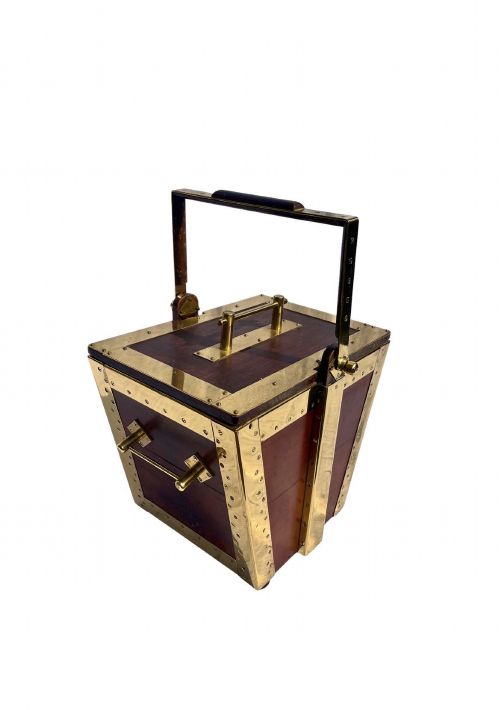
A vintage coal store encompasses fireside containers like coal boxes, scuttles, log bins and purdoniums designed to hold solid fuel near the hearth. The pieces you meet here range from simple rustic country wooden crates and coopered buckets to elaborate Victorian and Edwardian cabinets.
Victorian examples dominate the selection, often rendered in solid mahogany, oak, brass and copper. These items double as decorative fireside accessories while retaining their original utility for holding coal, logs or kindling.
Simpler metal and iron bins sit alongside refined Arts and Crafts and Art Nouveau copper buckets, offering various ways to house fuel beside an open fire. Cabinet styles such as purdoniums enclose the fuel entirely behind lidded or dropped fronts.
Materials and construction
Metal vessels rely on hand-beating, riveting and brass-banding to join sheets of copper and iron into durable cylinders and buckets. Woodwork utilises traditional joinery, with coopered staves bound by metal hoops and cabinet versions featuring carved mahogany and inlaid Edwardian woodwork.
Makers integrated functional brass handles, ceramic liners and decorative embossing to lift everyday hearth items into polished household furnishings.
Listings span the nineteenth and twentieth centuries, uniting Victorian cabinetwork with rustic country pine and industrial iron bins.
Judging the range
Quality separates mass-produced utility items from bespoke or high-style workshop pieces through the weight of the metal and the precision of the joinery. Thicker gauge copper with hand-hammered rivets and solid hardwood frames represent the upper end of the scale.
Subtlety of carved detailing, quality of brass mounts and intact original liners distinguish finer Victorian and Edwardian examples from plain or later replacements.
The Vintage Coal Store Glossary
- Purdonium
- A specialised fireside cabinet designed to store coal, typically featuring a sloping drop-front door and a shovel housed in an internal compartment. This form kept coal dust contained inside enclosed cabinetry.
- Helmet scuttle
- A coal container shaped with a flared lip resembling a classical helmet, fitted with a hinged handle for carrying fuel to the grate. The form allows controlled tipping into the fireplace.
- Coopered
- Constructed using wooden staves fitted together and bound by metal hoops, much like a traditional barrel. This technique ensures watertight or sturdy containment for heavy logs and peat.
- Arts and Crafts
- A design movement prioritising visible handcraftsmanship, natural materials and simple utility over machine-made ornamentation. Pieces in this style often feature hammered copper surfaces and unpretentious iron fittings.
Vintage Coal Store: Frequently Asked Questions
What is a coal purdonium?
A coal purdonium is an enclosed fireside cabinet with a drop-front door designed to store solid fuel discreetly. It usually contains a metal liner and a matching shovel.
These cabinets kept coal dust contained and sat neatly beside the hearth as a piece of furniture.
How do I clean a copper coal scuttle?
Copper vessels require gentle cleaning with a specialised metal polish to remove tarnish while preserving the underlying patina. Avoid harsh abrasives that scratch the surface.
Many collectors prefer leaving a dark, aged patina on nineteenth-century pieces rather than polishing them to a bright shine.
Can I use these for modern firewood?
Most antique log bins and coal buckets serve equally well for holding modern firewood, kindling or peat blocks. Their original robust construction handles heavy timber without difficulty.
Check that internal liners are intact if you plan to store damp wood or unbagged fuel to protect the outer wood or metal.
How do I date a brass coal bucket?
Dating relies on construction methods, fastener types and prevailing design styles such as Victorian cast mounts or Arts and Crafts hand-hammering. Machine-cut screws and spot-welding point to twentieth-century production.
Earlier eighteenth- and nineteenth-century items often feature hand-cut dovetails, heavy copper riveting and distinctively aged brass patination.