



Fireplace Coal Purdonium
A fireplace coal purdonium offers a purposeful fireside container for solid fuel, combining domestic utility with period craftsmanship.
Fireplace Coal Purdonium
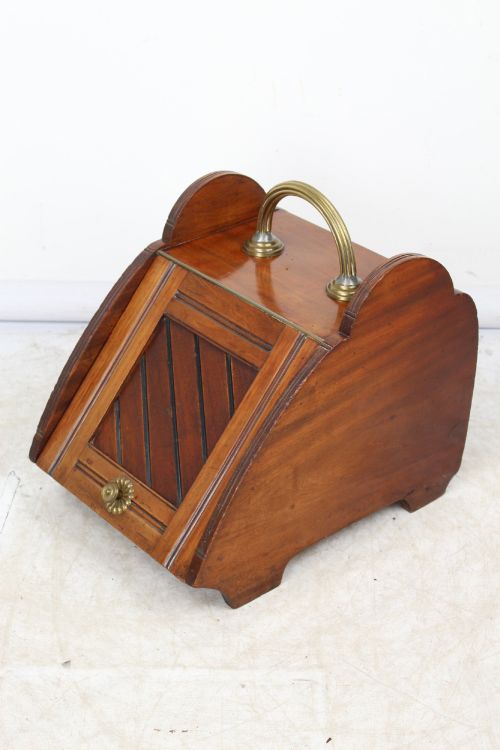
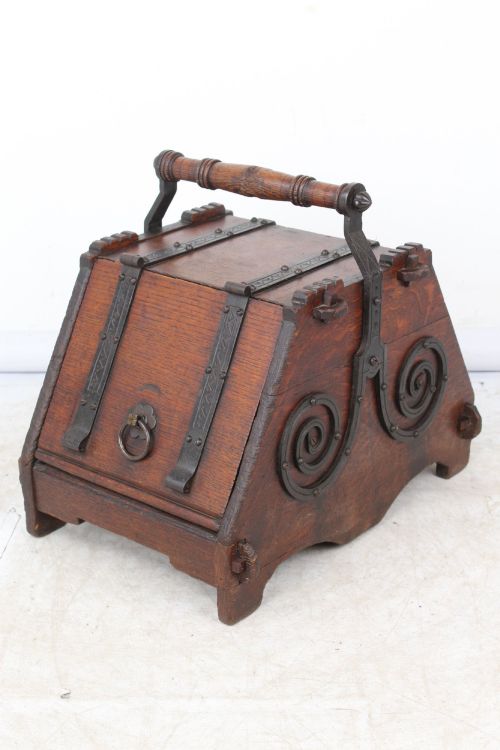
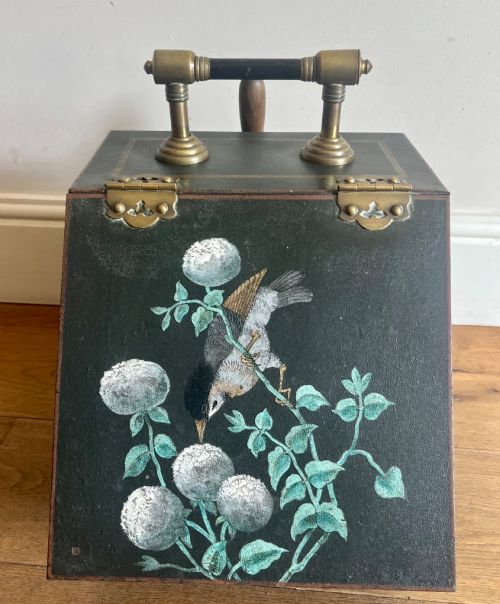
A fireplace coal purdonium provides a dedicated vessel for holding domestic fuel beside the hearth, appearing primarily in Victorian and Edwardian iterations across this selection. These pieces function as both fireside storage and decorative items, taking the form of purdoniums, coal boxes, buckets, and scuttles.
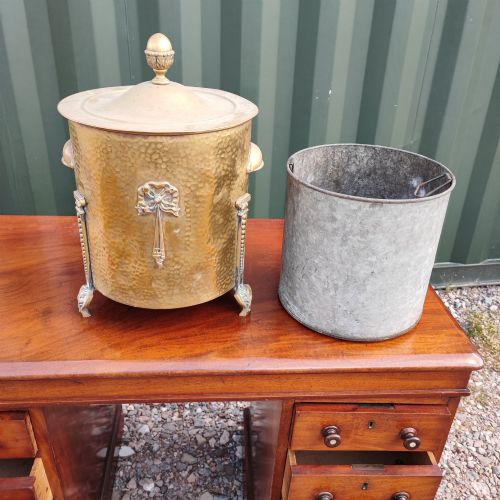
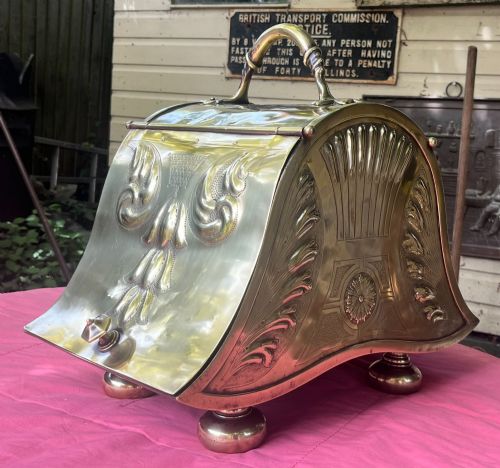
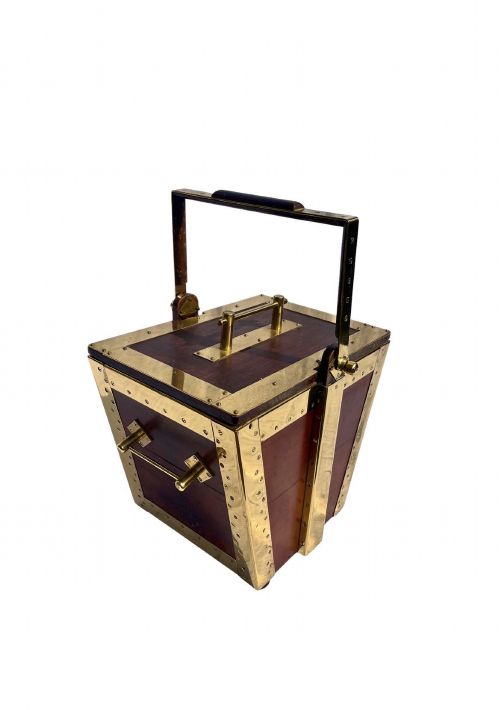
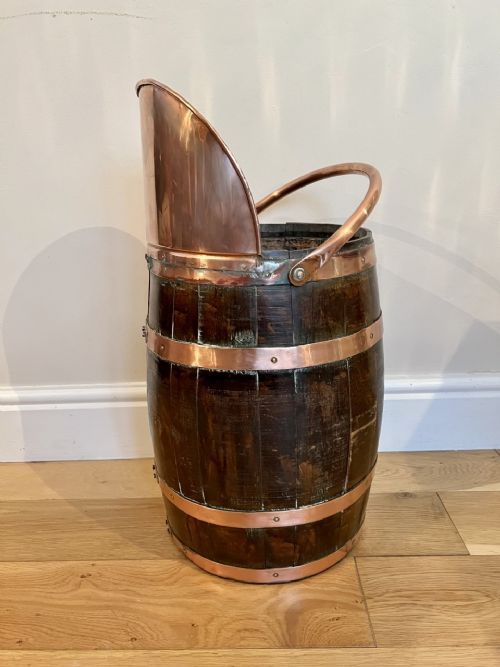
Makers fashioned these utilitarian items from timber, brass, copper, and iron, often incorporating drop-down panels, hinged lids, and handles for carrying fuel. Many examples include original metal liners and matching shovels or scoops to manage coal and logs efficiently.
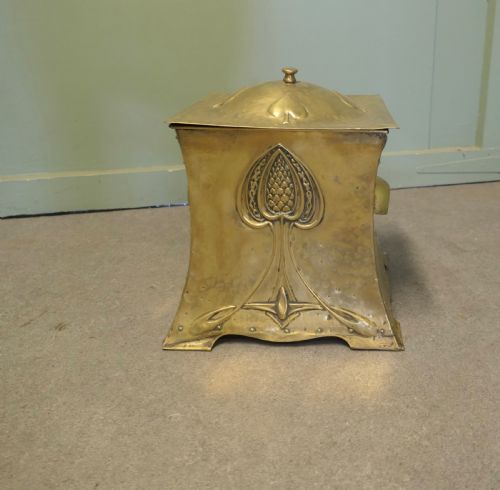
The materials span mahogany, oak, walnut, rosewood, and tole ware, reflecting the prevailing interior tastes of the nineteenth and early twentieth centuries. Styles range from plain utilitarian boxes to elaborate Gothic Revival, Arts and Crafts, Art Nouveau, and Aesthetic Movement designs.
Construction and materials
Cabinetmakers and metalworkers utilised solid timbers such as mahogany, oak, and walnut for traditional box purdoniums, frequently applying carved details, geometric inlays, and brass mounts. Wood-bodied containers often relied on interior metal liners to protect the timber from moisture and dust associated with coal.
Workers shaped sheet brass and copper into buckets and scuttles, employing riveted joints, hammered surfaces, and cast brass fittings. Metal bins utilised robust iron frameworks and applied patination, while tole ware pieces featured painted tinplate construction.
Some coal scuttles incorporate clever metamorphic tilting mechanisms that pivot smoothly on side pins to dump fuel without lifting.
Judging quality
Quality rests upon the selection of timbers, the weight of the brass or copper gauge, and the integrity of the original metal liner. Superior examples display crisp carving, secure joinery, and heavy cast mounts rather than thin stamped sheet metal.
Design ambition separates standard utility items from finer workshop pieces, seen in specialised elements like metamorphic actions, delicate wood inlay, and marked metalwork from known makers. The presence of matching original shovels and intact ceramic or brass handles completes a superior surviving ensemble.
Christopher Dresser·Benham & Froud·William Soutter & Sons
The Fireplace Coal Purdonium Glossary
- Purdonium
- A specialised coal box featuring a sloping front panel that tilts forward to dispense fuel. This drop-down action distinguishes it from simple lidded buckets.
- Tole ware
- Enamelled and painted metalware produced on tinplate surfaces. This technique allowed makers to apply decorative finishes to utilitarian fireside vessels.
- Metamorphic
- Describing furniture that transforms or conceals its function. In this context, it refers to scuttles with pivoting bodies or integrated storage compartments.
- Liner
- The removable internal metal container placed inside wooden or metal bins. It protects the outer structure from dirt and moisture during everyday use.
- Gothic Revival
- An architectural and decorative style drawing on medieval ecclesiastical forms. Pieces in this manner display pointed arches, heavy hinges, and structural strapwork.
Fireplace Coal Purdonium: Frequently Asked Questions
What is a coal purdonium?
A coal purdonium is a dedicated fireside container designed to hold solid fuel, typically featuring a sloping front drop-down panel and an internal metal liner.
These pieces kept coal neatly contained and accessible beside the hearth while blending with period drawing room or parlor furnishings.
How did people use them?
Households used these containers to store coal, logs, or kindling right by the fireplace for easy refuelling throughout the day.
Servants or family members carried the removable inner bucket to the main fuel store outdoors, refilled it, and returned it to the fireside housing.
Are original liners important?
Original metal liners remain important because they were custom-fitted to the interior dimensions of each specific box or bucket.
Their presence confirms that the container retains its original functional components rather than relying on later replacements.
How do I date a coal box?
Dating relies on identifying the prevailing style, timber choices, and construction methods characteristic of periods like the Victorian or Edwardian eras.
Arts and Crafts, Aesthetic Movement, and Art Nouveau motifs also provide clear stylistic markers pointing to specific decades around the turn of the twentieth century.