
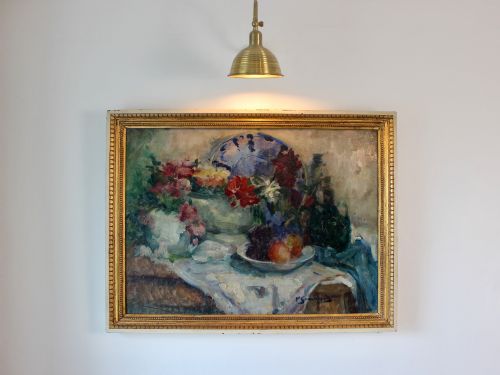


Fine Art Still Life
Fine art still life pieces capture arranged domestic subjects, bringing centuries of painted fruit, flora and objects into interior spaces.
Fine Art Still Life
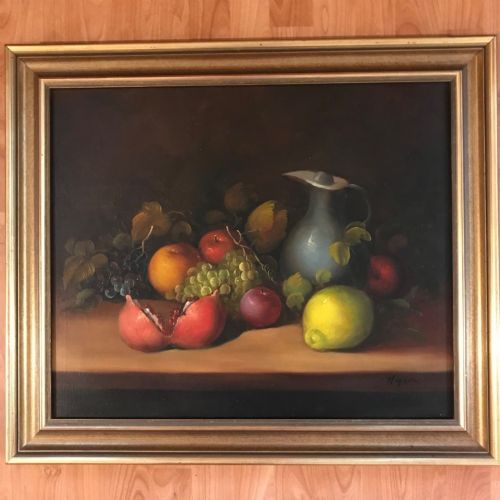
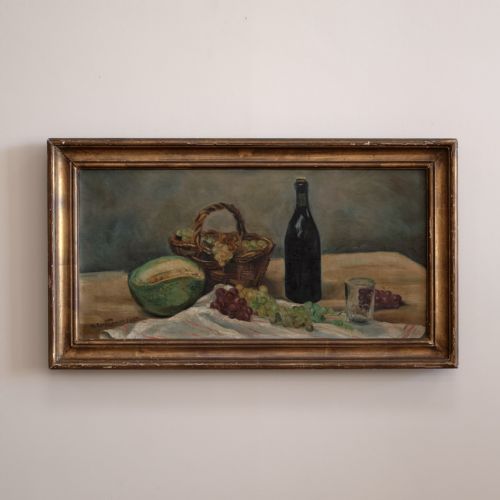
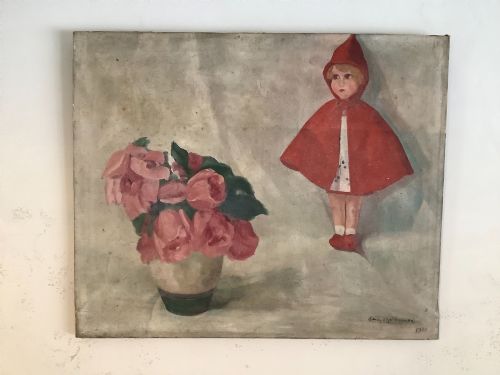
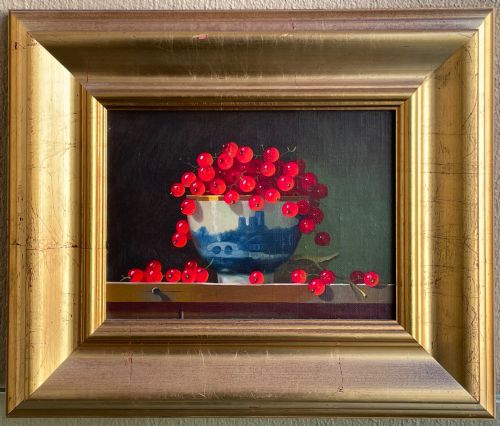
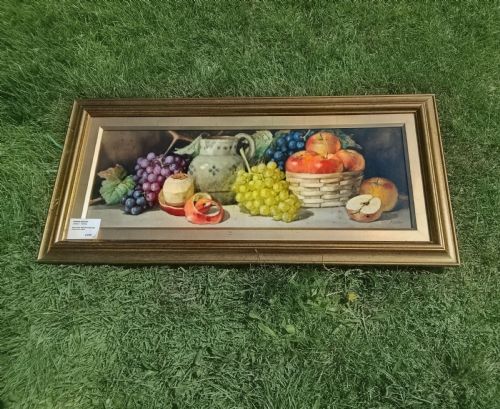
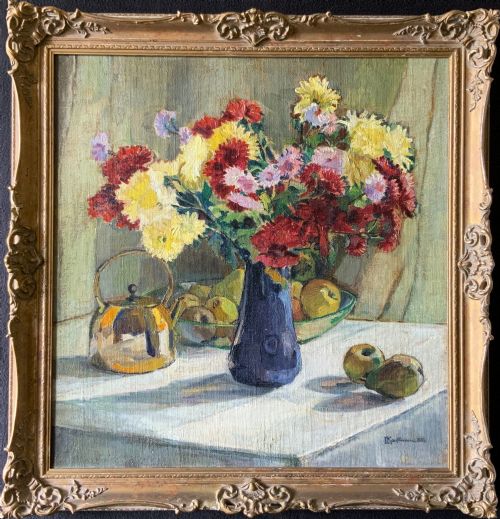
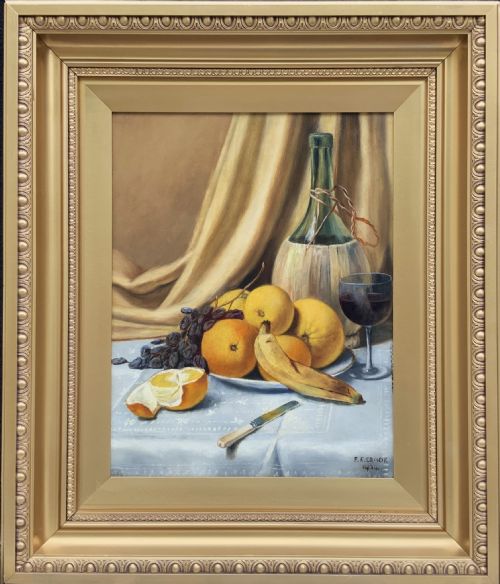
Fine art still life works encompass oil paintings, watercolours and oil on board studies focusing on inanimate subject matter such as fruit, flowers, game and household objects. Buyers encounter everything from formal Victorian compositions to modernist and impressionist interpretations spanning multiple centuries.
The selection ranges across diverse European and international schools, featuring nineteenth-century academic studies alongside mid-century compositions. Works appear on canvas, wood and paper, frequently housed in their original frames.
Victorian and Edwardian examples sit alongside avant-garde and contemporary realist pieces, offering collectors a broad chronological spread of domestic and symbolic arrangements.
Materials and technique
The primary medium across the collection is oil paint applied to canvas or wood panel, supported by watercolour works on paper and occasional encaustic methods. Artists built rich textures using layered pigments to render the light on fruit, porcelain and fabric.
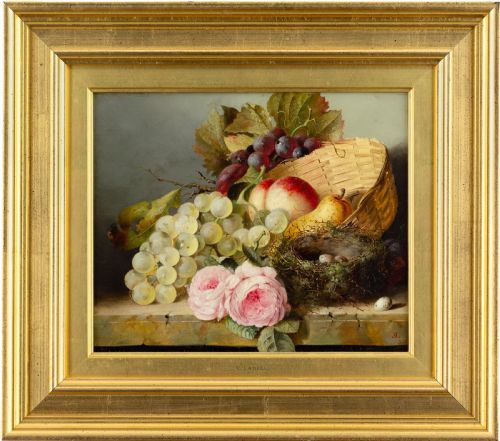
Several compositions feature unexpected animal companions, including watchful parrots, curious monkeys and hidden birds nesting among the fruit.
Variations in quality
Quality rests in the precision of brushwork, spatial arrangement and the artist's command of light and shadow across textures like fruit skins, woven baskets and metallic vessels. Superior compositions demonstrate confident draughtsmanship and harmonious colour relationships that elevate ordinary domestic subjects.
The integrity of the original support, the stability of the paint layers and the preservation or period appropriateness of the gilt frame contribute significantly to the standing of an individual work.
Edward Ladell·Arthur Dudley·Victor Simonin·Denis Mitchell·Evelyn Chester·Henri Joseph Pauwels·William Duffield·Niels Wiwel·Bela Balogh·Girieud·Sir George Reid·Pieter Claesz·Bartolome Murillo·Maud Frances Eyston Sumner·Margaret Evangeline Wilson·Harold Edward Conway·James Kerr McArthur·John Sherrin·Katherine Bourne·George Lance·Jozsef Molnar
The Fine Art Still Life Glossary
- Vanitas
- A symbolic style of still life painting containing collections of objects such as skulls, rotting fruit or hourglasses intended to remind the viewer of the transience of life. These works use allegorical elements to prompt philosophical reflection.
- Giltwood
- Wood that has been coated with a thin layer of gold leaf or powder. This material is standard for traditional picture frames housing fine art paintings.
- Impressionism
- A nineteenth-century art movement characterised by relatively small, thin yet visible brush strokes and an emphasis on accurate depiction of light. Artists working in this manner prioritized atmospheric qualities over microscopic detail.
- Naive Art
- Visual art produced by a person lacking formal training and professional artistic education. Such pieces often display charming perspectives and simplified forms.
- Encaustic
- A painting technique involving heated beeswax mixed with coloured pigments. The molten mixture is applied to a surface before being shaped and cooled.
Fine Art Still Life: Frequently Asked Questions
What subjects do still life paintings feature?
These works commonly depict arrangements of fruit, cut flowers, game birds, household ceramics and symbolic objects like books or musical instruments.
Artists arranged these everyday items to study light, colour and texture within a controlled interior composition.
How do I identify the period of a painting?
Dating relies on stylistic clues, framing techniques, artist signatures, and the physical characteristics of the canvas or board support.
Victorian and nineteenth-century works often show academic precision, while twentieth-century examples incorporate impressionist or modernist brushwork.
Are these works painted on canvas or wood?
The selection includes pieces created on stretched canvas, wooden panels, board and paper supports.
Oil paint was frequently applied to canvas or wood, whereas watercolours were executed on paper surfaces.
How should I display a framed painting?
Paintings should be hung away from direct sunlight and excessive humidity to protect the pigments, canvas and original gilt frames.
Maintaining stable room temperatures prevents the wood and paint layers from expanding or cracking over time.