


Post Impressionist Floral Art
Post impressionist floral art brings bold brushwork and vibrant blooms into your interior through expressive oil and watercolour studies.
Post Impressionist Floral Art
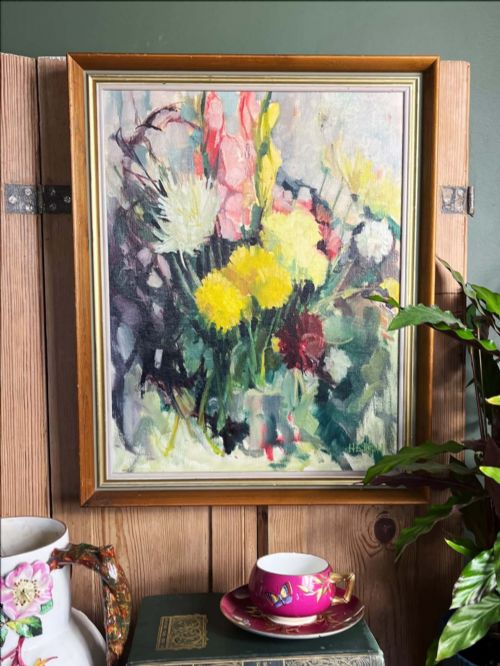
Post impressionist floral art encompasses oil and watercolour paintings capturing botanicals through expressive brushwork and vivid palettes. These works draw from periods spanning the late nineteenth century through to the mid twentieth century, reflecting the evolution of British and European modernism. When you search for post impressionist floral art, you encounter diverse interpretations of still life subjects, ranging from luminist pointillist compositions to robust impasto studies.
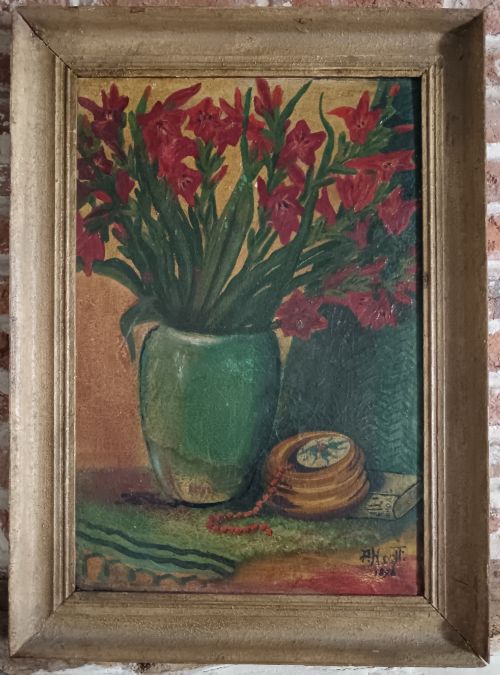
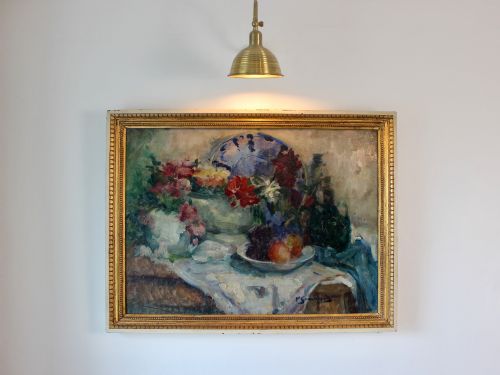
The pieces on this page showcase floral subjects rendered on canvas, board, and paper, often housed in period gilt wood frames. Domestic interiors and garden blooms form the primary focus, translated through the distinct stylistic lenses of Impressionism, Post-Impressionism, and Modern British art. Each painting records a specific approach to light, colour, and form during the decades following the turn of the twentieth century.
How they were made
Artists of these works applied oil paint or watercolour onto prepared canvas, wooden board, or paper supports, utilising direct brushwork to build texture and depth. The handling of medium varies from fluid watercolour washes to thick impasto oil applications that give petals and leaves tangible physical presence. Pointillist techniques also appear, employing distinct dabs of pigment to construct luminous floral forms.
Framing plays an integral role in the physical presentation of these works, with many retaining original gold leaf and gilt wood frames that complement the painted surface. The combination of traditional canvas or board supports with period framing preserves the physical integrity of each study. Makers selected materials that responded directly to the demands of rapid outdoor sketching and expressive studio painting.
Several artists recorded the exact personality of their potted anemones and garden roses.
What varies in quality
Quality in post impressionist floral art rests upon the confidence of the brushwork and the harmony of the colour palette. Stronger works demonstrate a sure command of tone and composition, where every stroke contributes to the energetic rendering of the botanical subject. Lesser examples may rely on rigid outlines or hesitant applications of pigment that fail to capture the vitality inherent in the style.
The relationship between the painting and its original frame further distinguishes individual pieces within the range. Works retaining period gilt or gold leaf frames that enhance the visual impact of the canvas command greater attention from collectors. The preservation of the pigment layer, free from disruptive overpainting or surface damage, maintains the direct connection to the artist's original intention.
Victor Simonin·Sir Matthew Smith·Rowland Henry Hill·Ernest Higgins Rigg·Henry D'Arcy Hart·Herbert Davis Richter·Owen Bowen
The Post Impressionist Floral Art Glossary
- Impasto
- Paint applied thickly to a canvas or board, standing out in relief from the surface. This technique creates physical texture and catches light across floral petals.
- Pointillism
- A technique of painting where small, distinct dots of colour are applied in patterns to form an image. Luminist examples use this method to intensify the vibration of light.
- Gilt
- A thin layer of gold applied to wood frames or surfaces to provide a decorative metallic finish. Period frames often utilise this technique to frame oil paintings.
- Still life
- A work of art depicting mostly inanimate subject matter, typically commonplace objects such as flowers in a vase. Botanical studies form a major category within this tradition.
Post Impressionist Floral Art: Frequently Asked Questions
What periods do these paintings date from?
The works originate from the late nineteenth century through to the mid twentieth century, capturing decades of artistic experimentation.
Specific dates within the listings span from the 1890s up to the 1960s, reflecting diverse modernist developments.
What materials are used in these works?
Painters employed oil paint and watercolour applied to stretched canvas, wooden boards, or paper.
Many pieces are preserved within their original gilt wood frames and gold leaf surrounds.
How should I display a painting?
Position the artwork away from direct sunlight and excessive moisture to protect the oil or watercolour pigments.
Ensure the piece hangs securely using appropriate fixings suited to the weight of the frame and support.
What defines the post impressionist style?
This approach emphasises expressive brushwork, vibrant colour choices, and subjective interpretations of light over strict naturalism.
Artists moved beyond traditional representation to focus on the emotional resonance of domestic floral arrangements.