



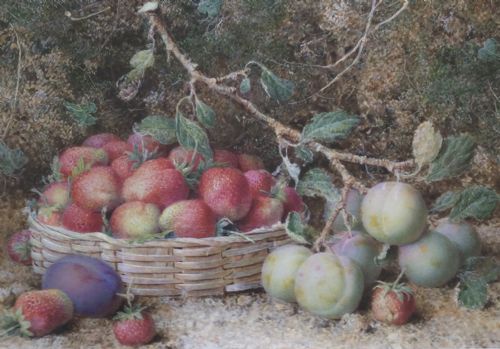

Fine Art Fruit Painting
Fine art fruit painting brings together centuries of still life and portraiture executed in oil and watercolour.
Fine Art Fruit Painting
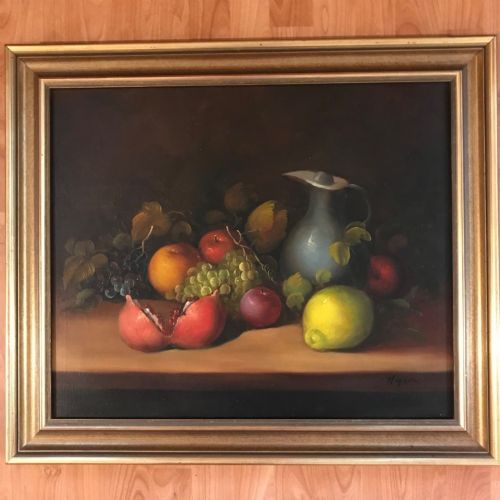
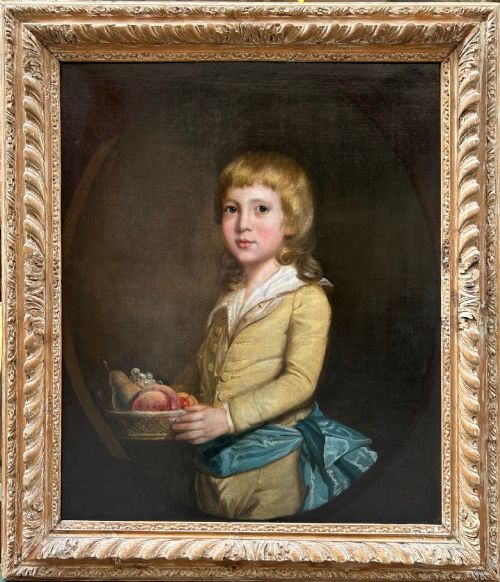
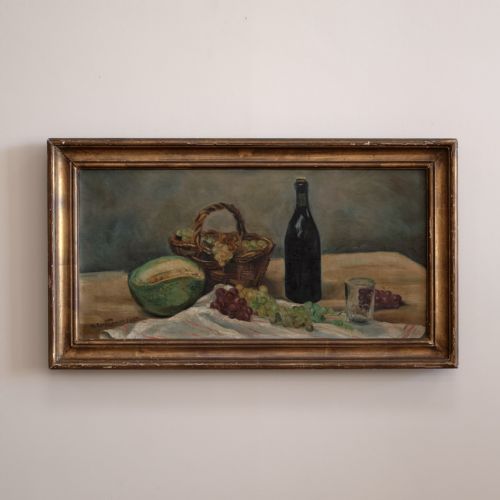
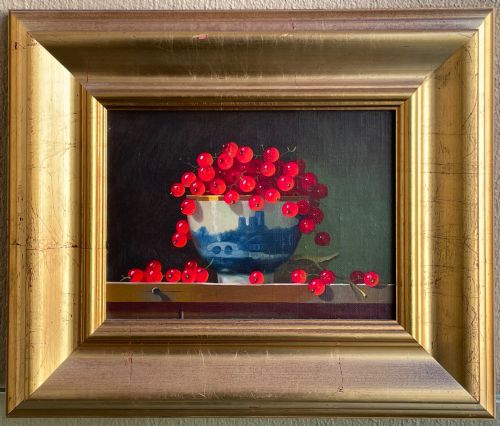
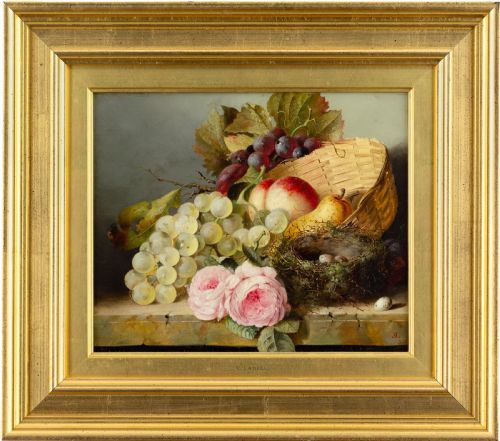
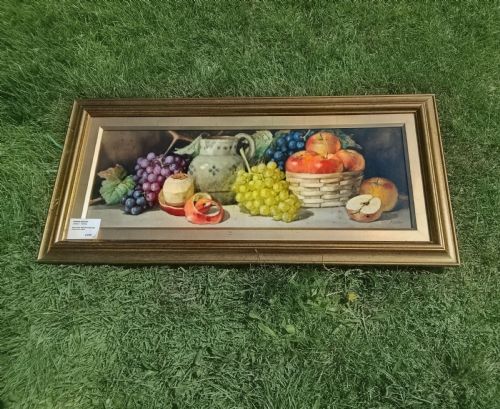
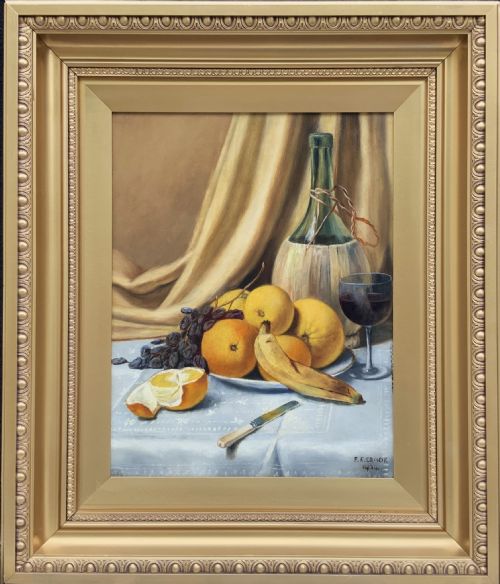
A fine art fruit painting typically presents arrangements of fruit, sometimes accompanied by flowers, baskets, or game, rendered through historical periods ranging from the eighteenth century to the mid-twentieth century. Buyers searching for fine art fruit painting frequently encounter Victorian and Edwardian canvases alongside earlier Georgian works and mid-century examples.
The subjects appear as detailed still lifes or as elements within portraits where subjects hold baskets or individual pieces of fruit. Canvas and wood serve as the primary supports, framed in giltwood or gold leaf.
Materials and techniques
Artists utilise oil paint and watercolour on canvas, wood, or board to build these compositions. Canvases are frequently stretched over wooden frames and housed in decorative gilt, giltwood, or gold leaf surrounds.
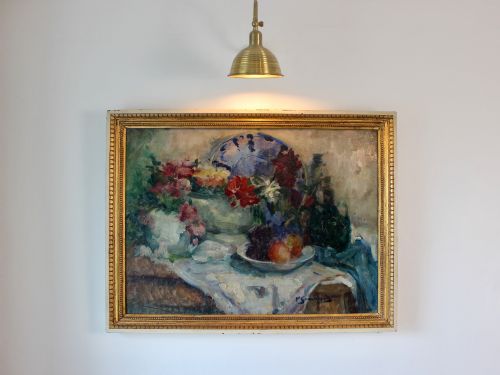
The application ranges from classical realism to impressionism and post-impressionism, capturing light and texture across natural surfaces.
Fine Art Fruit Painting Retail Price Guide 2026
Typical asking prices for fine art fruit painting among the pieces listed under this phrase on Sellingantiques today, from the lower quarter to the upper quarter. They describe what is for sale here now, not the wider market.
Listings feature oil on canvas, watercolour, and oil on board, housed in gilt and giltwood frames across multiple centuries.
Variations in quality
The standard of execution separates works by named, tracked artists from anonymous school pieces. Finer examples display precise handling of light on surfaces like grapes, peaches, and baskets.
The retention of original swept gilt decorative frames or period giltwood mounts influences the preservation and presentation of the artwork.
Edward Ladell·Thomas Beach·Ian Parker·Arthur Dudley·Victor Simonin·Evelyn Chester·Henri Joseph Pauwels·William Duffield·Bela Balogh·Maud Frances Eyston Sumner·John Sherrin·Robert Byng·George Lance·William B. Hough·J. M. Arundele·Jozsef Molnar
The Fine Art Fruit Painting Glossary
- Still life
- A painting or drawing depicting inanimate subject matter, typically commonplace objects such as fruit or flowers. These compositions focus on arrangement, light, and colour.
- Giltwood
- Wood that has been covered with a thin layer of gold leaf or gold paint. This material is standard for period frames accompanying these paintings.
- Impressionism
- A nineteenth-century art movement characterised by relatively small, thin, yet visible brush strokes and an emphasis on accurate depiction of light. Works in this style capture the transient effects of illumination.
- Classical realism
- An artistic style that combines elements of nineteenth-century neoclassicism and academic art. These works emphasise precise draughtsmanship and lifelike rendering of subjects.
Fine Art Fruit Painting: Frequently Asked Questions
What periods do these paintings come from?
The works span from the eighteenth century through the nineteenth and twentieth centuries, including Georgian, Victorian, and Edwardian eras. Mid-century examples up to the 1960s also appear.
Each period brings distinct stylistic approaches, moving from classical realism toward impressionist and post-impressionist techniques.
Are these works painted on canvas?
Many examples utilise oil paint on canvas stretched over wooden supports. Others employ wood or board as the primary backing.
Watercolour paintings on paper also feature within the selection, often protected under glass within gilt frames.
How should I frame these paintings?
Many pieces retain their original gilt, giltwood, or gold leaf frames from the nineteenth and twentieth centuries. Preserving these historic surrounds maintains the integrity of the piece.
When replacement is necessary, select period-appropriate wooden mouldings that match the era of the canvas.
Who painted these fruit pieces?
The selection includes works by listed British, European, and Hungarian artists, alongside pieces attributed to wider European schools.
Signatures appear on numerous canvases and watercolours, connecting specific pieces to documented historical painters.