



Dining Room Oil Painting
A dining room oil painting brings warmth to a wall, offering rich studies of fruit, vessels, and interiors from past centuries.
Dining Room Oil Painting
A dining room oil painting comprises works executed on canvas or wood panels, capturing domestic interiors, still life arrangements, and fruit studies suited for traditional spaces. Buyers searching this phrase encounter pieces spanning from the Victorian and Edwardian eras through the mid-twentieth century.
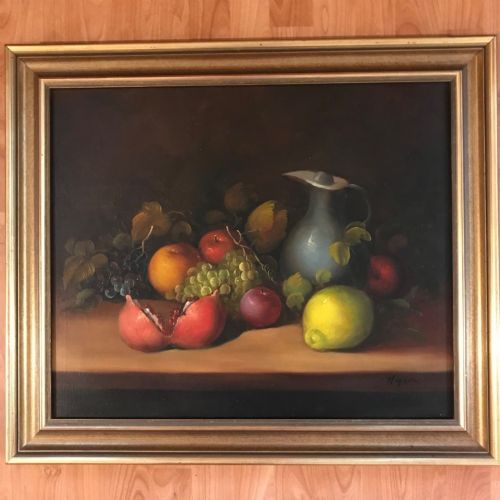
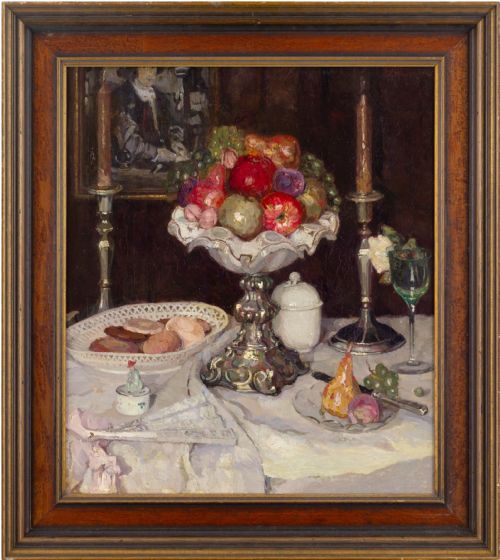
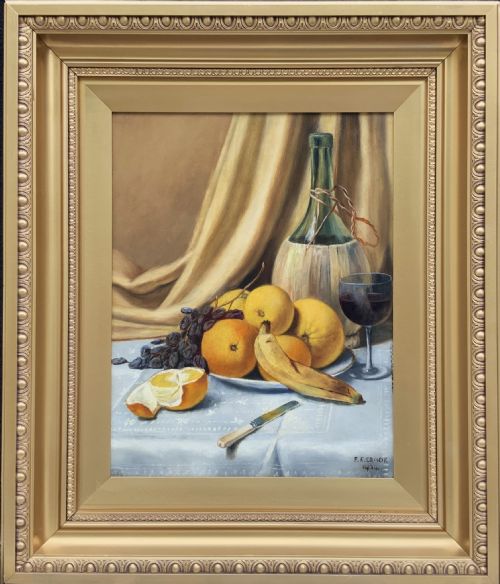
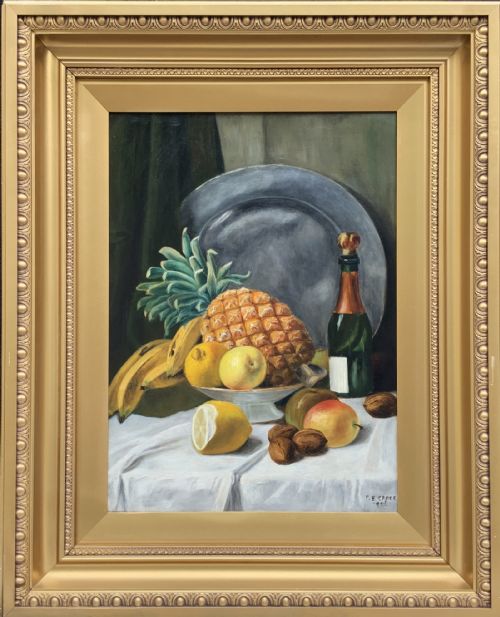
The selection on this page relies heavily on still life subjects involving fruit, jugs, and candlesticks alongside occasional interior cottage scenes. These works capture the domestic tastes of periods including the 1930s, 1950s, and 1960s with straightforward realism and post-impressionist touches.
Materials and construction
These works are painted in oil media upon canvas supports, frequently mounted within wood frames or gilded wood mouldings. The application of oil paint allows for layered depth in depicting textures such as fruit surfaces, ceramics, and textiles.
Frames play a structural role in presenting these canvases, utilising traditional woodworking techniques and gilt finishes to complement the painted imagery. The combination of canvas, oil paint, and wood framing defines the physical composition of each piece.
Dining Room Oil Painting Retail Price Guide 2026
Typical asking prices for dining room oil painting among the pieces listed under this phrase on Sellingantiques today, from the lower quarter to the upper quarter. They describe what is for sale here now, not the wider market.
Assessing quality
Quality in these works rests upon the precision of the brushwork and the artist's handling of light, shadow, and form within the composition. Stronger examples display confident handling in subjects such as fruit, candlesticks, and tableware.
The sophistication of the framing also influences the overall standard, with original gilded wood frames adding period context to the canvas. Signed works by identifiable hands carry distinct interest compared to unsigned decorative studies.
Else Preußner·John Exley·T.Vincent
The Dining Room Oil Painting Glossary
- Oil on Canvas
- A traditional painting medium where oil paints are applied to a stretched woven fabric support. This combination provides durability and allows for subtle blending of colours.
- Gilded Wood
- Wood surfaces covered with a thin layer of gold leaf or metallic gilt powder. This finish enhances picture frames and decorative mouldings.
- Still Life
- An artwork depicting inanimate subject matter, typically commonplace objects such as fruit, food, and tableware. These arrangements focus on texture and lighting.
- Post-Impressionism
- An art style developing subsequent to impressionism that explores emotional and structural responses through bolder colours and forms. It moves beyond strict optical realism.
- Victorian
- The period of the reign of Queen Victoria, associated with detailed realism and traditional craftsmanship in art and furniture. Works from this era often feature rich tones.
Dining Room Oil Painting: Frequently Asked Questions
What subjects appear in these paintings?
The subjects focus primarily on still life arrangements featuring fruit, baskets, tureens, candlesticks, and blue and white jugs. Occasional interior cottage scenes also represent the theme.
These compositions reflect domestic dining and kitchen aesthetics across the Victorian, Edwardian, and mid-twentieth-century periods.
How should I hang them?
These works suit traditional dining rooms, kitchens, and living spaces where food and domestic themes complement the interior. They pair naturally with wood furniture and period decor.
Ensure placement avoids direct sunlight to protect the oil paint and canvas from fading over time.
How do I identify the period?
Dating relies on stylistic clues, framing materials, and artist signatures recorded across the Victorian, Edwardian, and subsequent decades up to the 1960s. Canvas preparation and frame construction also offer chronological indicators.
Written dates or signatures on the canvas or stretcher frame help confirm the origin of specific pieces.
Are the frames original?
Many pieces retain their period wood frames or gilded wood mouldings that match the era of the canvas. These housings complete the presentation of the artwork.
Evaluating the framing involves observing the wear and construction methods consistent with the painting's date.