





Figured Walnut Centre Table
A figured walnut centre table commands a room with rich timber grain and stands ready to anchor any period interior.
Figured Walnut Centre Table
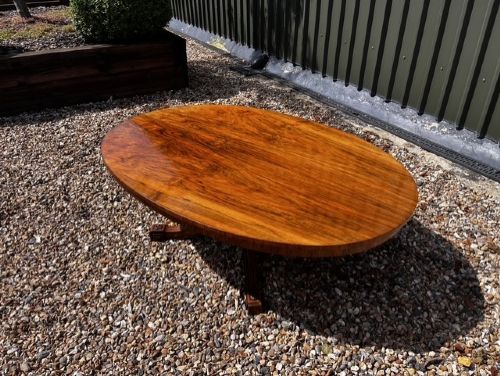
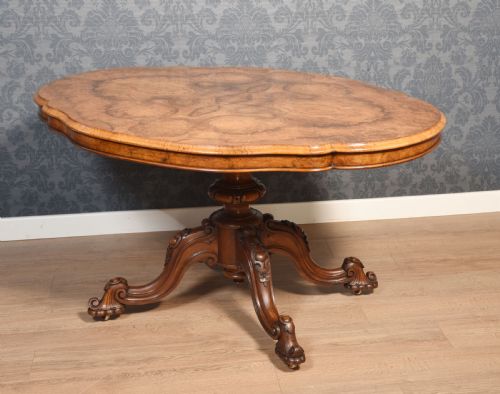
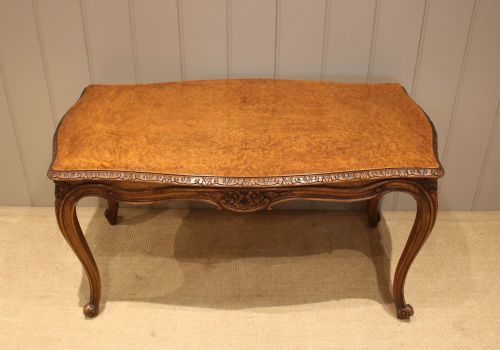
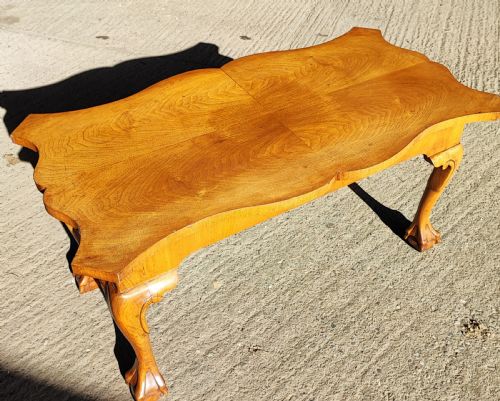
A figured walnut centre table is a freestanding piece designed to be viewed from all sides in the middle of a room, serving functional purposes as a writing surface, dining table, or display piece. When you search for this phrase, you encounter forms ranging from circular Victorian tilt-top pedestal tables to geometric Art Deco coffee tables.
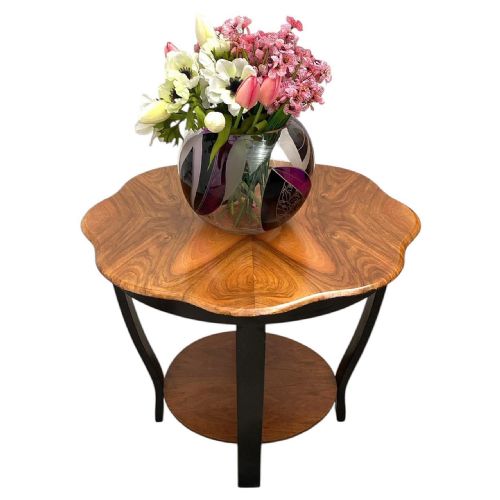
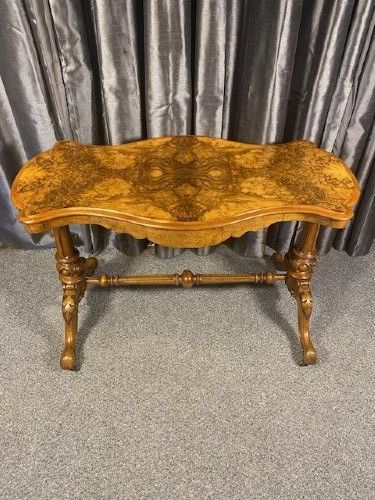
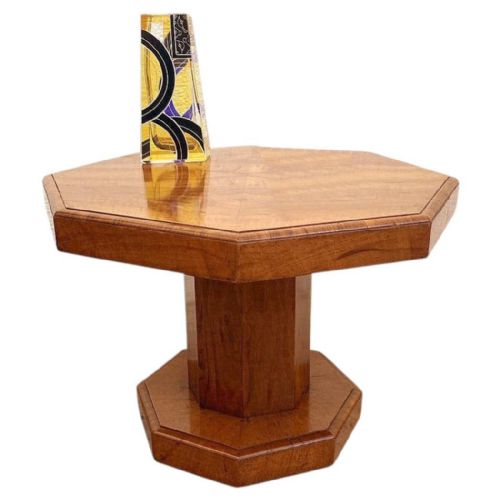
The Victorian examples dominate the selection, often featuring circular or oval tops supported by tripod bases or carved pedestals, alongside occasional tables with fitted drawers. Alongside these sit later twentieth-century iterations, including hexagonal and two-tier occasional designs from the nineteen-thirties that adapt the timber for more compact proportions.
How they were made
Craftsmen built these tables using solid timber frames overlaid with carefully selected veneer, utilising burr and figured walnut slices to create mesmerising, symmetrical grain patterns across the surface. Brass hardware, marble inserts, and marquetry inlay appear on selected pieces to accent the warm tones of the wood.
Structural integrity relied on sturdy mahogany linings for drawers and robust pedestal or tripod supports for large circular tops, allowing heavy timber to balance securely without tipping.
Several tilt-top tables waited patiently for centuries to save floor space by standing upright against parlour walls.
What varies in quality
The distinction between standard examples and top-tier pieces lies primarily in the selection and matching of the veneer, where burr and golden walnut display superior depth and symmetry. Carved ornamentation also dictates worth, shifting from simple turned pedestals to profusely carved Italian or London-made frames bearing maker attribution.
Construction details such as mahogany drawer linings and ingenious tilt-top mechanisms separate high workshop standards from ordinary production.
Holland & Sons Of London
The Figured Walnut Centre Table Glossary
- Figured walnut
- Timber exhibiting an attractive, non-uniform grain pattern resulting from branching, disease, or growth stress in the tree. This wood is sliced into thin veneers for decorative table tops.
- Burr walnut
- A specific form of figured timber taken from the tree's root or growth excrescences, yielding a dense cluster of swirling knots. It forms the prized central panel of many Victorian tables.
- Gueridon
- A small French occasional table supported by one or more columns, frequently topped with marble or fine wood veneer. These pieces function as decorative stands or small coffee tables.
- Tilt-top
- A hinged table mechanism allowing the circular top to pivot into a vertical position for storage against a wall when not in use. This mechanism appears frequently on Victorian pedestal examples.
- Loo table
- A large round or oval Victorian table designed originally for the card game loo, standing on a heavy pillar and tripod base. They double as substantial centre or dining tables.
- Marquetry
- The art of applying pieces of veneer to a structure to form decorative patterns and pictures. It adds geometric or floral enrichment to the edges of table tops.
Figured Walnut Centre Table: Frequently Asked Questions
What is a centre table?
A centre table is a freestanding piece finished on all sides to sit in the middle of a room rather than against a wall. It functions as a visual anchor and a practical surface for display or daily use.
Historically, these tables held lamps, books, or writing materials, while larger versions accommodated dining or games.
How do I spot Victorian walnut?
Victorian walnut pieces display deep, warm brown tones with complex figuring and rich natural polish. They often feature robust construction with mahogany linings and traditional joinery.
Look for pedestal tripod bases, tilt-top mechanisms, and subtle hand-carved details characteristic of nineteenth-century workshops.
Can I use an antique table daily?
These tables served active households for generations and handle regular modern use well with sensible care. Using coasters and protecting the veneer from excessive moisture preserves the finish.
Placing them away from direct heat sources prevents the timber and veneer from drying out or splitting.
What distinguishes Art Deco walnut?
Art Deco walnut tables favour clean geometric lines, stepped tiers, and contrasting woods like coromandel over traditional carved ornamentation. They reflect a shift towards streamlined modern interiors around nineteen-thirty.
These pieces often serve as lower coffee tables or compact two-tier occasional stands.