


Figural Porcelain Centrepiece
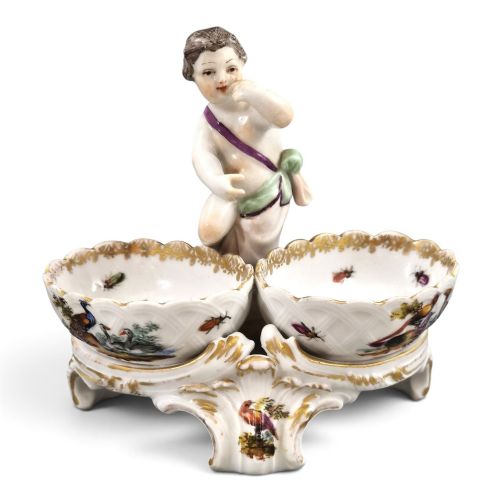
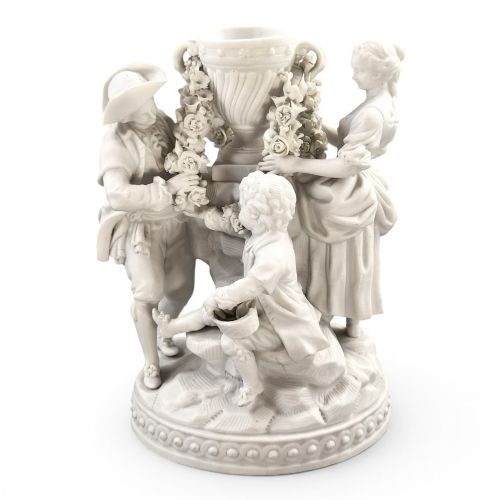
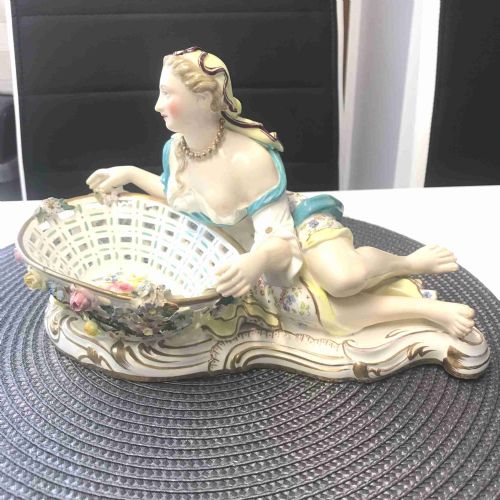
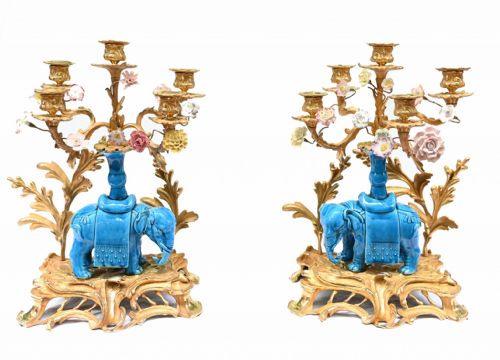
A figural porcelain centrepiece anchors a grand dining table with sculpted figures, rich gilding and elaborate floral arrangements.
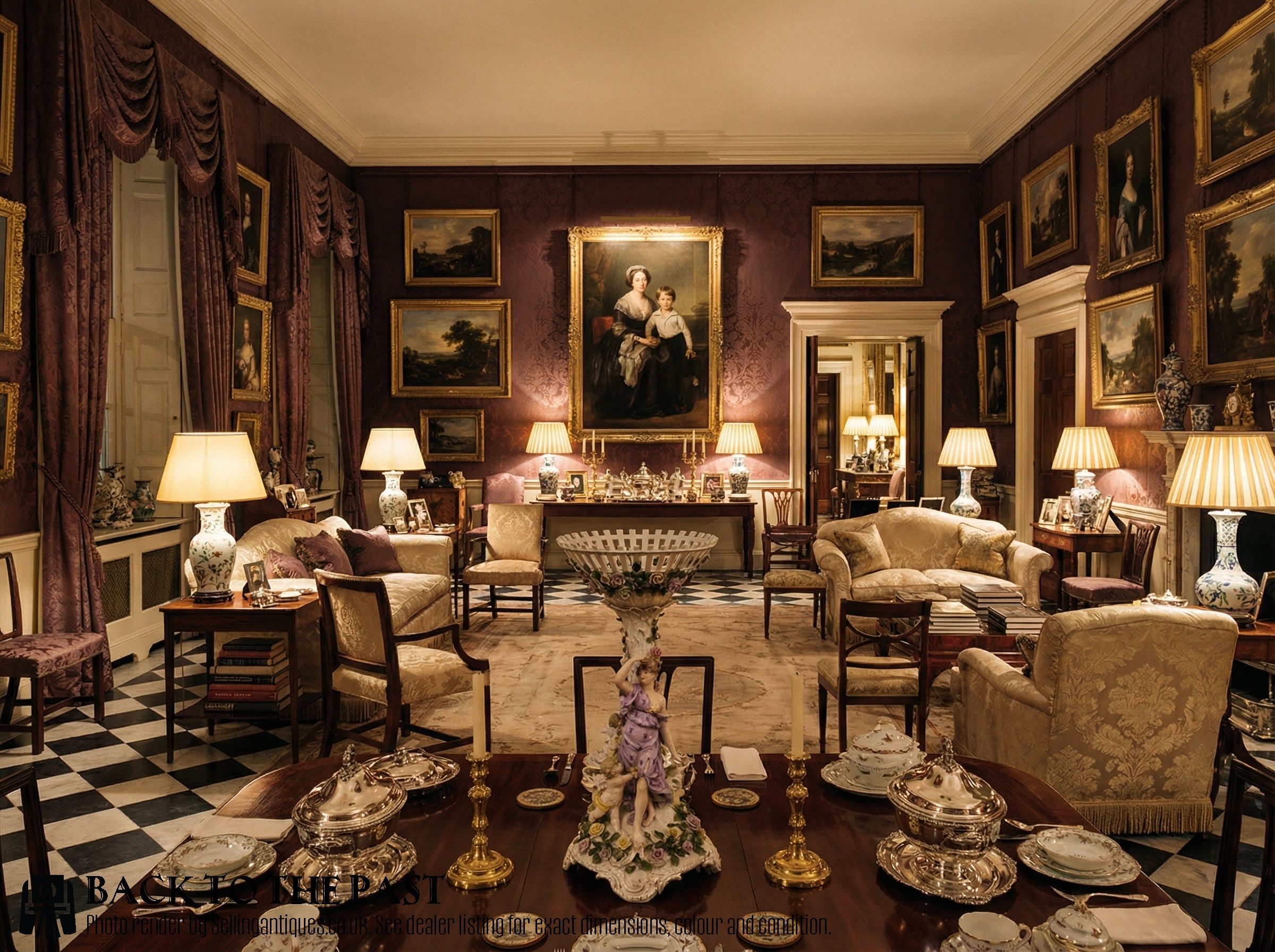
Figural Porcelain Centrepiece
A figural porcelain centrepiece combines functional table vessels with sculptural human, animal or mythological figures. These grand arrangements often take the form of open bowls, sweetmeat dishes, flower carts or multi-armed candelabra designed to command attention.
Most examples encountered date from the nineteenth century, spanning Victorian and Edwardian periods, alongside earlier eighteenth-century productions. Makers across Germany, France and Austria shaped these elaborate porcelain assemblies for wealthy dining rooms.
The decorative vocabulary draws heavily from Rococo revival curves and flowing Art Nouveau lines. Figures of maidens, cherubs and bathers interact with seashells, foliage and gilded cartouches to form striking tablescapes.
Materials and production methods
Manufacture relies on hard-paste porcelain, biscuit porcelain and bisque porcelain, shaped through intricate moulding and hand-modelling. Artisans applied detailed enamel painting by hand before firing the pieces at high temperatures.
Many items incorporate gold leaf and careful gilding to highlight raised scrolls and structural edges. Delicate elements like floral garlands and birds required immense skill from ceramicists working in established European factories.
Object forms range from punch bowls and sweet baskets to multi-arm candelabra and chariot vases.
Assessing quality and craftsmanship
The application of gilding and enamel colours also distinguishes finer works, showing precise brushwork without pooling or fading. Well-preserved floral garlands and intact applied details reflect the original hand of a master ceramicist.
KPM Berlin·Vieux Paris·Meissen·Kister, Scheibe-Alsbach·Sitzendorf·Royal Dux·Royal Worcester Hadley·Dresden·Ernst Wahliss
The Figural Porcelain Centrepiece Glossary
- Biscuit porcelain
- Unglazed porcelain fired once to leave a matte, stone-like texture resembling marble. This finish highlights the fine details of sculpted figures and facial expressions.
- Hard-paste porcelain
- A durable ceramic compound of kaolin and petuntse fired at very high temperatures. It forms a dense, bright white body capable of holding sharp moulded details.
- Comport
- A raised dish or bowl used for serving fruit or sweets at the centre of a table. These pieces often stand on an elaborate pedestal supported by figural groups.
- Sweetmeat dish
- A small vessel designed for holding confectioneries, nuts or dried fruits. In figural pieces, these dishes are frequently borne aloft by cherubs or maidens.
- Cartouche
- An ornamental frame with a curved, scroll-like border used to enclose painted scenes or crests. They appear frequently on the bases and bowls of nineteenth-century table pieces.
Figural Porcelain Centrepiece: Frequently Asked Questions
How were figural porcelain centrepieces used?
These large table ornaments held fruit, sweetmeats or flowers during formal nineteenth-century dining. They served as conversation pieces that demonstrated the host's taste and wealth.
Placed directly in the middle of the dining table, their candelabra and sculptural groups provided both illumination and decorative splendour throughout long banquets.
How do I identify a nineteenth-century piece?
Nineteenth-century works often display characteristic Rococo revival scrolls or sweeping Art Nouveau contours. Look for painted enamel details combined with heavy gilding and biscuit porcelain figures.
Factory marks on the underside, combined with the specific weight and translucency of the hard-paste porcelain, help confirm the production era.
How should I clean porcelain centrepieces?
Dust these delicate items gently with a soft, dry brush to protect fragile applied flowers and painted surfaces. Avoid submerging pieces with old gilding or delicate enamel work in water.
Professional restoration may be needed for old repairs, so handle multi-part candelabra and figural bowls with extreme care during relocation.