


Cream Porcelain Centrepiece
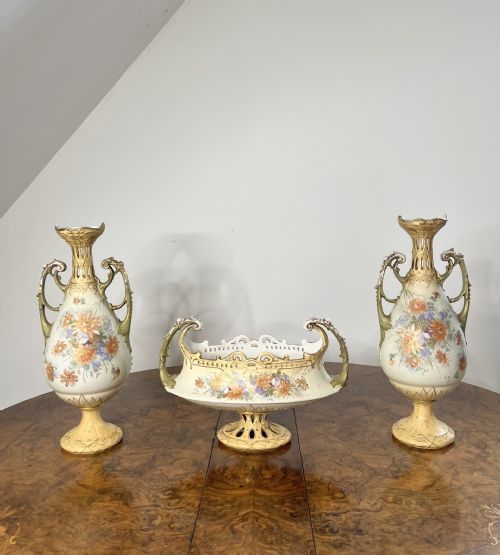
A cream porcelain centrepiece brings commanding table presence through sculptural forms and hand painted details spanning the Georgian era to the mid-twentieth century.
Cream Porcelain Centrepiece
A cream porcelain centrepiece serves as a striking focal point for a table or sideboard, uniting sculptural artistry with functional presentation. When you search for a cream porcelain centrepiece, you encounter items ranging from elaborate figural compositions to large decorative bowls.
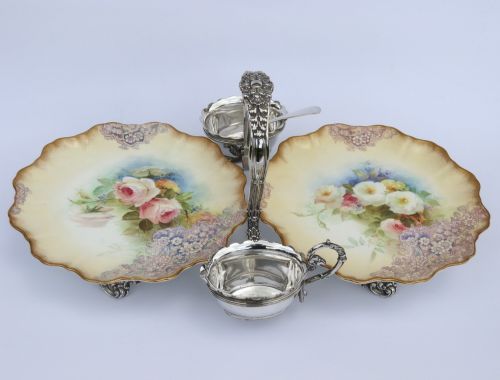
The pieces listed here span the Georgian period, the Victorian era, and the early twentieth century, taking the form of centrepieces, decorative bowls, and figural vases. You are most likely to meet Victorian and Edwardian examples featuring soft cream glazes, hand painted botanical scenes, and figural models such as bathers or shell motifs.
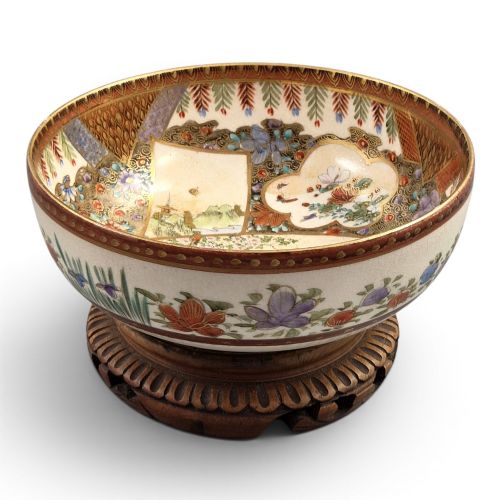
Makers and factories represented include Royal Vienna, Royal Dux, Royal Worcester, and Doulton Burslem alongside Japanese Satsuma and French soft-paste porcelain. Styles stretch across Rococo Revival, Art Nouveau, and Meiji period designs, offering diverse aesthetic choices for period interiors.
Judging quality and execution
The preservation of original gilding and enamel colours without excessive rubbing determines the visual impact of a centrepiece. Intricate openwork, substantial scale, and distinct maker signatures further separate ordinary items from exceptional examples.
Design styles span Rococo Revival, Art Nouveau, and Meiji period Japanese ceramics.
Royal Vienna·Walker and Hall·Doulton Burslem·Royal Dux·Royal Worcester
The Cream Porcelain Centrepiece Glossary
- Bisque porcelain
- Unglazed ceramic body fired to a matte, porous finish that resembles marble and highlights sculptural detail.
- Soft-paste
- Early ceramic composition fired at lower temperatures, producing a warm cream tone and a slightly softer glaze texture.
- Gilding
- Application of gold leaf or powdered gold to ceramic surfaces, enhancing decorative borders and sculptural highlights.
- Garniture set
- A matched group of vases or ornaments designed to be displayed together on a mantelpiece or sideboard.
- Enamel
- Opaque vitreous composition fused to the porcelain surface to provide durable, colourful painted decoration.
Cream Porcelain Centrepiece: Frequently Asked Questions
What periods do these centrepieces cover?
The listings encompass items from the Georgian period through the nineteenth century, including Victorian and Edwardian eras, up to the 1940s.
Art Nouveau and Rococo Revival styles dominate the chronological spread alongside Japanese Satsuma and Meiji period pieces.
How were these large centrepieces used?
Large ceramic centrepieces functioned as decorative table garnitures for grand dining occasions, holding fruit, flowers, or sweetmeats.
Figural and sculptural variants were also displayed on sideboards and consoles to demonstrate the host's refined taste.
How do I distinguish factory marks?
Factories such as Royal Worcester and Royal Dux utilised distinctive printed and impressed backstamps beneath the glaze to indicate period and origin.
Signatures from individual artists or specialised studios occasionally appear alongside the primary factory marks.
How should I care for cream porcelain?
Maintain porcelain centrepieces by dusting gently with a soft, dry cloth to protect delicate hand painted surfaces and gilding.
Avoid immersion in water, particularly for pieces with silver plate mounts or fragile enamel work.