
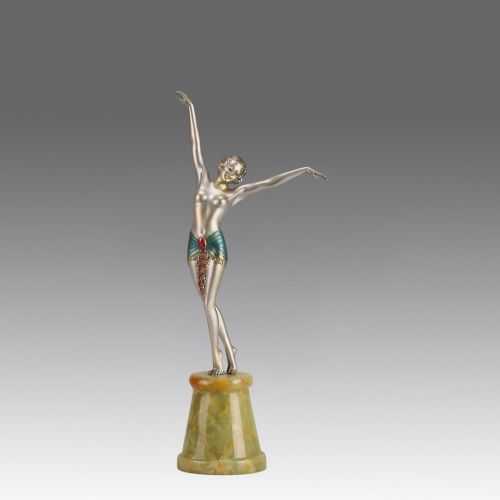
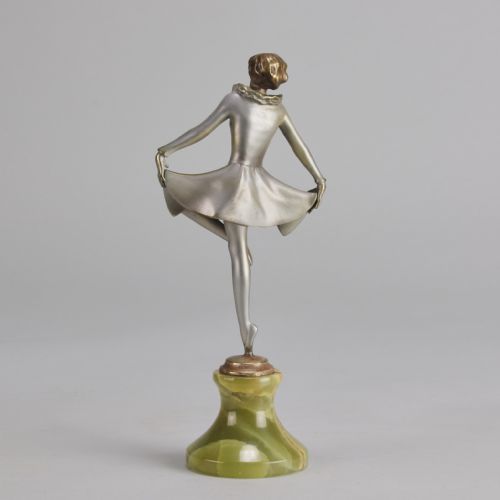


Female Dancer Bronze Statuette
A female dancer bronze statuette captures the kinetic energy of early twentieth-century movement through metal and stone.
Female Dancer Bronze Statuette
A female dancer bronze statuette embodies the sculptural ambitions of the early twentieth century, spanning the Art Nouveau and Art Deco movements. These figures capture motion, from balanced poses to high kicks and outstretched arms, depicting named characters such as Trouser Girl, Egyptian Dancer, and Starfish Dancer.
The version most commonly met on this page is the French or Austrian Art Deco bronze figure produced around 1920 to 1930. These works frequently stand upon integral bases of marble, onyx, or alabaster, elevating the dancer and providing a solid foundation for the metalwork.
Makers and sculptors of the period rendered the female form through distinct stylistic lenses, ranging from naturalistic harvest dancers to stylised modernist performers. The resulting objects function both as tabletop sculptures and larger cabinet pieces.
Materials and Technique
The primary metal utilised in these pieces is bronze, cast to capture intricate drapery, hair, and musculature. Artisans frequently applied cold-painted finishes, silvering, or gilt surfaces to heighten visual contrast and decorative appeal.
Alternative compositions include spelter, an alloy employed as a substitute for bronze during the period. Spelter figures often received painted or metallic finishes to simulate solid bronze.
Sculptures are mounted upon stone bases, utilising materials such as marble, onyx, and alabaster. These bases anchor the dynamic postures of the dancers.
Materials recorded across the inventory include bronze, spelter, silvered bronze, cold paint, gilt bronze, onyx, marble, alabaster, and enamel.
Judging Quality and Execution
The application of surface treatments, such as cold-painting, silvering, or gilding, distinguishes fine studio output from mass production. Well-preserved pigment and metal plating indicate careful historic handling.
The choice and integration of the stone base matter considerably. Dancers mounted on substantial marble or onyx plinths demonstrate a more harmonious design than those on simple or replacement footings.
Josef Lorenzl·Demetre H. Chiparus·Claire Jeanne Roberte Colinet·Bruno Zach·Pierre le Faguays·Mario Korbel
The Female Dancer Bronze Statuette Glossary
- Cold-Painted
- Paint applied to a metal object without subsequent firing or heat treatment. This technique allows for polychrome details on bronze surfaces.
- Spelter
- A zinc alloy utilised as a less expensive alternative to bronze for decorative figures. It requires careful handling due to its relative softness compared to copper alloys.
- Art Deco
- A design style dominant in the 1920s and 1930s characterised by sleek lines, geometric abstraction, and stylised representations of the human form.
- Art Nouveau
- An international style prominent around 1910 that prioritised organic, asymmetrical lines inspired by natural plant and floral forms.
- Silvered Bronze
- Bronze that has been coated with a thin layer of silver to create a luminous, reflective surface finish.
Female Dancer Bronze Statuette: Frequently Asked Questions
What materials make up these statues?
The primary metals are bronze and spelter, often enhanced with cold-painting, silvering, or gilding. These figures are typically mounted on bases carved from marble, onyx, or alabaster.
Stonework varies by piece, with denser marbles and onyx providing both visual weight and stable support for slender dancing postures.
How do I care for cold-painted bronze?
Dust the surface gently with a soft, dry brush and avoid liquid cleaners that can strip delicate pigments. Keep the piece away from direct sunlight to prevent paint fading.
Temperature stability matters as much as cleaning, so position the sculpture away from direct heat sources to protect the painted finish.
Are these figures solid bronze?
Many examples are cast in solid bronze, though hollow casting was also common to manage weight and material cost. Certain pieces utilise spelter instead of bronze.
Examining the underside or mounting points often reveals the casting method and the nature of the underlying metal.
When were these figures produced?
The listings on this page date primarily from the early twentieth century, spanning the decades between 1900 and 1930. Art Deco works from the 1920s and 1930s dominate the selection.
Earlier examples from the Art Nouveau period around 1910 reflect a softer, more organic approach to the dancing female form.