




Feather Inlaid Walnut Chest
These feather inlaid walnut chest examples bring rich grain and subtle banding to any room, offering timeless storage built from figured timber.
Feather Inlaid Walnut Chest
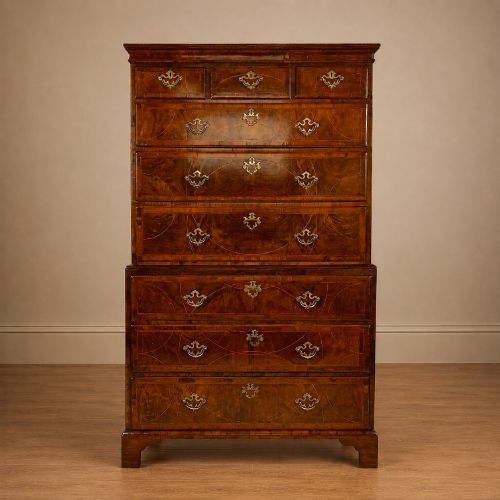
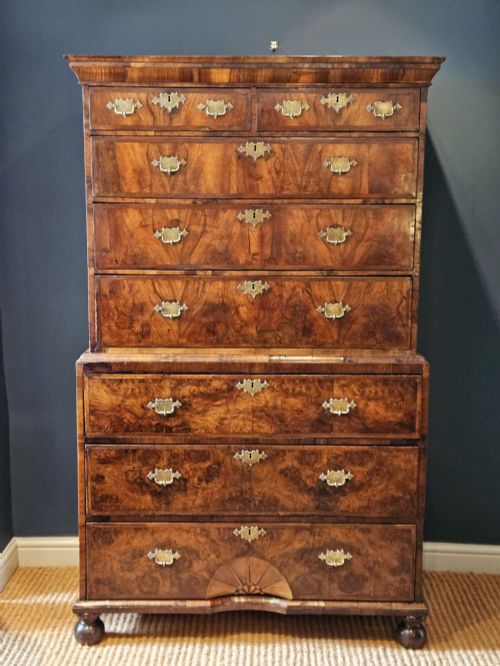
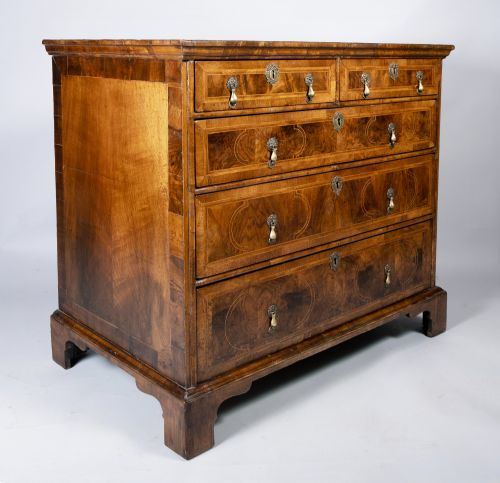
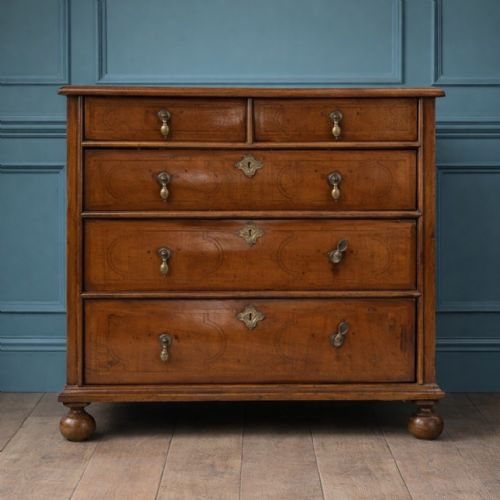
A feather inlaid walnut chest is a sophisticated storage piece featuring distinctive decorative banding around the drawer edges and top surfaces. You encounter these items in forms ranging from standard chests of drawers to taller chest on chest configurations.
The pieces on this page span the late seventeenth and eighteenth centuries, including William and Mary, Queen Anne, George I, and George II periods. Walnut and burr walnut dominate the timber choices, often supported by oak linings.
Makers of this era utilised figured walnut veneers laid upon firmer carcases, creating intricate patterns enhanced by feather inlay and cross-banding. Buyers seeking this aesthetic will find both compact chests and imposing tallboys originating from these defining eras.
How They Were Made
Cabinetmakers constructed these pieces using dense walnut veneers applied over secondary timbers such as oak, creating stable carcases that resist warping. The decorative banding involves cutting thin strips of veneer at precise angles to form the signature herringbone or feather effect.
Brass hardware, including drop handles and escutcheons, was secured to the drawer fronts to complement the dark, figured timber. Polish and wax finishes were built up over the burr walnut surfaces to highlight the natural grain variations and protect the delicate inlay.
Materials appearing across the inventory include solid oak, brass hardware, and figured walnut veneers enriched by intricate feather banding.
What Varies in Quality
The richness of the burr walnut figure and the precision of the feather banding set the finest examples apart from simpler work. Finer pieces display continuous grain matching across the drawer fronts, whereas lesser versions show disjointed timber selection.
Proportion and the retention of original brass mounts heavily influence the character of each piece. Superior execution is evident in the crispness of the cross-banding and the harmonious integration of the upper and lower sections on tallboys.
The Feather Inlaid Walnut Chest Glossary
- Feather banding
- A decorative inlay technique where two strips of veneer are cut and joined at an angle to resemble a bird feather. This detail frames drawer perimeters on better walnut furniture.
- Tallboy
- A tall chest of drawers, often constructed as a chest on chest where a smaller upper section sits upon a larger base. It provides extensive vertical storage while occupying minimal floor space.
- Cross-banding
- A border technique where strips of veneer are laid perpendicular to the main grain of the surface. It creates a neat framing effect around drawer fronts and tabletops.
- Burr walnut
- Timber taken from the gnarled growths of a walnut tree, yielding highly figured and swirled grain patterns. Cabinetmakers reserved this prized material for primary display surfaces.
- Line inlay
- Thin contrasting strips of wood inserted into channels flush with the surface to form geometric borders. This technique adds subtle definition to drawer margins.
Feather Inlaid Walnut Chest: Frequently Asked Questions
What is a feather inlaid walnut chest?
A feather inlaid walnut chest is an eighteenth-century storage piece decorated with angled veneer borders around the drawers. These items showcase figured timber and careful cabinetmaking.
They serve as practical drawer units while functioning as statement furniture due to their rich grain patterns and decorative banding.
How do I date a walnut chest?
Dating relies on observing construction methods, handle styles, and prevailing architectural trends of the period. Pieces from the late seventeenth century differ in proportion and foot style from later Georgian examples.
Changes in drawer linings, such as the shift from oak to deal, also help establish the chronological context of the item.
Where were these chests used?
These chests were originally placed in bedchambers and private dressing rooms to store garments and linens. Their refined appearance meant they were often kept in principal family rooms.
Today, they function well in hallways, living rooms, and bedrooms as both display surfaces and functional storage units.
How do I care for antique walnut?
Caring for antique walnut involves keeping the timber away from direct heat sources and sudden humidity changes. Regular waxing with traditional beeswax maintains the lustre of the finish.
Avoid using modern liquid polishes, which can build up residue and dull the natural figure of the burr walnut.