



Farmhouse Rush Seat Chairs
Farmhouse rush seat chairs bring honest domestic craft into the room, combining local timbers with woven seating built for everyday life.
Farmhouse Rush Seat Chairs
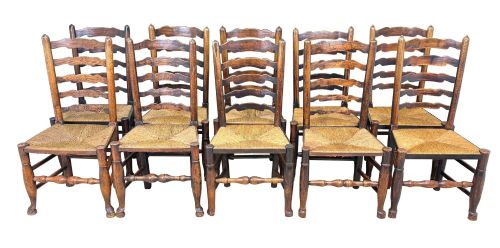
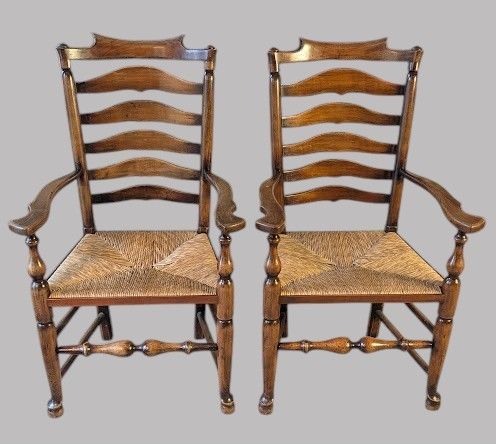
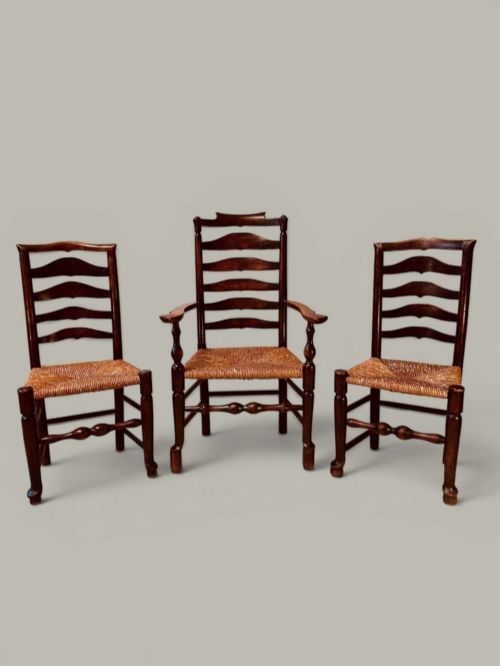
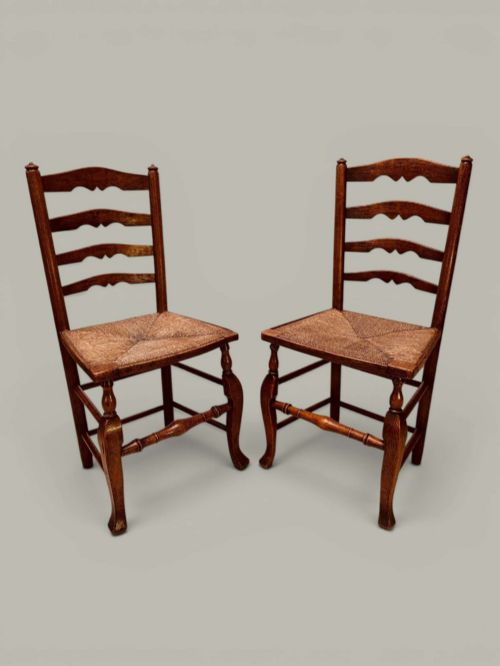
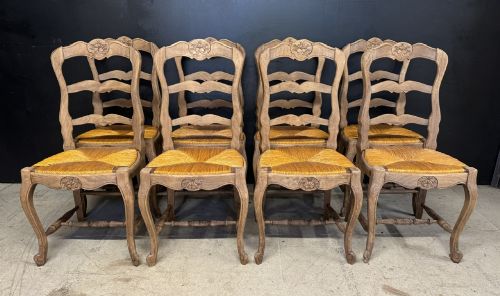
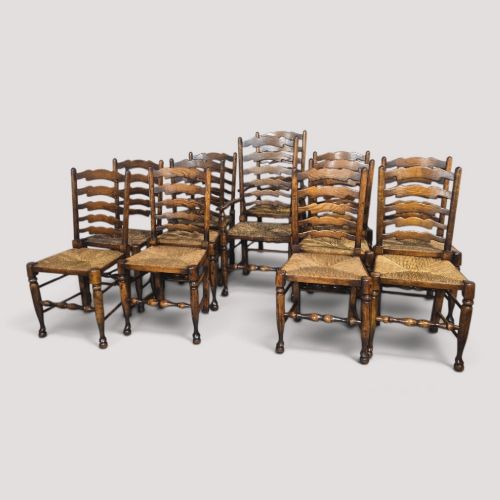
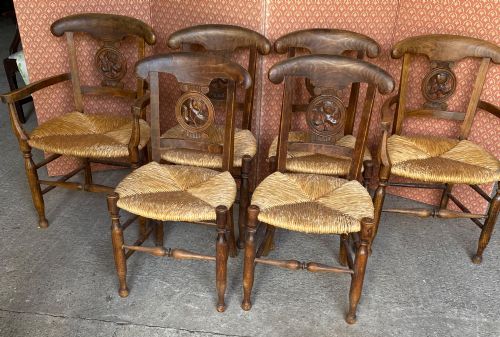
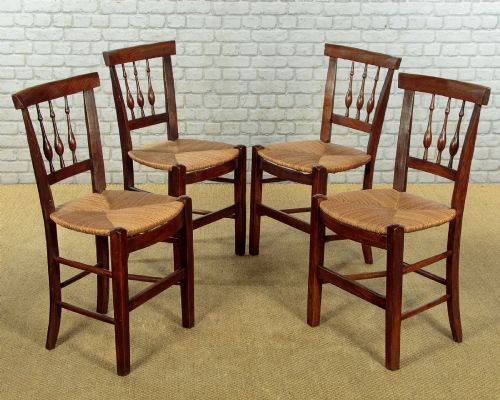
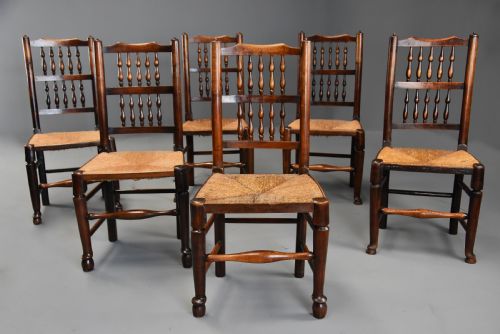
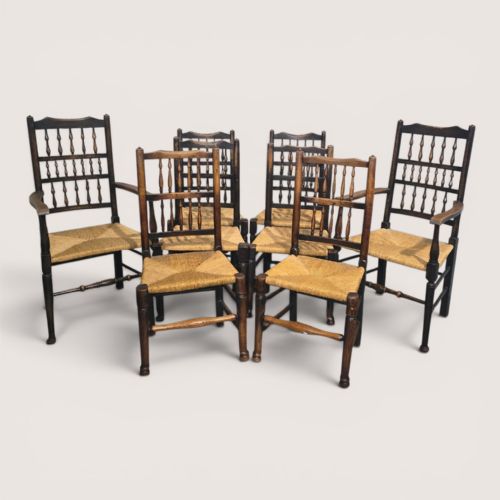
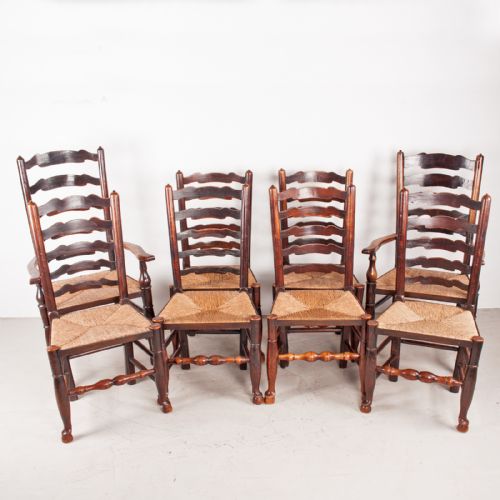
When you search for farmhouse rush seat chairs, you encounter robust domestic seating produced across the nineteenth and early twentieth centuries in regional workshops. These pieces appear mainly as dining chairs and armchairs, often gathered in sets that range from four to ten pieces or more.
The styles encompass English country, Victorian country, French provincial, and vernacular traditions. Makers utilised local timbers to build sturdy frames designed for heavy kitchen and dining use.
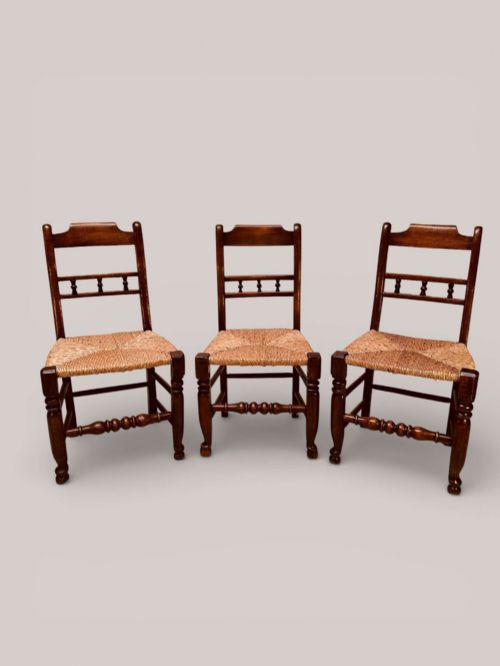
Most examples rely on traditional ladder back or spindle back configurations to support the seated occupant. The combination of turned wooden uprights and woven rush creates a functional form that has endured for generations.
Materials and construction
The framework of these chairs relies on native hardwoods such as oak, elm, ash, and fruitwood. Carpenters turned spindles on lathes and shaped solid timber seats to receive the woven plant fibres.
Rush was twisted into cords and hand-woven tightly across the seat frame to form a durable, supportive surface. This traditional method distributed weight evenly while allowing the natural material some flexibility.
Farmhouse Rush Seat Chairs Retail Price Guide 2026
Typical asking prices for farmhouse rush seat chairs among the pieces listed under this phrase on Sellingantiques today, from the lower quarter to the upper quarter. They describe what is for sale here now, not the wider market.
Listings feature timbers including oak, elm, ash, and fruitwood across nineteenth and early twentieth-century periods.
Factors that distinguish examples
Quality in these chairs rests upon the integrity of the wooden frame and the tightness of the woven rush. Tighter, more uniform weaving and heavier gauge timber indicate superior craftsmanship from regional workshops.
The visual appeal of the timber surface, whether showing deep patination through age or clean grain in fruitwood and oak, dictates the standing of the piece. Complete sets matched in timber and turning also command greater attention than harlequin collections.
The Farmhouse Rush Seat Chairs Glossary
- Rush seat
- A seating surface formed by twisting dried marsh grass or flag rush into cords and weaving them tightly around the seat rails. This technique creates a resilient and supportive pad.
- Ladder back
- A chair back featuring horizontal wooden slats between the upright posts. These slats provide back support and often define the regional style.
- Spindle back
- A chair back constructed with numerous thin, turned wooden uprights rather than solid slats. This design lightens the frame while maintaining structural strength.
- Patina
- The surface sheen and colour developed by wood through years of handling, polish, and exposure to light. It serves as an indicator of age and continuous use.
- Harlequin set
- A collection of dining chairs that match in general style or period but differ slightly in minor details, colour, or turning. Such groups were often assembled over time rather than purchased together.
Farmhouse Rush Seat Chairs: Frequently Asked Questions
How do I clean a rush seat?
Keep rush seats clean by brushing them gently with a soft dry brush to remove dust from the woven crevices.
Avoid using water or liquid cleaners, as moisture causes the dried plant fibres to swell, weaken, and eventually rot.
Can I use these chairs daily?
These chairs were built for heavy kitchen and dining use and handle everyday sitting well.
Check the joints periodically to ensure the wooden frames remain tight and stable under regular weight.
What is a harlequin set?
A harlequin set is a group of dining chairs that share a similar style, period, or construction but vary in minor details.
These collections formed naturally as households gathered chairs of the same vernacular type over many years.
How do I date an elm chair?
Dating relies on observing tool marks, the turning style of the spindles, and the overall wear on the timber.
Earlier nineteenth-century pieces often display hand-turned variations, whereas later examples show more uniform machine shaping.