




Carved Medallion Back Chairs
Carved medallion back chairs bring classical symmetry and elegance into a room, offering refined seating shaped by French taste and revival design.
Carved Medallion Back Chairs
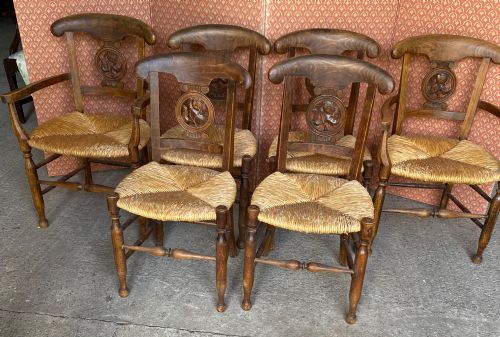
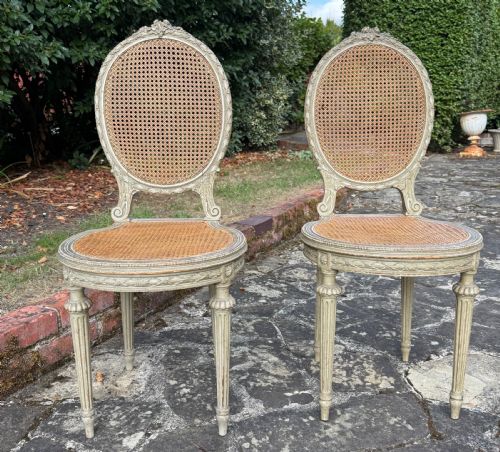
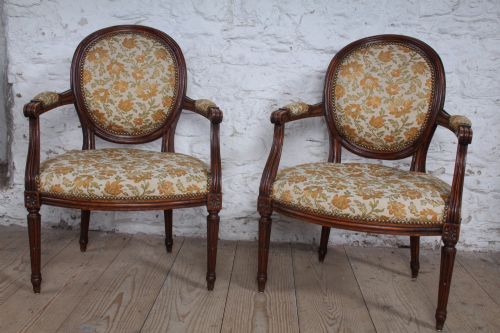
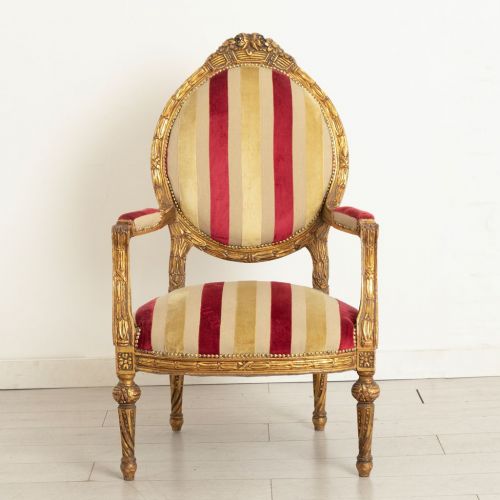
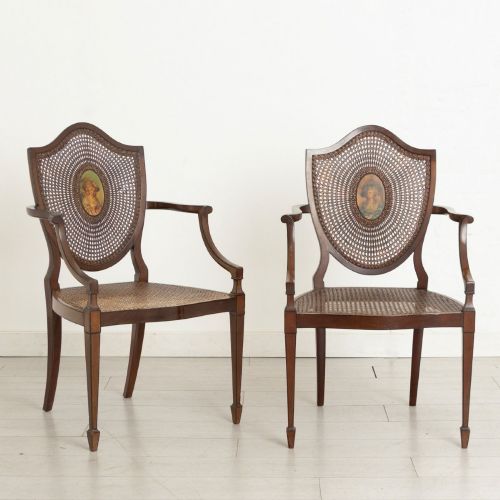
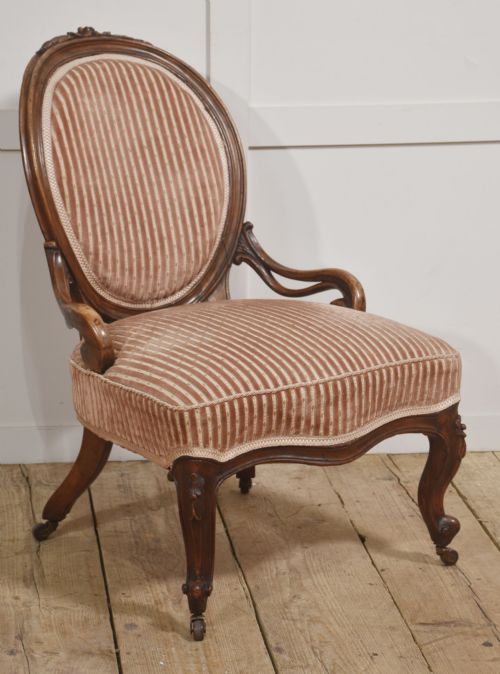
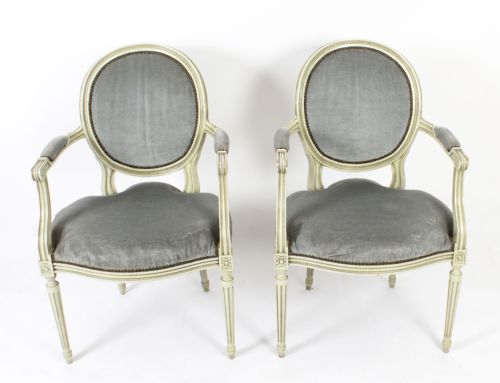
Carved medallion back chairs are defined by their distinctive oval or circular upholstered backs, framed in carved wood or giltwood. These seats draw heavily from French neoclassical design and later revival periods, bringing a formal symmetry to interiors.
The selections available here span several centuries and styles, ranging from 18th-century giltwood armchairs to Edwardian salon seating and 1920s French style open armchairs. Pieces appear in various forms, including armchairs, dining chairs, hall chairs, and nursing chairs.
How they were made
Makers shaped these frames from woods such as walnut and painted wood, often applying a giltwood finish to achieve a rich, metallic appearance. Skilled artisans carved decorative motifs directly into the wooden framework surrounding the oval back.
Upholstery completed the construction, utilising traditional textiles like velvet, fabric, linen, and cane. These materials were secured to provide comfortable padding for the oval backrest and seat.
One notable set previously belonged to Lady Diana at Spencer House.
What varies in quality
The refinement of the wood carving sets individual examples apart, as crisp, deeply carved details display a higher degree of craftsmanship than softer, shallower execution. The choice of finish, whether genuine giltwood or layered paint, significantly impacts the visual depth of the frame.
The structural integrity of the joints and the quality of the chosen upholstery materials, from durable linen to plush velvet, determine the longevity and sustained elegance of each chair.
The Carved Medallion Back Chairs Glossary
- Fauteuil
- An open-armed upholstered armchair with exposed wooden sides, typically associated with French seating of the 18th century and later revivals.
- Giltwood
- Timber treated with gold leaf or a gold-coloured metallic finish, frequently utilised on formal French-style frames.
- Louis XVI Style
- A neoclassical design aesthetic characterised by straight tapered legs, classical symmetry, and oval medallion backs.
- Cane
- Woven rattan material used for seats or backs, offering a light and textured surface.
- Rococo Revival
- A 19th-century design movement favouring asymmetrical scrollwork, naturalistic curves, and ornate decoration.
Carved Medallion Back Chairs: Frequently Asked Questions
What are carved medallion back chairs?
These pieces are decorative seats featuring a distinct circular or oval upholstered backrest framed by carved wood. They draw heavily upon classical French design traditions.
Craftsmen produced them across multiple eras, resulting in variations ranging from formal giltwood armchairs to Edwardian salon seating.
How were these chairs used historically?
Historically, they served as formal seating in parlours, salons, and bedchambers where appearance mattered as much as comfort. Armchairs and open armchairs accommodated guests during social gatherings.
Dining chairs and hall chairs fulfilled specific functional roles within grand residences and domestic interiors.
How do I style a medallion back chair today?
A single armchair functions well as an accent piece in a bedroom or a quiet reading corner. Pairs of salon chairs can anchor a living room seating arrangement.
Sets of dining chairs bring classical symmetry to a dining table when mixed with contemporary or traditional tables.
How do I tell periods apart?
18th-century originals display the hand-carved joinery and patination of their era, whereas 19th-century and Edwardian revival pieces reflect the interpretation of historical styles popular during those decades.
Materials such as ebonised wood, painted finishes, and specific revival motifs help indicate whether a piece dates from the Victorian period or the early 20th century.