
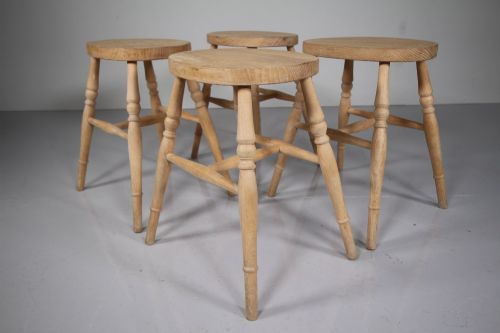
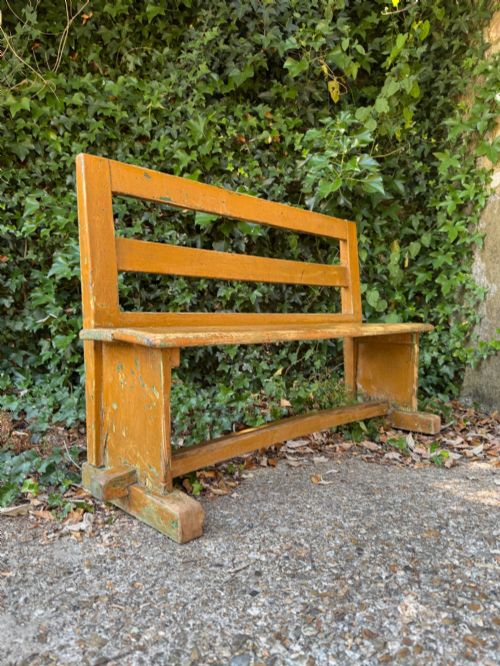
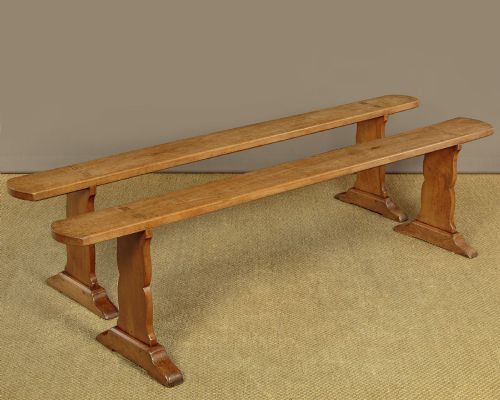
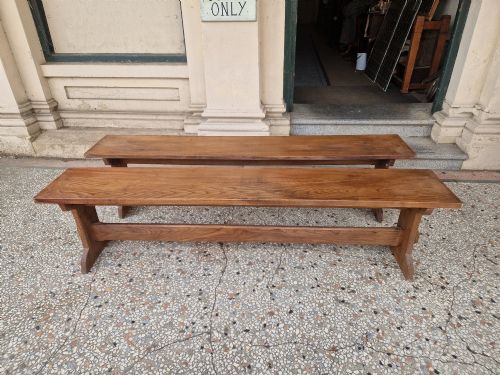

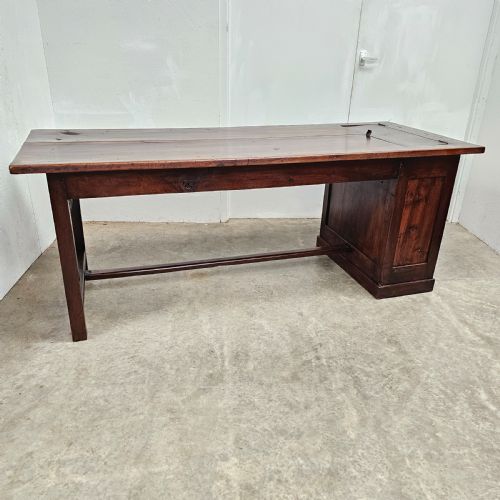


Farmhouse Kitchen Bench
A farmhouse kitchen bench brings everyday utility and honest character into a room, offering simple seating built for hard work.
Farmhouse Kitchen Bench
These items emerge in simple single formats as well as matching pairs, reflecting their original purpose around communal tables and work areas. The selection spans straightforward utilitarian designs from British and European workshops, alongside rustic country variants.
Most examples rely on straightforward construction methods tailored for daily domestic service rather than formal display. Buyers will discover options ranging from long dining benches to shorter work seats shaped by decades of practical use.
Materials and construction methods
Makers relied on robust domestic timbers like pine, oak, elm, and cherrywood, selecting woods that could withstand constant daily friction and weight. Planks were often joined solidly to form thick seats capable of enduring heavy kitchen tasks without flexing.
Surface treatments ranged from natural wax finishes that revealed the grain to layers of old paint applied over generations. Simple pegged joints and sturdy leg structures provided the necessary stability for seating placed directly on uneven flagstone floors.
Listings feature timbers including pine, oak, elm, and cherrywood across nineteenth and early twentieth-century periods.
What defines quality in these benches
Quality rests in the integrity of the timber selection and the retention of honest surface wear rather than smooth factory perfection. Superior examples display substantial plank thicknesses and well-balanced proportions that maintain structural firmness.
The character of the aged patina tells a story of genuine domestic use, distinguishing thoughtfully constructed pieces from later recreations. Original fixings and untouched timber surfaces elevate an example above those that have undergone extensive rebuilding.
The Farmhouse Kitchen Bench Glossary
- Patina
- The surface sheen and colour developed through decades of handling, cleaning, and exposure to light. This gradual ageing process distinguishes period timber from newly finished surfaces.
- Plank-top
- A tabletop or seat surface constructed from joined boards running the length of the piece. This method provided a stable working or sitting area using available timber widths.
- Trestle
- A support structure consisting of horizontal beams and upright legs holding a top board. It allowed for stable placement on irregular domestic floors.
- Primitive
- A descriptor for furniture made with basic tools and straightforward methods, prioritising function over decorative refinement. These items embody unpretentious regional craftsmanship.
- Hardwood
- Timber derived from broad-leaved deciduous trees, such as oak, elm, and cherrywood, valued for its density and durability. These woods formed the skeletal structure of high-use domestic furniture.
Farmhouse Kitchen Bench: Frequently Asked Questions
How do I clean an old pine bench?
Wipe surfaces gently with a slightly damp cloth to remove dust without stripping the historic wax or dry finish. Avoid harsh modern detergents that can lift the aged patina.
Apply a traditional beeswax polish sparingly if the timber appears dry, buffing it gently with a soft brush after application.
Are these benches sturdy enough for daily dining?
Most period examples were built for robust domestic service and easily support regular seating use today. Solid timber construction ensures they remain stable when placed around a kitchen table.
Check that joints remain firm and legs sit squarely on the floor before positioning them for heavy everyday traffic.
How do I date a nineteenth-century bench?
Examine the tool marks on the underside and legs, as hand-sawing and adze work indicate earlier manufacturing methods. Fasteners such as hand-forged nails or wooden pegs also help establish the production era.
Compare the timber shrinkage patterns and surface wear with documented examples from the same regional tradition.
Can I use an elm bench outdoors?
Elm responds poorly to sustained moisture and temperature fluctuations, making outdoor placement risky for historic timber. Damp conditions cause the wood to warp, split, and lose its historic surface character.
Keep these pieces inside regulated indoor environments where the humidity remains relatively stable.