


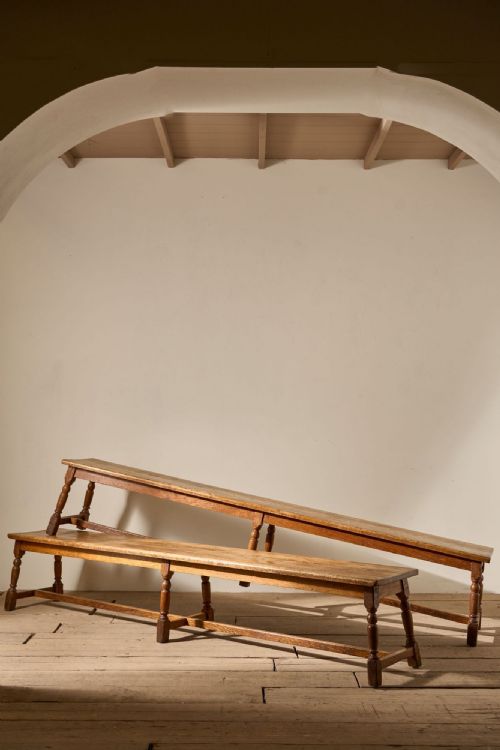


Long Wooden Dining Bench
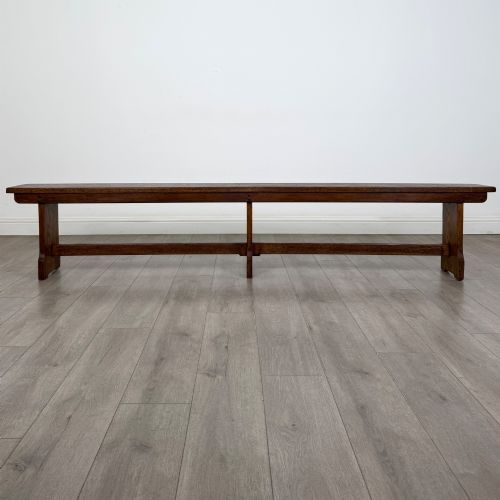
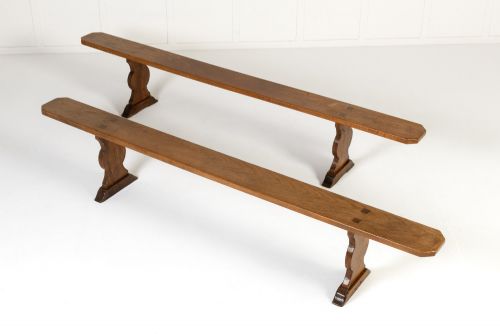
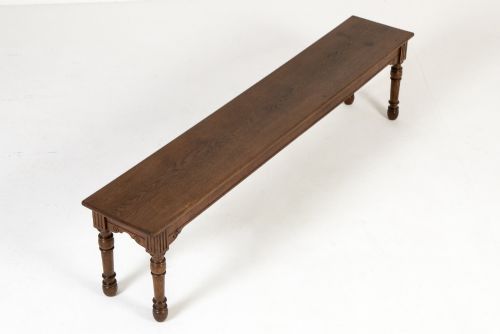
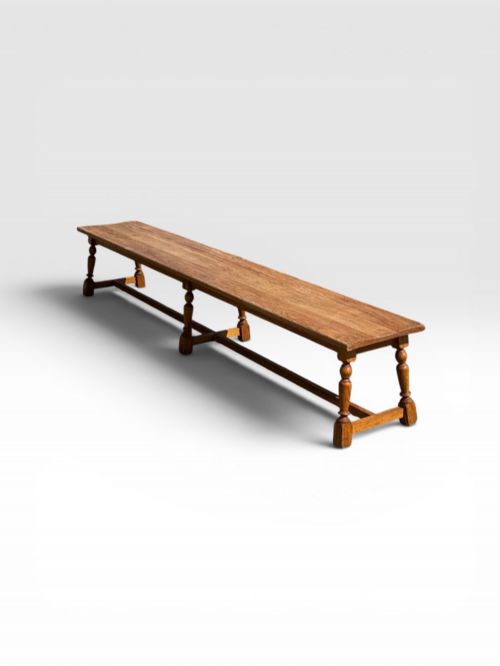
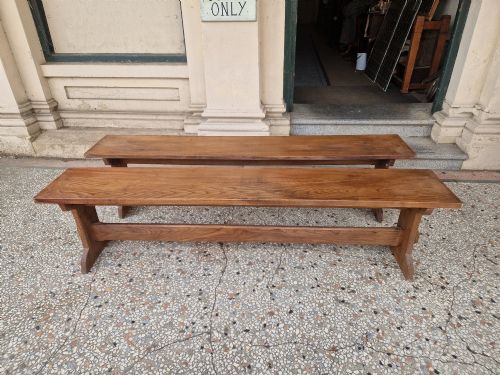
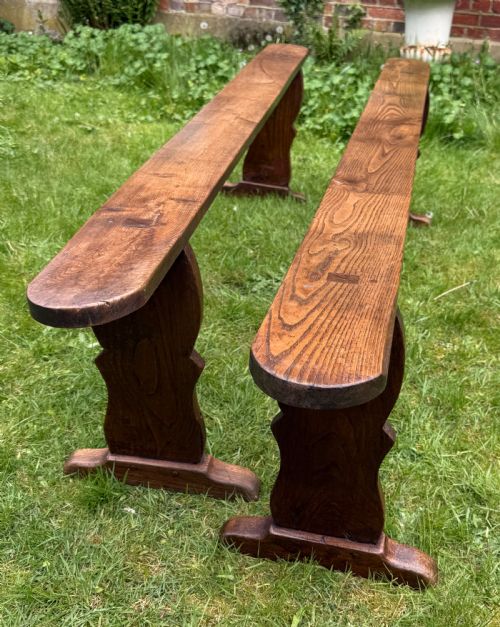
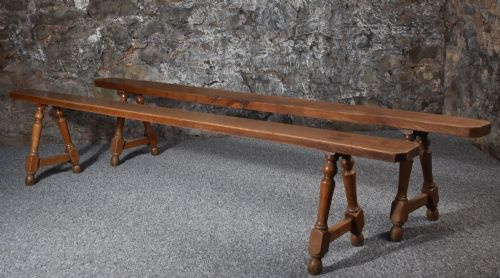
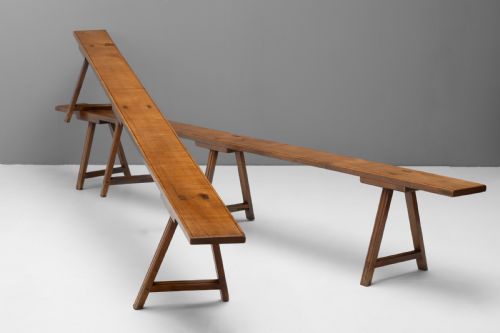
A long wooden dining bench brings simple utility and enduring character to a room, offering generous seating fashioned from solid timber.
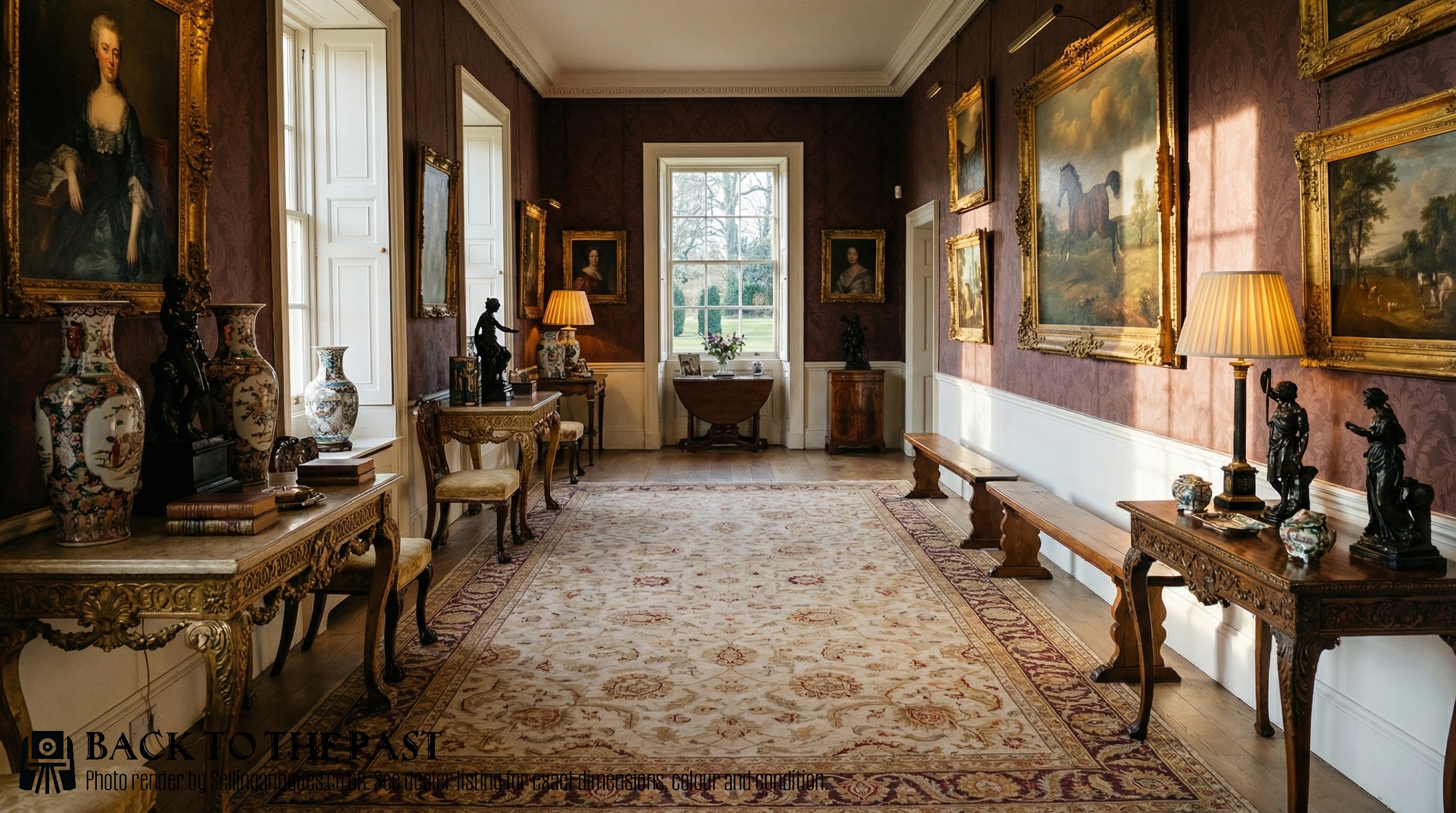
Long Wooden Dining Bench
A long wooden dining bench serves as a practical alternative to individual chairs, accommodating several diners along the length of a table. These pieces originate from domestic, institutional, and commercial settings, ranging from rustic farmhouses to provincial halls.
The versions met most frequently on this page span the eighteenth, nineteenth, and early twentieth centuries. They appear in robust hardwoods like oak and elm, as well as softer timbers such as pine, often reflecting regional English, French, and Scandinavian vernacular traditions.
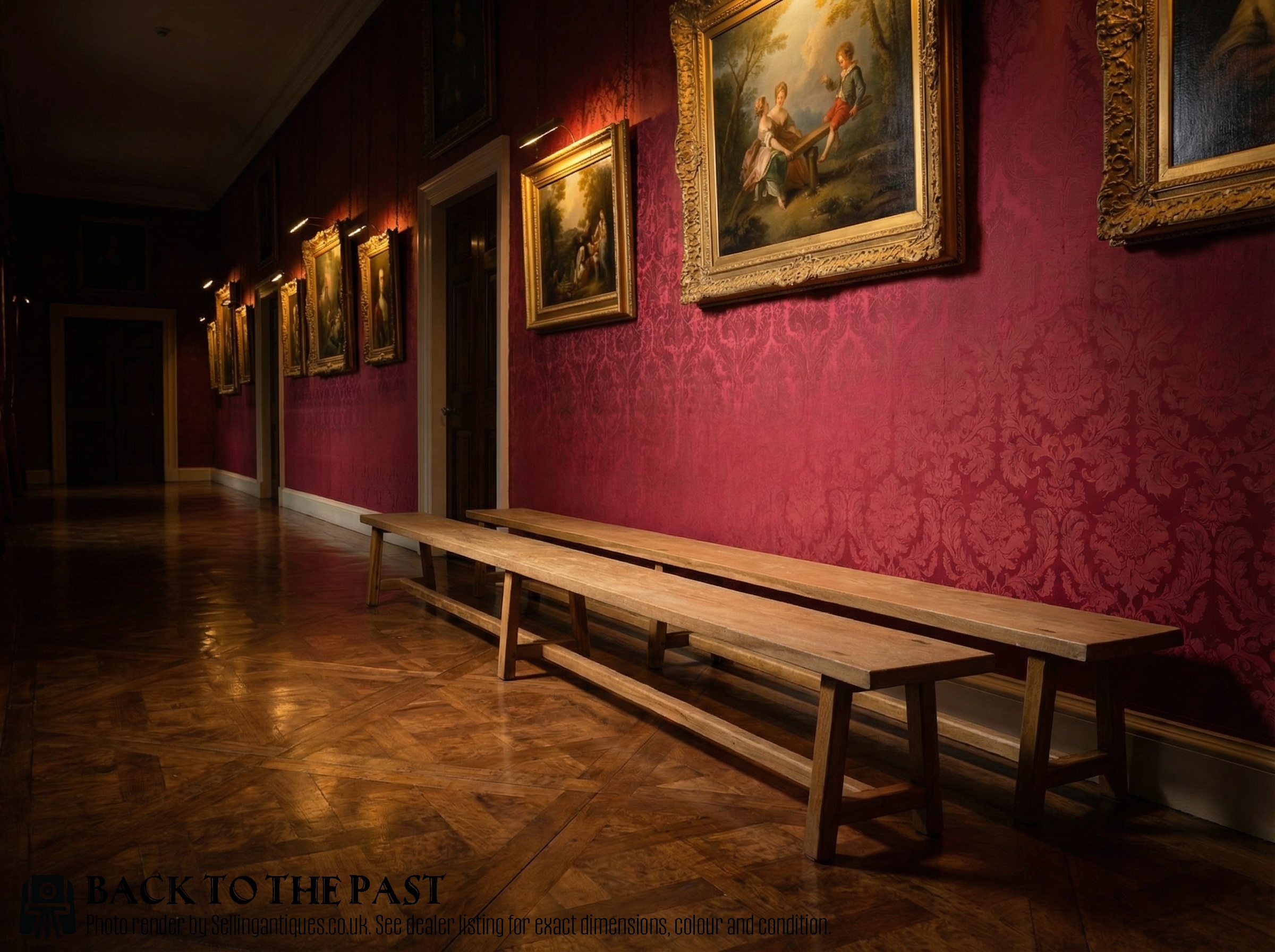
How they were made
Cabinet makers and local joiners constructed these benches using solid timbers including oak, pine, fruitwood, and cherry wood. Structural strength relied on thick planks and robust joints designed to withstand heavy daily use in busy settings.
Surfaces were left natural, waxed, or occasionally painted, allowing the grain and natural markings of the hardwood or softwood to show through years of wear.
What varies in quality
Quality rests in the selection of the timber and the integrity of the original construction rather than surface finish alone. Superior examples utilise thick, stable boards of oak, elm, or fruitwood that remain flat and true over centuries.
Proportion and restraint separate utilitarian pieces from finer vernacular items. Better examples exhibit balanced scaling, particularly in lengthy formats, and maintain their original supporting stretcher systems without excessive replacement parts.
The Long Wooden Dining Bench Glossary
- Tavern bench
- A long, sturdy seat traditionally used in public houses or communal dining spaces. These pieces are built to endure heavy public use.
- Refectory bench
- A long seating form designed to accompany a large dining table in monastic, institutional, or domestic dining halls. They are typically narrow and substantial in length.
- Vernacular furniture
- Domestic pieces made by local craftspeople using regional materials and traditional methods rather than adhering to high-style metropolitan designs. This approach prioritises local utility.
- Stretcher
- A horizontal timber connecting the legs of a bench to provide lateral stability and rigidity. It prevents the legs from bowing outward under heavy loads.
Long Wooden Dining Bench: Frequently Asked Questions
How do I style a long wooden dining bench?
Pair the bench with a matching refectory or farmhouse table to create a cohesive dining arrangement. Allow sufficient clearance underneath for diners' legs.
Soften the seat with loose cushions or animal skins for comfort during long meals. Keep the surrounding floor space clear to highlight the linear form of the timber.
Can I use an antique bench outdoors?
Most antique wooden benches were designed for interior use in homes, schools, or public spaces. Exposure to moisture and temperature extremes can warp the timber and degrade historic finishes.
Keep these pieces indoors unless they are specifically designated as garden furniture. Protect them from direct sunlight and damp environments to preserve the wood.
How do I care for historic wood finishes?
Dust the timber regularly with a dry cloth to prevent dirt accumulation. Avoid modern silicone sprays that can damage old wax and polish layers.
Apply a traditional beeswax occasionally to nourish dry timber and maintain a gentle sheen. Wipe up liquid spills promptly to prevent staining the grain.
What is the difference between oak and pine benches?
Oak benches provide a dense, hard-wearing surface with a prominent grain pattern associated with long service life. They often carry a darker natural patina developed over centuries.
Pine benches offer a lighter visual weight and softer texture, frequently found in painted finishes or Scandinavian styles. They tend to show more dents and marks from everyday use.