

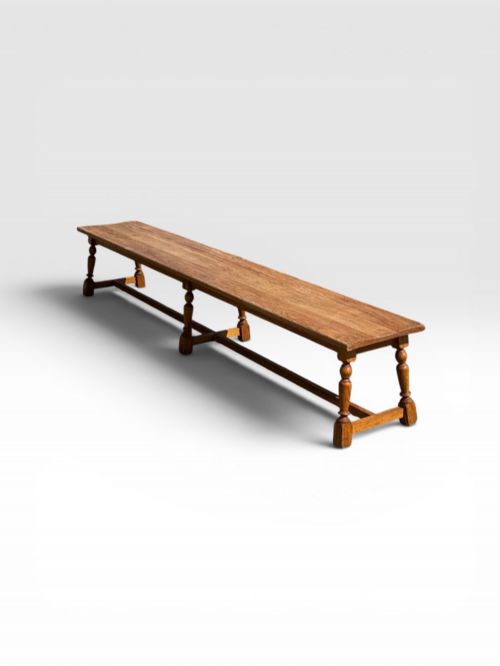
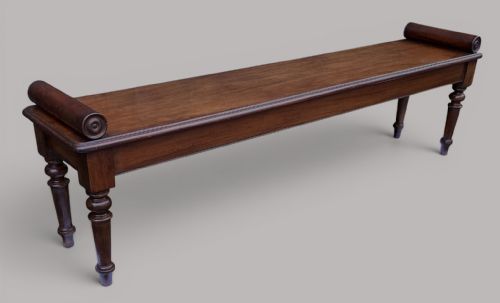
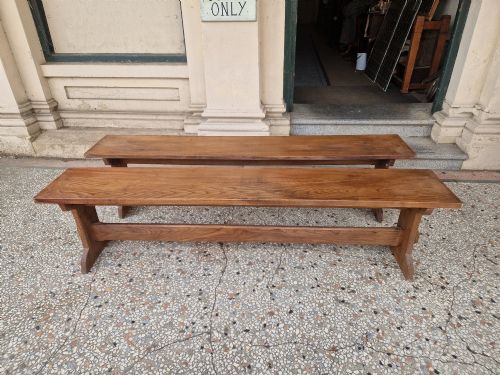

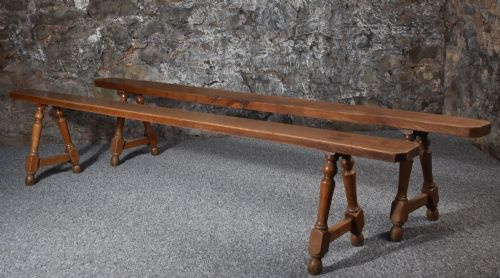

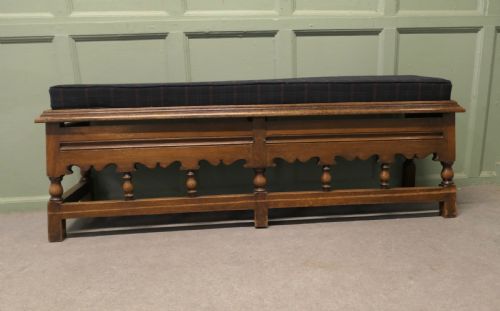
Long Wooden Hall Bench
A long wooden hall bench brings scale and practical timber character to an entranceway, drawing on centuries of vernacular and formal furniture design.
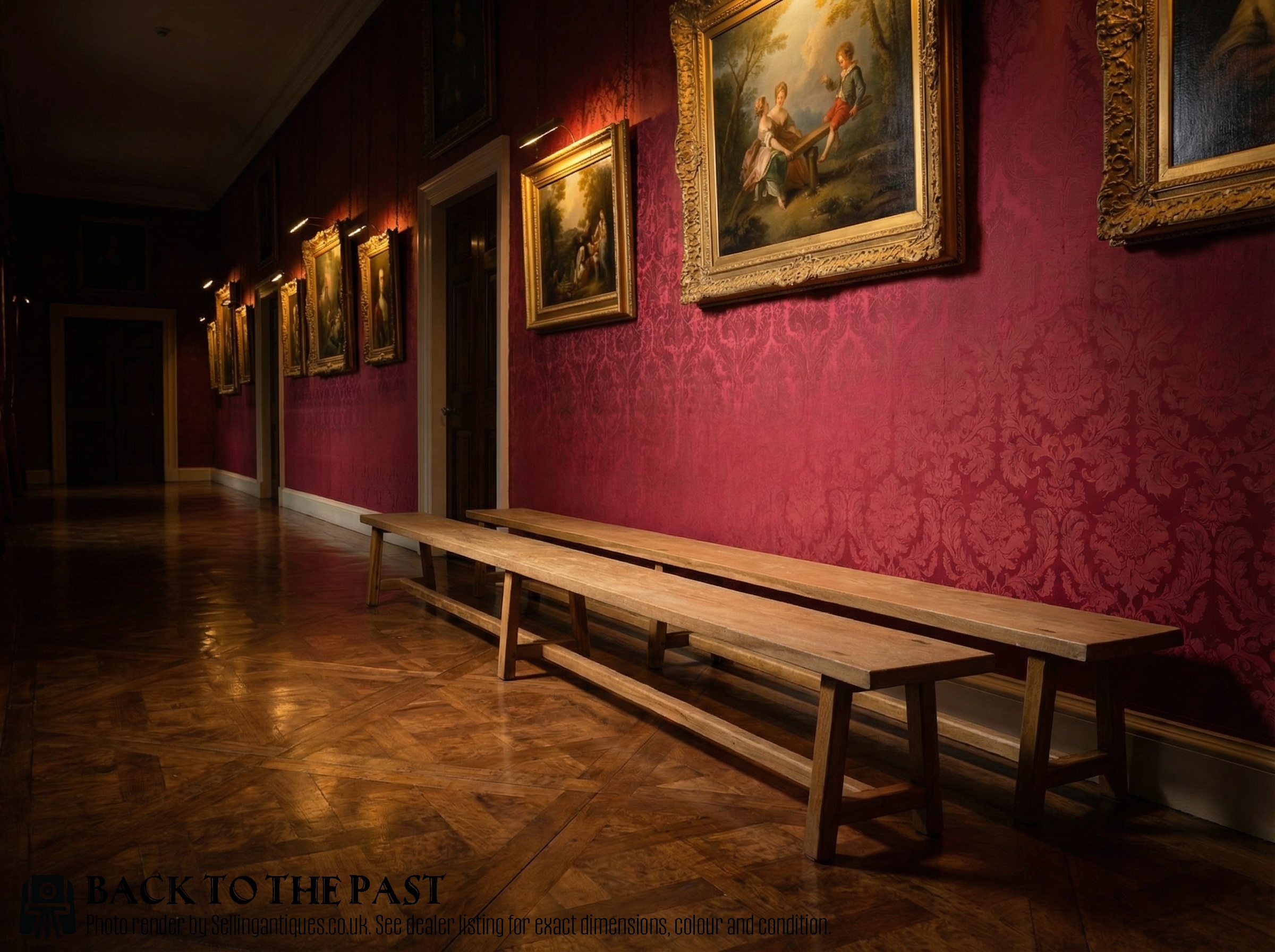
Long Wooden Hall Bench
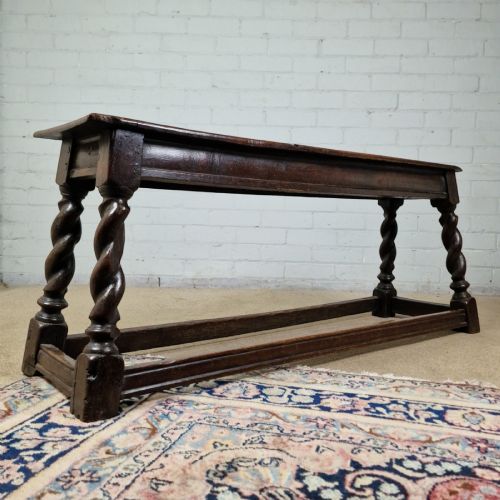
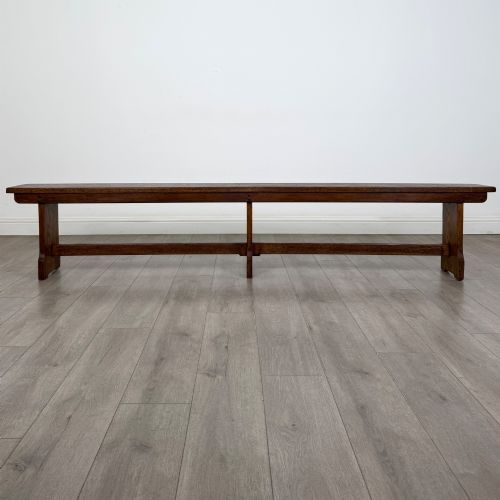
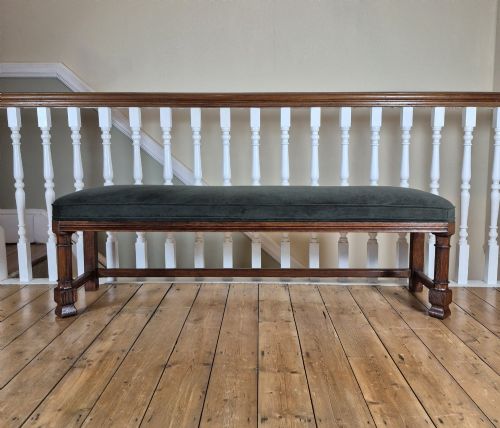
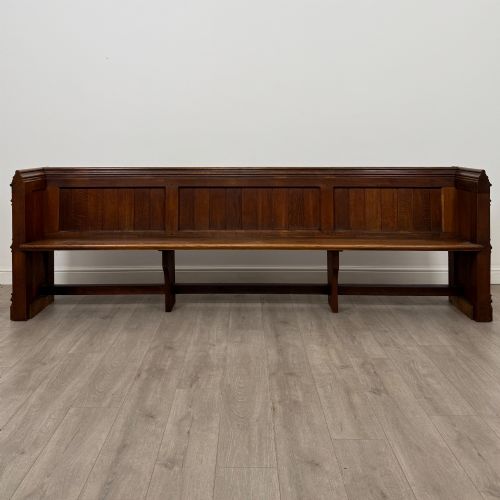
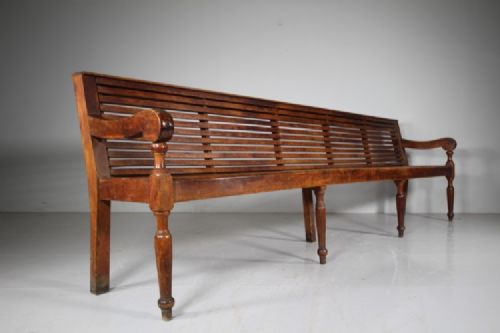
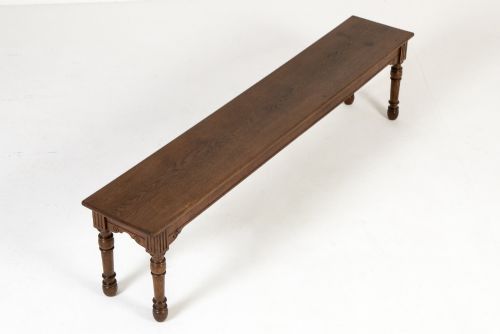
A long wooden hall bench serves as substantial seating for large passageways, public rooms, and country houses, often appearing in lengths stretching from six to nine feet. When you search for a long wooden hall bench, you encounter forms ranging from rustic farmhouse seating and tavern pews to refined Regency mahogany window seats.
The material foundations span native and continental timbers, with oak, pine, and walnut forming the backbone of the selection. Pieces emerge from diverse historical contexts, including Irish country houses, French provincial workshops, and ecclesiastical settings.
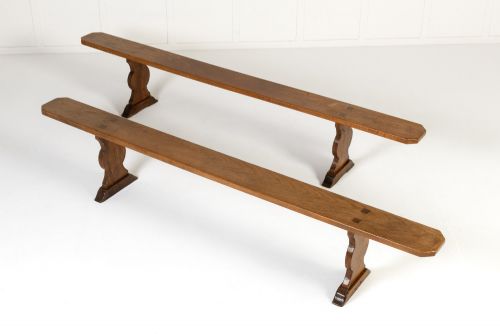
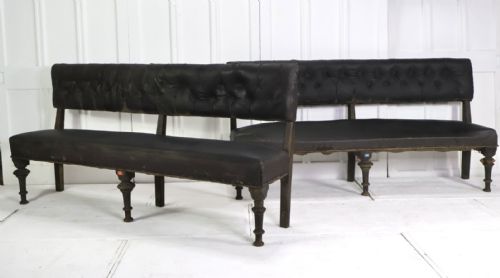
Design vocabulary shifts across the periods represented, moving from joined 18th-century oak frameworks to Victorian ebonised finishes, Gothic revival detailing, and Edwardian proportions. Many survive as pairs, offering symmetrical furnishing options for extensive corridors.
The Measure of Quality
Excellence in these seating pieces rests upon timber selection, structural honesty, and the preservation of original surfaces. Benches fashioned from dense, old-growth oak or finely figured mahogany with uncompromised timber thickness sit at the upper end of the scale.
Proportion and execution define the distinction between utilitarian workshop output and high-status commission work. Pieces retaining their original unaltered length, patinated finish, and integrated structural supports demonstrate superior craftsmanship compared to heavily modified examples.
Several examples retain the quiet dignity of waiting room slates and archiepiscopal palaces.
The Long Wooden Hall Bench Glossary
- Tavern bench
- A long, robust wooden seat historically utilised in public houses and commercial spaces. These pieces prioritised heavy-duty construction and stability over decorative refinement.
- Window seat
- A specialised bench proportioned to sit within the recess of a large window. They frequently feature upholstered tops or shallow depths suited to contemplative sitting.
- Pegged construction
- A traditional joinery method utilising wooden pins to secure mortise and tenon joints. This technique accommodates seasonal timber movement without relying on modern adhesives.
- Ebonised
- Wood treated with chemical stains or dark finishes to imitate ebony. This decorative process gained popularity during the Victorian era for formal seating.
- Vernacular furniture
- Domestic objects made by local tradespeople using regional materials for everyday utility. These pieces reflect traditional local craftsmanship rather than metropolitan academic styles.
Long Wooden Hall Bench: Frequently Asked Questions
How were long wooden hall benches used originally?
These long benches provided communal seating in large entrance halls, waiting rooms, and institutional buildings where groups gathered. Servants, visitors, and family members used them while removing outerwear or awaiting admission.
In domestic settings, they also functioned along dining tables or beneath tall windows as convenient perches for changing footwear or observing outdoor grounds.
Can I place a hall bench in a modern hallway?
Their narrow footprint makes them well suited for contemporary corridors and entryways without obstructing foot traffic. They offer a stable surface for bags and sitting while providing immediate visual weight to plain architectural spaces.
Pairing a timber bench with wall hooks above creates an efficient boot room storage area that balances historical character with everyday utility.
How do I care for an antique wood bench?
Maintain the timber by applying appropriate natural waxes periodically to nourish the dry surface and protect against moisture. Avoid placing wooden furniture near direct heat sources or in fluctuating sunlight to prevent timber splitting.
Clean surfaces gently with a soft, dry cloth rather than wet solutions that can degrade historic polishes and penetrate open wood grain.
How do I distinguish an 18th-century bench from a Victorian copy?
Examine the underside and joining points for hand-tool marks, peg construction irregularities, and timber shrinkage patterns consistent with age. Earlier pieces display natural wear gradients and deep patination developed through centuries of handling.
Victorian revival pieces often incorporate machine-sawn components, standardised fixings, and stylistic quirks drawn directly from historical pattern books of the period.