
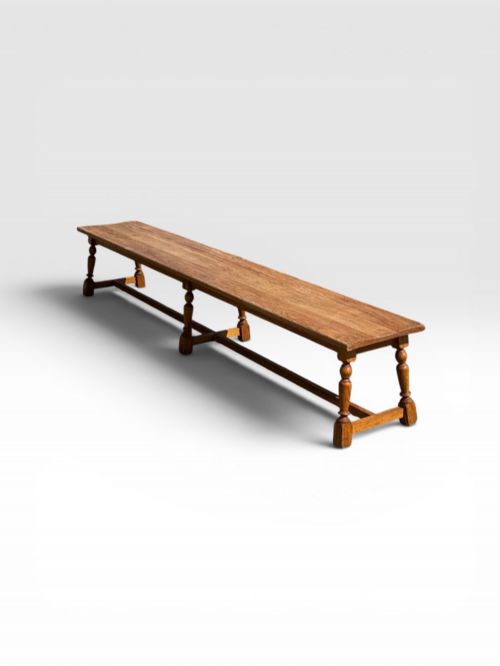
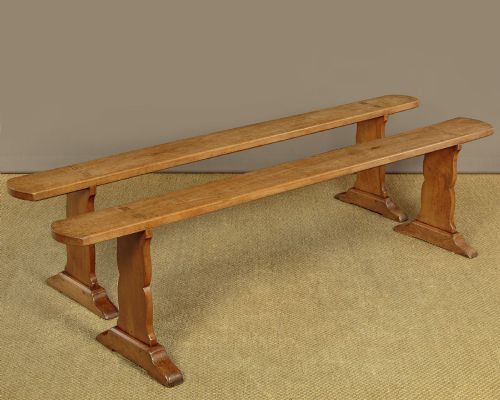


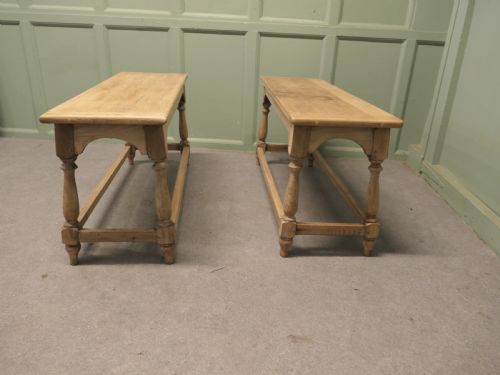
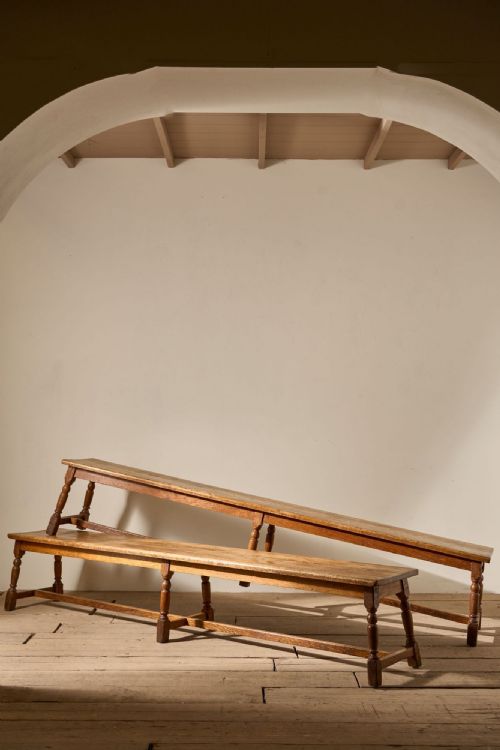


Rustic Wooden Form Bench
A rustic wooden form bench offers long, honest seating built for hard use in taverns, halls, and farmhouse kitchens.
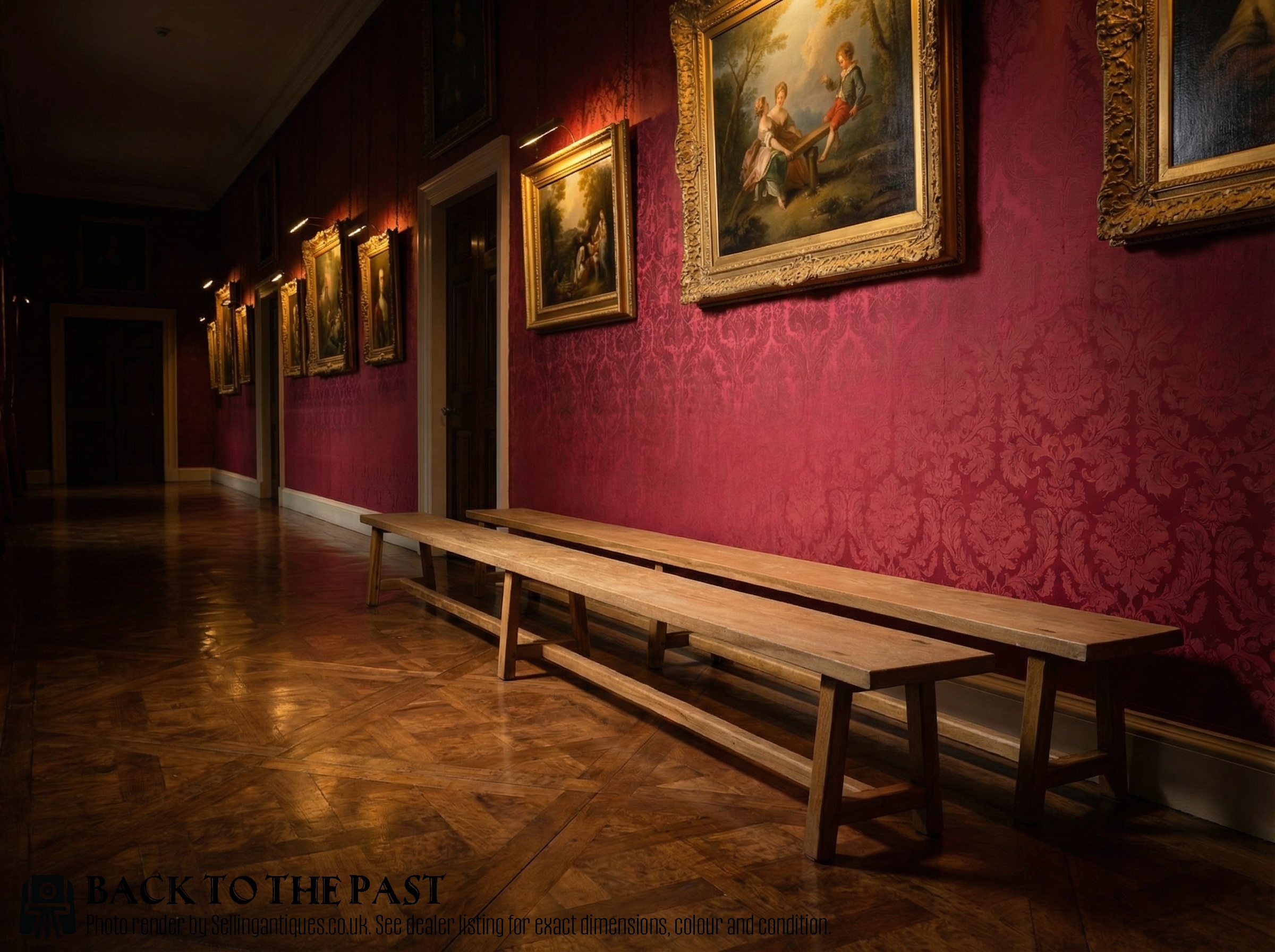
Rustic Wooden Form Bench
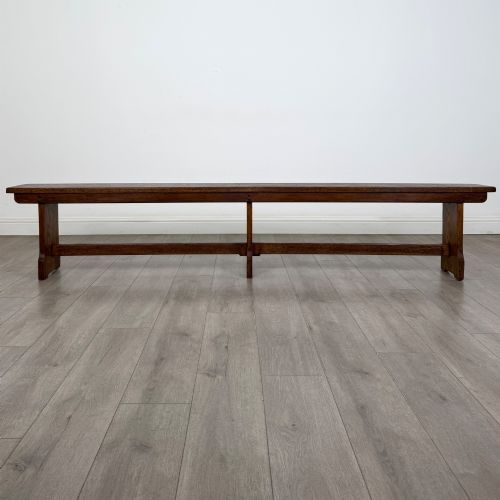
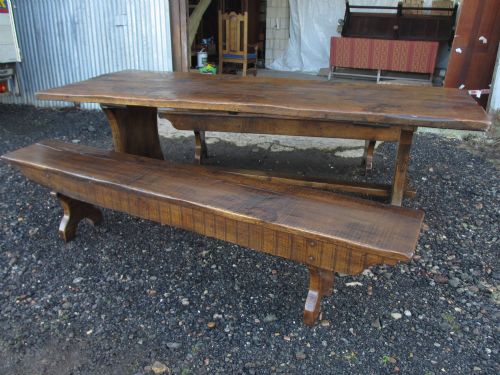
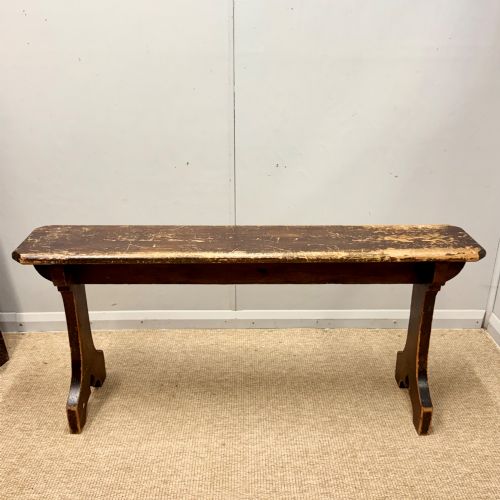
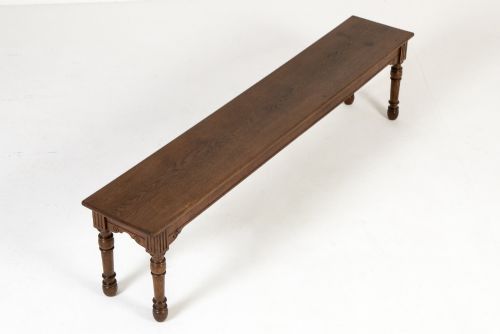
When you search for a rustic wooden form bench, you find long, narrow seats designed for communal dining or hallway service. These pieces trace their origins back through the eighteenth, nineteenth, and early twentieth centuries, spanning periods from Georgian through Victorian and Edwardian eras. They take various forms, including simple school benches, tavern seating, and refectory dining pairs.
The most common examples on this page are pine and oak pieces from the nineteenth century, often measuring several feet in length. You will encounter single long boards alongside matched pairs intended for dining tables. Their forms remain strictly utilitarian, shaped by the practical demands of communal spaces rather than decorative excess.
What varies in quality
Quality in these pieces rests upon the integrity of the timber and the honesty of the construction. Superior examples feature thick, single-piece top boards and robust underframes that remain rigid without excessive modern intervention. Lesser pieces may suffer from unsympathetic timber replacement or compromised structural joins.
Proportion and scale also separate standard utility seating from finer examples. Exceptional pieces display balanced proportions, unusual length, or provenance tied to institutional or domestic estates. The best items retain their original surface texture and unclipped feet, showing age through natural wear rather than damage.
Listings span the eighteenth, nineteenth, and early twentieth centuries, featuring materials from native oak and pine to cherrywood, elm, and fruitwood.
The Rustic Wooden Form Bench Glossary
- Form bench
- A long, backless seat historically used alongside refectory tables or in institutional settings. This term often appears interchangeably with long benches and dining forms.
- Refectory
- A large dining hall, typically in a monastery or school, which gave its name to long tables and matching benches designed for communal meals.
- Scumble
- A translucent layer of paint applied over a base coat to imitate wood grain or create decorative mottled patterns on pine furniture. Georgian and Victorian makers used this technique to elevate inexpensive softwoods.
- Trestle
- A structural support consisting of a horizontal beam fixed to two splayed legs, commonly found beneath long benches and tables to maximise legroom.
- Joint bench
- A piece constructed using tight, pegged joinery rather than nails, typical of earlier cabinet-making traditions.
Rustic Wooden Form Bench: Frequently Asked Questions
How do I style a long bench at home?
Place a long bench against a dining table to create an informal seating arrangement that saves floor space when tucked underneath.
They also work well against hallway walls for putting on shoes or displaying textiles and baskets.
Are these benches sturdy enough for daily dining?
Most of these pieces were originally constructed for heavy institutional, tavern, or domestic use and remain exceptionally robust.
Solid oak and thick pine examples easily support daily seating demands without structural worry.
What is the difference between pine and oak benches?
Pine benches generally offer a lighter tone and softer surface texture, often associated with country kitchens, schools, and Scandinavian interiors.
Oak benches provide greater density, darker patination, and a formal presence linked to dining halls and public houses.
How can I tell the age of a wooden bench?
Examine the underside and joints for hand-cut tool marks, pegged construction, and timber shrinkage that indicates age.
Surface patination, including centuries of wax buildup and wear patterns on the feet, also points to earlier periods.