
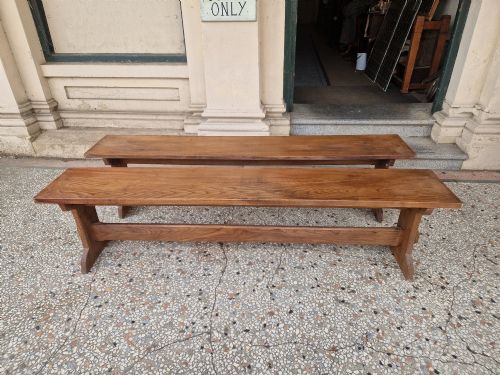
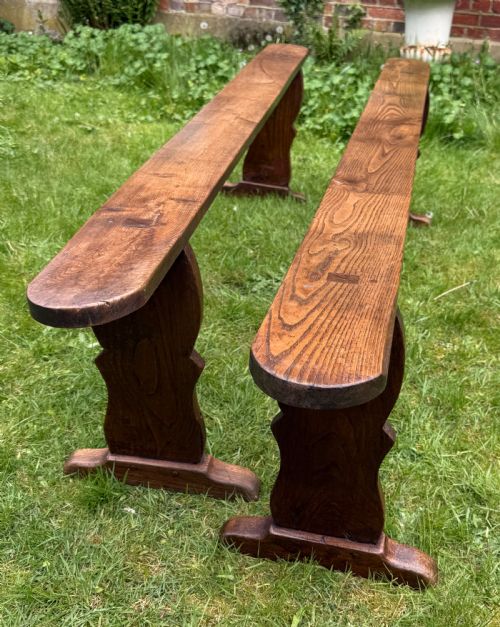
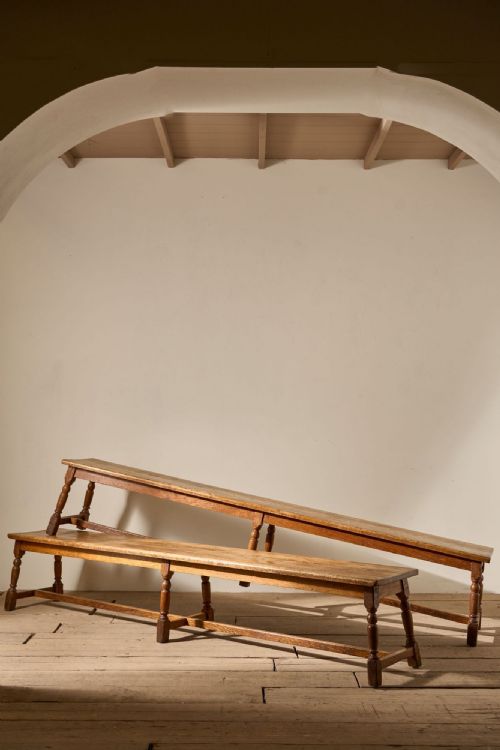


Long Oak Dining Benches
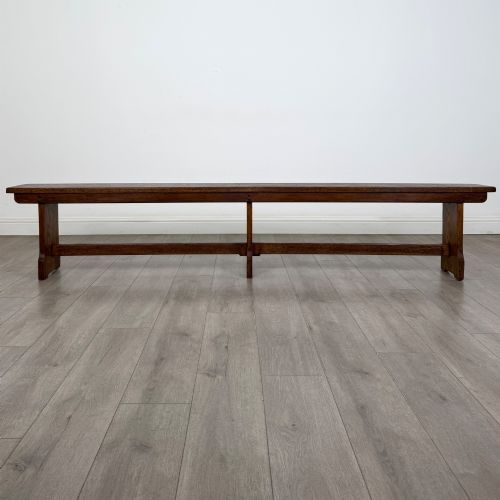
Long oak dining benches bring communal seating to the table, offering sturdy timber construction and generous proportions suited to farmhouse or tavern settings.
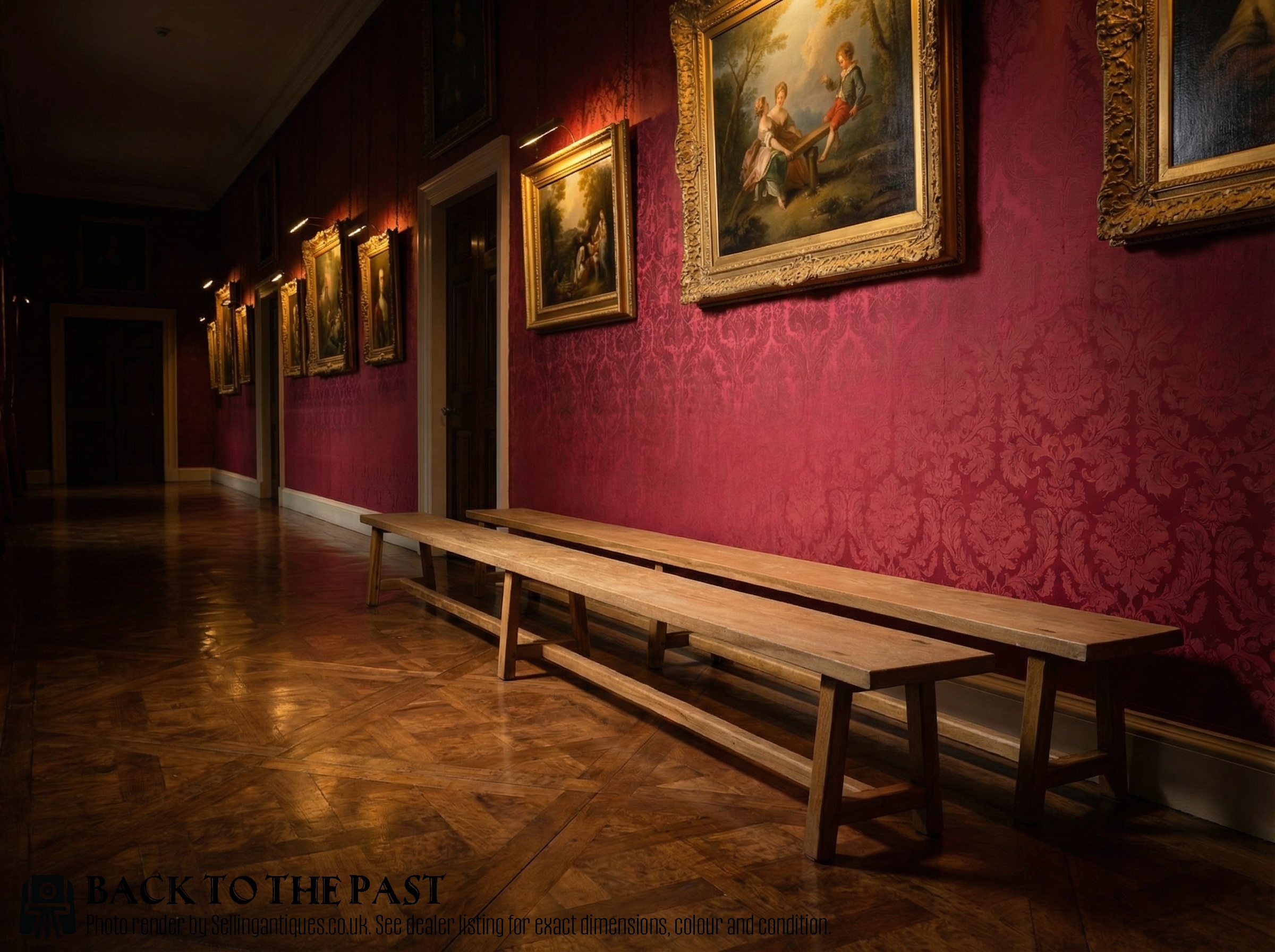
Long Oak Dining Benches
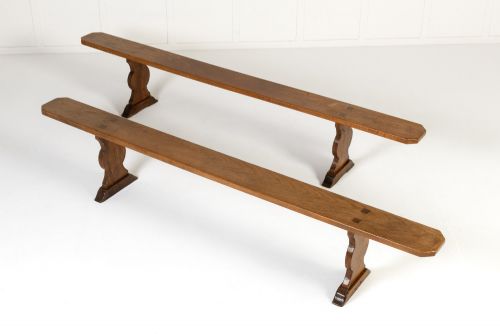
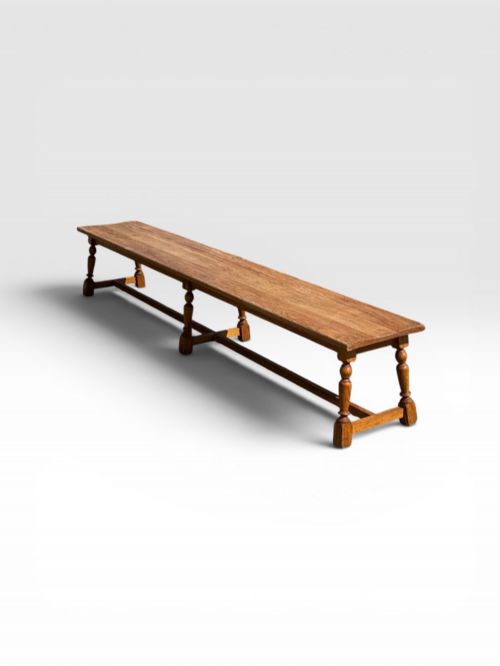
Buyers encountering these items on this page will see examples varying from eight to nine feet in length, sometimes offered as pairs or matched with refectory tables. Origins span English, Welsh, and French workshops, utilising resilient timber to serve practical domestic and institutional roles.
Materials and construction methods
Construction relies primarily on solid oak, supported by secondary timbers like pine and softwood found in structural framing or historical repairs. Cabinetmakers utilised traditional joinery techniques, securing heavy planks to sturdy legs or trestle bases designed to withstand decades of daily use.
Surfaces display the natural grain and patination developed over centuries of wear, often finished simply to protect the wood while retaining its tactile, rustic character.
At least one bench carries a direct provenance from Bishopthorpe Palace in York.
Assessing quality in historical seating
The distinction between ordinary and superior pieces rests on the integrity of the timber and the honesty of the construction. Retaining original boards of exceptional length, such as nine-foot Welsh oak planks, elevates a piece above standard utilitarian examples assembled from mixed timbers.
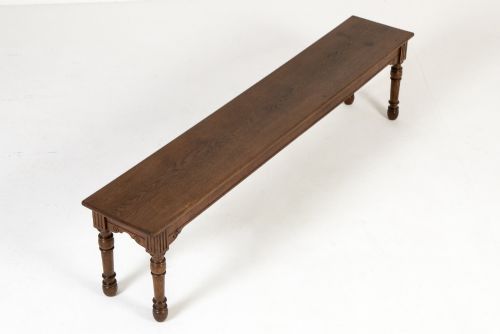
Proportion and surface patination further define the hierarchy, where untouched historical wear and balanced structural proportions distinguish domestic Welsh and English pieces from later revivals.
The Long Oak Dining Benches Glossary
- Oak
- A durable hardwood prized for its dense grain and strength, forming the primary material for the majority of these listings.
- Trestle
- A structural support consisting of a horizontal beam fixed to two splayed legs, commonly found on longer dining benches and refectory tables.
- Refectory
- A long dining table or associated bench traditionally used in communal dining halls and monasteries.
- Patina
- The surface sheen and coloration developed through age, handling, and wax polishing over centuries.
- Jacobean Revival
- A nineteenth-century style mimicking the ornate, sturdy carved woodwork characteristic of early seventeenth-century English furniture.
Long Oak Dining Benches: Frequently Asked Questions
How long are these dining benches?
The pieces listed here frequently measure between eight and nine feet in length, designed to accommodate multiple diners along large tables.
Such generous proportions make them suitable for substantial dining rooms, open-plan kitchens, or commercial hospitality spaces.
Are these benches sturdy enough for daily use?
Constructed from solid oak and heavy timber, these historical benches were originally built for rigorous daily service in taverns, halls, and farmhouses.
Their robust joinery and dense hardwood frames ensure they remain structurally capable of handling regular seating requirements in modern homes.
How do I care for an antique oak bench?
Maintenance requires little more than occasional dusting with a dry cloth and the sparing application of traditional beeswax to nourish the timber.
Keep the wood away from direct heat sources and strong sunlight to prevent the historic oak planks from drying out or splitting.
What periods do these benches come from?
The inventory spans the eighteenth century through the nineteenth century, with additional examples from early twentieth-century revival periods.
This timeline includes Georgian pieces alongside Victorian interpretations and early nineteen-twenties craftsmanship.