
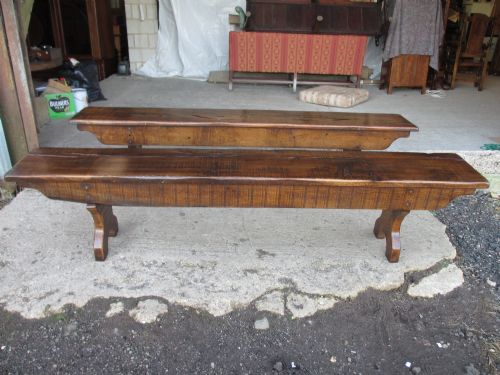
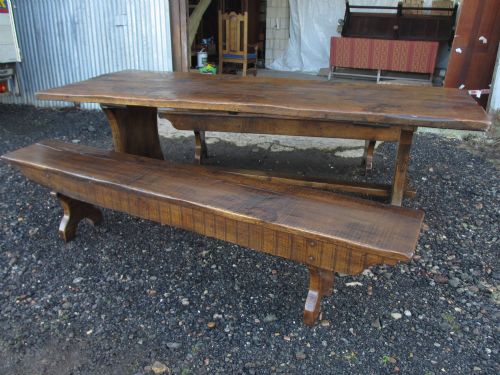
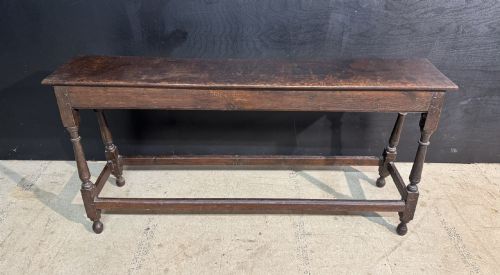
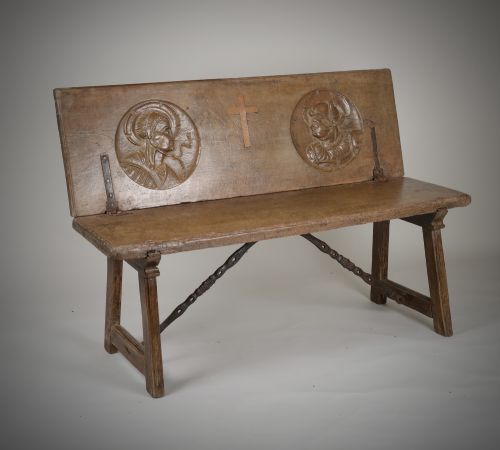
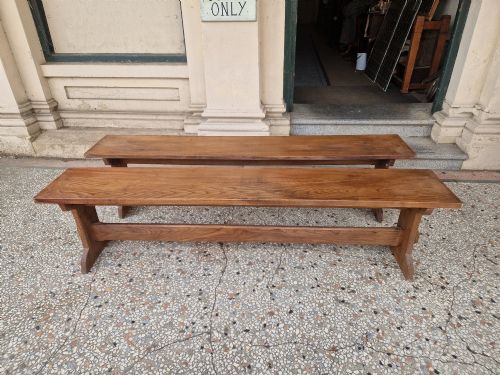
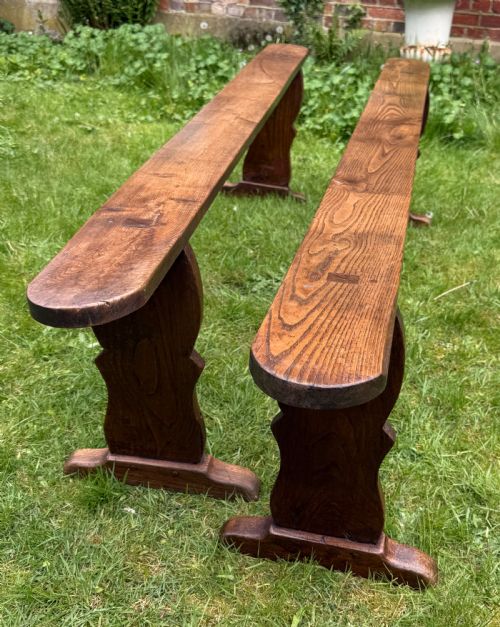


Rustic Oak Trestle Bench
These rustic oak trestle bench designs bring durable timber seating into homes, offering sturdy construction and characterful grain for long-lasting daily use.
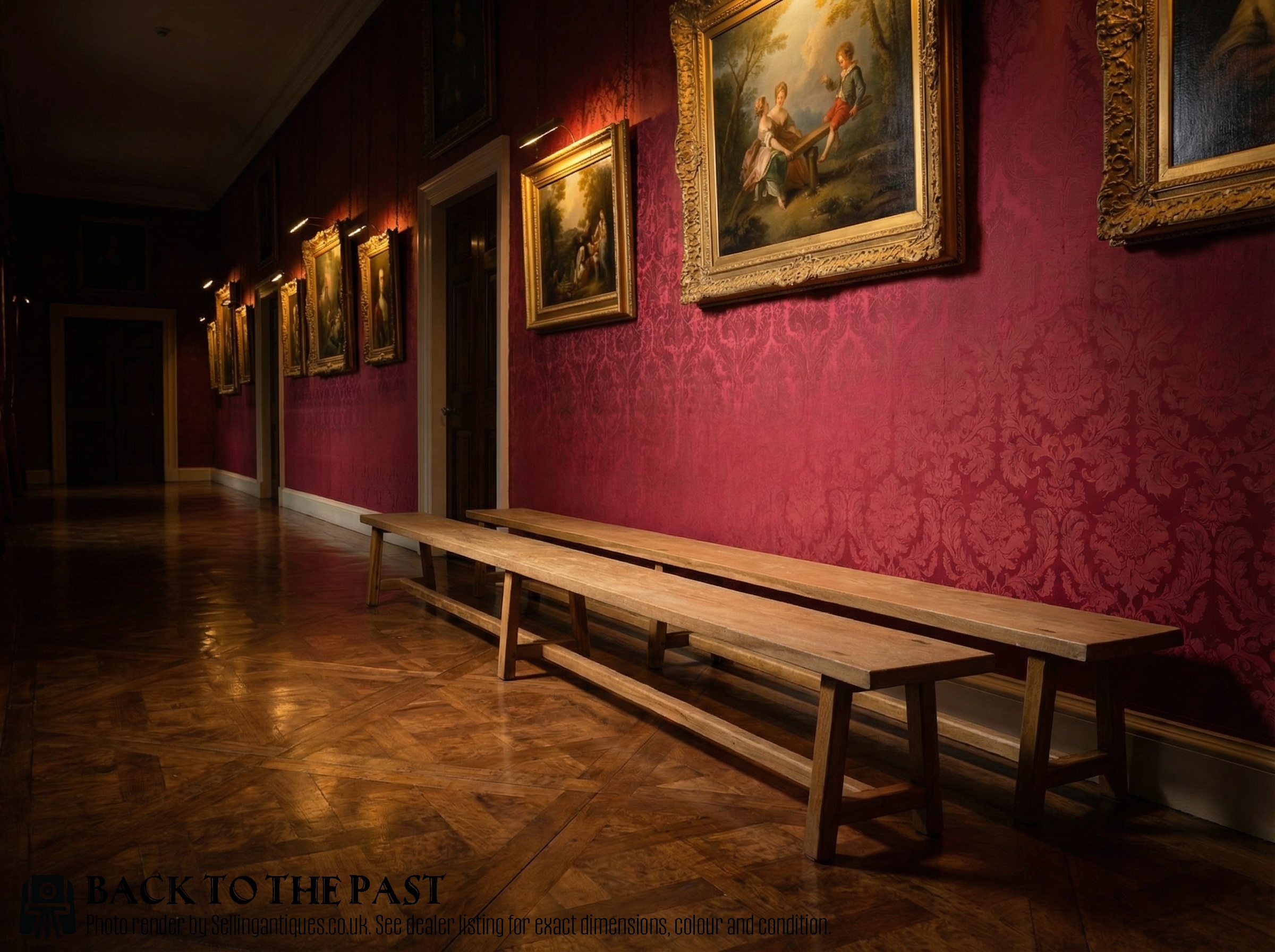
Rustic Oak Trestle Bench
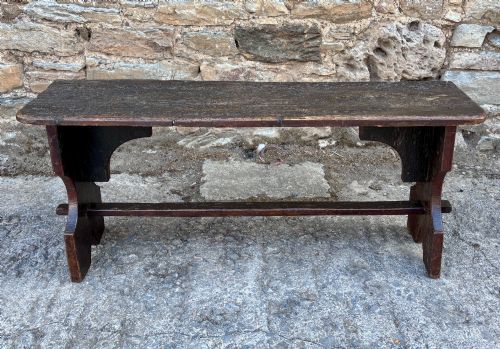
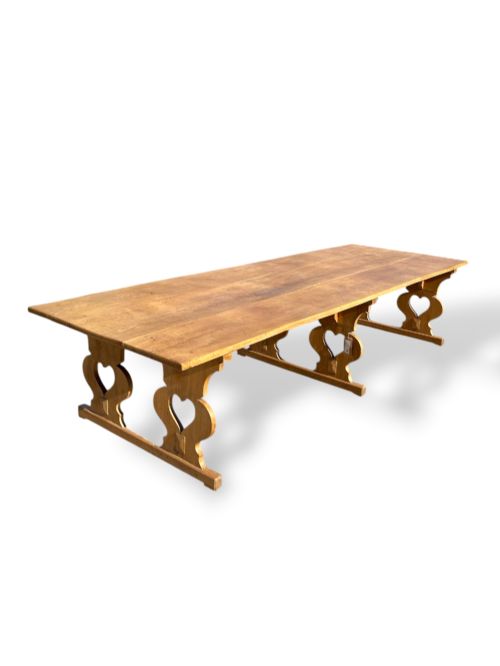
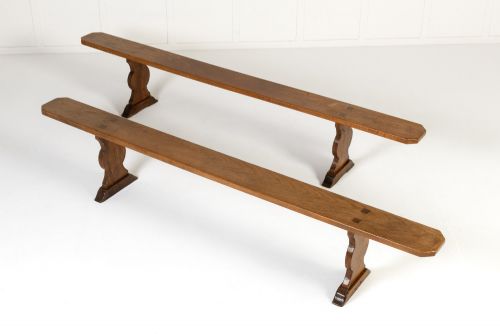
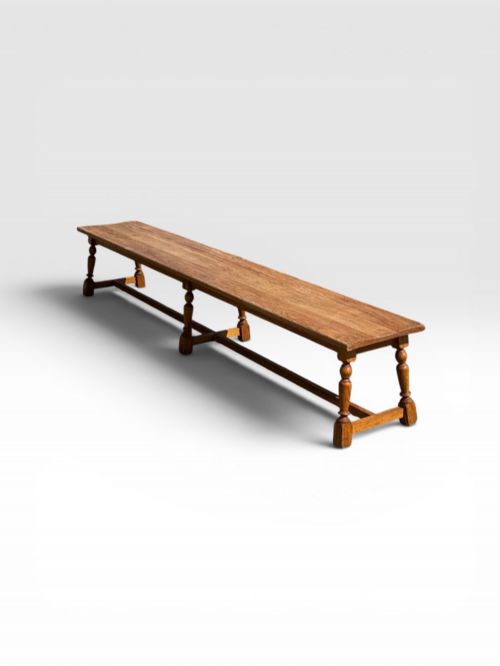
When searching for a rustic oak trestle bench, buyers encounter long linear seating shaped by centuries of domestic and institutional dining traditions. These sturdy items range from extended refectory accompaniments down to compact hall seats designed for narrow spaces.
The examples gathered here span periods from the sixteenth century through the Edwardian era, incorporating styles such as French Provincial, Gothic Revival, and heavy rustic farmhouse forms. Oak dominates the selection, frequently paired with elm timber or supported by wrought iron elements.
Most entries focus on substantial dining forms, long refectory formats, and hall benches that retain visible signs of past utility. Buyers frequently select these heavy timber seats to anchor large dining tables or to provide practical seating in entrance halls.
How they were made
Makers constructed these pieces using solid oak, elm, and other hardwoods selected for their density and strength. Workshops relied on traditional joinery techniques, securing heavy planks to robust trestle ends to withstand heavy daily use.
Surfaces often display the natural grain and texture of the timber, sometimes scrubbed or bleached depending on regional domestic practices. Wrought iron reinforcements appear on specific structural joints to provide additional stability.
Several eighteenth-century oak benches originate directly from Bishopthorpe Palace and the Archbishops Palace in York.
What varies in quality
Quality rests in the integrity of the timber selection and the weight of the solid oak planks used for the top and trestle supports. Pieces fashioned from dense, mature hardwood show superior resistance to warping and wear over centuries.
The refinement of the joinery and the depth of the natural patina distinguish superior examples from ordinary utilitarian seating. Details such as shaped trestle ends or balanced proportions elevate specific variants above standard workshop production.
The Rustic Oak Trestle Bench Glossary
- Trestle
- A structural support consisting of a horizontal beam fixed to two splayed legs. This design provides sturdy support for long dining benches and refectory tables.
- Refectory
- A large communal dining hall, typically in a monastery or college. Benches made for these spaces are exceptionally long and heavy.
- Patina
- The surface sheen and colour developed on timber through decades of handling, polishing, and natural ageing. A deep patina indicates long-term use and care.
- Joint stool
- A low wooden seat constructed with mortise and tenon joints rather than turned legs. These sturdy pieces frequently served as precursors to longer benches.
Rustic Oak Trestle Bench: Frequently Asked Questions
How do I style a rustic oak trestle bench at home?
Place the bench alongside a matching refectory table to create an authentic dining arrangement that maximises seating capacity. Alternatively, position it in a hallway or against a wall to function as a standalone seat.
Allow the natural wood grain and patina to remain the focal point by keeping surface accessories minimal. Pair the piece with woven textiles or simple cushions to soften the dense timber construction.
Are these benches suitable for daily dining use?
Solid oak and elm construction provides the structural strength required for regular family meals and heavy daily traffic. The robust trestle supports distribute weight evenly across the floor.
Check the height of the bench relative to your specific table to ensure comfortable legroom and seating posture. Most examples designed for refectory tables offer standard dining proportions.
How do I identify an older oak bench?
Examine the construction joints for hand-cut pegs, pegged tenons, and signs of manual shaping rather than modern machine production. Older boards often display irregular widths and hand-planed surfaces.
Look for the characteristic deep patina and wear patterns accumulated over generations of use. Regional styles and historical timber preparation methods also point toward earlier manufacturing periods.
What maintenance does solid oak require?
Protect the timber surface by using coasters and mats to prevent moisture rings or heat marks from damaging the wood. Clean the bench regularly with a dry or slightly damp cloth.
Apply traditional beeswax periodically to nourish the hardwood and preserve the natural sheen of the patina. Avoid placing solid oak furniture directly next to intense heat sources.