
Farm Dining Table
A farm dining table brings the substantial build and honest timber of working kitchens straight into the modern home.

Farm Dining Table
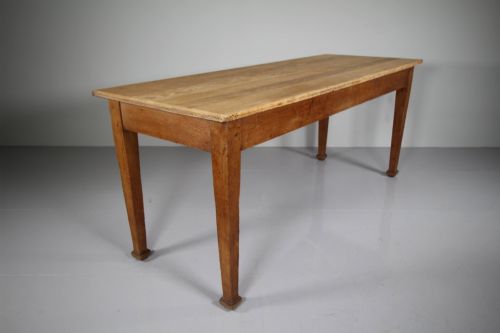
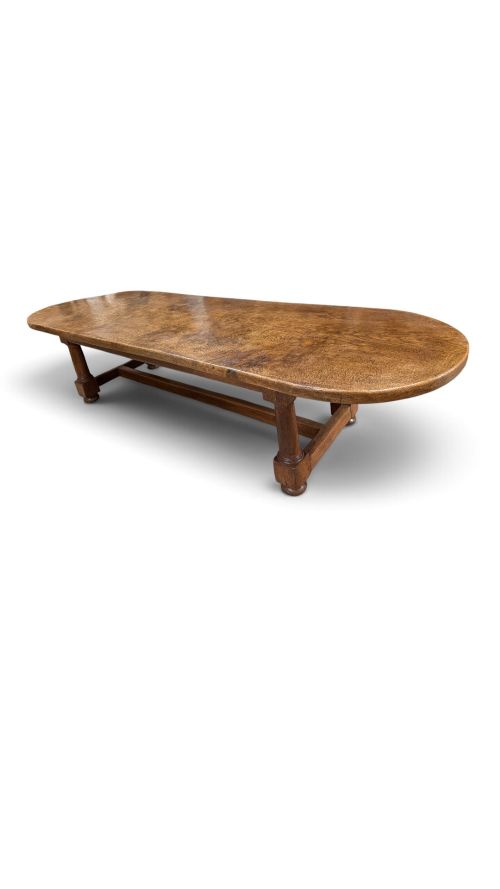
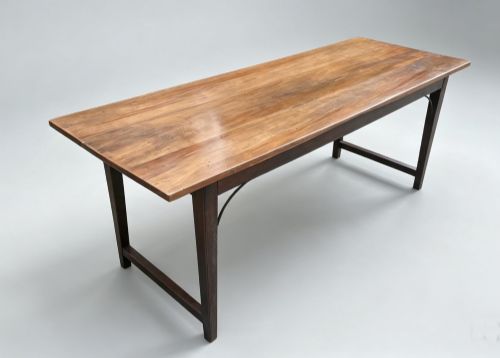
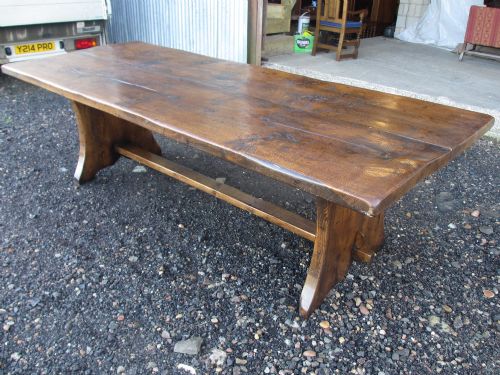
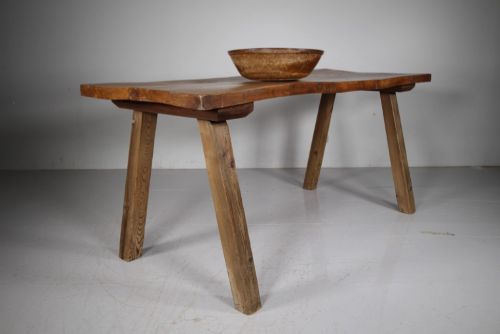
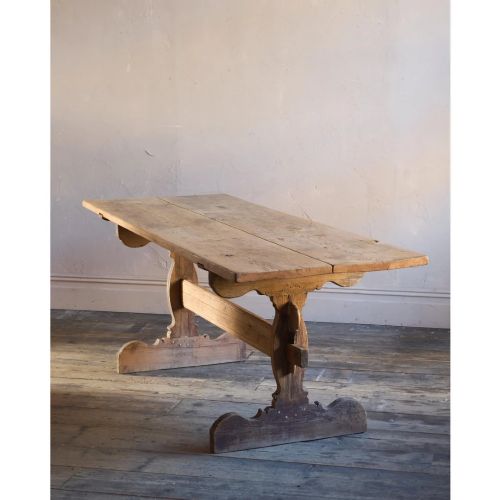
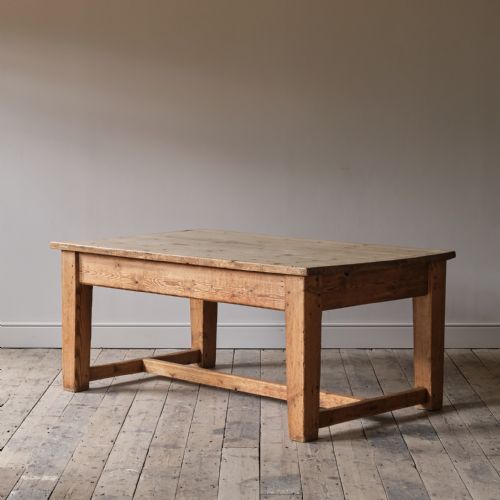
A farm dining table is a heavy, utilitarian piece designed for communal daily use, spanning formats from simple scrubbed pine kitchen tables to grand oak and elm refectories. When searching for a farm dining table, you encounter diverse regional interpretations ranging from French provincial and Swedish country designs to English Victorian harvest tables.
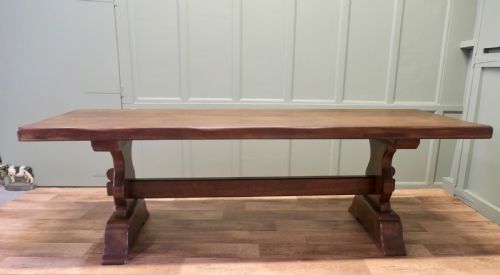
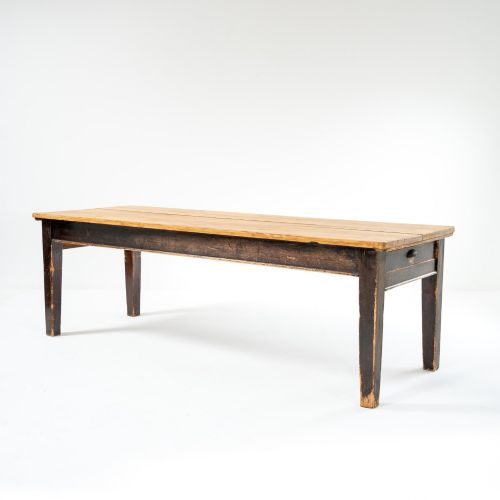
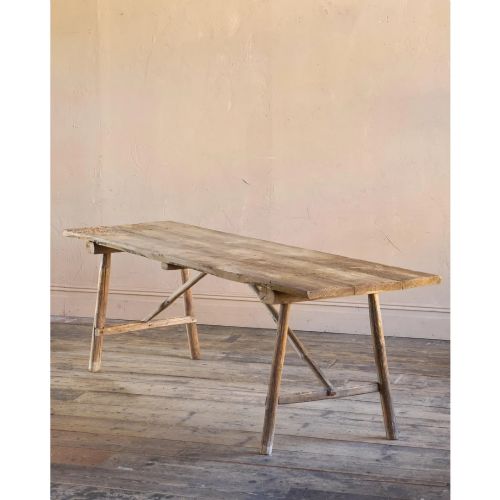
The most common versions met on this page are 19th-century pine and oak examples, often featuring single-plank tops, functional side drawers, or trestle ends. These domestic surfaces carry the marks of regular use, showing how everyday spaces relied on robust timber construction for gathering and food preparation.
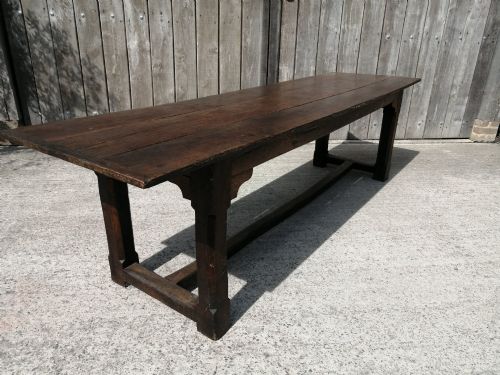
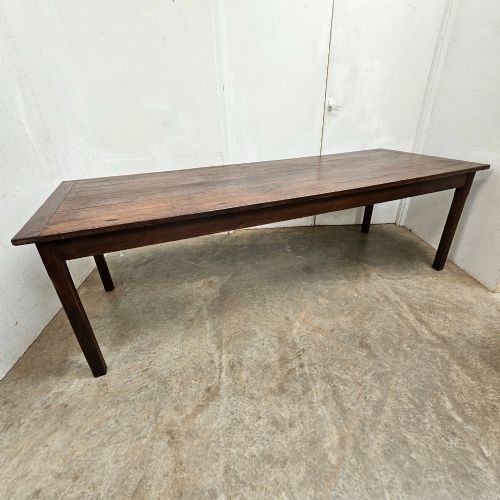
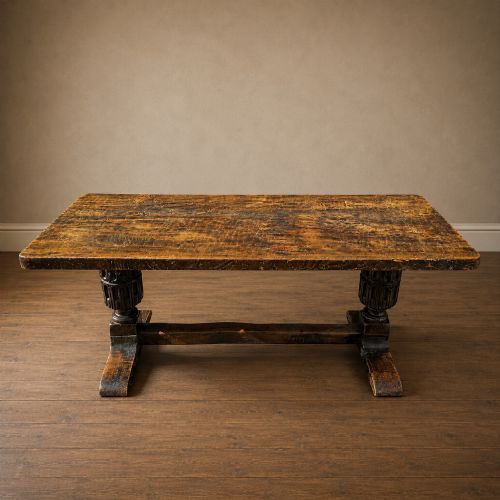
Earlier iterations stretch back to the 17th and 18th centuries, built primarily from solid oak and elm with stretcher bases designed for stability on uneven floors. Whether configured with extending leaves, drop sides, or bread slides, these tables served as the literal and figurative heart of rural homes.
Materials and construction
The construction of these tables relies heavily on native hardwoods and softwoods selected for durability, with oak, pine, and elm dominating the historical record. Joinery techniques prioritize strength, utilising pegged mortise and tenon joints for frames and substantial boards secured to sturdy underframes.
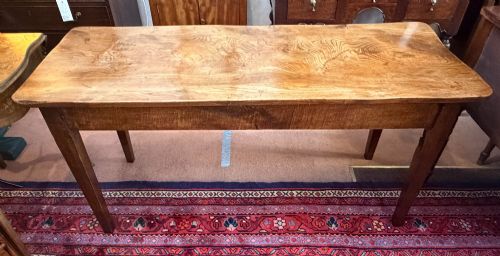
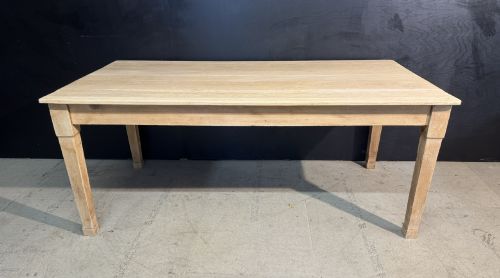
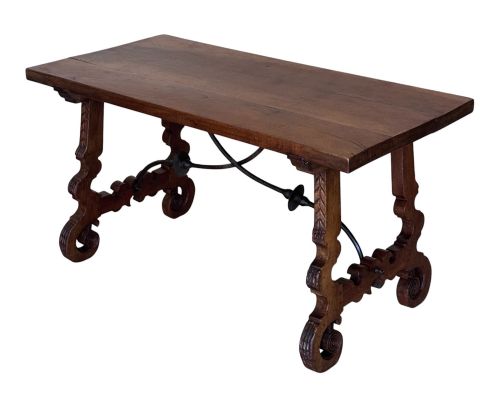
Single-plank tops, particularly in oak and elm, demonstrate the availability of mature timber in earlier centuries, while later pine and fruitwood versions frequently employ multi-board tops. Supporting structures vary from simple four-legged frames to shaped trestles, X-legs, and wrought iron reinforcements, occasionally incorporating functional additions like frieze drawers or wind-out extension mechanisms.
Regional variations include French provincial styles, Swedish painted finishes, and English Victorian harvest designs.
Evaluating craftsmanship and integrity
Quality in a farm dining table rests upon the integrity of its timber and the honesty of its construction, distinguishing purposeful utility from decorative imitation. Superior pieces display thick, stable timber tops - such as single-plank oak or seasoned elm - that have aged naturally through decades of use without losing structural soundness.
The sophistication of the joinery and the retention of original elements, including hardware, drawers, and stretcher bases, separate standard utility pieces from finer examples. Grain selection, timber thickness, and the balance between the top and the supporting frame dictate how well the table holds up to daily demands.
Heals Of London
The Farm Dining Table Glossary
- Refectory table
- A long, narrow dining table traditionally used in monastic refectories, characterised by a long single-plank top and sturdy stretcher-supported legs. These forms became staples of domestic farmhouse dining.
- Harvest table
- A narrow wooden table designed to be easily moved into fields for seasonal agricultural meals, usually featuring a drop-leaf or lightweight pine construction. They are valued for their slender proportions in modern dining spaces.
- Frieze drawer
- A storage compartment built directly beneath the tabletop within the upper framing structure. Many period examples include one or two of these drawers for storing cutlery and linens.
- Bread slide
- A pull-out wooden shelf positioned beneath the main surface, originally intended for cooling baked goods or expanding workspace. This clever mechanism adds utility to extending tables.
- Trestle end
- A support system where vertical posts or shaped boards are connected by a horizontal foot or stretcher rather than standard corner legs. This design provides maximum legroom along the length of the table.
Farm Dining Table: Frequently Asked Questions
How do I choose the right size farm dining table?
Consider the daily seating requirements alongside the physical dimensions of your dining space, keeping in mind that refectory and harvest formats tend to be narrow and long.
Allow ample clearance around the perimeter for chairs and movement, noting that many period designs comfortably seat eight to twelve people depending on their length.
What is the difference between pine and oak farm tables?
Pine tables generally offer a softer, lighter aesthetic with a scrubbed or painted finish well-suited to informal kitchen environments.
Oak and elm examples provide a denser, darker timber with prominent grain patterns that lend themselves to more formal dining rooms and heavier daily wear.
Can I use an antique farm table every day?
These pieces were originally constructed for heavy daily labour and communal meals, making them inherently durable for modern domestic use.
Using coasters and placemats helps protect historic timber surfaces from heat and moisture while allowing the natural patina to continue evolving.
How do I identify the period of a farm dining table?
Dating relies on observing construction methods, such as hand-cut peg joints, timber selection, and hardware types like forged iron or early brass handles.
Secondary woods, tool marks on the underside, and the natural wear patterns accumulated on the tabletop provide additional clues to the table's age.