
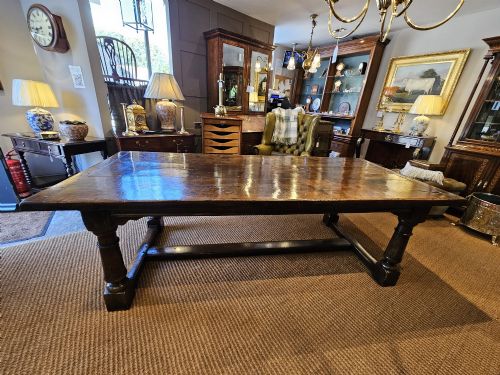
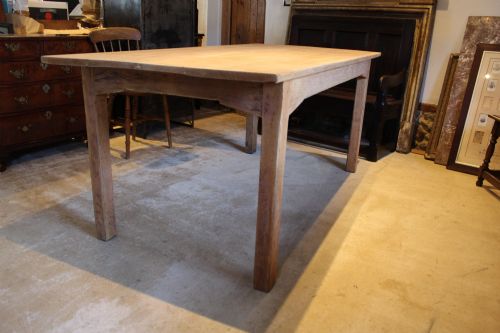

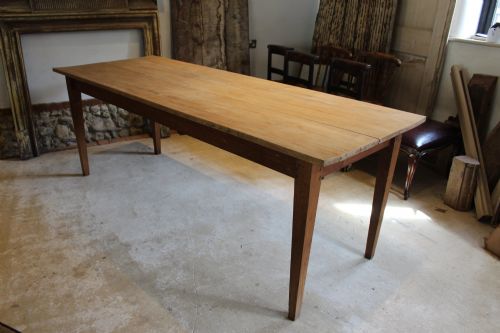


8 Seater Oak Table
An 8 seater oak table anchors a room with dependable timber and generous proportions, offering a timeless surface for large gatherings.

8 Seater Oak Table
An 8 seater oak table brings substantial scale and sturdy utility into a dining room or large kitchen space. These pieces serve as the literal and social hub of a home, designed to accommodate family meals and gatherings with ease.
Buyers will encounter several distinct formats across the inventory, ranging from traditional refectory styles and rustic farmhouse boards to gateleg and extending mechanisms. Origins stretch from the Georgian and Victorian eras through to Edwardian and early twentieth-century revivals.
The aesthetic leans heavily into English and French country traditions, with Jacobean Revival and Arts and Crafts influences appearing frequently. Solid timber construction ensures these dining tables withstand daily wear while developing a rich patina over decades of use.
Materials and Construction
Makers relied primarily on solid oak and timber, utilising its natural hardness and dense grain to build stable, long-lasting dining furniture. Scrubbed and golden oak finishes appear alongside traditional wax treatments that highlight the natural figure of the wood.
Structural integrity was achieved through robust joinery, heavy refectory stretcher bases, and sturdy gateleg configurations. Secondary materials such as iron brackets or cane and fabric accents on associated seating occasionally complement the primary oak framework.
Listings feature oak dining tables spanning the seventeenth to the twentieth centuries, alongside pine, iron, and cane materials.
Assessing Quality and Craftsmanship
Superior examples display careful selection of timber matching, where the grain runs harmoniously across wide board surfaces rather than appearing patched together. The weight and depth of the top planking indicate the underlying substance and stability of the piece.
Refinement in leg turning, such as bobbin or spiral details, separates standard utility tables from more ambitious stylistic revivals. The tightness of joints and the smooth operation of gateleg or extending mechanisms reflect the original joiner's skill.
The 8 Seater Oak Table Glossary
- Refectory table
- A long, narrow dining table traditionally used in monasteries and large halls, characterised by substantial legs connected by a central longitudinal stretcher.
- Gateleg table
- A drop-leaf table with hinged flaps supported by swing-out legs that resemble a swinging gate when opened.
- Draw leaf table
- An extending table featuring two hidden leaves beneath the main top that pull out from the ends to lengthen the surface.
- Scrubbed oak
- Timber surfaces that have been thoroughly washed and scrubbed to create a pale, clean, matt finish free from heavy varnishes.
- Wind out table
- A dining mechanism utilising an internal screw thread operated by a crank handle to separate halves of the table for insertion leaves.
8 Seater Oak Table: Frequently Asked Questions
How much space do I need for an eight seater?
An eight seater requires sufficient surrounding clearance for chairs to pull out fully and diners to move comfortably around the perimeter. Allow at least ninety centimetres of clear floor space on all sides of the dining table.
Positioning the piece away from heavy traffic lanes ensures the room remains functional even when the seats are occupied during large meals or dinner parties.
How do I care for a solid oak top?
Routine maintenance involves wiping the surface with a damp cloth and drying it immediately to prevent moisture rings or timber warping. Avoid placing the dining furniture near direct heat sources or strong sunlight to protect the finish.
Applying a traditional beeswax periodically nourishes the wood and helps maintain a natural sheen while defending the grain against everyday kitchen use.
Are gateleg versions practical for daily dining?
Gateleg designs offer flexible versatility because the drop leaves fold down to reduce the overall footprint when the full seating capacity is not required. This adaptability suits rooms where floor space must accommodate multiple activities between meals.
Checking that the swing-out support legs lock securely into place ensures the surface remains stable and safe for family dining routines.
How do I distinguish a Georgian table from later revivals?
Eighteenth-century examples display authentic hand-cut joinery marks, native timber shrinkage patterns, and structural wear consistent with extended domestic service. Hardware and nail types often point to period-specific manufacturing techniques.
Later Victorian and Edwardian revival pieces frequently incorporate heavier timber dimensions or standardised machine-cut elements while faithfully copying earlier Jacobean or Georgian aesthetic styles.