
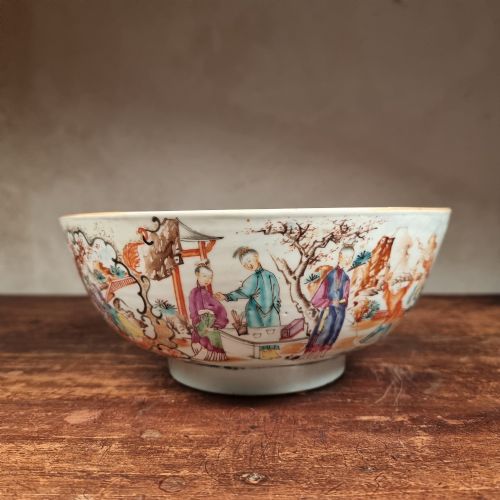
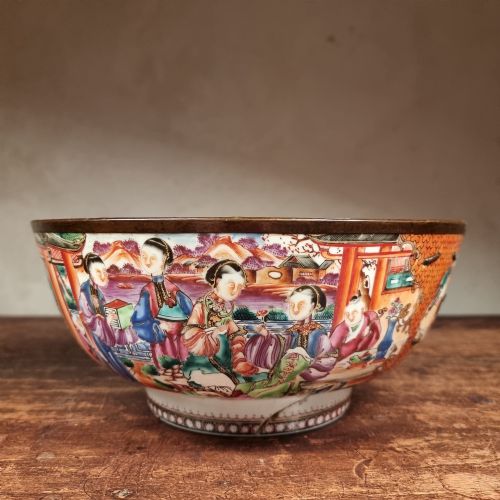
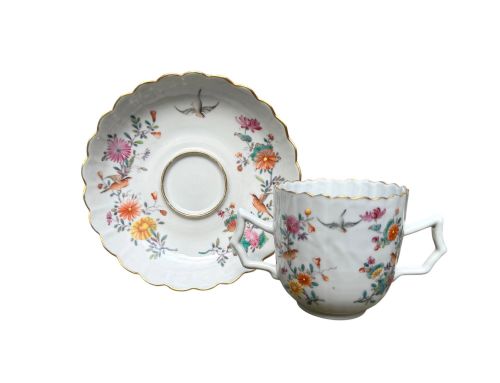


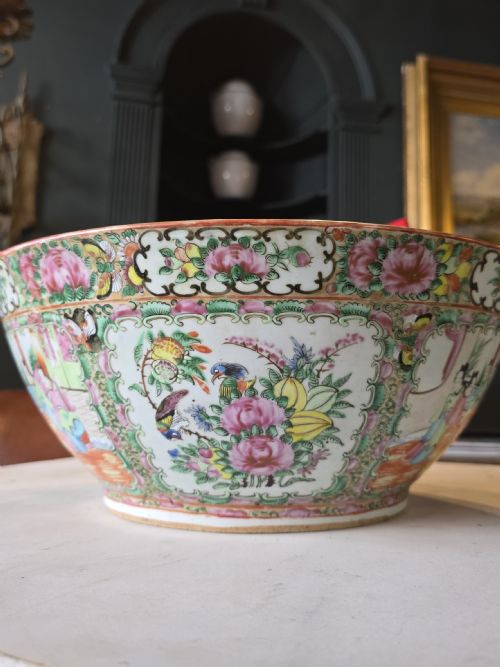


Famille Rose Ceramic Bowl
These famille rose ceramic bowl examples bring hand-painted enamels, rich gilding and centuries of Chinese export craftsmanship directly to your table.
Famille Rose Ceramic Bowl
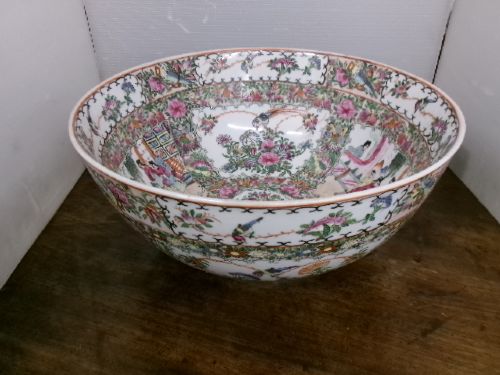
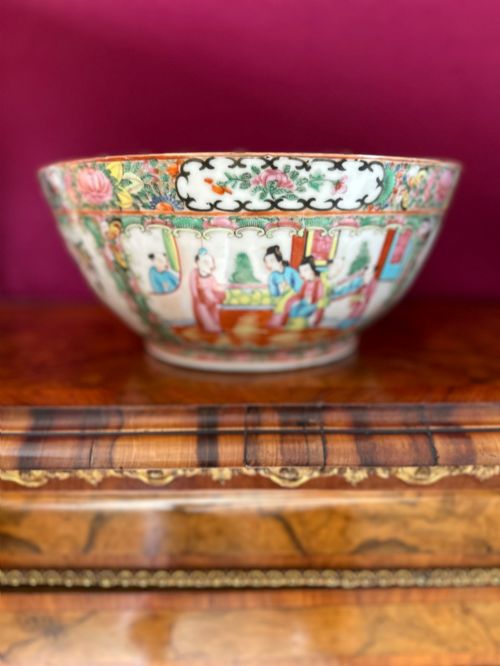
A famille rose ceramic bowl combines delicate porcelain bodies with opaque pink and polychrome enamel decoration. You will most frequently encounter large Canton punch bowls, rose medallion dishes and smaller tea vessels spanning the eighteenth and nineteenth centuries.
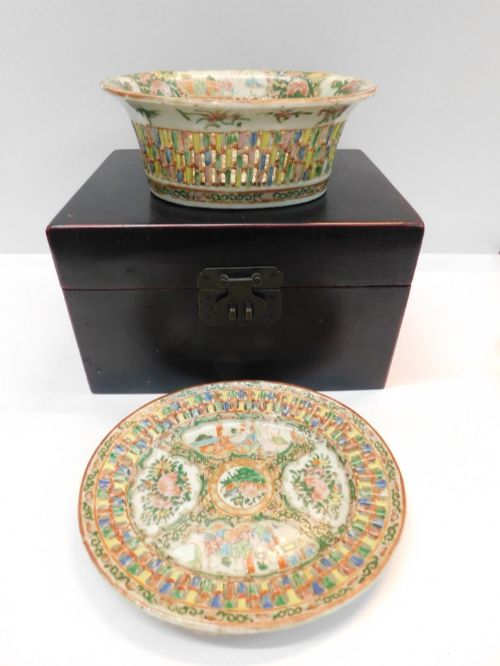
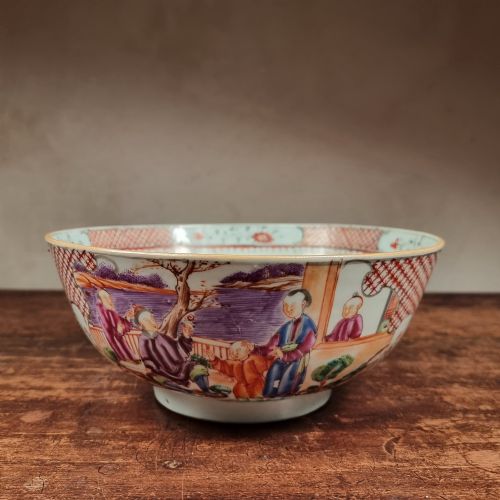
The selection here includes pieces from the Qing Dynasty, Chinese Export commissions and Victorian imports. Forms range from simple circular serving bowls and pedestals to pierced chestnut baskets and large jardinières.
These vessels served both practical dining functions and decorative display roles in European and domestic interiors. Their distinct floral, figural and butterfly motifs reflect the artistic exchanges of the trade era.
Materials and Techniques
Potters shaped fine white porcelain before applying vibrant overglaze enamels by hand. Artisans utilised contrasting pink, green, yellow and coral pigments alongside gold leaf and fine gilding.
Many items feature complex hand-painted scenes incorporating Mandarin figures, floral panels and auspicious symbols. Some nineteenth-century examples also incorporate brass or ormolu mounts fitted in Europe.
Several bowls feature the Auspicious Five Blessings, giving you longevity, health, wealth, virtue and a peaceful death in one dish.
Assessing Quality
Quality rests upon the precision of the brushwork and the clarity of the enamel palette. Superior pieces display finely detailed facial expressions, crisp patterning and generous application of gold leaf.
The weight and translucency of the porcelain body also distinguish standard production items from eggshell wares and imperial period commissions. Careful kiln firing ensures stable glazes and vibrant colour saturation.
The Famille Rose Ceramic Bowl Glossary
- Famille Rose
- A palette of opaque enamels introduced in Chinese porcelain decoration during the Qing Dynasty, dominated by rose-pink tones. The style allowed for subtle shading and complex pictorial designs.
- Canton
- A major production and export centre in southern China where much nineteenth-century porcelain was decorated for Western markets. Canton wares frequently feature crowded figural panels and dense floral borders.
- Rose Medallion
- A specific decorative layout featuring alternating panels of birds, flowers and figures arranged around a central medallion. This pattern became enormously popular during the nineteenth century.
- Qianlong Period
- The era of the Qing Dynasty spanning from 1736 to 1795, associated with technical excellence in porcelain manufacture. Pieces bearing marks from this period remain highly sought after by collectors.
- Overglaze Enamel
- Mineral colours applied on top of a fired and glazed porcelain surface, then fixed with a lower temperature second firing. This technique produces the raised texture and bright hues characteristic of famille rose.
Famille Rose Ceramic Bowl: Frequently Asked Questions
How do I date a famille rose bowl?
Dating relies on stylistic markers, enamel characteristics and imperial reign marks when present. Eighteenth-century pieces typically feature thinner potting and refined palettes, while nineteenth-century Canton wares display denser decoration.
Examining the foot ring, base glaze and wear patterns also helps establish the approximate period of manufacture.
Were these bowls used for food?
Large punch bowls and tea vessels were originally created for social dining and beverage service during the export trade eras. Over time, many transitioned into decorative centrepieces and display objects.
Modern owners often continue to use them for display, floral arrangements or serving dry goods.
What is the difference between export and domestic ware?
Export porcelain was specifically produced in China for European and American markets, often incorporating Western tastes and heraldic motifs. Domestic pieces followed traditional aesthetic standards intended for local imperial or elite use.
Both categories utilise the same fundamental porcelain and enamel techniques.