




Famille Rose Bowl
A famille rose bowl brings vibrant enamel decoration and historical depth to any room.
Famille Rose Bowl
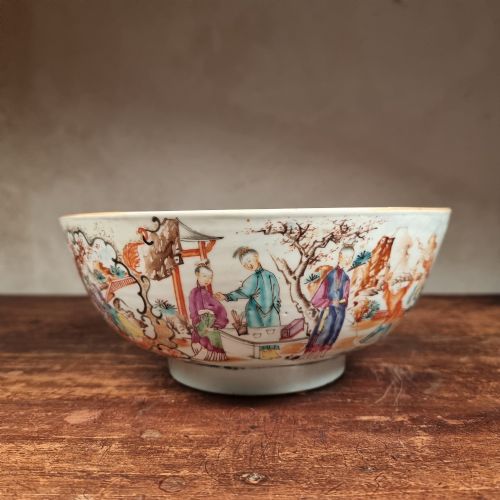
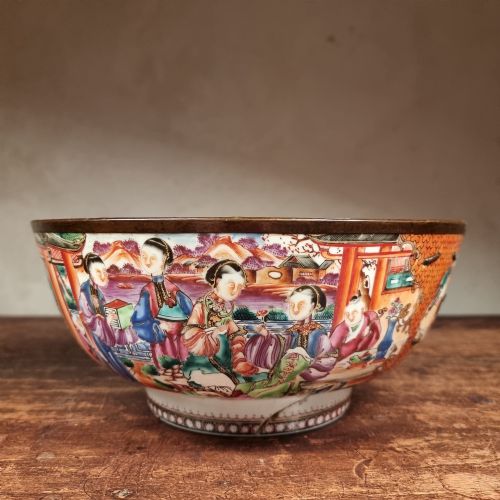
A famille rose bowl is a ceramic vessel decorated with an opaque pink or rose enamel palette introduced during the Qing dynasty. These pieces range from small tea bowls to large punch bowls created for both domestic use and international trade.
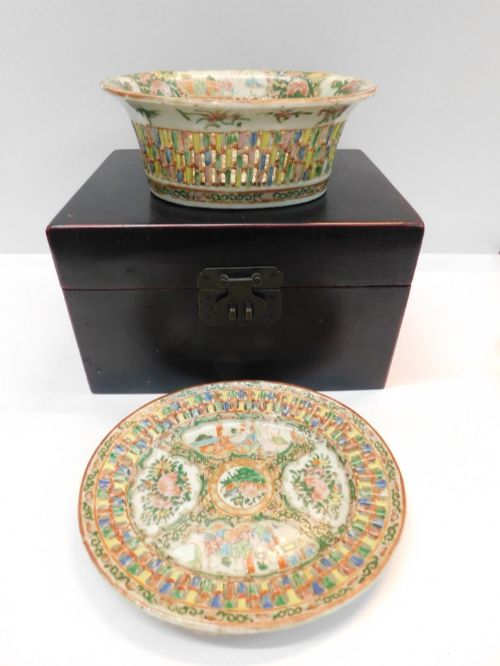
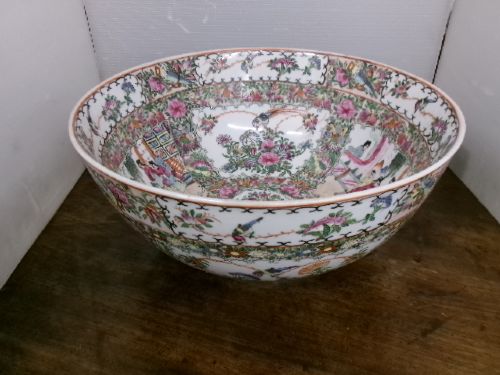
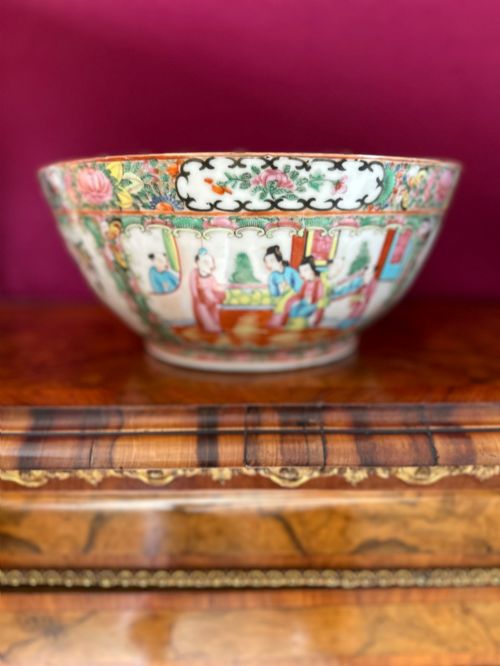
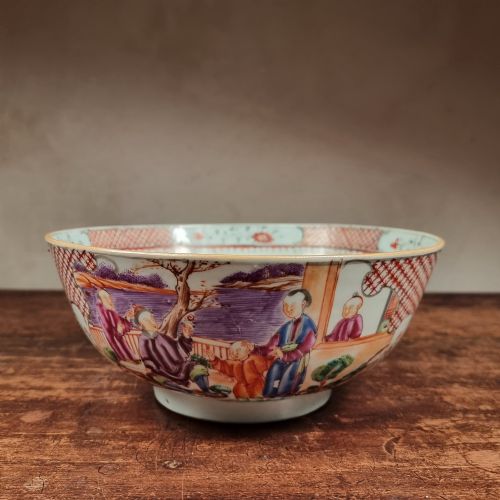
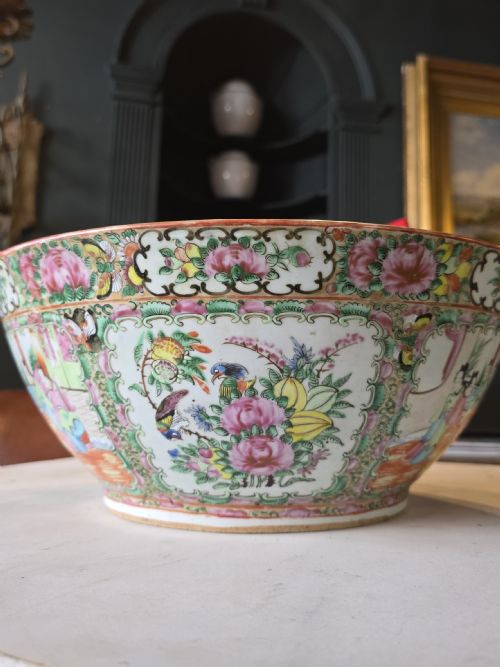
The versions most commonly met on this page date from the nineteenth century, often associated with Cantonese production and the vibrant rose medallion style. Earlier examples stretch back to the eighteenth century under the Qianlong and Yongzheng periods, showing refined detailing and export designs.
Judging Quality and Execution
Quality rests in the precision and density of the hand-painted brushwork across the surface. Superior pieces exhibit crisp botanical or figural motifs with cleanly delineated outlines, whereas simpler production shows hurried application and less defined colour separation.
The weight and resonance of the porcelain body, along with the crispness of any reign marks, distinguish masterwork imperial or high-export items from standard commercial wares.
Materials recorded across the inventory include hard-paste porcelain, overglaze enamel, gold leaf, and ormolu mounts.
The Famille Rose Bowl Glossary
- Famille Rose
- A palette of opaque enamels dominated by pink or rose, developed in China during the Qing dynasty. It allowed artists to achieve delicate tonal gradations not possible with earlier blue and white or famille verte ceramics.
- Canton
- A major trading port in southern China associated with colourful export porcelain decorated with panels of figures, birds, and flowers. Much of the nineteenth-century material found in collections originates from these workshops.
- Qianlong
- An eighteenth-century Qing emperor whose long reign represents a high point in Chinese porcelain production and export. Wares from this period are noted for technical excellence and elaborate decoration.
- Overglaze Enamel
- Mineral pigments applied over a previously fired and glazed ceramic body before undergoing a second, cooler kiln firing. This technique preserves the brightness of colours like pink, turquoise, and yellow.
- Reticulation
- An openwork pattern pierced through the ceramic wall before firing, often seen on baskets and specialised stands. It requires great skill to prevent warping during the drying and kiln stages.
Famille Rose Bowl: Frequently Asked Questions
What is a famille rose bowl?
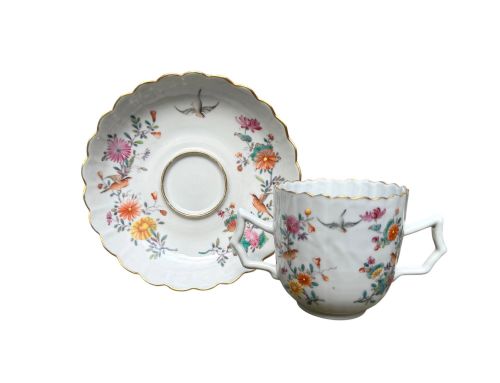
A famille rose bowl is a Chinese porcelain vessel painted with opaque enamels that feature a prominent pink or rose colour. These pieces were produced for domestic use and export to Western markets.
They display various motifs including figures, flowers, and butterflies, reflecting the artistic styles of the Qing dynasty and later nineteenth-century production.
How do I date an antique bowl?
Dating relies on stylistic clues, potting characteristics, and any reign marks found on the base. Eighteenth-century pieces often show thinner potting and refined Qianlong or Yongzheng palettes.
Nineteenth-century Cantonese items tend to feature heavier porcelain bodies, crowded rose medallion patterns, and brighter, denser enamel applications.
Were these bowls used for food?
Many large vessels, particularly eighteenth and nineteenth-century punch bowls, served beverages and communal dining in Western and Chinese households. Smaller examples functioned as tea bowls or decorative basins.
Today, collectors primarily display them as centrepieces or decorative objects rather than utilising them for active dining.
What is the difference between Canton and export wares?
Canton wares specifically originated from workshops around the southern Chinese port, often defined by segmented panels filled with figures and botanical motifs. Chinese export porcelain is a broader category that includes various ports and decorative styles made specifically for international trade.
Many Canton pieces are also export wares, but they possess a distinct visual density associated with nineteenth-century production.