





Faded Red Carpet
A faded red carpet brings a soft, mellow warmth to a room through time-worn wool and muted tones.
Faded Red Carpet
A faded red carpet is a floor covering that shows the gentle softening of colour through age and wear. The pieces found here span from the nineteenth century to the early decades of the twentieth century, originating from Persian, Turkish, and Uzbek traditions. Buyers search for these textiles to anchor a space with history rather than shouting pattern.
The most common versions met on this page are room-sized carpets and long runners. These include traditional regional designs such as Sarouk, Ushak, Kirman, Kashan, and Qashqai, alongside tribal kilims. Each piece displays the particular palette and weaving structure of its origin.
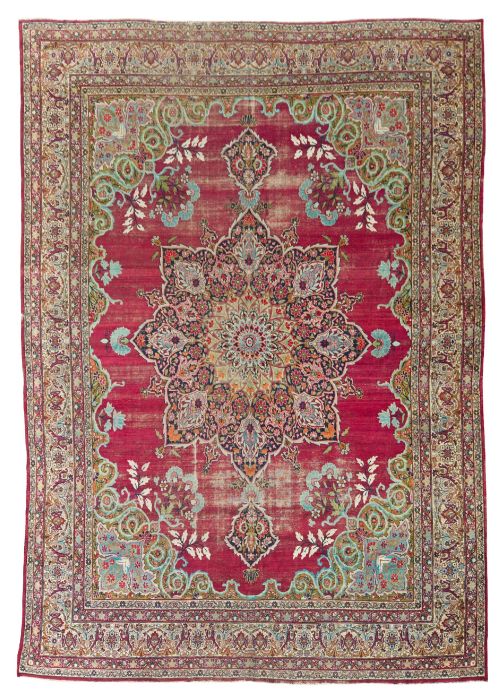
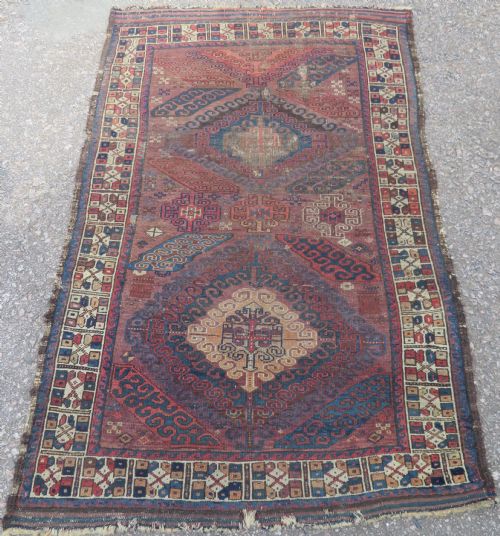
The surface appearance relies on the natural weathering of the wool pile over decades. Rather than uniform factory dyeing, these carpets reveal subtle shifts in tone where sunlight or foot traffic has gently lifted the crimson and madder hues. This muted quality allows the underlying geometry or floral motifs to read with understated elegance.
How they were made
These textiles rely on wool, cotton, and angora wool for their construction. Weavers typically knotted wool pile onto sturdy cotton foundations, though certain tribal kilim pieces utilise flatweave techniques woven in narrow strips. The choice of material dictates the softness of the handle and the way the pile catches the light.
Dyeing methods involved natural substances derived from plants and insects, which react to light and age by softening into muted terracotta and rose shades. The density of the knotting and the tightness of the weave determine the structural integrity of each runner or carpet. Artisans worked on upright looms, passing foundational wefts through warp threads before trimming the pile by hand.
Faded Red Carpet Retail Price Guide 2026
Typical asking prices for faded red carpet among the pieces listed under this phrase on Sellingantiques today, from the lower quarter to the upper quarter. They describe what is for sale here now, not the wider market.
The documented periods span from the nineteenth century through the early nineteen-twenties.
What varies in quality
Quality rests in the balance between structural survival and aesthetic harmony. A finer piece maintains a supple foundation despite extensive softening of the surface pile, whereas lesser examples suffer from brittle cotton foundations or dry wool. The integrity of the outer borders and the crispness of the remaining design elements indicate the baseline skill of the original workshop.
The character of the fade also separates the desirable from the mundane. Even wear that exposes the pale foundation yarn in balanced gradations creates a pleasing visual depth. Uneven loss or clumsy repairs disrupt the rhythm of the design and diminish the decorative impact of the piece.
The Faded Red Carpet Glossary
- Pile
- The upright loops or cut ends of yarn that form the soft surface of a carpet. This layer bears the brunt of foot traffic and shows the gradual fading of colour.
- Warp
- The vertical threads stretched tightly on the loom that carry the structural weight of the weave. The visible fringe at either end of a carpet consists of these extended warp threads.
- Weft
- The horizontal threads passed alternately over and under the warp threads to bind the knots in place. Together, warp and weft form the hidden grid supporting the wool surface.
- Kilim
- A flatwoven textile made without a pile by tightly interweaving warp and weft strands. These pieces present a smooth, lightweight finish compared to knotted carpets.
- Medallion
- A large central ornamental design motif placed in the middle of the field. This symmetrical feature often anchors the entire composition of Persian and Turkish carpets.
Faded Red Carpet: Frequently Asked Questions
How do I clean an old carpet?
Gentle vacuuming without a rotating brush attachment removes loose grit from the wool pile. Professional specialist cleaning remains essential for deep maintenance.
Water and harsh chemical detergents damage natural dyes and weaken cotton foundations. Prompt blotting handles accidental liquid spills before moisture sets into the fibres.
Will these runners work in hallways?
Long runners fit narrow corridors and high-traffic transitional spaces with ease. Their durable wool and cotton construction handles daily footsteps while softening hard floorboards.
Using a quality underlay prevents slipping and cushions the low-pile structure against stone or wood floors.
Why do the colours look faded?
Decades of exposure to natural sunlight and gentle foot traffic naturally soften plant-based dyes. This gradual weathering transforms bright reds into subdued terracotta and rose tones.
Time creates a harmonious patina that modern chemical dyes cannot replicate. The muted palette allows older textiles to complement contemporary interior spaces.
How do I tell regional styles apart?
Persian examples such as Sarouk and Kirman often feature intricate floral sprays and central medallion compositions. Turkish Ushak and Anatolian pieces tend to display bolder, more geometric motifs.
Tribal Qashqai and Uzbek rugs present idiosyncratic village designs with spontaneous colour shifts. Examining the knotting density and border patterns clarifies the origin.