


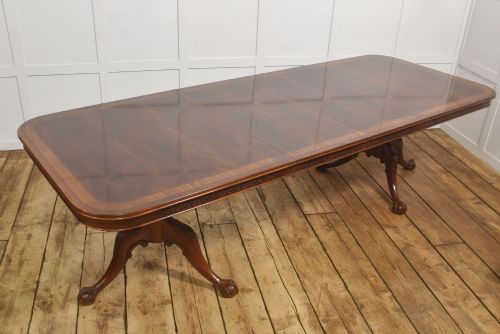
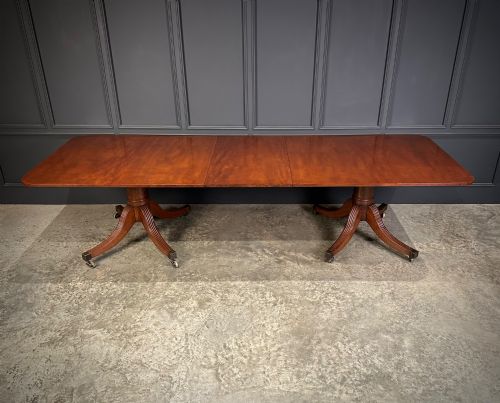
Extending Conference Table
An extending conference table provides a practical surface for gatherings, drawing on the sturdy construction of nineteenth-century and revival dining furniture.

Extending Conference Table
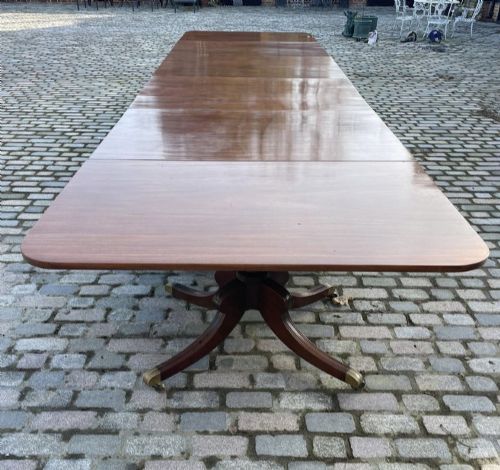
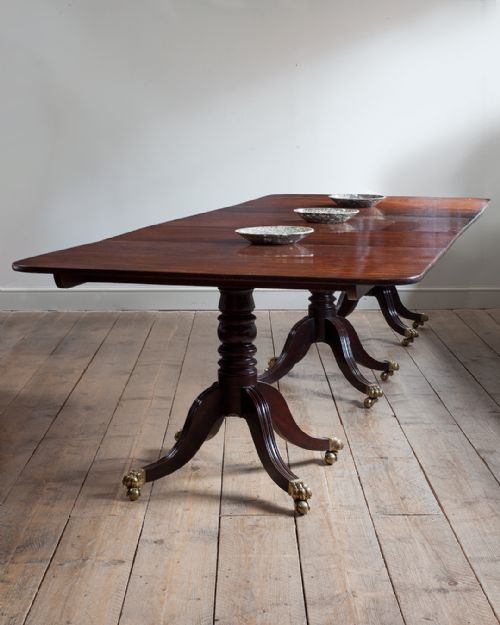
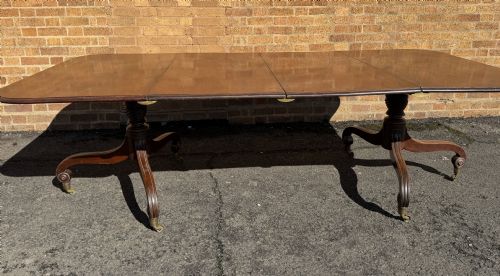
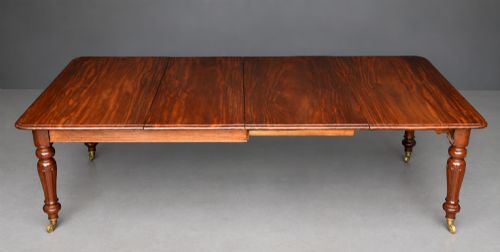
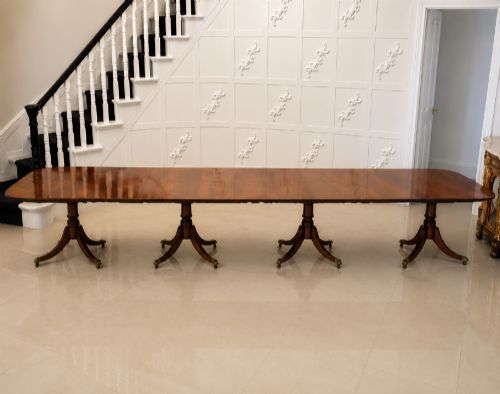
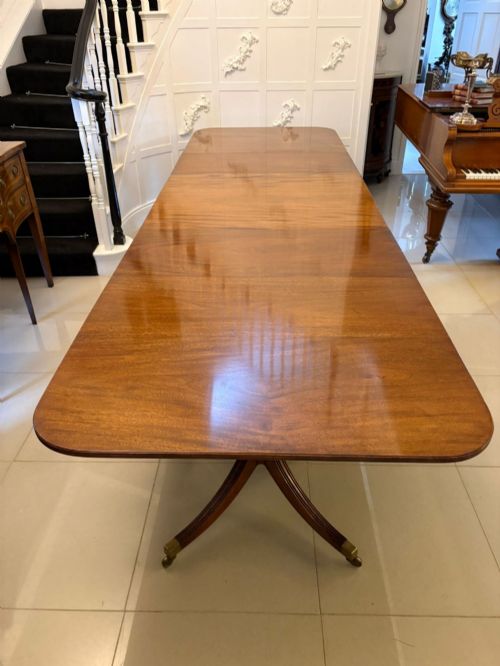
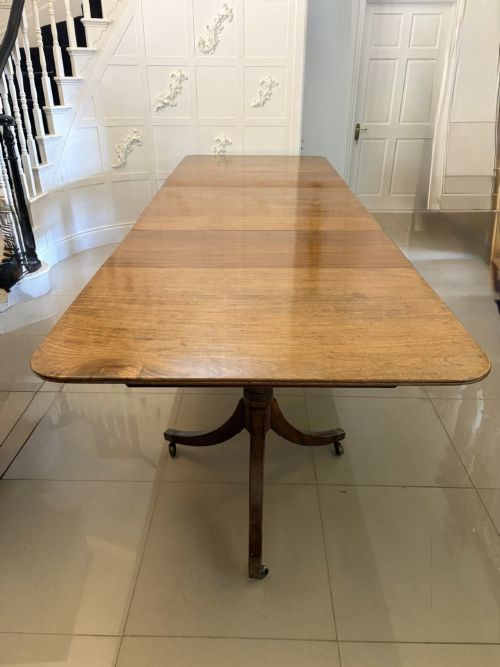
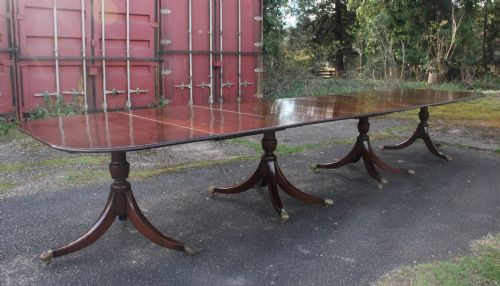
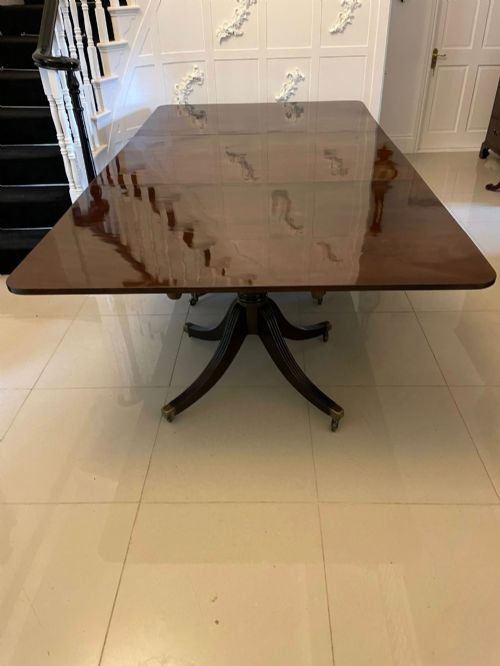
An extending conference table serves large groups by adapting its length through removable leaves or pedestal arrangements. Buyers examining this category encounter substantial multi-pillar formats originally built for dining rooms but suited to boardroom use.
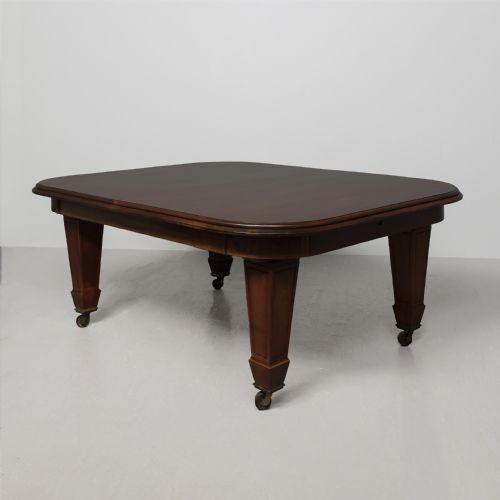
The pieces on this page span the Georgian, Regency, Victorian, and Edwardian eras, alongside later revivals. Common forms include twin-pillar and triple-pillar designs in figured mahogany, walnut, and oak.
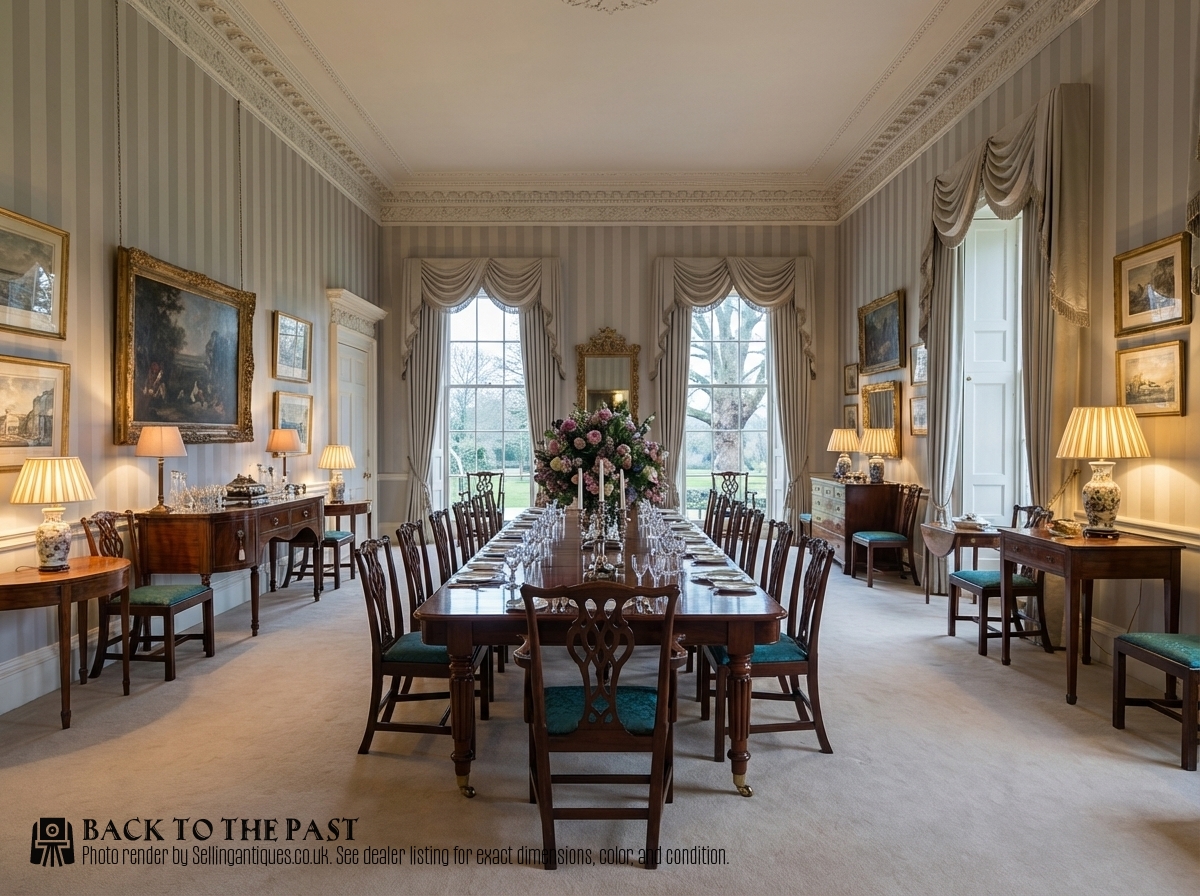
Many examples accommodate ten to twenty-eight guests, reflecting the grand scale demanded by historic banquet rooms. These heavy timber constructions rely on robust pillar supports and brass castor feet to manage frequent adjustments.
How They Were Made
Cabinet makers utilised dense hardwoods like mahogany, walnut, and oak to build these frames, often selecting figured veneers for the top surfaces. Timber sections joined together using traditional dowels, screws, and wooden runners to allow the leaves to slide smoothly.
Pedestal bases frequently incorporated brass castors and metal fittings to support heavy weights and ease movement across the floor. Individual leaves secured tightly with under-table brass clips or wooden buttons to keep the surface flat and stable during use.
Extending Conference Table Retail Price Guide 2026
Typical asking prices for extending conference table among the pieces listed under this phrase on Sellingantiques today, from the lower quarter to the upper quarter. They describe what is for sale here now, not the wider market.
Listings feature woods such as mahogany, walnut, and oak alongside brass and fabric upholstery.
What Varies in Quality
The distinction between tiers rests upon timber selection and the precision of the extension mechanism. Fine examples display richly figured mahogany grain across every matching leaf, while simpler versions utilise plain cuts of oak or walnut.
Construction methods also set pieces apart, distinguishing workshop-built tables featuring hand-turned pillars from later mass-produced items. Smooth operation of the runner system and the matching of timber colour across added leaves indicate superior craftsmanship.
Gillows·Wylie & Lochead·Maple & Co·Whytock & Reid
The Extending Conference Table Glossary
- Pedestal
- A central column support resting on splayed legs, commonly found in multi-pillar extending tables. These pillars allow sitters more legroom than traditional four-leg table designs.
- Leaf
- A removable section of timber inserted into the centre of a table to increase its length. Extra leaves store separately when the table is closed down to a shorter format.
- D-End
- A table end shaped in the form of a capital letter D, created when half-round consoles join the central section. This shape appears frequently on Regency and Georgian dining furniture.
- Reeded
- A decorative moulding featuring parallel convex rounded projections carved into the wood. Cabinet makers often applied reeding to table legs and edge banding.
- Veneer
- A thin slice of figured timber applied to a secondary wood base to provide a decorative surface. Figured mahogany and burr walnut veneers decorated the tops of high-status tables.
Extending Conference Table: Frequently Asked Questions
How do extending conference tables work?
These tables utilise wooden runners and drop-in leaves that expand the central surface area. Users pull the ends apart to create a gap where additional leaves fit securely.
Brass clips or wooden pins underneath hold the sections tightly together. This mechanism allows a single table to shift between intimate proportions and large seating capacities.
Where were these tables used originally?
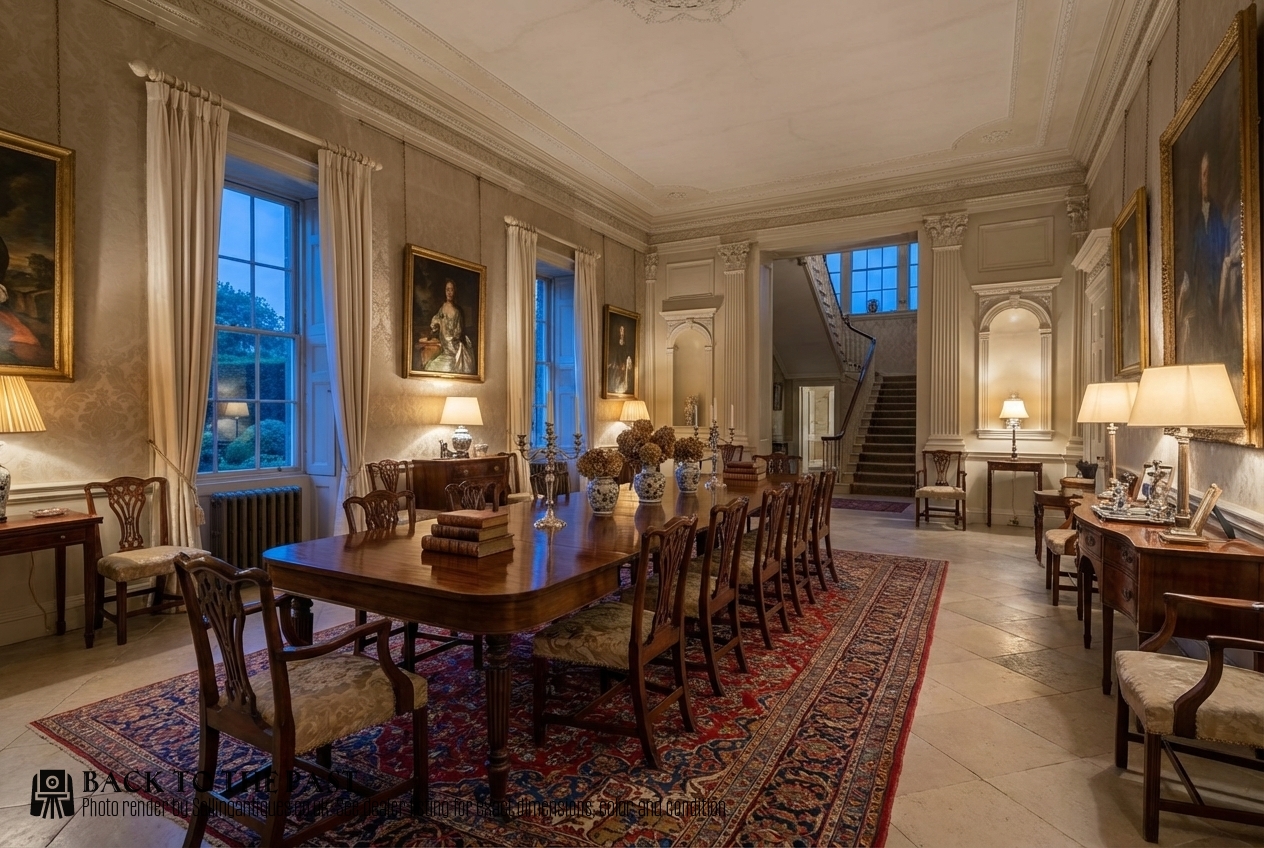
Historically, large multi-pillar tables stood in the dining rooms of substantial country houses and town residences. Families gathered around them for formal banquets and large dinner parties.
Today, their generous length and sturdy pedestals make them suitable for modern boardrooms and meeting spaces. They provide both a formal aesthetic and a functional workspace for groups.
How do I care for a wood surface?
Polished timber surfaces require regular dusting with a soft, dry cloth to prevent grit accumulation. Avoiding direct sunlight and sudden temperature shifts protects the polish and natural timber from splitting.
Applying wax occasionally maintains the lustre of mahogany and walnut finishes. Using mats underneath hot cups or heavy objects prevents ring marks on the antique polish.
How do I distinguish Regency from Victorian styles?
Regency pieces often display restrained lines, brass reeded legs, and classical proportions dating from the early nineteenth century. Mahogany and satinwood featured prominently during this period.
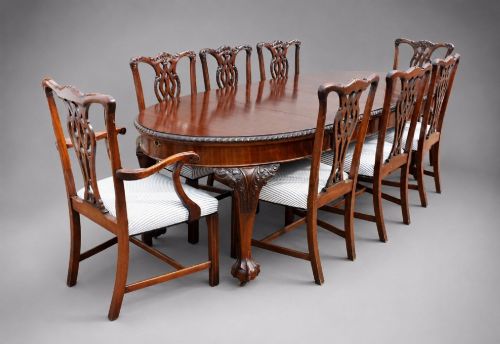
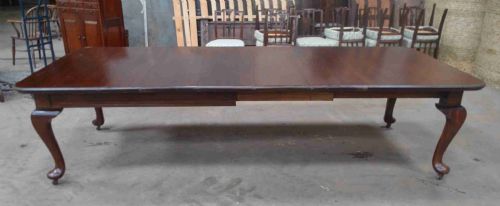
Victorian examples tend to be heavier in scale, sometimes incorporating five pillars and massive carved details. Oak and heavy figured mahogany dominated the later Victorian decades.