
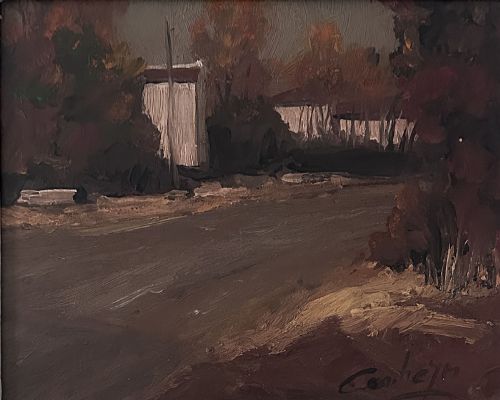
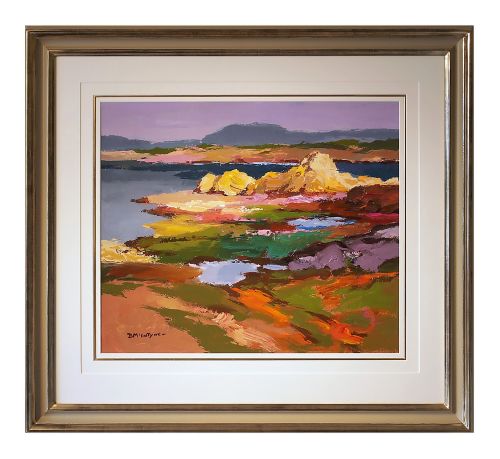
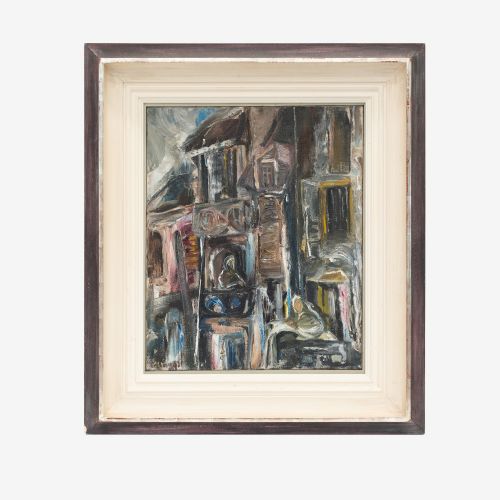


Expressionist Landscape Canvas Art
Expressionist landscape canvas art brings raw emotional energy and bold colour to interior walls through dynamic mid-century brushwork.
Expressionist Landscape Canvas Art
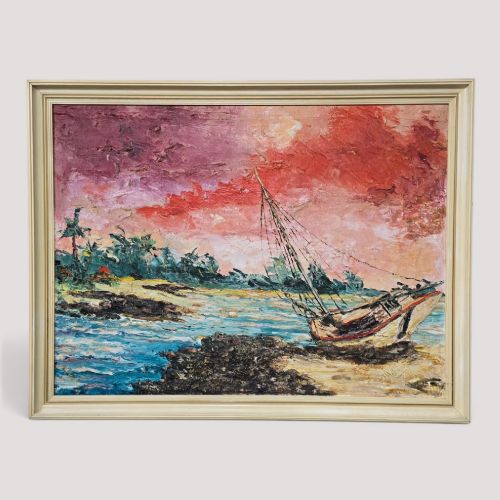
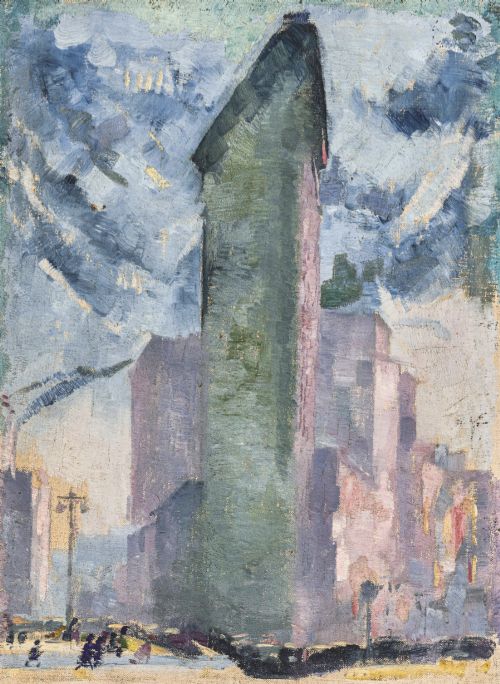
Expressionist landscape canvas art captures natural and urban scenes through distorted forms and heavy pigment, moving away from strict realism to convey inner feeling. The examples you encounter on this page span from the early twentieth century through the nineteen-sixties, with a strong representation of mid-century British, French, and German works.
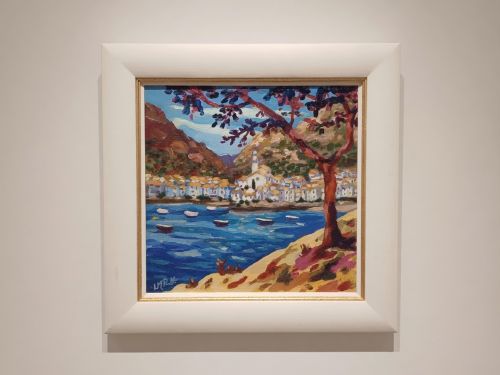
You will find varied formats ranging from intimate sketches to large cityscape and rural compositions. The subject matter stretches from Welsh ponies and Parisian quays to winter scenes and Mediterranean vistas, mapped across boards and canvases.
The aesthetic bridges several related movements including Post-Impressionism, Fauvism, and Mid-Century Modernism. These paintings serve as focal points in a room, offering both historical depth and immediate visual impact.
Materials and technique
These works rely primarily on oil paint applied to canvas, frequently supported by wooden stretchers and housed in period wood frames. Artists utilised heavy impasto techniques, laying down thick layers of pigment that retain the physical trace of the brush or palette knife.
The physical build of the support matters as much as the medium, with boards and stretched canvases providing different degrees of surface tension. Pigments were chosen for their emotional resonance rather than strict botanical or atmospheric accuracy, creating vibrant contrast.
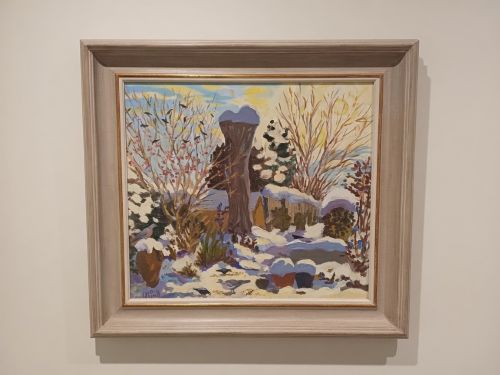
Several canvases capture winter scenes complete with feeding chickens, snowy village paths, and stray boxers by the seaside.
Assessing quality and presence
The success of an expressionist landscape rests on the confidence of the mark-making and the internal coherence of the palette. Stronger pieces demonstrate a purposeful handling of space and light, where distortion serves the emotional weight of the scene rather than masking uncertainty.
Provenance and attribution elevate certain works, particularly those linked to documented exhibitions or identifiable mid-century workshops and named artists. The relationship between the painted surface and its original or period wood frame also contributes to the integrity of the piece.
Alfred Wolmark·Donald McIntyre·Lilian Colbourn·Gabriel Dauchot·Mercedes Legrand·Hans Kappel Øvre·Markey Robinson·Pierre Peltier
The Expressionist Landscape Canvas Art Glossary
- Impasto
- A technique where oil paint is laid on canvas in very thick areas, usually thick enough that the brush or painting-knife strokes are visible. This texture catches the light and adds a sculptural dimension to flat wall art.
- Fauvism
- An early twentieth-century style characterised by strong colours and fierce brushwork over representational values. The approach prioritises painterly qualities and bold colour over the realistic depiction of nature.
- Mid-Century Modern
- A design movement spanning roughly from the nineteen-thirties to the nineteen-sixties that influenced painting through simplified forms and abstraction. It embraces both organic and geometric visual structures.
- Canvas
- A heavy woven fabric used as a surface for oil painting, typically stretched taut over a wooden frame. It provides the flexible yet durable foundation for the majority of these works.
- Provenance
- The chronology of the ownership, custody or location of a historical art piece. A documented history helps verify authenticity and adds context to the artwork.
Expressionist Landscape Canvas Art: Frequently Asked Questions
How do I hang a large canvas securely?
Heavy oil on canvas paintings require picture hooks rated for the specific weight, fixed securely into wall studs or using appropriate masonry anchors.
Ensure the hanging wire or D-rings on the wooden frame are firmly attached to support the balanced distribution of the artwork.
What is the difference between an oil painting and an impasto work?
All impasto works in this selection are oil paintings, but not all oil paintings use the impasto technique. Impasto specifically refers to paint applied thickly enough to stand proud of the canvas surface.
Flat application blends colours smoothly, whereas impasto creates a textured, three-dimensional surface that interacts dynamically with room lighting.
How do I date an expressionist landscape?
Dating relies on stylistic markers, signature formats, stretcher construction, and documented exhibition histories associated with the artist or period. Mid-century works often exhibit distinct framing materials and canvas stamps.
Comparing brushwork and subject matter to known dated pieces by the same maker provides the most reliable chronological placement.