

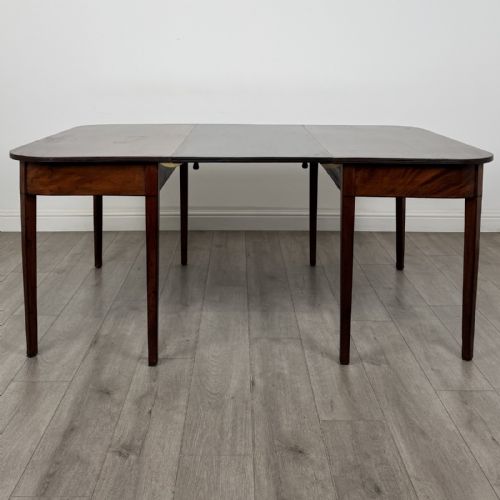
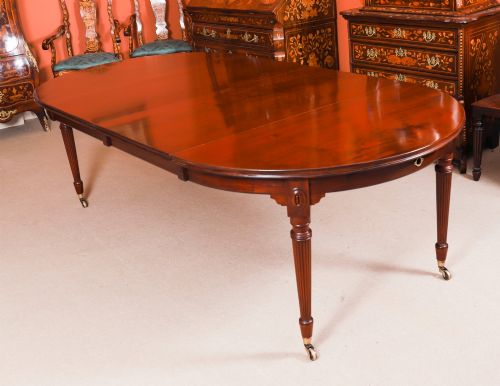
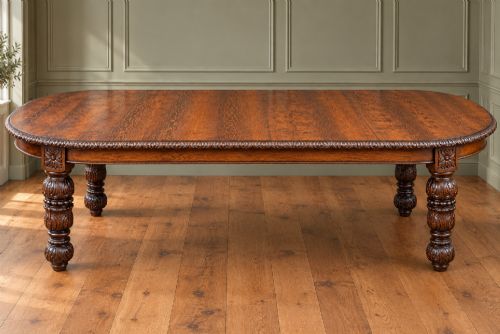
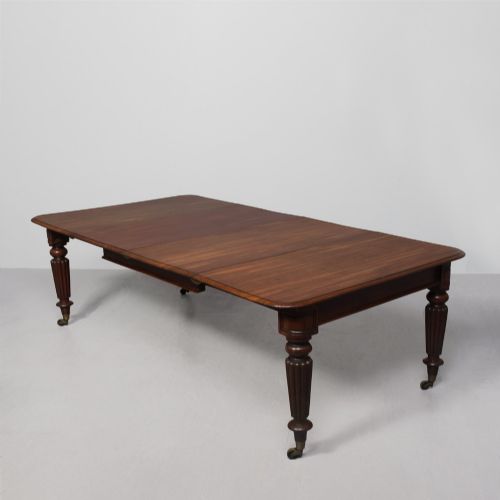



Expandable Conference Table
An expandable conference table provides the monumental scale and mechanical versatility required for boardrooms and large gatherings.
Expandable Conference Table
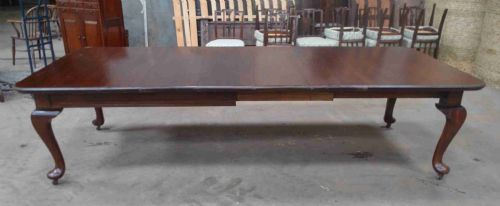
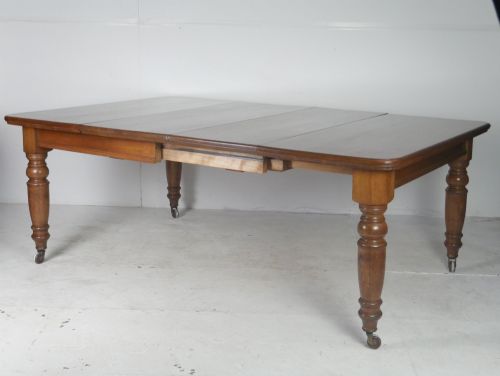
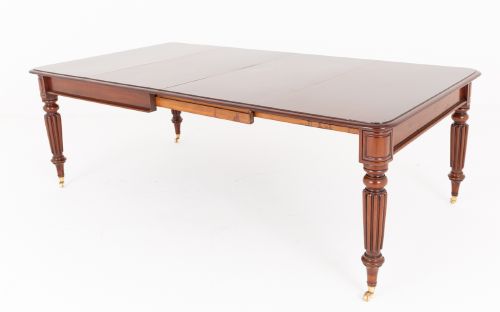
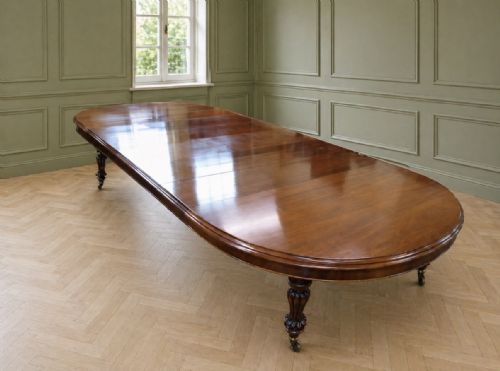
When searching for an expandable conference table, buyers encounter substantial dining and board room tables designed to accommodate large assemblies. These pieces primarily date from the nineteenth century, encompassing Regency, William IV, and Victorian periods.
The form adapts easily from daily use to formal banquets through clever internal mechanisms and removable leaves. Such tables form the architectural centrepiece of historic and modern meeting spaces alike.
Distinctions in Quality and Craftsmanship
Quality rests upon the selection of timber, visible in the rich figuring of flame mahogany and the integrity of the secondary timbers. Superior examples display meticulous hand-carving on the legs, such as claw and ball motifs, alongside seamless leaf-matching.
The sophistication of the extending mechanism and the precision with which the leaves lock into alignment dictate the engineering standard. Tables bearing maker stamps demonstrate superior workshop provenance compared to anonymous equivalents.
Expandable Conference Table Retail Price Guide 2026
Typical asking prices for expandable conference table among the pieces listed under this phrase on Sellingantiques today, from the lower quarter to the upper quarter. They describe what is for sale here now, not the wider market.
Several tables retain their original winding handles, allowing modern hosts to crank open history just as Victorians did.
Gillows·Thomas Treherne
The Expandable Conference Table Glossary
- Extending table
- A table designed with internal mechanisms or removable sections to increase its surface length. This adaptability made them essential for large nineteenth-century banquets and meetings.
- Flame mahogany
- A highly decorative wood veneer showing a distinct torch-like pattern in the grain. Makers reserved this prized material for the primary display surfaces of high-status tables.
- Pedestal base
- A central support column, often dividing into multiple carved legs with brass castors. This configuration provides sturdy weight distribution for heavy timber tops.
- Leaf
- A removable wooden board inserted into the centre of a table to extend its length. Sets often include two or three original leaves to vary seating capacity.
- Gillows
- A renowned furniture-making firm operating from London and Lancaster. Their pieces are distinguished by exceptional mechanical ingenuity and stamped signatures.
Expandable Conference Table: Frequently Asked Questions
How do I operate the extending mechanism?
Most nineteenth-century tables utilise a winding handle and internal wooden runners to separate the main sections. Once opened, individual leaves drop into the central gap and secure with brass clips.
Care must be taken to support the weight evenly during expansion to prevent strain on the pedestals and runners. Regular waxing of the tracks ensures the mechanism slides smoothly without binding.
How are extra leaves stored safely?
Leaves should be kept flat in a climate-controlled environment to prevent warping from humidity changes. Storing them upright places uneven stress on the veneer and timber joints.
Many period leaves were stored in dedicated storage cabinets or felt-lined bags when not in use. Keeping them near the table ensures the timber acclimatises evenly to the room.
How do I clean mahogany surfaces?
Dust the timber regularly with a soft, dry lint-free cloth to prevent abrasive particle buildup. Apply traditional beeswax periodically to nourish the French polish and maintain the natural lustre.
Avoid placing the table near direct heat sources or strong sunlight, which can fade the rich reddish-brown tones. Use protective mats for hot dishes and liquids to safeguard the polished finish.
How do I date a Victorian table?
Examine the timber species, leg styling, and secondary woods underneath the top for period-specific clues. Early Victorian examples often retain Regency influences, while later pieces feature heavier proportions and carved embellishments.
Hardware such as brass castors and screw fittings also provide reliable indicators of manufacturing decades. Maker stamps or handwritten labels underneath occasionally confirm exact chronological origins.