

European Cut Diamond
European cut diamond jewellery gathers antique rings, earrings, and pendants shaped by hand for candlelit sparkle.
European Cut Diamond
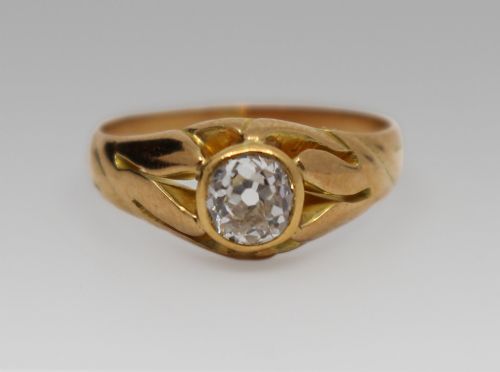
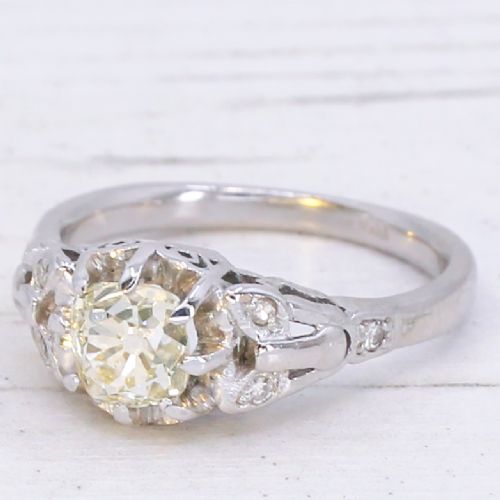
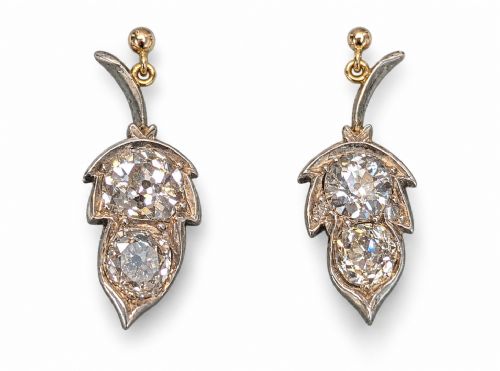
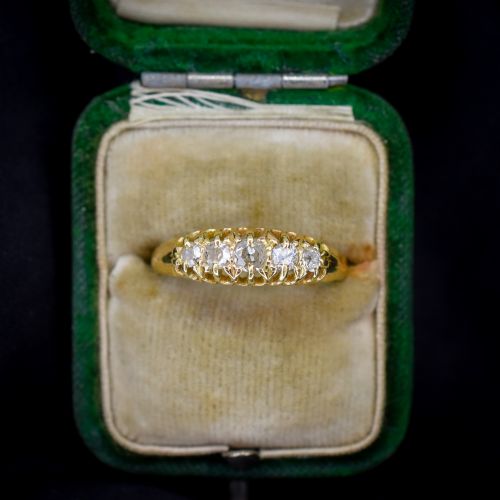
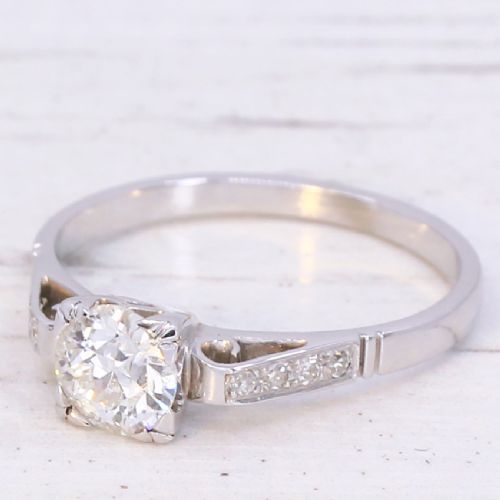
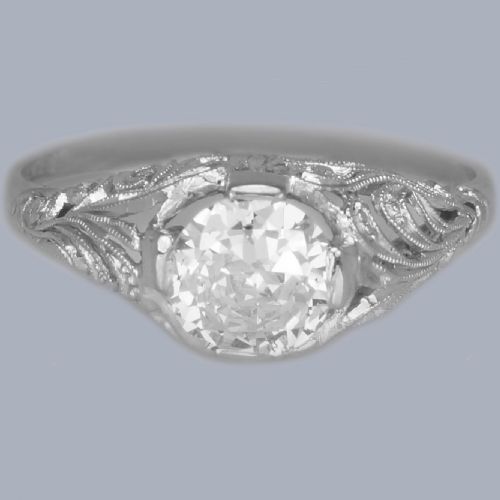
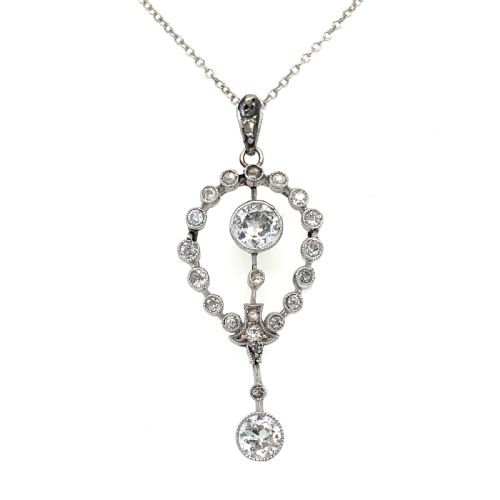
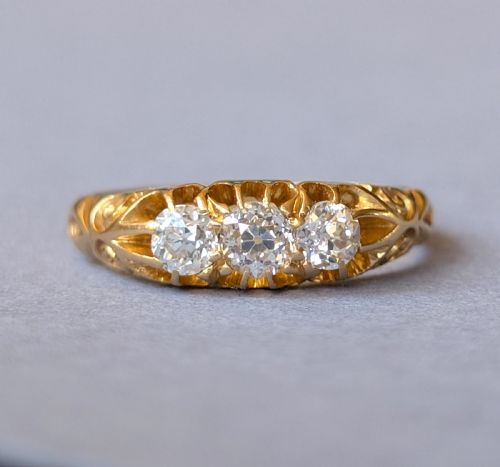
A european cut diamond sits at the centre of antique rings, pendants, and drop earrings spanning the Victorian, Edwardian, Art Deco, and Mid-Century periods. Buyers seek these pieces for their soft, hand-faceted brilliance that differs markedly from modern brilliant cuts.
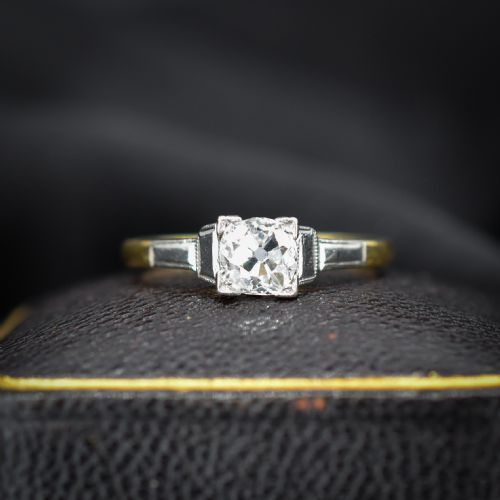
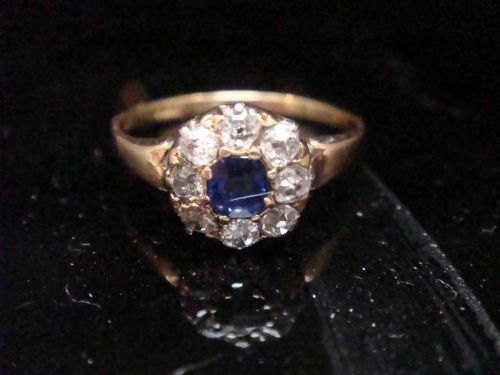
Engagement rings and cluster rings dominate the selection, frequently paired with sapphires, rubies, or emeralds. Solitaire and multi-stone configurations appear across platinum and yellow gold settings from the early decades of the twentieth century.
Materials and Techniques
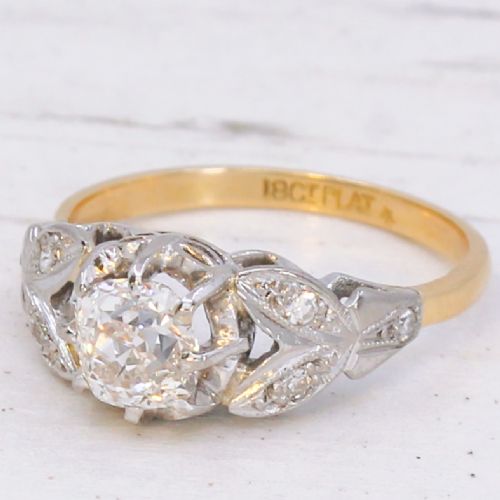
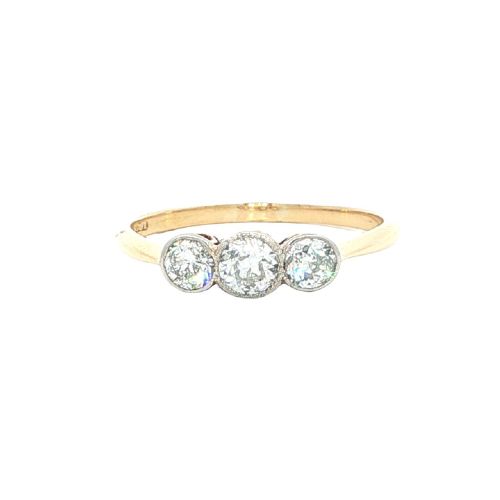
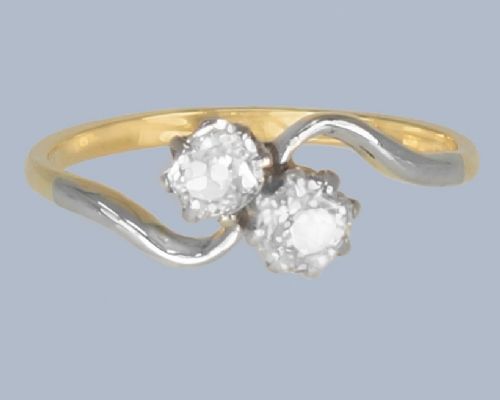
Goldsmiths set these stones into platinum, 18ct yellow gold, and 18ct white gold, often combining platinum heads with gold shanks to highlight the gems. Hand-cutting produced smaller tables and characteristic high crowns designed to catch ambient light.
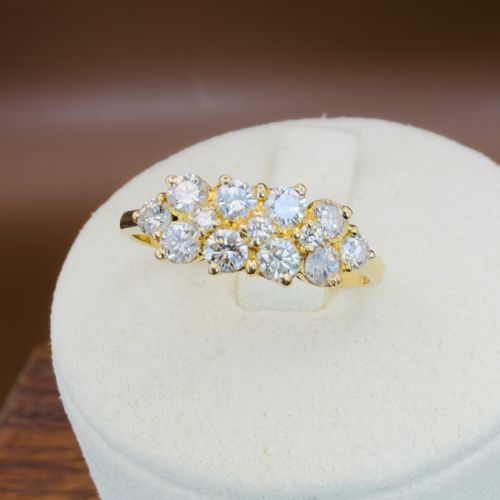
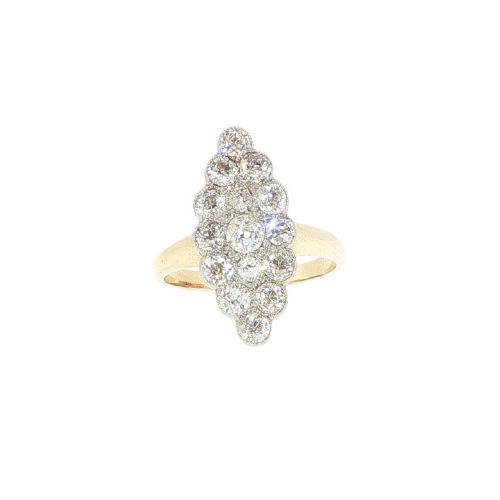
Cluster, gypsy, and solitaire settings utilise claw, bezel, or millegrain techniques to secure the stones while maintaining delicate metalwork frames.
Listings span eight distinct periods from Victorian to 1950, utilising platinum, silver, and multiple gold alloys.
Quality Variations
The precision of the hand-cutting and symmetry of the facets determine the optical performance of each stone. Expert proportioning maximises light return despite the older geometric standards.
The integrity of the surrounding metalwork, including the preservation of millegrain edges and the original height of the setting, defines the overall preservation of the piece.
The European Cut Diamond Glossary
- Old European Cut
- An early round brilliant diamond cut characterised by a small table, a high crown, and a noticeable culet at the base. This historic geometry creates broad, patterned flashes of light.
- Millegrain
- A decorative technique involving a row of small metal beads along the edges of a setting. It creates a soft, textured border typical of Edwardian and Art Deco jewellery.
- Toi et Moi
- A ring style featuring two main gems placed side by side to symbolise two souls entwined. These designs frequently pair a diamond with a ruby or sapphire.
- Gypsy Ring
- A ring style where stones are flush-set directly into a wide, tapering band of solid metal. The metal surrounds the girdle of the gem closely.
- Navette
- A boat-shaped mounting that extends along the finger, accommodating a cluster of stones. This elongated silhouette was favoured during the Edwardian era.
European Cut Diamond: Frequently Asked Questions
How do I care for my antique ring?
Clean your jewellery gently using warm soapy water and a soft brush, avoiding harsh ultrasonic cleaners that can loosen old settings. Store pieces individually in soft pouches to prevent metal abrasion.
Have the settings checked periodically by a professional jeweller to ensure the claws remain secure around the stone.
What periods do these pieces come from?
The items span from the late Victorian and Edwardian eras through the Art Deco period and into the mid-century decades. Each era brought distinct design characteristics to the metalwork and mounting styles.
Art Deco pieces favour geometric platinum settings, while Edwardian examples often showcase intricate millegrain work and lighter floral motifs.
Can I wear an engagement ring daily?
These historical pieces withstand everyday wear provided you treat them with reasonable care. Platinum and 18ct gold provide robust mountings for daily use.
Remove rings during heavy manual work, gardening, or swimming to protect the delicate antique settings and softer gemstones.
How do these stones differ from modern cuts?
Older cutting styles prioritised face-up warmth and deep crown proportions over the mathematical symmetry of modern brilliant cuts. They display wider, more romantic facet reflections under low lighting conditions.
The presence of an open culet at the base of the pavilion serves as a key visual identifier of the historic cutting method.