


Ersari Octagonal Rug
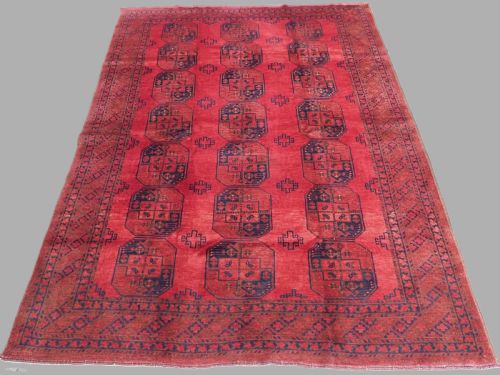
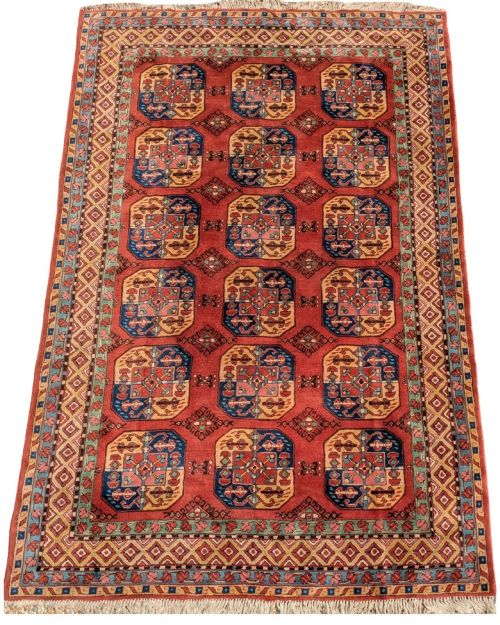
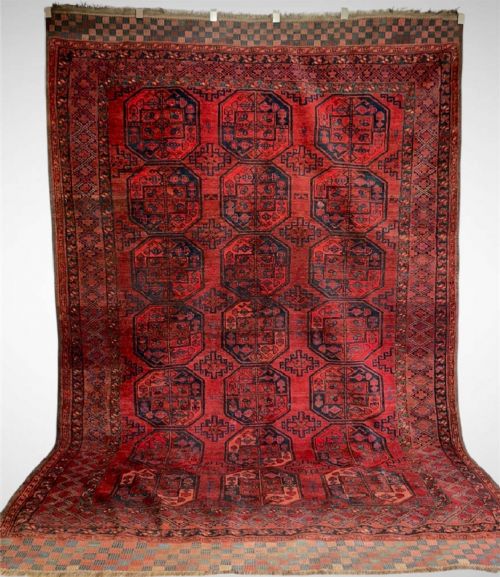
An ersari octagonal rug is a tribal weaving driven by deep red tones and geometric guls, sought after for lasting nomadic character.
Ersari Octagonal Rug
When you search for an ersari octagonal rug, you are looking at tribal carpets and village floor coverings originating from Central Asia, often designated through Afghan or Turkmen tribal styles. The pieces met most frequently on this page span from the late nineteenth century into the early decades of the twentieth century, taking the form of main carpets, large country house sizes, face chuvals, and village rugs.
These floor coverings display traditional patterns such as the guls and octagonal motifs characteristic of Turkmen weavers. The evidence shows formats ranging from smaller area rugs and rug panels up to exceptionally large carpets woven in village and tribal workshops across northern regions.
Materials and Construction
The construction relies heavily on wool, sometimes paired with goat hair and horsehair foundations for structural durability. Natural dyes provide the palette, yielding warm reds, deep rich red tones, and old gold hues.
Weavers utilised traditional techniques tied to nomadic and village production methods, creating soft glossy piles and solid structures that survived decades of domestic use.
Listings span from eighteen-fifty through nineteen-thirty, uniting wool, natural dyes, goat hair, and horsehair.
Distinctions in Quality
Quality rests upon the depth and saturation of the natural dyes, where vibrant warm reds and rich shades elevate the visual impact of the rug. Softer, glossier wool handles demonstrate superior material selection by the weaver.
Scale and proportion also divide the examples, with large country house size carpets and early pieces requiring greater coordination in tribal design than standard village rugs.
The Ersari Octagonal Rug Glossary
- Gul
- A primary repeating medallion or octagonal design motif used extensively in Turkmen and Ersari carpets. These geometric elements form the backbone of the tribal layout.
- Chuval
- A large tribal bag face or storage sack woven by nomadic groups, often featuring multiple guls. Collectors prize these panels for their dense knotting and complete face designs.
- Main Carpet
- A large floor rug produced for primary domestic use within the tent or home rather than smaller utility sacks. These pieces display the full complexity of the tribal pattern.
- Foundation
- The underlying structure of warp and weft threads that supports the knotted pile. In tribal weaving, this often includes goat hair or horsehair for added strength.
- Natural Dyes
- Colourants derived from plants, roots, and minerals rather than synthetic chemicals. These dyes age gracefully and produce the deep red tones found in older carpets.
Ersari Octagonal Rug: Frequently Asked Questions
How do I identify an Ersari rug?
Look for the characteristic deep red colour palette combined with repeating octagonal gul motifs across the field. These rugs typically reflect traditional Turkmen and Afghan tribal designs.
Examination of the wool and foundation materials helps confirm the tribal origin. Many examples incorporate natural dyes and sturdy goat hair or horsehair elements.
Where were these rugs made?
These floor coverings originate from Central Asia, specifically regions associated with northern Afghanistan and Turkmen tribal groups. Village weavers and nomadic tribes produced them for daily domestic use.
Production spanned local workshops and tribal camps, resulting in diverse formats ranging from small face chuvals to large country house carpets.
How should I care for an old tribal rug?
Vacuum the rug gently without using a rotating brush roll to protect the pile and soft wool fibres. Keep the piece out of direct sunlight to preserve the natural dyes.
Rotate the carpet periodically to ensure even wear across high-traffic areas. Professional cleaning tailored to antique textiles is recommended when deep maintenance is required.
What is a main carpet?
A main carpet refers to a large floor covering woven for primary use in the central living space of a home or tent. These pieces required extensive time and coordination from the weaver.
They typically display a higher number of guls and more complex border arrangements than smaller utility rugs or bag faces.