

Equestrian Oil on Canvas
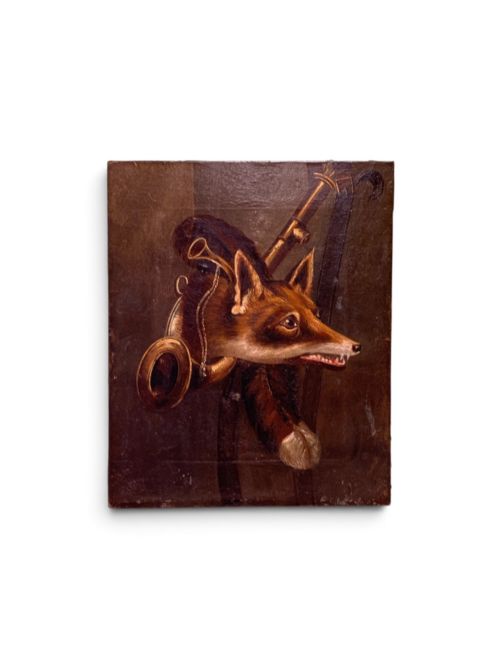
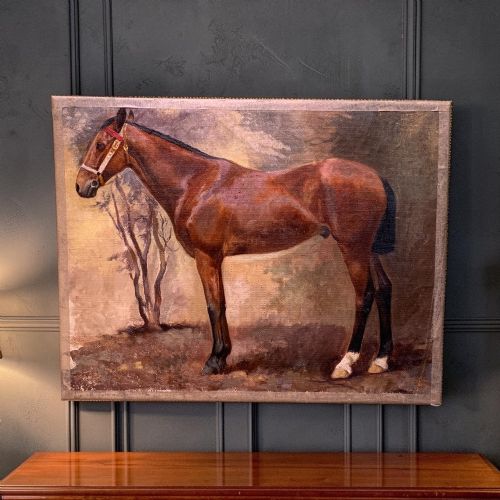
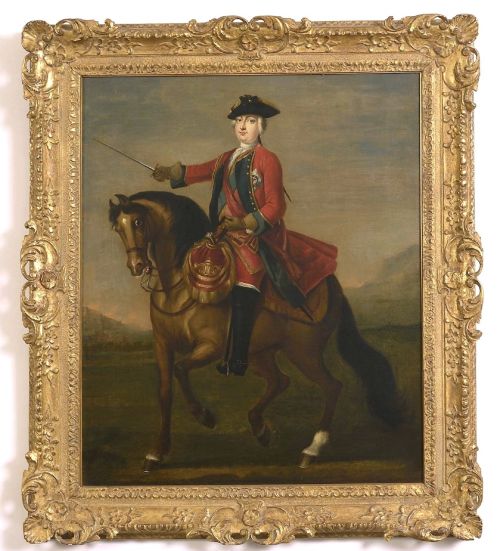
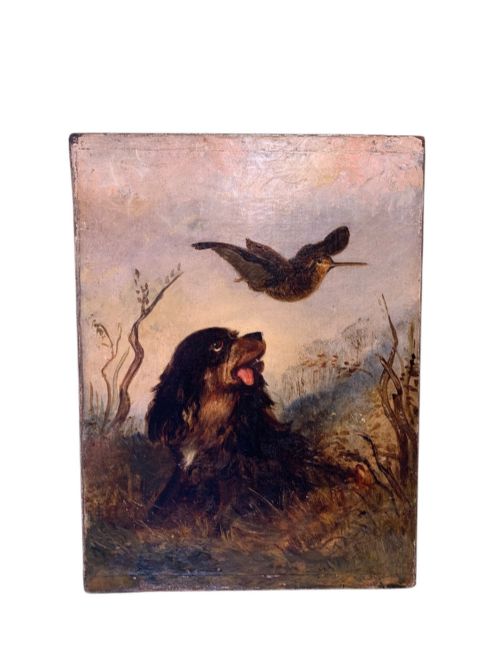
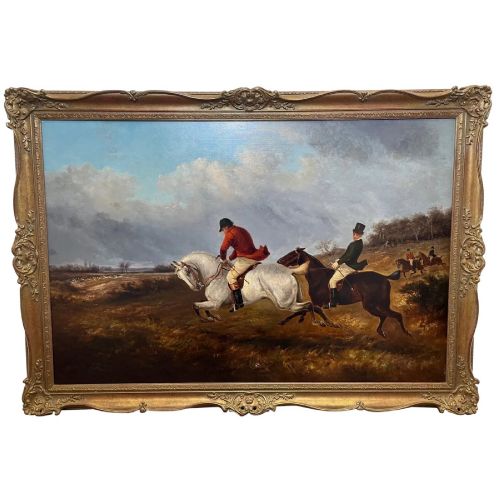
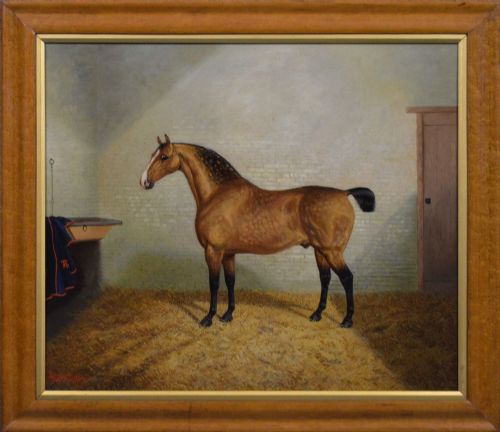
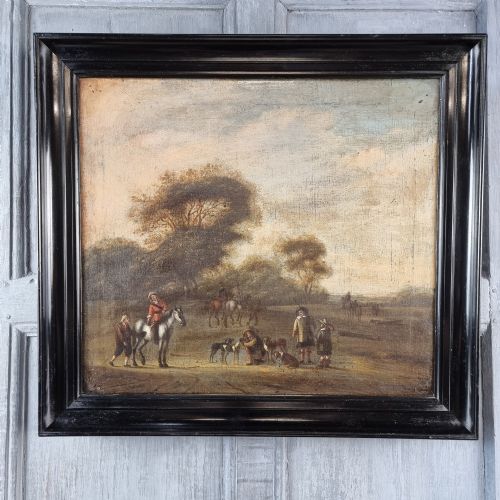
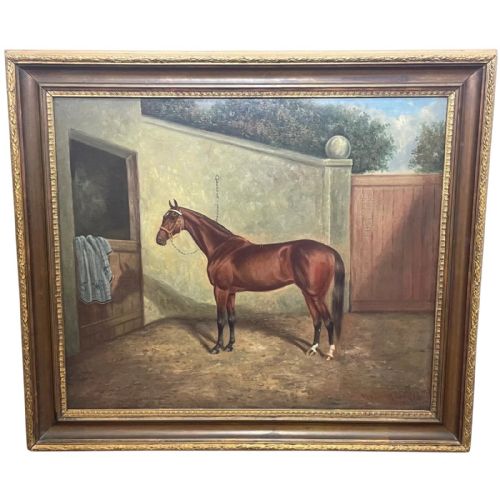
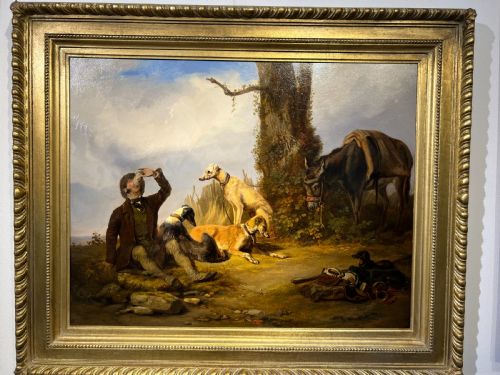
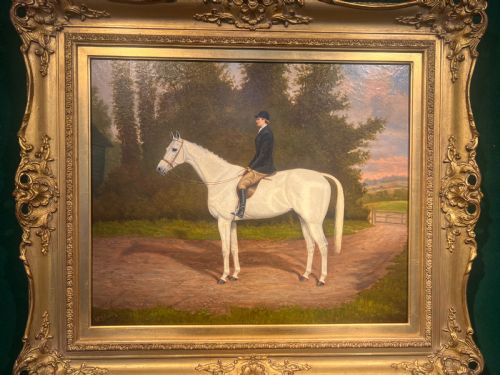
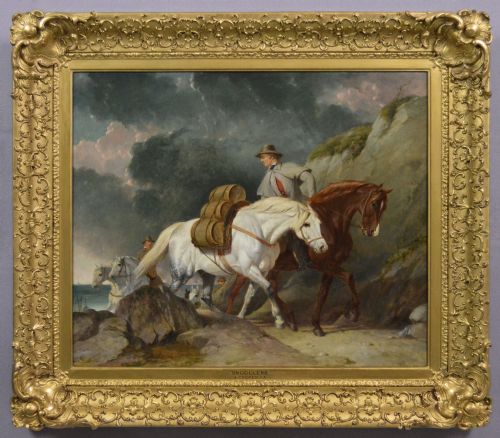
These equestrian oil on canvas works capture horses, riders and hunt scenes with painterly depth, offering an immediate window into historical sporting life.
What these paintings are
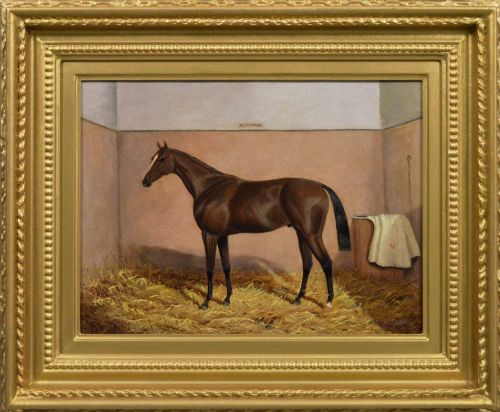
When you search for equestrian oil on canvas, you encounter varied portrayals of horses and riders across multiple centuries. The selection ranges from Victorian depictions of purebred Arabian horses in Indian stables to Georgian works and 19th-century British and English school scenes.
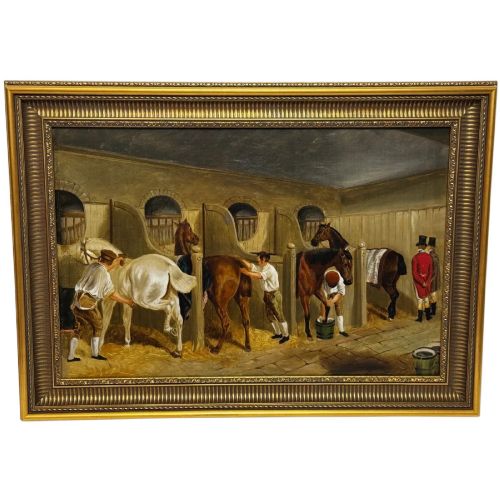
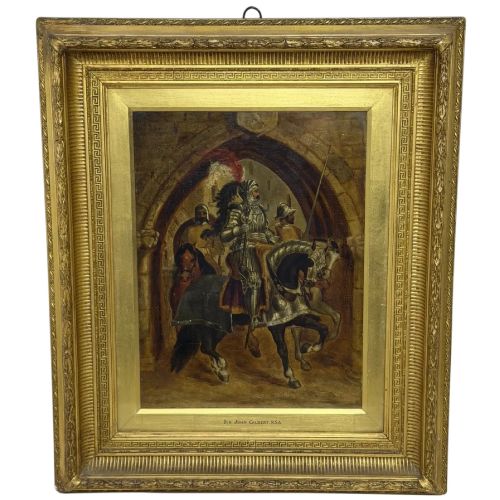
You are most likely to meet Victorian and 19th-century canvases on this page, spanning hunting parties, steeplechase racing and formal portraits. Subjects vary from large groups of shire horses and French huntsmen in hot pursuit to genre historical scenes involving blacksmiths and ladies.
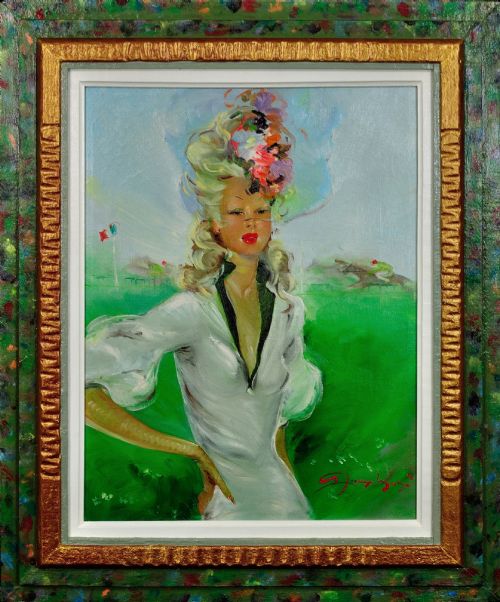
The styles encompass 19th-century colonial, traditional realism and art nouveau, alongside works executed in the manner of established artists. Frames are predominantly giltwood or gilt wood, complementing the traditional character of the paintings.
How they were made
These works are executed in oil paint applied to woven canvas supports, allowing artists to build rich textures and deep colour layering. The technique supports both fine detail in human and equine anatomy and broad atmospheric effects in landscape backgrounds.
Many of these canvases are housed in period frames constructed from giltwood or gilt wood, sometimes featuring painted wood frame elements. The framing method typically involves ornate moulded timber finished with gold leaf or metallic paint to accentuate the artwork.
Retail Price Guide 2026
Typical UK retail prices for equestrian oil on canvas, calculated from the Sellingantiques database of over a million retail prices indexed since 2003. This retail price guide relies exclusively on Sellingantiques data; no external sources or auction records are used, so the figures do not describe the wider market.
Listings feature periods from 1800 through the Victorian era up to 1960, utilising oil on canvas and giltwood framing.
What varies in quality
Quality in these works lies in the anatomical precision of the horses and the fluidity of the brushwork. Superior examples demonstrate a confident handling of light on horse coats and musculature, whereas lesser pieces can appear rigid or flat in composition.
The integration of the frame with the canvas also dictates overall calibre. Original swept giltwood frames that harmonise with the period of the painting elevate the piece far above canvases paired with mismatched or later replacements.
Heywood Hardy·Guillaume Urban Régamey·B J Burrows·David Morier·Benjamin Cam Norton·George Stubbs
The Equestrian Oil on Canvas Glossary
- Canvas
- A heavy woven fabric stretched across a wooden frame to serve as the foundation for oil paintings. It provides a flexible yet durable surface for pigment application.
- Giltwood
- Timber carved and coated with gold leaf or a gold-coloured finish. This material is standard for period frames associated with traditional oil paintings.
- Steeplechase
- A horse race featuring obstacles such as ditches and fences. This subject frequently appears in 19th-century English school paintings.
- Genre painting
- Artwork depicting scenes from everyday life, often involving human figures interacting with animals or working environments. Such pieces offer social context alongside the primary equine subject.
- Realism
- An artistic style that aims to represent subject matter truthfully without artificiality. In these listings, traditional realism ensures accurate proportions of horses, riders and hounds.
Frequently Asked Questions
How do I date an antique canvas?
Dating relies on stylistic evidence, costume details, framing methods and artist signatures recorded on the work. Victorian and 19th-century pieces often display specific clothing styles, such as top hats and hunting pinks.
Frame construction and canvas preparation also offer clues to the period of origin.
How were these paintings framed?
Many period canvases are housed in giltwood or gilt wood frames designed to complement the artwork. These frames often feature decorative moulding and a gold leaf finish.
Some listings note specific variations such as painted wood frames or swept gilt designs.
Where were these scenes painted?
The origins span multiple regions, including British schools, French realism, 19th-century colonial settings and Indian stables. Artists recorded both local English hunts and international subjects.
This geographical spread reflects the widespread popularity of equestrian art across Europe and the British Empire.