
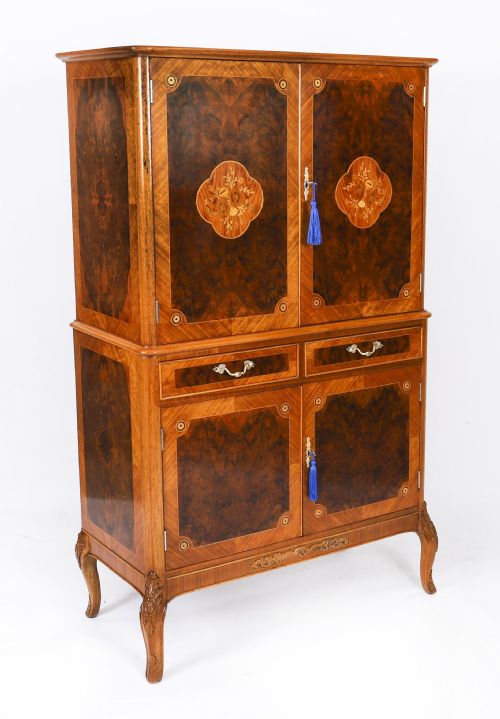

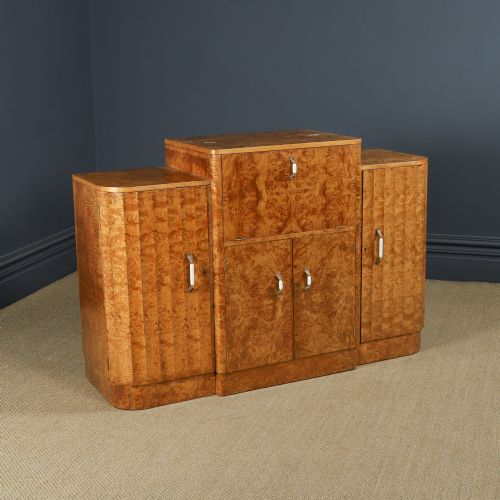


Epstein Furniture 1930s
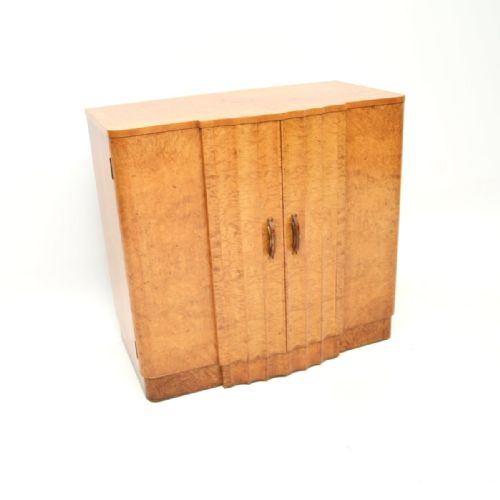
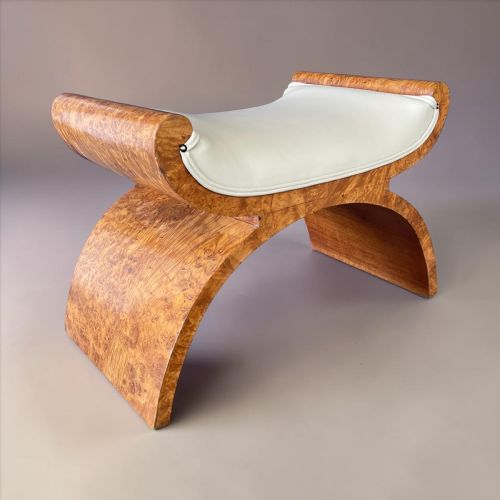
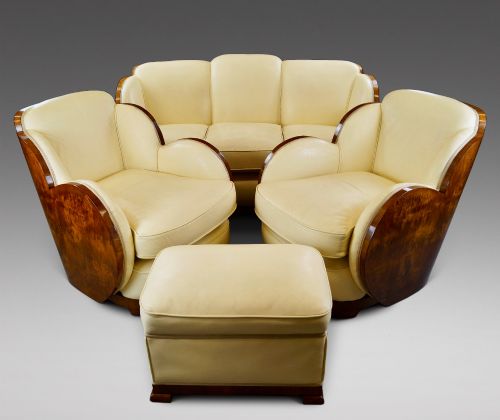
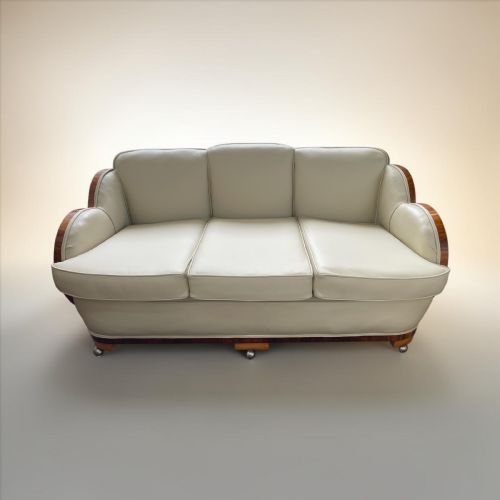
Epstein furniture 1930s brings bold Art Deco forms into the room through burr walnut, maple, and striking cloud suites.
Epstein Furniture 1930s
Epstein furniture 1930s encompasses striking seating, storage, and dining designs created during the interwar period. The maker's output includes prominent cocktail cabinets, nests of tables, sideboards, and expansive lounge suites.
The selection centres heavily on Art Deco aesthetics, featuring sculptural silhouettes and rich timber surfaces. Pieces range from bedside tables and dressing tables to triple wardrobes and complete dining suites.
Buyers encounter works explicitly attributed to Harry and Lou Epstein alongside related examples from the period. These items define a distinct British contribution to twentieth-century design through their heavy proportions and dramatic grain patterns.
Materials and construction
Makers utilised burr walnut, standard walnut, maple, and satinwood to build these substantial forms. Timber veneers were carefully selected to create symmetrical patterns across large cabinet doors and drawer fronts.
Metal elements such as brass appear alongside glass, leather, bakelite, and secondary woods like sycamore. These materials combined to give the dining tables, sideboards, and cocktail units their finished surface contrast.
Every serious cocktail cabinet requires a hidden stash point for the shaker, proving that 1930s entertaining was taken very seriously indeed.
Assessing craftsmanship and condition
Quality in these pieces rests upon the boldness of the wood veneers and the precision of the joinery. The alignment of burr walnut figures across multiple panels dictates the visual success of a cabinet or sideboard.
The integrity of the original framing within lounge suites and large dining tables separates standard examples from the finest survivals. Intricate marquetry work and intact hardware further elevate certain cocktail chests and dry bars.
Harry and Lou Epstein·Epstein and Co
The Epstein Furniture 1930s Glossary
- Art Deco
- A design style characterised by sleek geometric shapes, streamlined forms, and lavish materials. It dominates the appearance of interwar cabinetwork and seating.
- Burr Walnut
- A wood harvested from the warted growths on walnut trees, yielding highly figured and swirling grain patterns. It forms the primary visual draw on many cabinet doors.
- Cocktail Cabinet
- A dedicated furniture piece designed for storing bottles, glassware, and mixing tools. These units often feature drop-down serving flaps and fitted interior lighting.
- Cloud Suite
- A descriptive term for heavy, rounded upholstered lounge furniture associated with the period. The upholstery style emphasises bulky, enveloping curves.
- Marquetry
- The art of applying pieces of veneer to a structure to form decorative patterns. Craftsmen utilised this technique to enhance the facades of sideboards and drinks cabinets.
Epstein Furniture 1930s: Frequently Asked Questions
What is an Epstein cloud suite?
An Epstein cloud suite is a heavy, rounded lounge grouping typically comprising a sofa and matching chairs from the interwar period.
The design relies on deep, enveloping upholstery and sweeping curves that define the Art Deco seating aesthetic.
How do I identify an Epstein cocktail cabinet?
Epstein cocktail cabinets usually present dramatic burr walnut veneers, brass details, and fitted internal compartments for glassware and bottles.
Many examples incorporate drop-front preparation shelves and specialised storage designed for entertaining.
What woods did Epstein use?
Makers relied heavily on burr walnut, standard walnut, maple, and satinwood for visible exterior surfaces.
Secondary timbers like sycamore appear alongside brass, leather, glass, and bakelite elements in cabinets and tables.
Are these pieces strictly Art Deco?
The vast majority of the documented output falls under the Art Deco style with its characteristic geometric or curved silhouettes.
Occasional variations venture into revival aesthetics, though the core identity remains tied to 1930s modernism.