
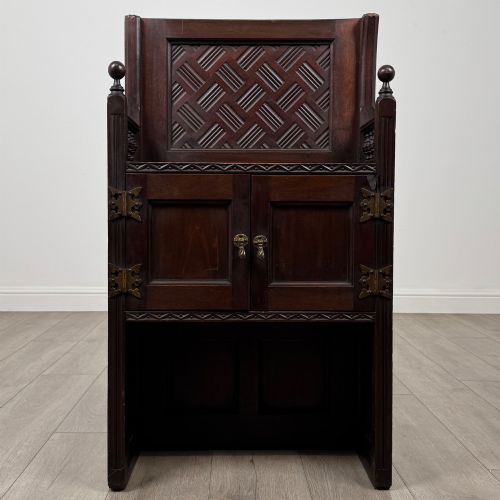
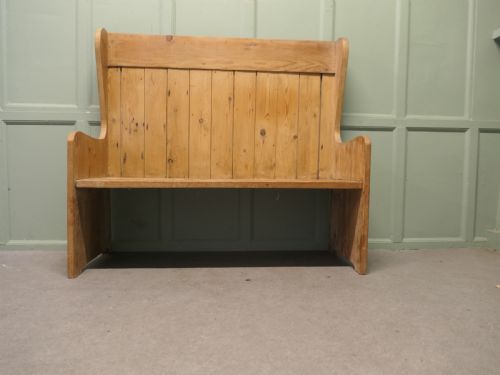
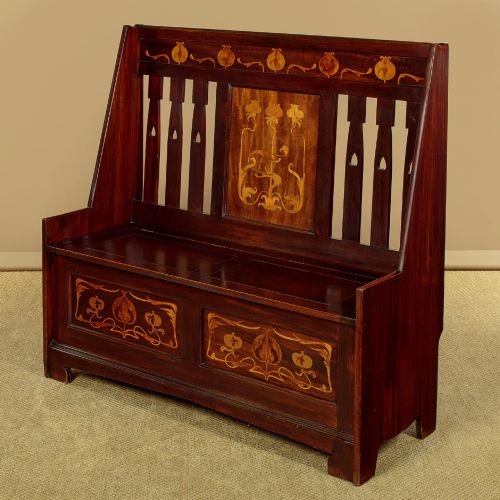
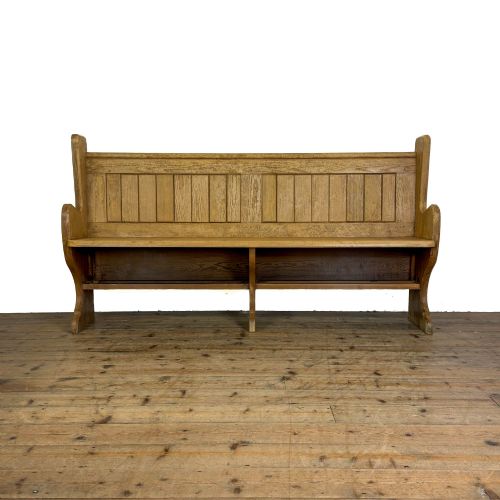




Entryway Bench Wood
An entryway bench wood piece provides a practical welcome in a hallway, combining seating with storage or decorative presence.
Entryway Bench Wood
An entryway bench wood search brings up an array of hallway seating, from nineteenth-century pine pews and settles to Edwardian oak benches and mahogany window seats. These items served households by offering a place to sit while removing boots or waiting in a hall.
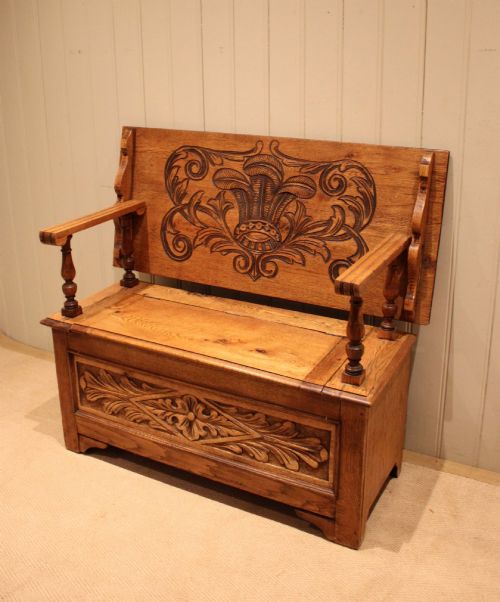
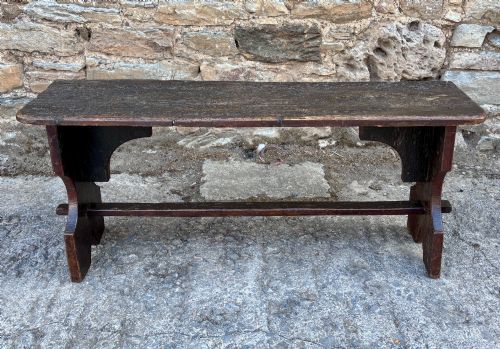
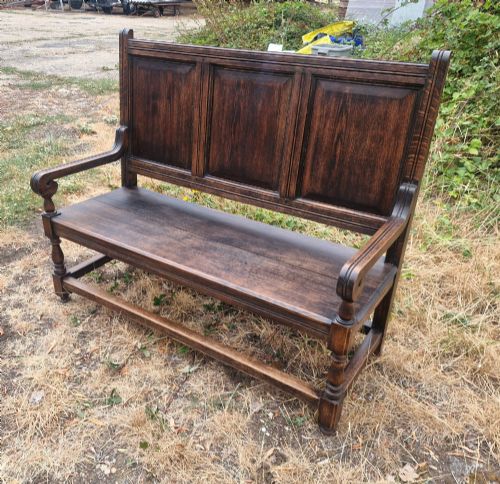
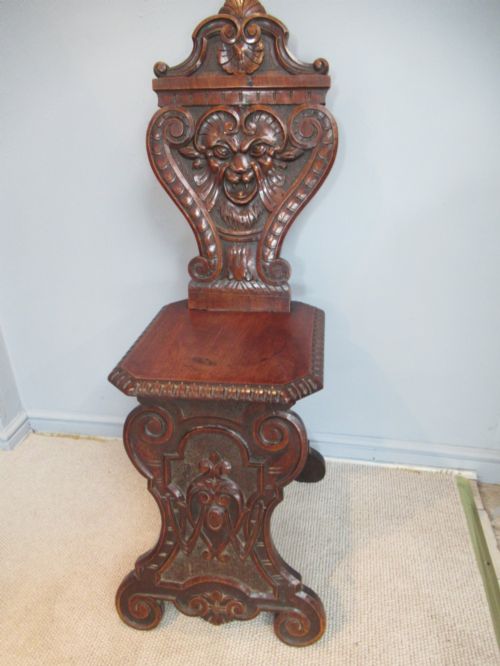
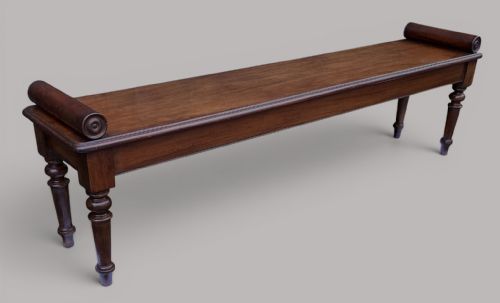
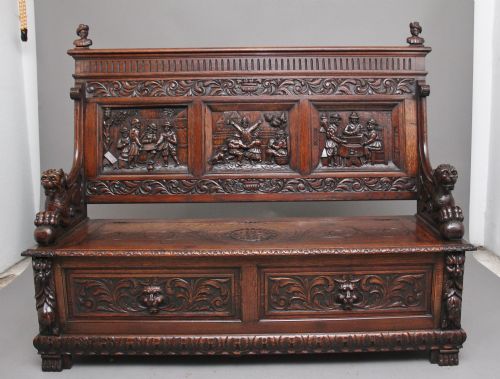
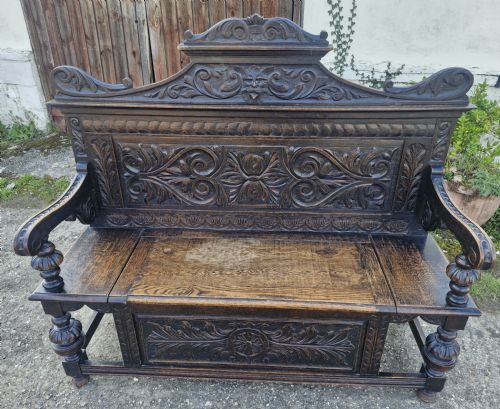
The pieces appearing here span the Victorian, Edwardian, and Regency periods, alongside rustic country house and farmhouse examples. Oak and mahogany dominate the selection, often taking the form of high-backed settles, box seats with lift-up lids, and monastic monks benches.
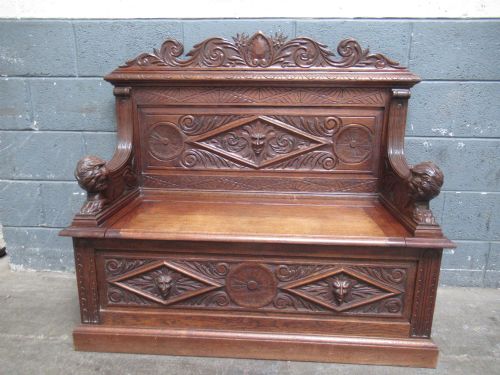
Buyers will frequently encounter carved oak hall benches from the late nineteenth century, alongside simpler pine church pews and country pub settles. More formal mahogany benches and Regency window seats also appear among the selection.
Materials and construction
Makers utilised solid timbers such as oak, mahogany, pine, walnut, elm, and sycamore to build these sturdy seats. Construction methods relied heavily on traditional joinery, panelled framing, and box compartments designed for storage.
Carving and inlay work frequently adorn the surfaces, featuring motifs like boxwood inlay, Green Man carvings, and elaborate Renaissance Revival or Jacobean Revival panels. Brass fittings and hinges support the lift-up lids found on many box settles and monks benches.
The selection includes styles ranging from Arts and Crafts and Art Nouveau to Regency, Gothic Revival, and rustic country farmhouse.
Assessing quality
The standard of a bench rests upon the grade of timber selected and the depth and crispness of the hand-carved detail. Dense solid oak and figured mahogany examples show superior cabinet-making compared to utilitarian pine workshop pieces.
Proportion and structural integrity dictate the standing of a piece, particularly where conversion mechanisms or hinged storage boxes are integrated. Original hardware and sound joints elevate an item above heavily restored or altered equivalents.
James Shoolbred and Co.·Gillows
The Entryway Bench Wood Glossary
- Settle
- A wooden bench with a high back, solid arms, and often a storage box beneath the seat. This form protected sitters from draughts in hallways and firesides.
- Monks Bench
- A convertible piece of furniture featuring a hinged top that flips to transform the backrest into a table surface. These often incorporate a box seat base.
- Hall Bench
- A narrow seating item designed specifically for corridors and entranceways. They frequently feature carved panels or umbrella stands.
- Window Seat
- An upholstered or polished wooden bench proportioned to fit beneath a window recess. Regency and Edwardian examples often feature elegant mahogany frames.
- Boxwood Inlay
- Contrasting pale wood inserted into recesses in a darker timber surface to create geometric or floral patterns. This decorative technique appears on Edwardian and later pieces.
Entryway Bench Wood: Frequently Asked Questions
What is a monks bench used for?
A monks bench serves as both a hallway seat and a small table through a pivoting top mechanism. The hinged backrest flips forward to rest upon the arms, creating a flat surface.
Historically, this dual-purpose design saved space in smaller entrance halls and rooms. The base often contains a box compartment for storing items out of sight.
Where should I place an entryway bench?
An entryway bench fits well against a hallway or corridor wall where visitors remove footwear. They provide a practical spot to sit while offering visual presence upon entering a home.
Model types with lift-up seats or built-in cabinets also help keep hallways tidy by hiding away boots, scarves, and gloves. Measure your hallway space carefully to ensure clearance for doors and passage.
How do I date an antique wooden bench?
Dating relies on examining the timber species, joinery methods, tool marks, and prevailing decorative styles. Victorian and Edwardian pieces often display specific revival motifs like Jacobean or Renaissance carving.
Earlier nineteenth-century examples tend to show hand-sawn timber marks and simpler, robust construction. Hardware such as hinges and screws also provides clues to the manufacturing period.