


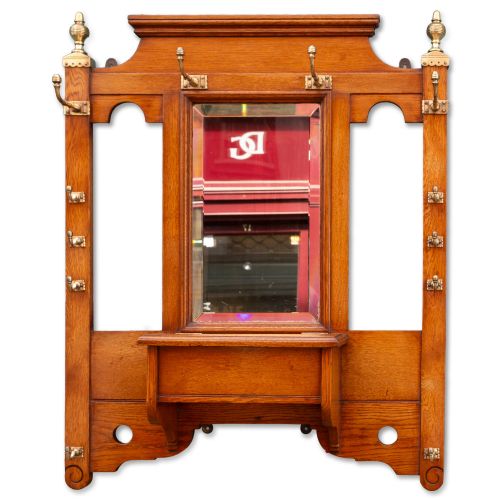
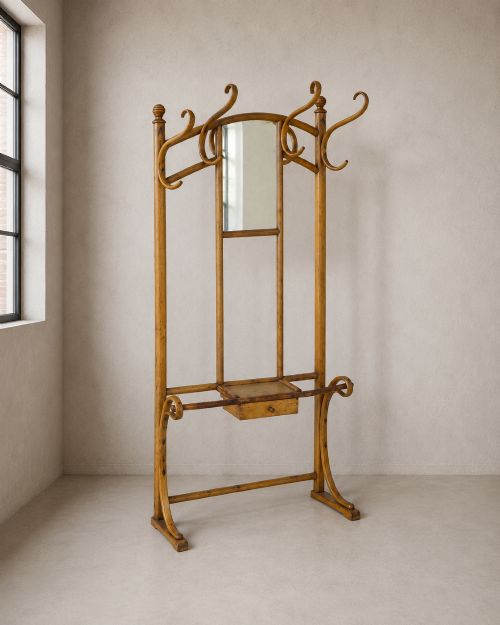
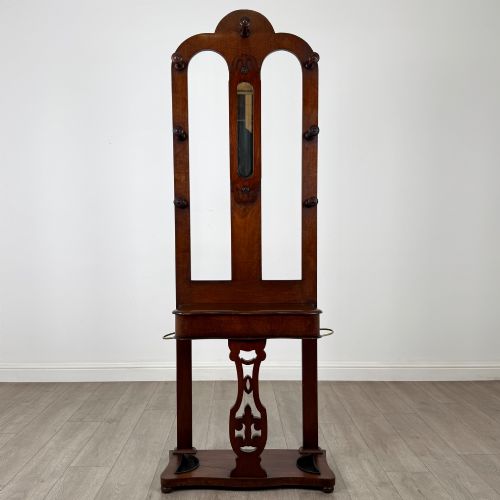
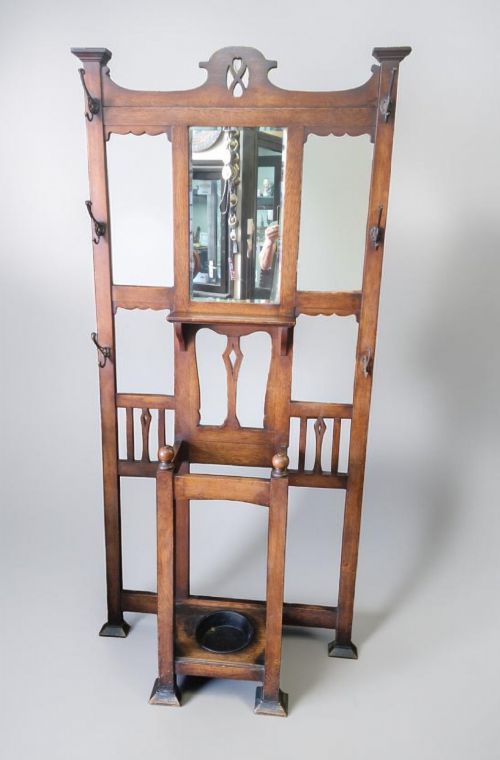



Entry Mirror Rack
An entry mirror rack combines a looking glass with hooks for hats and coats, welcoming visitors while serving the practical demands of a hallway.
Entry Mirror Rack
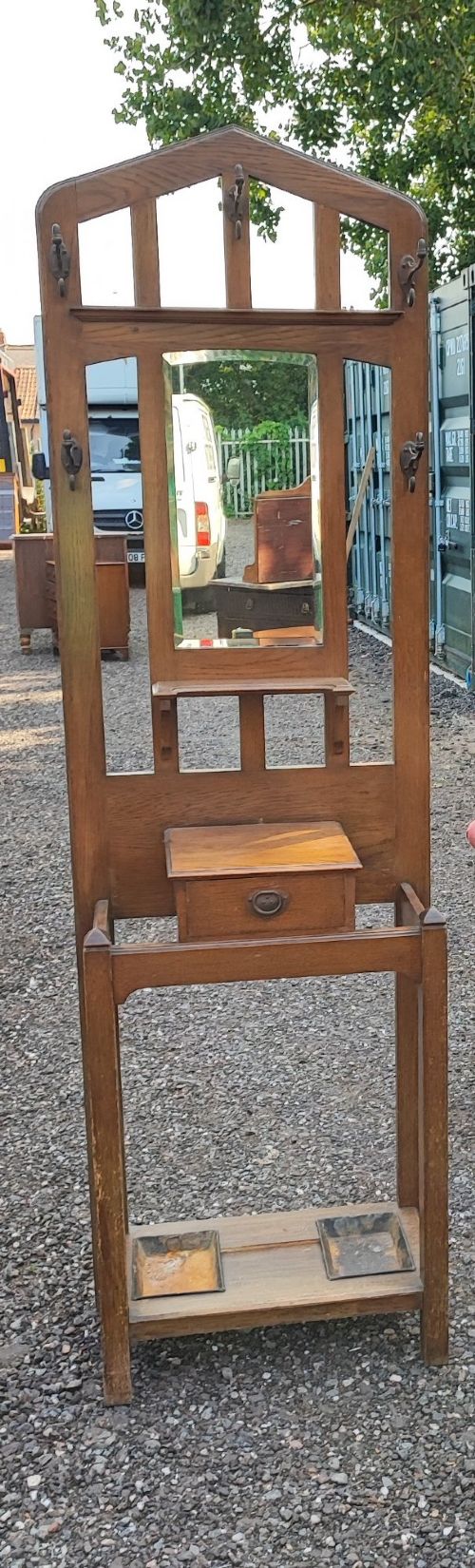
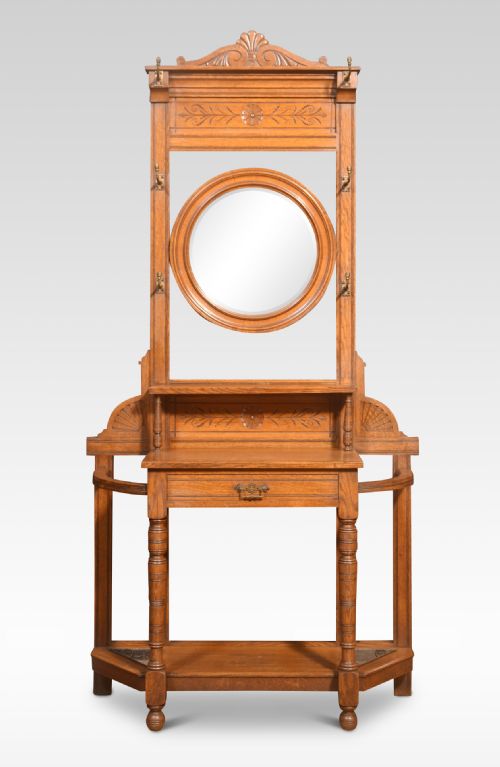
An entry mirror rack primarily takes the form of a hall stand or wall-mounted coat rack, designed for the entrance of a home. These functional pieces merge a looking glass with sturdy hooks for outdoor garments.
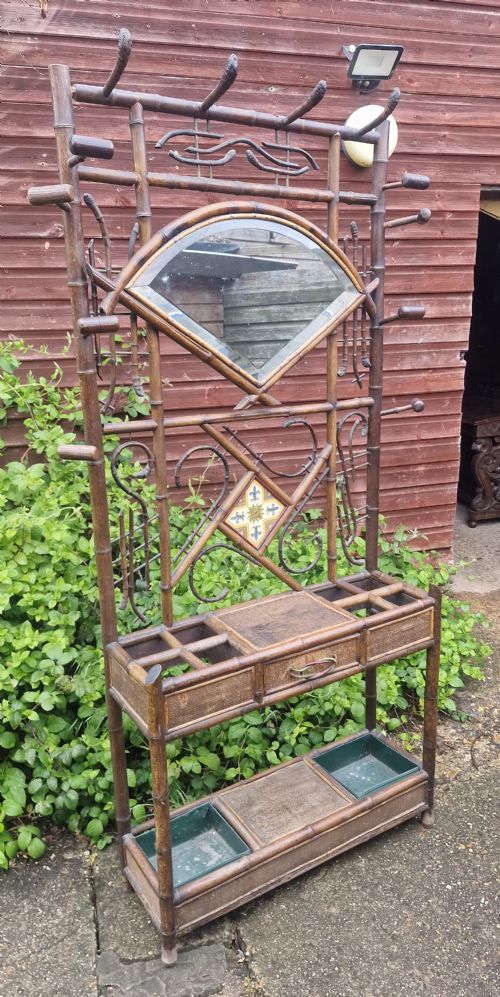
The versions most commonly met in these listings span the Victorian period into the early twentieth century, taking shape in oak, mahogany, and bamboo. They range from narrow wall fixtures to large freestanding hall trees equipped with umbrella wells and marble trays.
Makers and designers across the nineteenth and early twentieth centuries applied various regional styles, including Arts and Crafts, Art Nouveau, and Aesthetic Movement designs. Each piece reflects the domestic routines of its era, offering an organised space for hats, coats, and walking sticks right by the front door.
How they were made
Cabinetmakers constructed these pieces primarily using solid hardwoods such as oak and mahogany, often enhanced with carved details, fretwork, or inlaid panels. Bamboo also appears in lighter, exotic-influenced designs.
Metal components such as brass, cast iron, and wrought iron formed the coat hooks, hanging rails, and umbrella drip trays. These were screwed or bolted securely to the wooden frames to bear the weight of heavy garments.
Glass mirrors, often with bevelled edges, were fitted into the wooden or metal backplates using traditional backing boards and glazier's pins. Original mirror plates frequently display light patination and foxing developed over the decades.
Entry Mirror Rack Retail Price Guide 2026
Typical asking prices for entry mirror rack among the pieces listed under this phrase on Sellingantiques today, from the lower quarter to the upper quarter. They describe what is for sale here now, not the wider market.
Listings feature pieces from the Victorian, Edwardian, and Art Deco eras, utilising oak, mahogany, brass, and bamboo.
What varies in quality
The standard of carving and joinery dictates much of the distinction between simpler hallway furniture and master-built examples. Crisp, deep relief work and well-fitted mortise and tenon joints separate substantial country house pieces from lighter commercial production.
Coalbrookdale
The Entry Mirror Rack Glossary
- Hall stand
- A freestanding hallway furniture piece incorporating a mirror, coat hooks, and usually a shelf or umbrella stand. They became essential hallway items in Victorian and Edwardian homes.
- Portmanteau
- A large freestanding hall stand or wardrobe fixture designed for hanging coats and hats. These substantial pieces often feature umbrella wells and integrated seating.
- Bevelled glass
- A mirror glass pane with edges ground and polished at an angle to create a decorative frame effect. This technique reflects light at various angles.
- Foxing
- Age-related spots and discolouration appearing behind the silvering of an antique mirror plate. It occurs naturally as moisture interacts with the backing over many decades.
Entry Mirror Rack: Frequently Asked Questions
How do I clean an antique mirror rack?
Dust the wooden framework regularly with a dry cloth and nourish the wood occasionally with a traditional wax polish. Avoid getting moisture behind the mirror plate when cleaning the glass.
Take care around original brass or cast iron hooks, using a soft brush to remove dust from carved crevices without disturbing the aged surface patination.
Can wall-mounted racks support heavy winter coats?
Wall-mounted coat racks fixed securely into masonry or substantial wall studs can support everyday garments quite safely. Distributing weight evenly across all available hooks helps protect the antique fixings.
Freestanding hall stands rely on their heavy base construction and should be positioned on level flooring to prevent tipping when loaded with multiple heavy coats.
Are the mirror plates usually original?
Many surviving pieces retain their original glass, often identifiable by subtle surface irregularities and light foxing. These aged traits confirm the period authenticity of the mirror.
Some pieces may feature replaced glass if the original suffered damage over generations of domestic use, though period-appropriate glass is generally preferred by collectors.
How do I identify a Victorian hall stand?
Victorian examples frequently display rich timber tones in mahogany or oak, often accompanied by elaborate carvings, turned spindle work, and cast iron umbrella drip pans. The overall scale tended to be generous to suit grand entrance halls.
Later styles from the Edwardian period or the nineteen-twenties often embraced lighter oak finishes, Arts and Crafts simplicity, or wrought iron industrial forms.