
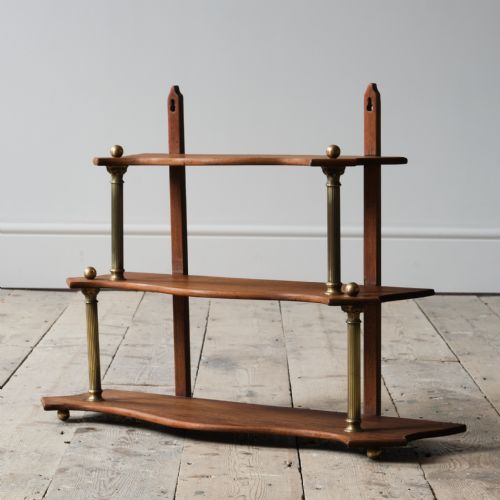
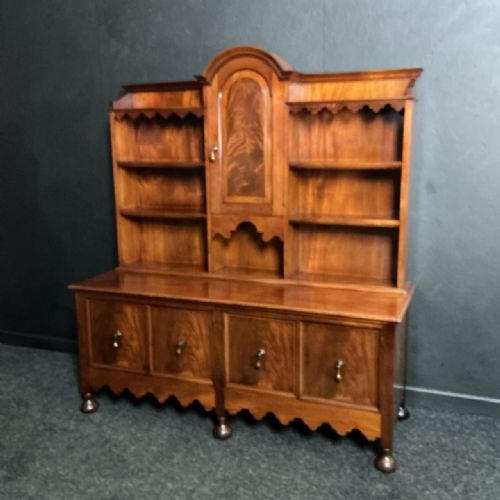
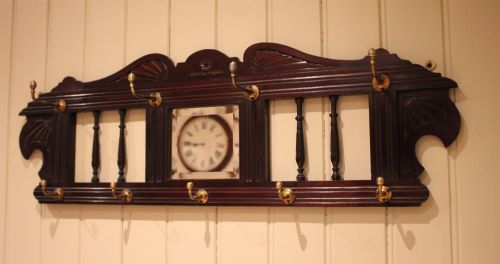
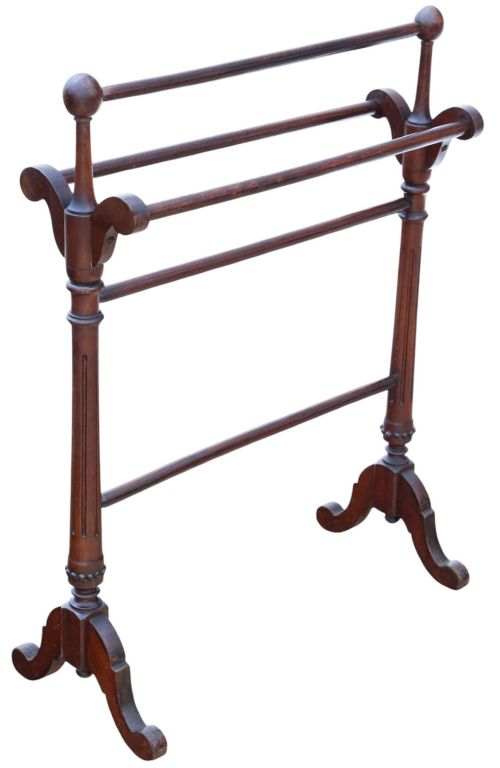



Carved Mahogany Rack
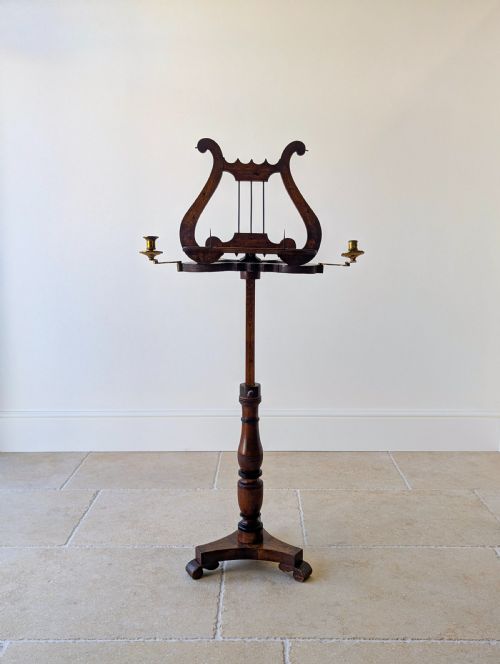
A carved mahogany rack brings functional timber utility into a room, spanning wall shelves, hall stands, and music holders.
Carved Mahogany Rack
A carved mahogany rack encompasses a diverse array of domestic furnishings designed for storage and display, appearing frequently across nineteenth-century and early twentieth-century periods. Buyers searching this phrase encounter forms ranging from wall-hanging shelves and coat stands to magazine canterburys and folio holders.
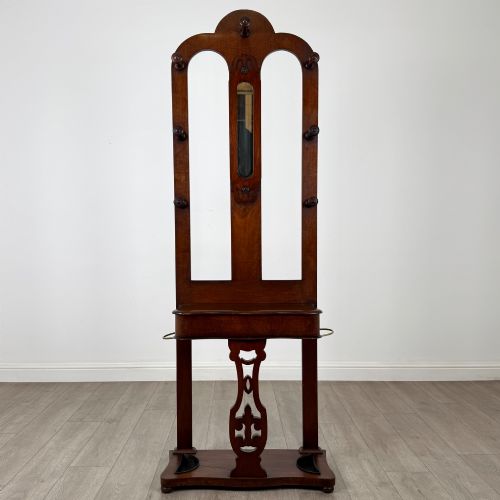
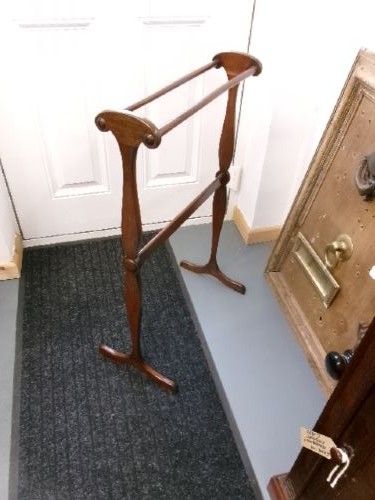
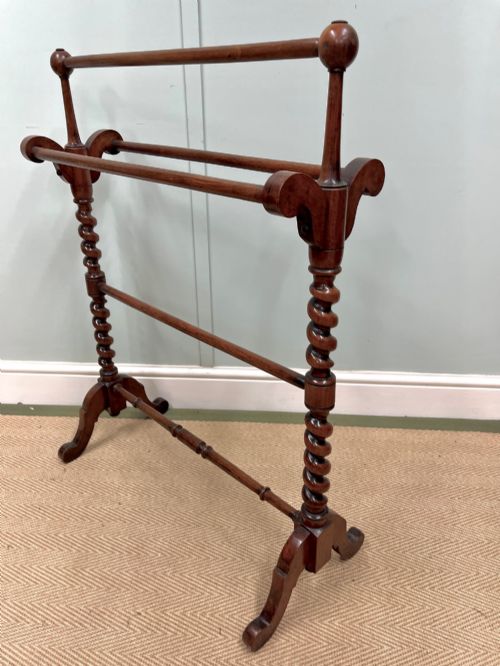
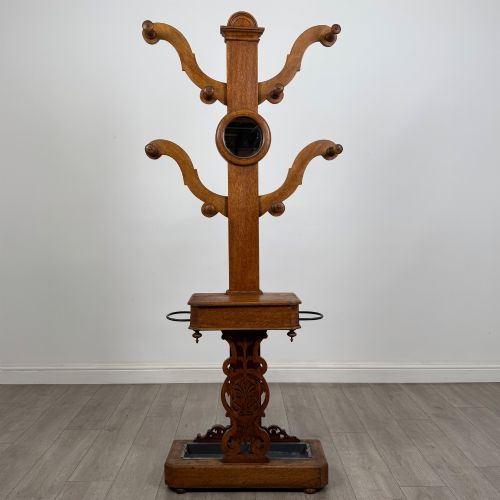
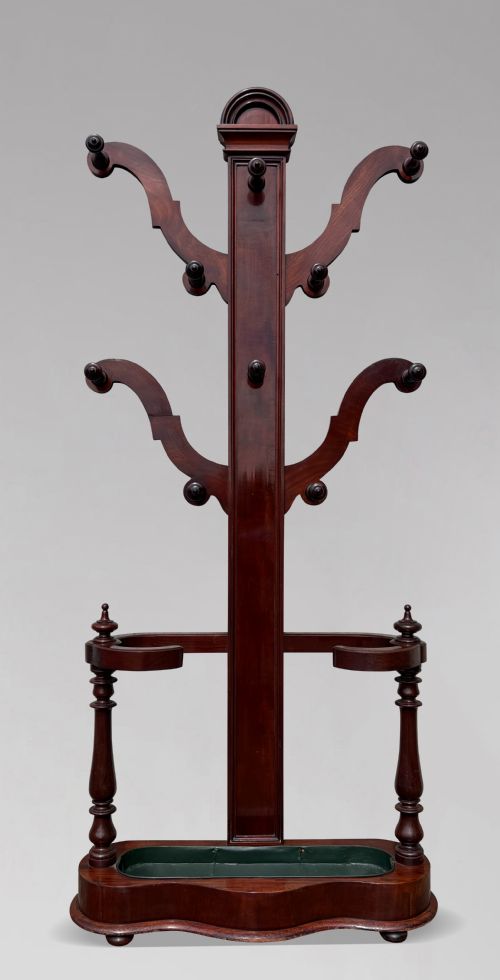
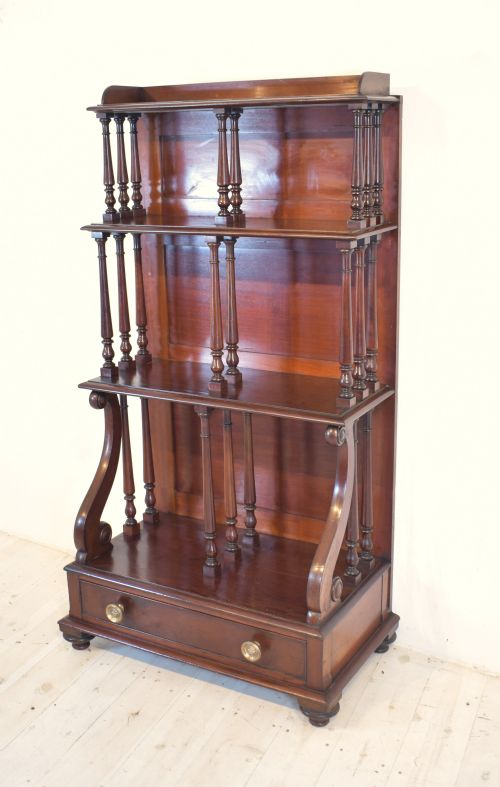
The selection leans heavily toward Victorian and Regency hall stands, wall brackets, and towel rails executed in dense tropical timber. These pieces served practical daily roles in hallways, studies, and drawing rooms of period properties.
Makers utilised the rich grain and deep colour of the timber to anchor functional items within domestic interiors. Styles stretch from classical Regency lines to heavier Gothic Revival and Arts and Crafts interpretations.
How they were made
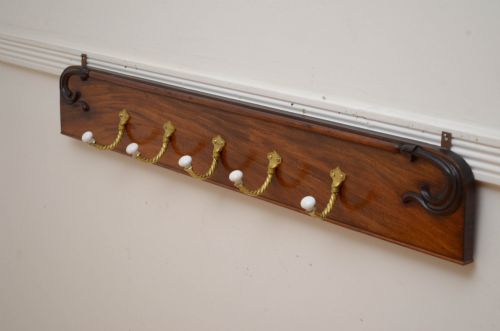
Construction relies primarily on solid mahogany and Cuban mahogany, augmented occasionally by secondary timbers like oak, alongside brass hooks, mirrored plates, and ceramic elements. Workshops shaped the timber using traditional joinery methods, combining dovetailed joints, turned spindles, and pegged framing.
Carving was executed by hand to render details such as scrolling foliage, lion heads, and twisted rope motifs. Surfaces were finished with shellac or wax polishes that enhanced the natural figuring and reddish-brown tone of the wood.
Several pieces feature carved dragon motifs and riding boot stands, proving that past Victorians took their equestrian hobbies quite literally.
What varies in quality
Quality rests in the crispness of the hand carving and the selection of the mahogany timber itself, particularly where dense grain and rich figure are visible. Superior pieces display deeply undercut botanical or figurative carving rather than shallow, mechanical moulding.
Structural integrity and the retention of original brass or ceramic hardware separate standard utility items from finer examples. Proportion, balance, and the integration of functional elements like mirrors or marble shelves further define the upper tier of the range.
Brockbank and Atkins
The Carved Mahogany Rack Glossary
- Canterbury
- A low wooden stand featuring slatted or pierced divisions, originally designed to hold sheet music, folios, or magazines.
- Hall stand
- A tall piece of hall furniture combining coat hooks, umbrella wells, and frequently a central mirror and marble glove shelf.
- Fusee
- A conical pulley mechanism used in clock movements to maintain even driving power as the mainspring unwinds.
- Folio stand
- An adjustable wooden rack designed to display large books, prints, or architectural drawings.
Carved Mahogany Rack: Frequently Asked Questions
Where were hall stands placed?
Hall stands were positioned immediately inside the entrance of a home to manage outdoor wear.
They provided visitors and residents with a designated place to hang coats, store walking sticks, and deposit hats upon arrival.
How do I care for mahogany?
Mahogany furniture requires minimal maintenance to preserve its polish and structural stability over time.
Keep pieces away from direct heat sources and apply a traditional beeswax polish periodically to nourish the timber.
What is a canterbury used for?
A canterbury functions as a compartmentalised rack for organising periodicals, sheet music, or books.
Their open slatted partitions allowed easy access while keeping reading materials tidy beside a desk or seating area.
How do I identify Victorian pieces?
Victorian items often display heavier proportions and ornamental carving reflecting Gothic Revival or Arts and Crafts influences.
Construction details such as machine-sawn elements alongside hand-finished joinery help distinguish this era from earlier Georgian work.