



Engraved Sterling Silver Jug
These engraved sterling silver jugs bring decorative metalwork and hand-cut glass to the table, offering lasting utility and period character.
Engraved Sterling Silver Jug
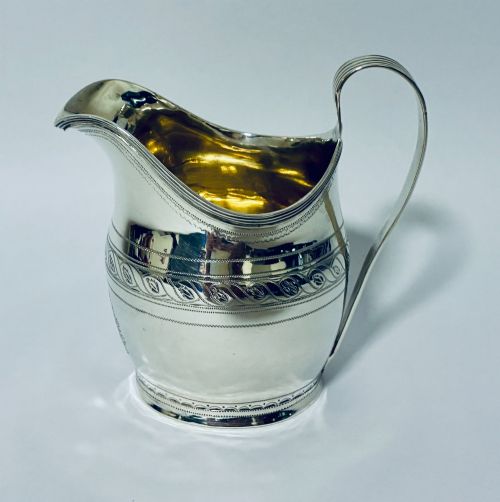
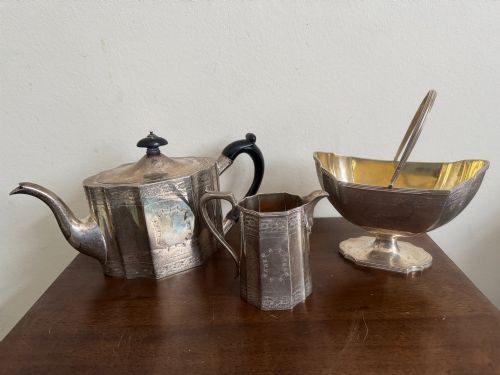
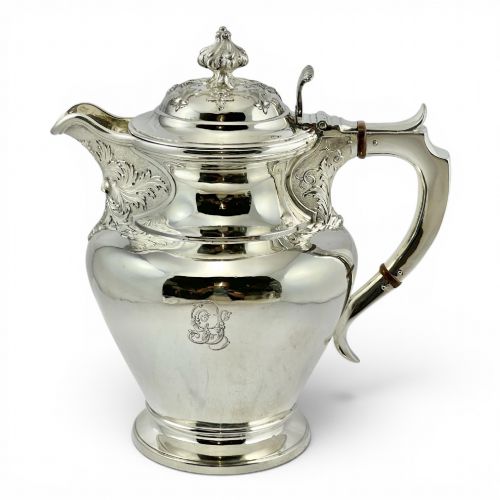
When searching for an engraved sterling silver jug, buyers encounter various historical forms ranging from compact cream jugs and milk jugs to large claret jugs and water pitchers. These hollowware vessels date across the Georgian, Victorian, and Edwardian periods, reflecting changing dining and domestic habits.
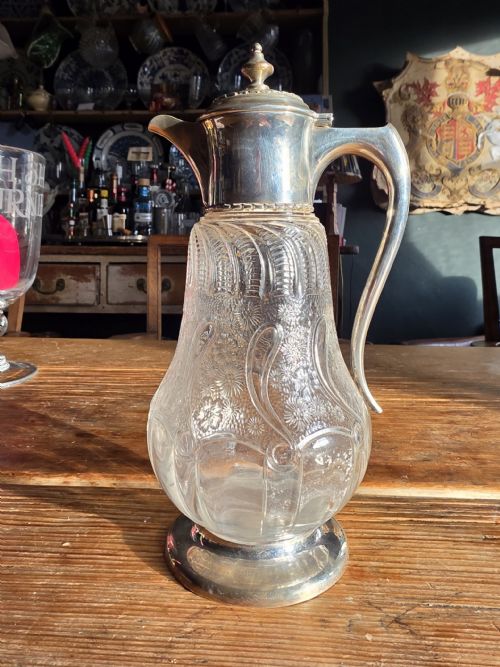
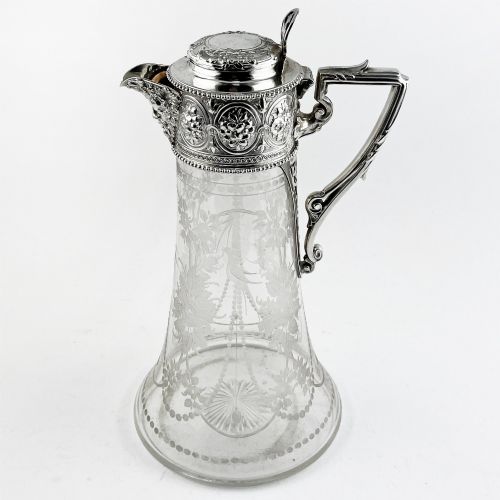
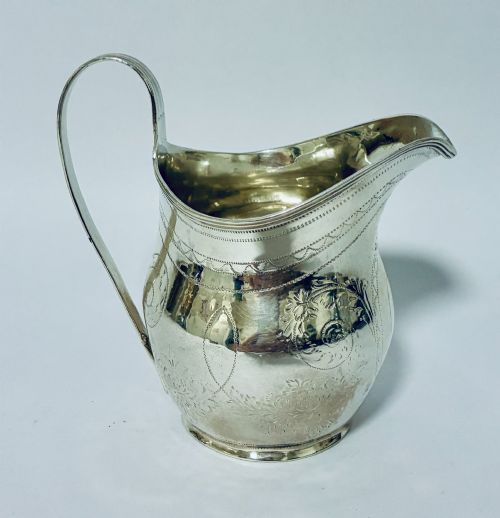
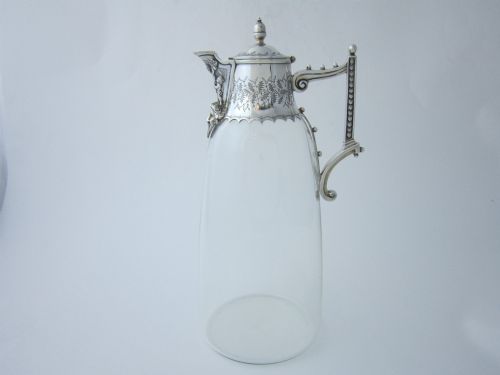
The selections on this page most commonly include cream jugs from the Georgian era alongside floral and naturalistic claret jugs from the Victorian period. Examples range from simple provincial forms to ornate presentation pieces involving glass bodies mounted in silver.
Makers utilised diverse decorative techniques such as bright-cut engraving, hand-chiselled floral motifs, and botanical patterns featuring acorns. These objects served functional roles at tea services and dinner tables, combining precious metal with practical utility.
Distinguishing quality in silver jugs
Quality separates simple utility vessels from masterworks through the crispness of the hand engraving and the balance of the proportions. Superior pieces display deep, sharply defined cutting on the silver and well-integrated cast handles rather than stamped components.
The weight of the silver and the structural integrity of hinged lids and mounts indicate the standard of production. Makers who utilised heavier gauge metal and precise assembly created durable pieces that retain their form and decorative clarity over centuries.
Victorian silversmiths occasionally rendered water jugs with naturalistic acorn designs, ensuring that even a formal pouring vessel carried an oak forest into the dining room.
William Comyns·Rait·John Emes·Peter and Ann Bateman·William Davenport·Robert Hennell
The Engraved Sterling Silver Jug Glossary
- Sterling silver
- An alloy consisting of 92.5 percent silver by mass, with the remainder composed of copper or other metals to increase durability. This standard has served as the baseline for British hallmarked plate for centuries.
- Bright-cut engraving
- A surface decoration technique utilising faceted angled cuts that reflect light from multiple directions. Silversmiths employed this method extensively during the Georgian period to create geometric and floral borders.
- Claret jug
- A large pouring vessel designed specifically for serving red wine at the dining table. Victorian examples frequently paired engraved glass bodies with elaborate cast silver mounts and hinged lids.
- Cream jug
- A small pouring vessel intended for serving milk or cream during tea service. These compact forms allow silversmiths to display intricate chasing and handle designs on a domestic scale.
- Pedestal foot
- A raised circular or multi-sided base that elevates the body of the vessel above the table surface. This structural feature provides stability and visual balance to jugs and ewers.
Engraved Sterling Silver Jug: Frequently Asked Questions
What is an engraved sterling silver jug used for?
These vessels served functional roles in domestic dining, functioning primarily as cream jugs for tea service or as claret jugs and pitchers for serving wine and water at the table.
Over time, many of these pieces transitioned from active dining implements to decorative display items and presentation pieces valued for their craftsmanship.
How do I date a silver jug?
Dating relies heavily on official hallmarks stamped into the metal, which indicate the assay office, the specific year of manufacture, and the silversmith's mark. Stylistic indicators such as Neoclassical bright-cut engraving or Victorian naturalistic acorn motifs also point to specific periods.
Comparing the handle construction, form, and decorative vocabulary against known stylistic eras helps narrow down the decade of production when hallmarks are rubbed.
Are silver and glass claret jugs fragile?
Claret jugs combining cut glass and silver require careful handling during use and cleaning due to the weight of the metal mounts resting on the glass body. The structural joinery between the silver collar and the glass neck remains secure when handled properly.
Storing these pieces away from vibrations and washing them by hand in warm soapy water preserves both the glass clarity and the silver surface.
What is the difference between a cream jug and a milk jug?
Cream jugs from the Georgian and early Victorian periods tend to be smaller in scale, reflecting the concentrated use of rich cream during formal tea service. Milk jugs from later periods generally exhibit larger capacities to accommodate casual dining habits.
Both forms utilise similar pouring spouts and handle configurations, though milk jugs often pair with matching sugar bowls in larger tea sets.