


Engraved Sterling Silver Cutlery
Engraved sterling silver cutlery brings centuries of fine table silver into daily use, combining durable precious metal with intricate handwork.
Engraved Sterling Silver Cutlery
Engraved sterling silver cutlery encompasses functional table pieces fashioned from silver and ornamented with surface incision, crests, and detailed hand carving. These objects appear across periods ranging from the seventeenth century through the Victorian era and into the early twentieth century.
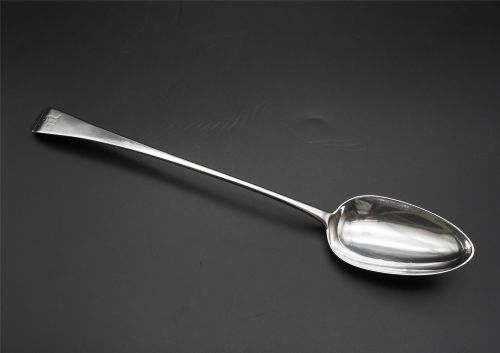
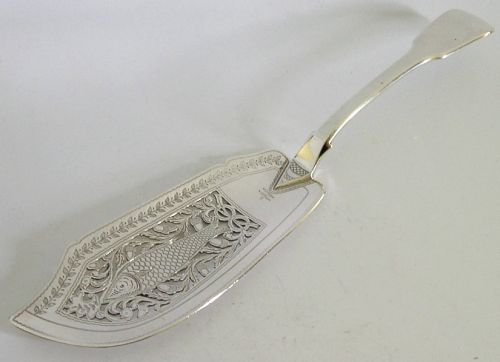
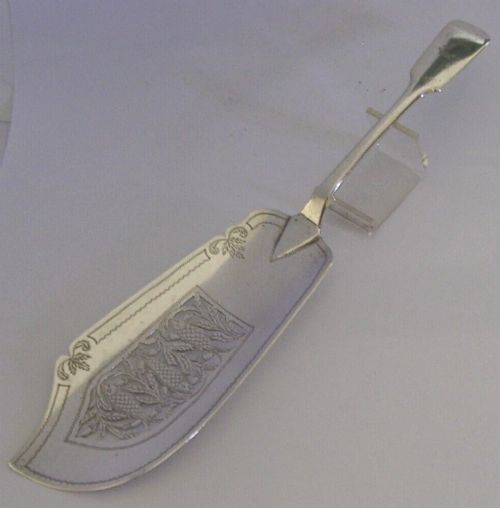
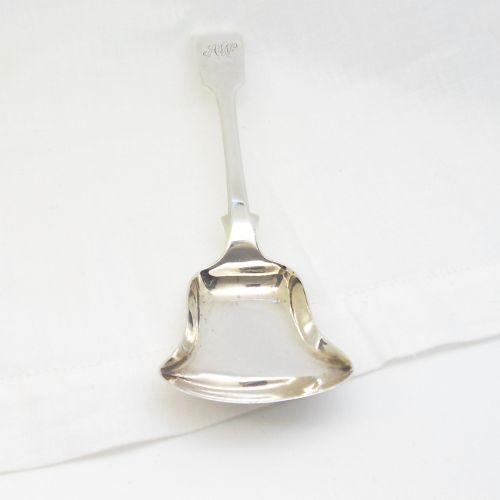
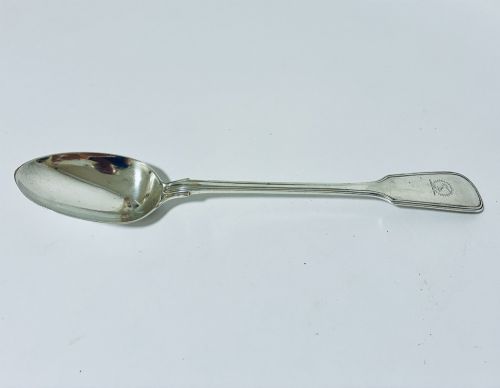
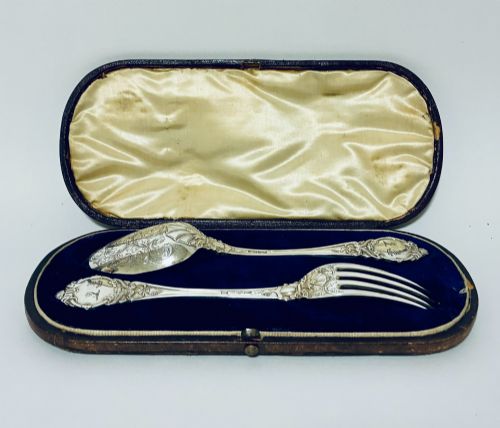
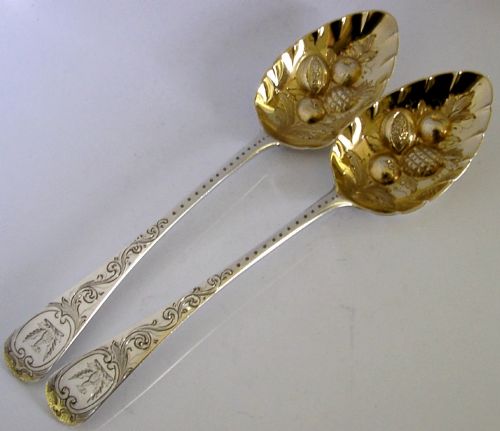
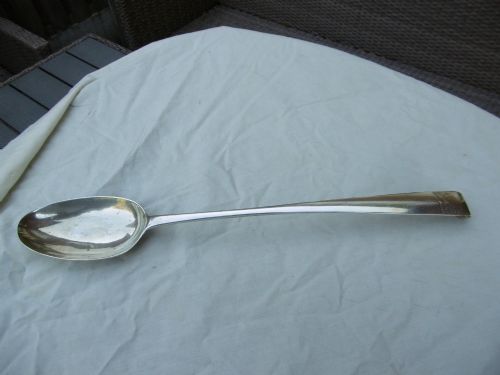
The assortment on this page leans heavily toward serving implements, basting spoons, fish servers, fruit knives, and christening sets originating in Georgian and Victorian workshops. Buyers encounter specialised utensils featuring Old English and Fiddle patterns alongside deeply chased fruit and berry motifs.
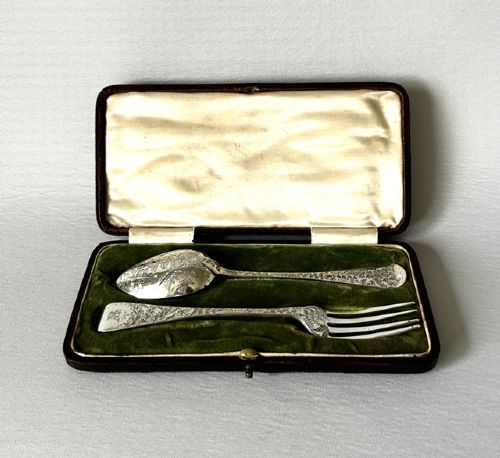
Many items survive inside fitted boxes lined with velvet, silk, or leatherette, preserving the original presentation for formal dining and gift giving. Regional provincial marks from Dublin, Edinburgh, Newcastle, York, and Inverness appear frequently among the London-hallmarked pieces.
Materials and Construction
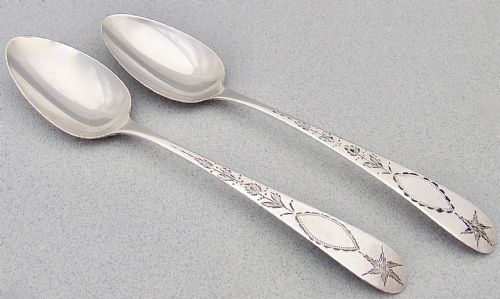
Silversmiths formed these eating utensils from solid sterling silver, occasionally adding silver gilt surfaces or pairing the metal blades with contrasting materials like mother of pearl and stag antler handles. Production methods combined heavy casting for structural strength with delicate hand engraving to apply crests, foliage, and geometric borders.
Fitted presentation cases lined with silk, velvet, or leather protect the finished cutlery sets from tarnishing and physical wear during storage. Hallmarks stamped directly into the silver record the assay office, duty marks, and maker details.
Listings feature regional provincial British silver from Newcastle, York, Exeter, Dublin, and Inverness alongside standard London pieces.
Judging Quality
The distinction between standard utensils and exceptional examples rests upon the crispness of the engraved decoration and the depth of the metalwork. Pieces bearing legible town marks, maker stamps, and well-preserved family crests command greater attention from collectors.
The integrity of the original form matters greatly, particularly where delicate elements like pierced fish slices, trefid terminals, or seal tops meet the handle. Complete boxed sets retaining their original silk and velvet linings represent higher tiers of preservation.
John Pittar·John Walton·John Craig·Jerimiah Johnson·William Penstone·James Tookey·William Chawner II·George Unite
The Engraved Sterling Silver Cutlery Glossary
- Sterling silver
- A silver alloy containing 92.5 percent pure silver by weight and 7.5 percent other metals, usually copper, chosen for durability in tableware.
- Hallmark
- A series of official marks stamped into precious metal objects to certify purity, origin, maker, and year of manufacture.
- Trefid
- An early form of flatware handle ending in a three-lobed shape, popular during the seventeenth century.
- Seal top
- A spoon style featuring a solid cast finial shaped like a seal or signet, common in seventeenth-century British silver.
- Fish slice
- A wide, often pierced server designed for partitioning and lifting fish at the dining table during the Georgian and Victorian periods.
Engraved Sterling Silver Cutlery: Frequently Asked Questions
What periods do these pieces date from?
The collection spans several centuries, including seventeenth-century seal top spoons, eighteenth-century Georgian basting ladles, and nineteenth-century Victorian fish serving sets.
Items from the early twentieth century, such as Art Nouveau serving spoons, also appear among the selections.
How were these utensils used originally?
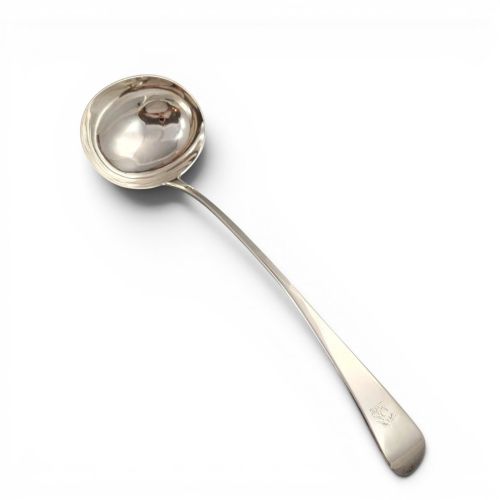
These implements served formal dining functions, from carving and serving fish to portioning soup, fruit, and sugar at the table.
Christening sets were traditionally presented as gifts for newborns to mark significant family milestones.
Are storage cases original to the cutlery?
Many Victorian and later sets survive inside their fitted presentation boxes lined with silk, velvet, or leatherette.
These cases were designed specifically to protect the engraved surfaces and delicate handles from damage.
How can I identify the maker and age?
Makers and dates are determined by reading the hallmarks stamped into the silver, which include symbols for the assay office and date letters.
Inscribed family crests and provincial town marks provide additional historical context about the origin of each piece.