




Cased Silver Christening Gift
These cased silver christening gift pieces offer a tangible piece of family history, combining fitted presentation boxes with lasting precious metal.
Cased Silver Christening Gift
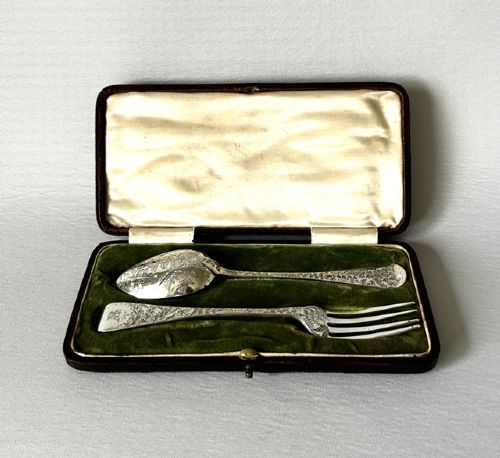
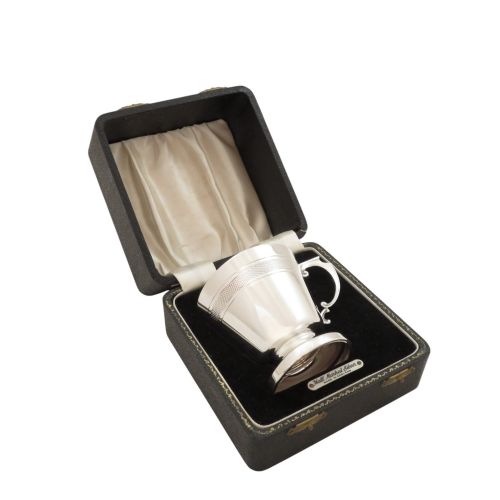
When you search for a cased silver christening gift, you are looking at presentation sets and individual items designed to mark the birth or early years of a child. These pieces encompass cutlery sets, individual spoons, and napkin rings housed in protective containers.
The versions you are most likely to meet on this page hail from the Victorian and Edwardian periods, stretching from the mid-nineteenth century into the early twentieth century. They reflect the formal gift-giving traditions of these eras, often preserved in their original fitted enclosures.
Object types vary from three-piece cutlery sets containing knives, forks, and spoons to singular sterling silver spoons and napkin rings. Each form represents a traditional token presented to commemorate a childhood milestone.
Assessing quality and craftsmanship
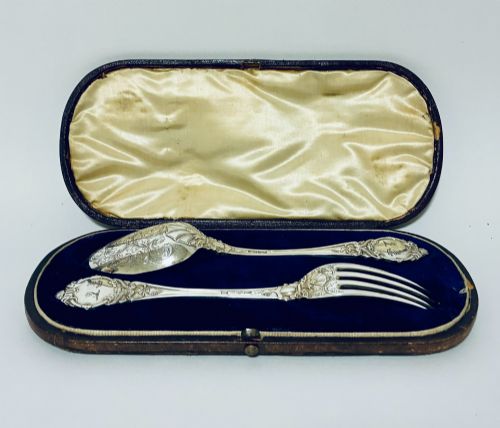
Quality in these items is determined by the weight and purity of the silver, alongside the intricacy of any applied patterns. Pieces bearing distinct decorative motifs, such as specific handle designs, demonstrate greater artisan involvement than plain variants.
The condition and survival of the original case contribute significantly to the overall integrity of the piece. Cases retaining intact hinges, unblemished velvet or silk linings, and sound exterior leather or leatherette coverings elevate the piece.
The reputation of the maker also dictates distinction, with items produced by established silversmiths carrying a greater level of refinement in their finish and detailing.
Some spoons arrive with handles shaped like a stag hunt scene, proving Victorian children took their cutlery with a side of wilderness.
John Round·Thomas Harwood and Co
The Cased Silver Christening Gift Glossary
- Sterling silver
- A silver alloy containing 92.5 percent pure silver and 7.5 percent other metals, usually copper, ensuring durability for practical use. This standard is frequently denoted by specific hallmarks on the metal.
- Gold gilt
- A thin layer of gold applied to the surface of the silver object to provide a two-tone decorative effect. This technique enhances the visual contrast of spoons and cutlery sets.
- Leatherette
- A synthetic material designed to imitate leather, commonly used for the exterior covering of storage cases. It provided a durable and uniform finish for protective boxes.
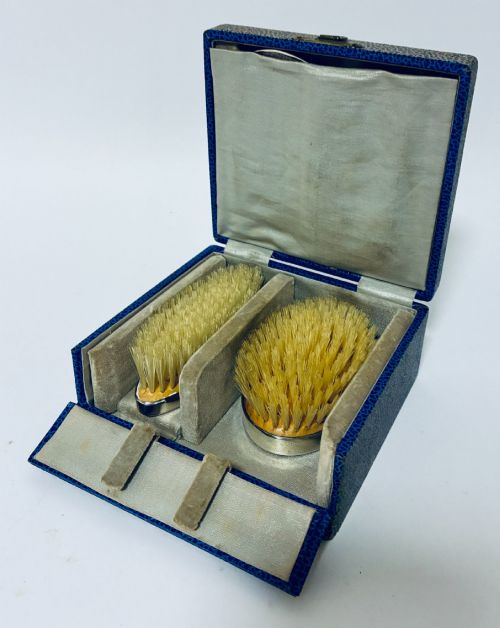
- Natural bristle
- Animal hair used in the construction of brush components found within broader vanity and dressing sets. It offers a firm texture distinct from synthetic alternatives.
- Napkin ring
- A small ring used to identify a person's table napkin during meals, frequently presented as a standalone commemorative gift. These items often feature engraved ornamentation.
Cased Silver Christening Gift: Frequently Asked Questions
What items make up a typical set?
A typical set comprises three pieces, usually including a knife, fork, and spoon designed for a child's use. These are matched in style and pattern.
Alternative sets may consist of single spoons or napkin rings, each serving as an individual commemorative token rather than a complete dining ensemble.
How should I store these items?
These pieces are best kept within their original fitted cases, which protect the silver from excessive tarnishing and physical knocks. The velvet and silk linings cushion the metal components effectively.
Keep the cases in a stable environment away from direct sunlight and high humidity to preserve both the leatherette exteriors and the delicate interior fabrics.
How do I identify the period?
Dating relies heavily on hallmarks stamped directly onto the silver, which indicate the assay office, standard, and year of manufacture. These small stamps are standard across British silver of the nineteenth and twentieth centuries.
Stylistic cues, such as the decorative motifs on handles and the construction of the protective cases, also point towards the Victorian or Edwardian eras.
Were these items meant for daily use?
Many of these pieces were intended as commemorative keepsakes rather than everyday tableware, explaining their high survival rate in fitted presentation boxes. They commemorated christenings and early birthdays.
Despite their decorative and ceremonial purpose, the sterling silver construction meant they were durable enough for actual use by children if desired.