


Victorian Silver Christening Spoon
These Victorian silver christening spoon pieces are treasured family heirlooms designed to mark a child's birth or baptism.
Victorian Silver Christening Spoon
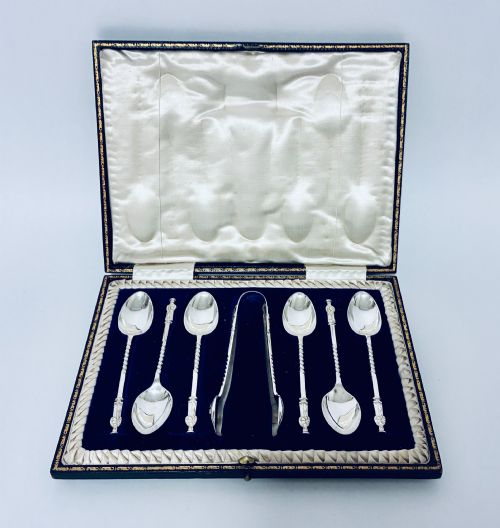
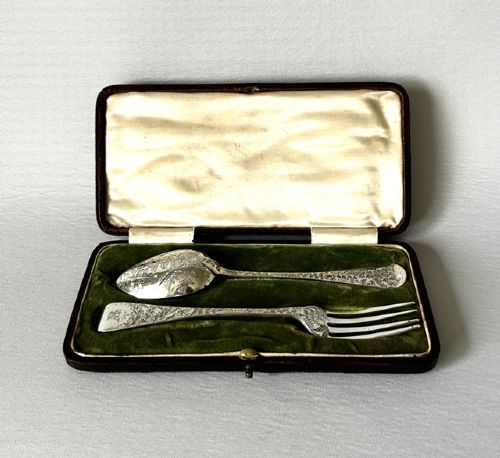
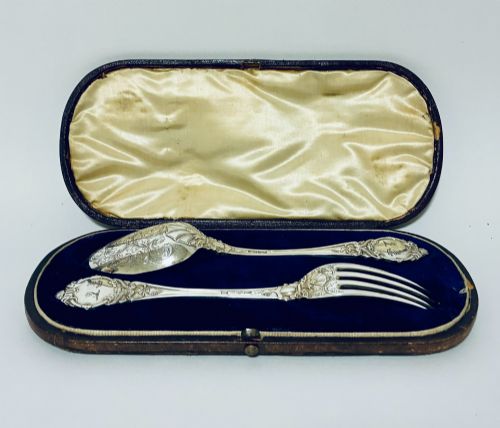
When you search for a victorian silver christening spoon, you discover single spoons alongside multi-piece sets containing forks, knives, or matching cases. These items date from the mid-nineteenth century through to the turn of the twentieth century, reflecting the domestic traditions of the era.
You are most likely to encounter boxed sets featuring a spoon and fork, frequently lined with silk, velvet, or leatherette. The objects span individual spoons to larger presentations, including apostle spoons, stag presentation pieces, and cup and saucer combinations.
The origin of these items spans British workshops, with specific pieces recorded from provincial assay offices such as Exeter alongside major manufacturing hubs like Sheffield. The stylistic vocabulary remains resolutely Victorian, adapting traditional motifs for family presentations.
Materials and construction
Makers utilised sterling silver and solid silver for the principal cutlery, forming bowls and handles designed for infant hands. Certain examples employ silver plate, providing an alternative metallic finish recorded within the period.
Presentation packaging forms an integral part of the manufacture, enclosing the silverware in fitted cases constructed from leather, leatherette, velvet, and silk. These protective housings ensure the preservation of the metalwork against tarnishing.
One oversized presentation spoon stretches to nine and a half inches, ensuring the recipient baby would need considerable growth before mastering it.
Assessing quality in silver christening items
The distinction between standard examples and superior pieces rests upon the crispness of the chasing, the weight of the silver, and the presence of specialist ornamentation like engraving or parcel-gilding. Master silversmiths executed detailed decorative work that remains sharp across the bowl and handle.
The integrity of the original fitted presentation case heavily influences the standing of the piece. Cases retaining intact silk linings and sound leather exteriors elevate the overall completeness of the survival.
Walter and John Barnard·Thomas Harwood and Co·John Round
The Victorian Silver Christening Spoon Glossary
- Sterling silver
- A standard alloy consisting of ninety-two point five percent silver by mass, with the remainder being copper. This alloy provides the durability required for functional domestic cutlery.
- Silver plate
- A base metal substrate coated with a thin layer of silver. This technique offered an accessible alternative to solid silver for household presentation items.
- Leatherette
- A imitation leather material manufactured from fabric coated with a plastic resin. It frequently lines the interior or covers the exterior of Victorian presentation boxes.
- Parcel-gilt
- Silver objects that feature selective application of gold leaf or wash to specific areas, creating a two-tone metallic contrast. This treatment often highlights the bowl or detailed chasing.
- Assay office
- A statutory body charged with testing the purity of precious metals and stamping them with official hallmarks. Regional offices included Exeter and Sheffield.
Victorian Silver Christening Spoon: Frequently Asked Questions
What came in a Victorian christening set?
Sets typically contained a single spoon or a combination of a spoon and fork, sometimes accompanied by matching knives or tea cups and saucers. These were presented in purpose-built velvet or silk-lined cases.
More elaborate configurations included apostle spoons, presentation spoons featuring animal motifs, or multi-piece cutlery collections designed for a child's future use.
How do I date a Victorian christening spoon?
Dating relies upon the official hallmarks stamped into the metal by assay offices, which indicate the exact year of manufacture and the city of testing. Stylistic details like nineteenth-century engraving and box construction provide additional context.
The historical record shows pieces spanning the middle decades of the Victorian reign up to the year nineteen hundred.
Are these spoons made of solid silver?
The majority of pieces encountered are struck from sterling silver or solid silver, whilst alternative examples are constructed from silver plate. Manufacturers utilised these materials to balance durability with the desired visual presentation.
Each metallic medium carries distinct hallmarks or marks denoting its composition and origin.
How should I store a boxed christening set?
Keeping the silverware inside its original fitted leather, leatherette, or velvet case protects the metal from excessive atmospheric tarnish and physical friction. Storing the box in a stable environment away from direct sunlight preserves the delicate silk and velvet interior linings.
Gentle handling ensures the historical presentation case remains undamaged alongside the cutlery.